
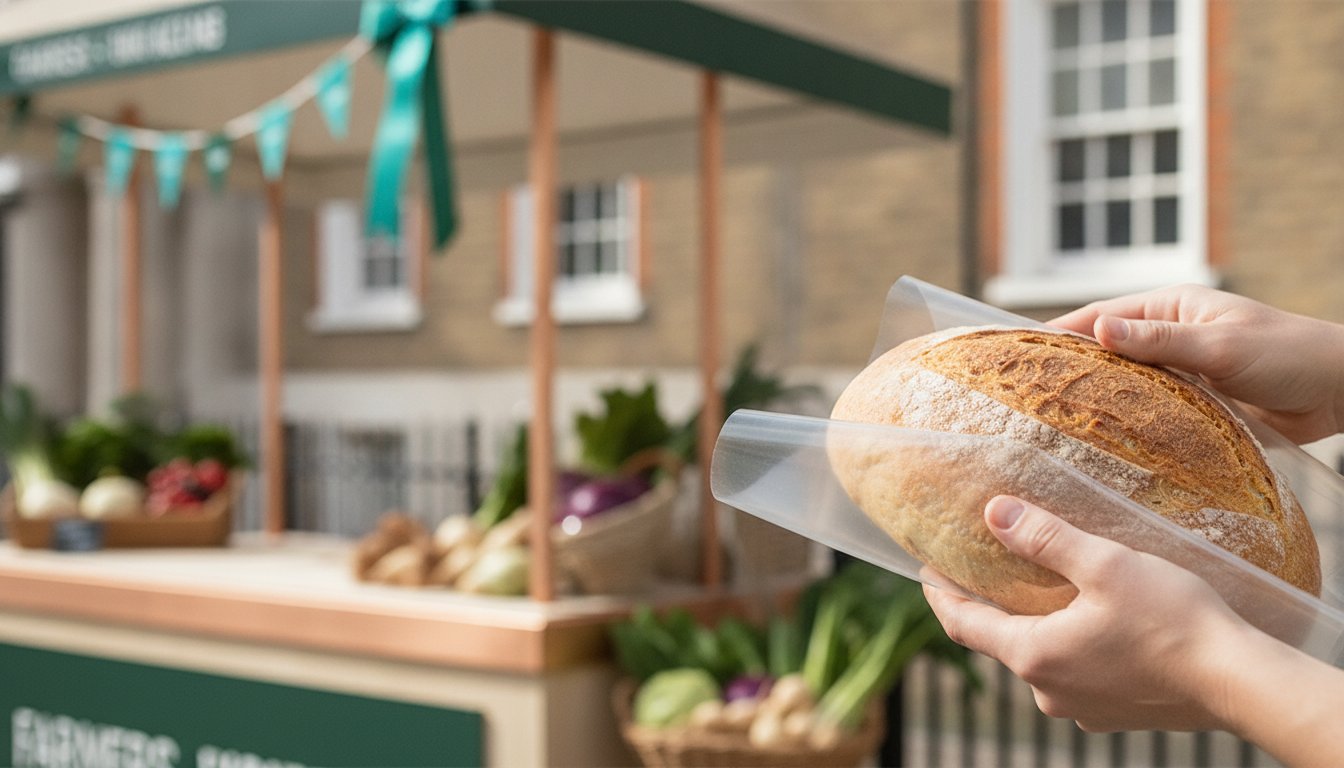
What if the material protecting your artisan produce could also be the most effective marketing tool at your stall? You’ve likely noticed that traditional plastic bags are no longer just an environmental concern; they’ve become a significant business risk. With the UK Plastic Packaging Tax now set at £228.82 per tonne, the shift toward sustainable packaging for market stalls is no longer optional. It’s natural to worry if eco-friendly wraps will actually stick or if they’ll fail to keep your food fresh. You need reliability, not just a green label.
We understand these challenges and believe that responsible choices should never compromise on performance. This 2026 guide will help you transition to certified compostable solutions that meet the latest UK regulations and exceed customer expectations. We’ll examine how to navigate complex certifications like OK compost HOME and select durable items, such as compostable clingfilm and shopping bags, that protect both your products and your brand’s reputation. You will gain a clear roadmap to becoming a leader in the circular economy while maintaining the functional excellence your business demands.
Key Takeaways
- Understand why 2026 consumer demands and UK regulations require a shift from standard recyclables to high-performance compostable options.
- Learn how to evaluate materials for outdoor environments, ensuring your packaging maintains high standards of puncture resistance and durability.
- Discover how to implement a circular strategy for sustainable packaging for market stalls by auditing your current plastic footprint and identifying quick replacement wins.
- Gain clarity on complex eco-certifications to ensure your packaging choices are legally compliant and genuinely beneficial for the environment.
- Identify high-performance alternatives like compostable cling film that provides the necessary hygiene and "cling" without the environmental cost of plastic.
The Shift to Sustainable Packaging for UK Market Stalls in 2026
The UK's market sector is undergoing a transformation driven by a new generation of conscious consumers. By 2026, the sight of a plastic carrier bag at a local market has become a significant deterrent for the 86% of UK shoppers who prefer brands using paper-based or compostable alternatives. Choosing Sustainable packaging is no longer just a moral choice; it's a fundamental requirement for commercial survival in a landscape where environmental impact is scrutinized as closely as price.
To better understand how these materials are evolving to meet commercial needs, watch this helpful video:
Meeting the 2026 Consumer Demand for Plastic-Free Trading
The connection between visible sustainability and customer loyalty is particularly strong in artisan markets. When a trader uses sustainable packaging for market stalls, they aren't just wrapping a product; they're reinforcing their brand's integrity. For many shoppers, the packaging is the first physical touchpoint of the "artisan" experience. Sustainable packaging represents a firm commitment to a circular economy. High-quality compostable options, such as caddy bags or food roller bags, demonstrate that a business values the long-term health of the environment as much as the immediate quality of its goods.
Navigating UK Regulations and the Plastic Packaging Tax
Small-scale vendors must now contend with a complex regulatory framework designed to eliminate waste. As of April 2026, the UK Plastic Packaging Tax has risen to £228.82 per tonne for materials with less than 30% recycled content. Proactively switching business to sustainable packaging allows traders to avoid these rising costs while mitigating the risk of non-compliance. Under the Digital Markets, Competition and Consumers Act, businesses also face heavy fines for "greenwashing" if their environmental claims aren't backed by verified certifications like EN 13432. Transitioning to certified compostable solutions ensures your stall remains both legally compliant and ethically sound.
Evaluating Compostable Alternatives: A Buyer’s Framework for Traders
Transitioning to sustainable packaging for market stalls requires a shift in focus from mere compliance to operational performance. While research shows that 40% of UK consumers are willing to pay up to 10% more for sustainable packaging, traders must ensure these materials withstand the rigours of an outdoor market. Thickness and puncture resistance are critical factors when handling heavy jars, sharp-edged artisan loaves, or damp produce. High-performance compostable materials are engineered to match the durability of their plastic predecessors, ensuring that your commitment to the environment doesn't result in damaged stock.
Essential Packaging for Food Stalls and Artisan Delis
Hygienic handling is non-negotiable for food vendors. Compostable food roller bags provide a plastic-free way to dispense produce quickly and safely. One common frustration among traders is finding compostable cling film that actually clings. Modern plant-based wraps now utilise advanced bio-polymers to provide the necessary "tack" for an airtight seal. This maintains product freshness and prevents cross-contamination without the risk of chemical leaching associated with traditional PVC wraps. For heavier items like bottled oils or preserves, selecting compostable shopping bags with reinforced handles is essential for a positive customer experience.
Durability and Performance: Ensuring Your Packaging Protects Your Goods
Market waste is often heavy and wet, which makes the choice of bin liners a vital operational decision. Investing in puncture resistant compostable garbage bags prevents messy leaks and tears during the critical stall pack-down phase. Traders should also review the EPR for packaging for small producers to understand their specific data reporting obligations. While these compostable solutions are robust, they are designed to break down in specific conditions. To maintain the shelf-life of your packaging stock, store it in cool, dry areas away from direct sunlight. You can explore our full range of performance-tested compostable solutions to find the right fit for your stall's specific needs.
Implementing a Circular Packaging Strategy for Your Stall
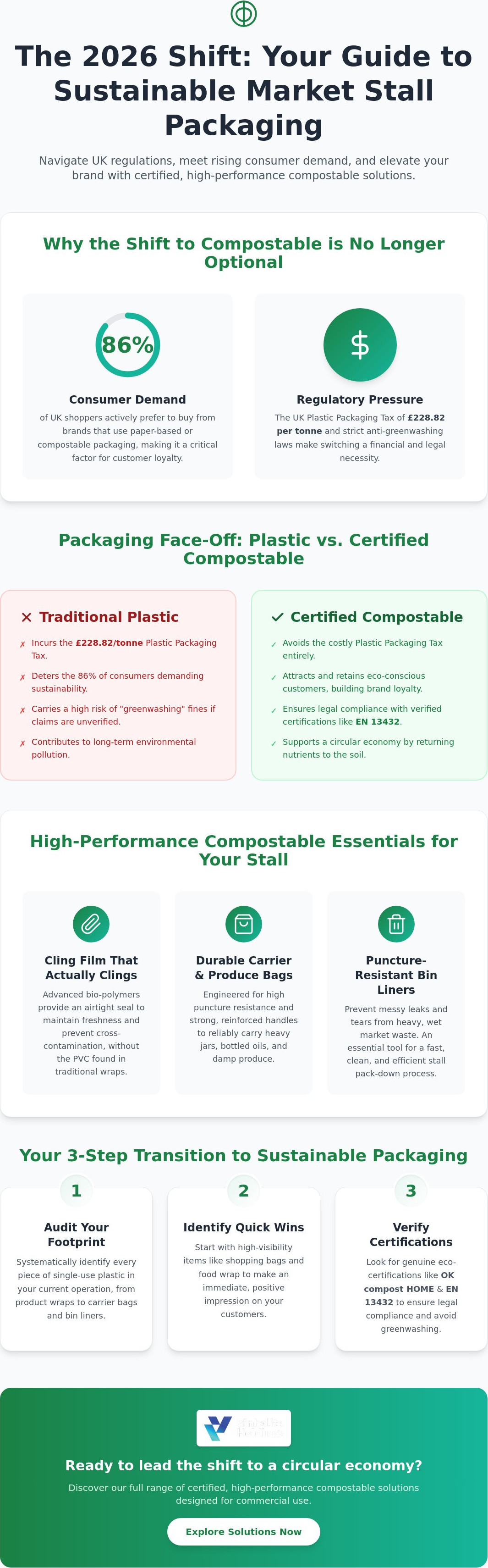
Implementing a circular strategy transforms your stall from a simple point of sale into a hub of environmental stewardship. The first step is a comprehensive audit of your current plastic usage. Identify "quick wins" where replacement is straightforward, such as switching from plastic carrier bags to compostable shopping bags. This immediate action reduces your plastic output while signaling a clear change to your regular clientele. It's about making the transition manageable by focusing on high-volume items first.
Next, ensure your replacements are backed by rigorous standards. You should prioritize products where you find the OK compost HOME certification explained in detail. This specific certification guarantees that the packaging will break down in a domestic compost heap, which is a significant selling point for 2026 shoppers. Finally, train your staff on disposal and storage. Because compostable items are bio-based, they require dry conditions to maintain their integrity before use. Clear internal protocols prevent waste and ensure every SKU performs as intended.
Transitioning to Certified Compostable Solutions
Partnering with a specialist UK supplier like Sinhalite Holdings ensures that your sustainable packaging for market stalls meets industrial performance standards. For managing organic waste behind the counter, compostable caddy bags are indispensable. These bags allow you to collect food scraps and biodegradable waste without contaminating the stream with traditional plastic. Providing compostable shopping bags as the final touchpoint of the transaction ensures the customer leaves with a physical reminder of your brand's commitment to the planet.
Communicating Your Sustainability Story to Customers
Transparency builds trust. Use clear signage to highlight your transition to 100% compostable packaging. This isn't just about ethics; it's a proven commercial strategy. Over 80% of UK consumers actively seek products with minimal or eco-friendly packaging. By educating your customers on how to compost your bags at home, you encourage a closed-loop mindset. This visible commitment to responsible business practices often justifies the premium pricing associated with high-quality artisan products, as shoppers recognize the added value of a plastic-free purchase.
Leading the Future of UK Street Markets
Aligning your business with modern environmental standards is a strategic advantage that fosters deep customer loyalty. By integrating sustainable packaging for market stalls, you demonstrate a clear commitment to the circular economy while protecting your products with high-performance materials. Selecting certified compostable solutions, from robust shopping bags to reliable food wraps, ensures your stall meets the rigorous demands of 2026 without sacrificing functional excellence.
As a specialist UK provider since 2018, Sinhalite Holdings remains dedicated to providing the industrial-strength tools needed for this transition. Our products are engineered for commercial durability, ensuring your operations remain efficient and responsible. You can take the next step in your sustainability journey today by viewing our verified collections and identifying the right fit for your specific trade.
Explore our range of professional compostable packaging for UK traders and join the movement toward a cleaner, more resilient trading environment. The path to a plastic-free future is achievable, and your stall can lead the way.
Frequently Asked Questions
Is sustainable packaging for market stalls more expensive than traditional plastic?
Initial procurement costs for compostable items can be higher than single-use plastic, but this gap is closing due to the UK Plastic Packaging Tax. By choosing sustainable packaging for market stalls, you avoid the £228.82 per tonne levy applied to plastic with low recycled content. Additionally, data shows that 40% of UK shoppers are willing to pay more for products in eco-friendly packaging, which helps offset costs through increased customer loyalty and brand value.
Will compostable cling film actually keep my food fresh during a long market day?
Yes, high-performance compostable cling film is engineered with advanced biopolymers that provide a secure, airtight seal. These materials offer excellent moisture barrier properties, preventing food from drying out or absorbing external odours. Unlike traditional PVC, these plant-based alternatives maintain hygiene and freshness throughout the trading day without the risk of chemical leaching into your artisan produce.
What happens if compostable bags get wet in typical UK market weather?
Compostable bags are designed to be water-resistant and durable during active use, even in damp conditions. While they are bio-based, they don't begin to break down immediately upon contact with rain; the decomposition process requires the specific microbial activity and heat found in a compost environment. You can confidently use compostable shopping bags or food roller bags in typical UK weather without fear of structural failure.
How can I tell the difference between real compostable packaging and greenwashed plastic?
You can identify genuine compostable products by looking for verified third-party certifications such as EN 13432 or the OK compost HOME logo. Avoid products labeled with vague terms like "degradable" or "eco-friendly" that lack evidence of environmental performance. Checking for these specific certifications ensures your packaging is legally compliant and won't leave behind microplastics, protecting you from the heavy fines associated with misleading environmental claims.


