
Why do we continue to wrap a living, artisanal product in a material that prevents it from breathing? If you've ever found a premium wedge of cheddar "sweating" or developing off-flavours in plastic, you know that traditional storage often does more harm than good. Finding a high-performance compostable food wrap for cheese has become a priority for businesses looking to balance food quality with the UK's evolving environmental regulations, such as the 2026 Plastic Packaging Tax and new EPR schemes.
It's a common frustration to find a sustainable wrap that actually sticks and seals as effectively as the plastic we're trying to replace. This guide provides a clear path forward; we'll show you how to extend the shelf life of your inventory while achieving zero-waste disposal through home or council composting. We will examine the latest innovations in breathable bioplastics and explain why the right compostable solution is now a practical, scalable choice for any responsible organisation.
Key Takeaways
- Learn why cheese requires consistent oxygen exchange to prevent ammonia buildup and how bioplastics facilitate this process more effectively than traditional PVC.
- Identify the most efficient compostable food wrap for cheese by comparing the cling performance and hygiene standards of plant-based film against beeswax and cellulose.
- Understand the commercial advantages of using disposable compostable wraps to maintain rigorous food safety protocols in professional kitchens and retail environments.
- Master specific wrapping techniques for both hard and soft cheeses to maximise product freshness and significantly reduce inventory waste.
- Discover how to verify environmental claims by identifying the OK compost HOME certification, ensuring your storage solutions are genuinely compatible with a circular economy.
The Science of Cheese Storage: Why Compostable Wrap Wins
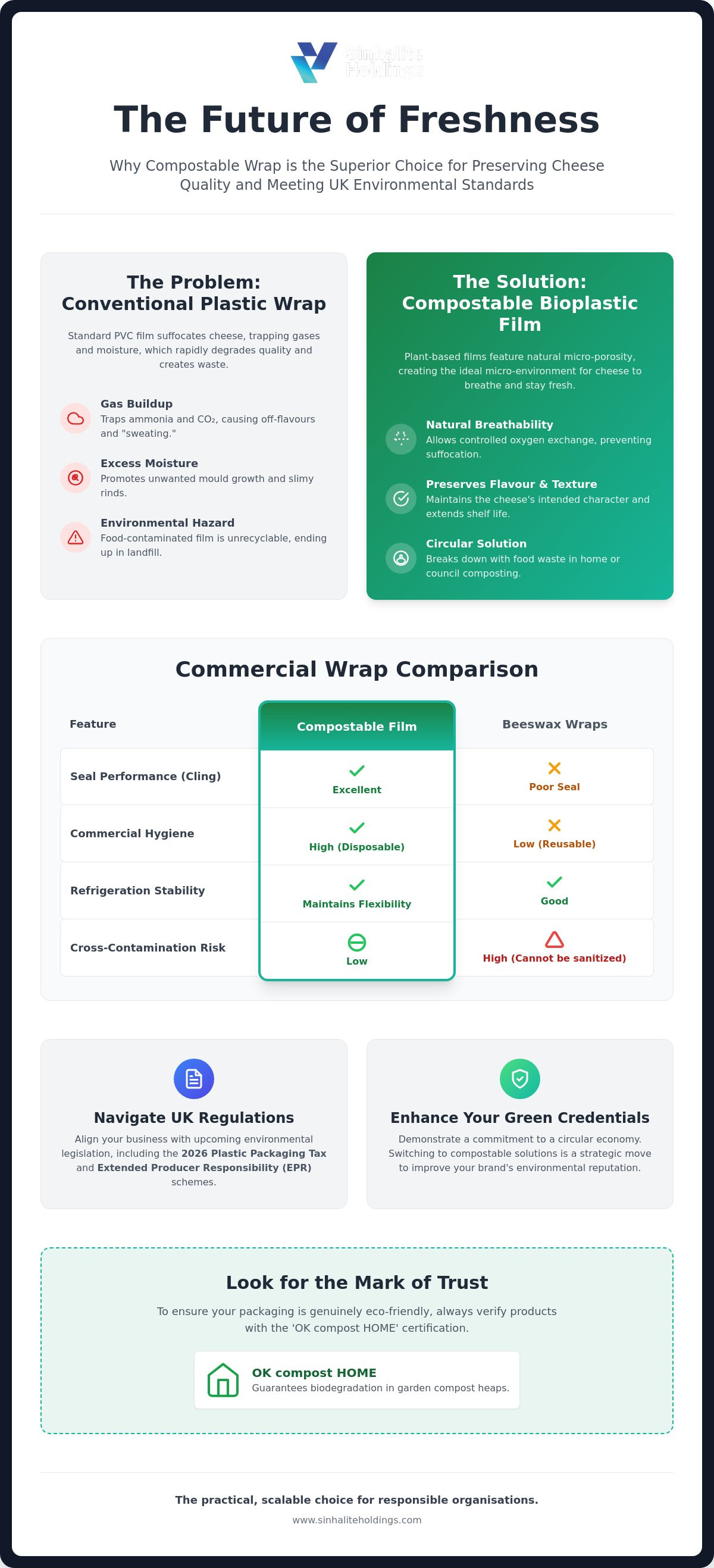
Cheese is, by its very nature, a living product. The microbial cultures responsible for its character and complexity don't simply stop working once a wheel is cut or a wedge is portioned. They continue to respire, releasing gases, primarily ammonia and carbon dioxide, that must be allowed to escape. Trap those gases beneath an impermeable layer of conventional PVC cling film, and the result is predictable: off-flavours develop rapidly, rinds become slimy, and the texture of even a well-aged cheddar deteriorates within days. Understanding the science of cheese storage makes it clear that the material you choose isn't a minor detail; it's the single most consequential decision in preserving product quality.
Compostable food wrap for cheese addresses this problem at a structural level. Plant-based films derived from materials such as polylactic acid (PLA) or thermoplastic starch possess a natural micro-porosity that conventional plastic simply cannot replicate. This breathability allows controlled oxygen exchange while still forming a protective barrier against external contaminants. The cheese can continue its biological processes without suffocation, and the flavour profile is preserved rather than undermined.
To see how compostable cling wrap performs in practice, this review from Pip Magazine offers a useful real-world perspective:
Preventing Mould and Ammonia Buildup
The micro-porosity of compostable films regulates moisture at the surface of the cheese rather than sealing it in. Excess humidity, the primary driver of unwanted mould growth and ammonia accumulation, is gently dispersed rather than concentrated. A cheese wrapped in conventional plastic effectively sits in its own gaseous waste, accelerating spoilage and compressing what should be a generous shelf life into a matter of days. Breathable bioplastic wraps interrupt this cycle, creating a stable microenvironment that keeps the rind intact and the interior flavour clean.
The Environmental Toll of Traditional Cheese Packaging
Plastic film contaminated with cheese oils and fats is, in practical terms, unrecyclable through standard UK kerbside collections. The food residue renders it ineligible for most sorting facilities, meaning it travels directly to landfill or incineration. For hospitality businesses and food retailers facing tightening Extended Producer Responsibility obligations, this creates both a compliance risk and a reputational one. Compostable household clingfilm, by contrast, is designed to enter the composting stream alongside food waste, aligning storage practices with the circular economy principles that UK commercial operators are increasingly required to demonstrate.
Comparing Compostable Food Wrap for Cheese: Film vs. Beeswax vs. Cellulose
Selecting the right compostable food wrap for cheese requires a balance between operational efficiency and ecological integrity. While beeswax wraps are often cited as a primary alternative to plastic, they frequently fall short in professional environments. Beeswax lacks the "memory" of bioplastic films, making it difficult to achieve the airtight seal necessary to prevent hard cheeses from drying out. More importantly, the hygiene requirements for Implementing Sustainable Storage in Your UK Kitchen make reusables problematic. Soft cheeses like Brie or Camembert are high-risk products; because beeswax wraps cannot be sanitised in high-temperature water without melting the coating, they pose a genuine cross-contamination risk that disposable compostable films eliminate.
Performance in low-temperature refrigeration is another critical differentiator. Traditional plastic often becomes brittle or loses its adhesive quality in the cold. High-quality compostable household clingfilm maintains its flexibility and seal at standard fridge temperatures, ensuring that expensive inventory remains protected until the point of service. For UK organisations, this transition isn't just about waste reduction. It's a strategic move to improve green credentials while navigating the financial pressures of the Plastic Packaging Tax and modern EPR schemes.
Why Cling Matters for Cheese Preservation
A perfect seal is essential to prevent the oxidation of fats and the loss of moisture. Modern bioplastic films are engineered to mimic the high-cling properties of PVC, providing a secure barrier that holds its shape even after repeated handling. For those requiring specific data on tensile strength and moisture vapour transmission rates, The Ultimate Guide to Compostable Clingfilm in the UK offers a deep dive into the technical performance of these materials. Achieving a tight wrap ensures that the cheese remains insulated from fridge odours while maintaining its own delicate aromatic profile.
Cellulose Sheets vs. Bioplastic Rolls
While cellulose sheets are excellent for flat applications, they often lack the versatility of bioplastic rolls or compostable food roller bags. Roller bags are particularly useful for bulk portioning, providing a pre-formed barrier that speeds up kitchen workflows. While some wood-pulp films claim high-barrier protection for long-term aging, they can be prone to tearing when stretched over irregular cheese blocks. For most commercial applications, a high-performance compostable clingfilm solution provides the most reliable balance of utility and protection, allowing staff to wrap varied shapes with confidence and speed.
Implementing Sustainable Storage in Your UK Kitchen or Business
Successful implementation of sustainable practices begins with understanding the specific needs of your inventory. For hard cheeses like aged cheddar or parmesan, the primary goal is to prevent moisture loss while allowing the product to breathe. Wrap these blocks tightly, ensuring the film makes direct contact with the surface to prevent air pockets. For soft, bloomy rind cheeses like Brie, a slightly looser wrap or double-layering can help manage the higher rate of gas exchange. By adopting a high-quality compostable food wrap for cheese, businesses can maintain these rigorous standards while ensuring all packaging waste is diverted from landfill.
For councils and large organisations, the transition offers significant logistical advantages. Standardising on compostable materials simplifies waste segregation, allowing used wraps to be discarded directly into food waste caddies alongside organic scraps. This eliminates the need for complex sorting and reduces the volume of general waste sent to incineration. Using compostable caddy bags in conjunction with these wraps ensures a clean, efficient collection process that aligns with modern environmental mandates.
Identifying Genuine Compostable Certifications
Greenwashing remains a significant challenge for UK procurement teams in 2026. Many products are labelled as "biodegradable" without meeting specific timeframes or environmental conditions, leading to contamination in recycling streams. To ensure your kitchen operations remain truly sustainable, it's essential to look for the OK compost HOME certification. Unlike industrial-only standards, this certification guarantees the wrap will break down in domestic composting conditions or local authority food waste collections. This distinction is vital for businesses that lack access to specialised industrial facilities but still wish to achieve zero-waste goals.
The Future of the UK Circular Economy
Transitioning to a high-performance compostable food wrap for cheese is a proactive step toward meeting national waste reduction targets. As the UK moves toward a more integrated circular economy, the role of bioplastics is expanding beyond simple alternatives. Staying informed about future compostable food packaging trends helps organisations stay ahead of regulatory shifts, such as the modulated fees introduced under the 2026 EPR scheme. Investing in these solutions now positions your business as a leader in responsible innovation, ready for a future where plastic waste is an outdated relic of the past.
Advancing Toward a Circular Future in Food Storage
Transitioning to sustainable practices is no longer a matter of idealism; it's a practical necessity for UK businesses navigating the regulatory landscape of 2026. We've established that the biological requirements of cheese demand a storage solution that balances protection with breathability. By selecting a high-performance compostable food wrap for cheese, you ensure that product quality remains high while your operational waste remains low. This choice directly supports the shift away from single-use plastics and aligns with evolving Extended Producer Responsibility mandates.
Certified home-compostable films provide the micro-porosity needed to prevent ammonia buildup and the hygiene security that reusable alternatives often lack. These solutions allow councils and hospitality leaders to meet national waste reduction targets without sacrificing the utility of traditional plastic. Sinhalite Holdings is a UK-based specialist in compostable innovation, offering certified home-compostable solutions designed for both professional and household performance. Making the switch today protects your inventory, your reputation, and the environment simultaneously.
Upgrade your kitchen with Sinhalite's Compostable Household Clingfilm and take a definitive step toward a more responsible, plastic-free future.
Frequently Asked Questions
Can I use compostable cling film for soft cheeses like Brie or Camembert?
Yes, compostable cling film is highly recommended for soft cheeses such as Brie and Camembert. Because these varieties are high risk for cross contamination, using a disposable, breathable bioplastic is more hygienic than reusable wraps like beeswax. The micro porosity of the film allows the cheese to release gases naturally, preventing the rind from becoming slimy. This ensures the delicate flavour profile remains intact while maintaining strict food safety standards.
Does compostable food wrap for cheese actually stick to the bowl or the cheese itself?
Modern compostable food wrap for cheese is engineered to provide a high cling seal that rivals traditional PVC film. It adheres effectively to ceramic, glass, and stainless steel containers, as well as directly to the surface of hard and semi hard cheeses. This performance ensures that air pockets are minimised, which is vital for preventing the fats in the cheese from oxidising. The material's memory helps it hold its shape reliably.
Is compostable wrap safe for long term freezer storage of cheese?
High performance compostable films are perfectly suitable for freezing cheese. Unlike some traditional plastics that become brittle and crack in sub zero temperatures, these bioplastics maintain their structural integrity and flexibility. This durability prevents freezer burn by keeping the cheese airtight and protected from moisture loss. For businesses managing bulk inventory, using a certified compostable solution ensures that long term storage doesn't result in plastic waste that persists for centuries.
What happens if my compostable cheese wrap ends up in a normal bin?
If compostable wrap is disposed of in general waste, it will typically be sent to a landfill or an incineration facility. In a landfill environment, the lack of oxygen prevents the material from breaking down as intended. To support a circular economy, it is essential to dispose of used wrap in a dedicated food waste caddy or home compost bin. This ensures the material is processed into nutrient rich compost rather than adding to pollution.


