What if the "expiration date" on your packaging wasn't a product flaw, but a deliberate, timed return to nature? Understanding the shelf life of compostable bags is essential for any UK business or household looking to move away from traditional plastics without sacrificing daily performance. While these materials are designed to break down eventually, they shouldn't disintegrate in your storage cupboard. Most certified compostable liners offer a reliable lifespan of 6 to 12 months, yet this window depends heavily on how you manage their environment and exposure to the elements.
It's frustrating to reach for a caddy bag only to have it split, or to feel like you're wasting money on stock that has lost its integrity. You deserve a solution that balances ecological responsibility with industrial-grade durability. This 2026 guide explains exactly how long your compostable liners and shopping bags will last and why certain conditions trigger their premature breakdown. We provide practical, science-backed storage tips to extend their usability up to 18 months, giving you the confidence to lead a sustainable transition that makes both environmental and financial sense.
Key Takeaways
- Understand the standard 6 to 12 month window for the shelf life of compostable bags and learn how to identify the early signs of structural decline.
- Discover how environmental factors like humidity trigger the hydrolysis process, causing biopolymers like PLA to break down before they ever reach the soil.
- Master specific storage techniques to protect your inventory; these methods can extend the reliable durability of your products up to 18 months.
- Identify why thin-gauge films like caddy liners require more precise care and environmental control compared to heavy-duty shopping bags.
- Learn how implementing a "First-In, First-Out" inventory system prevents wasted stock and ensures your household or business always has high-performance materials on hand.
What is the Typical Shelf Life of Compostable Bags?
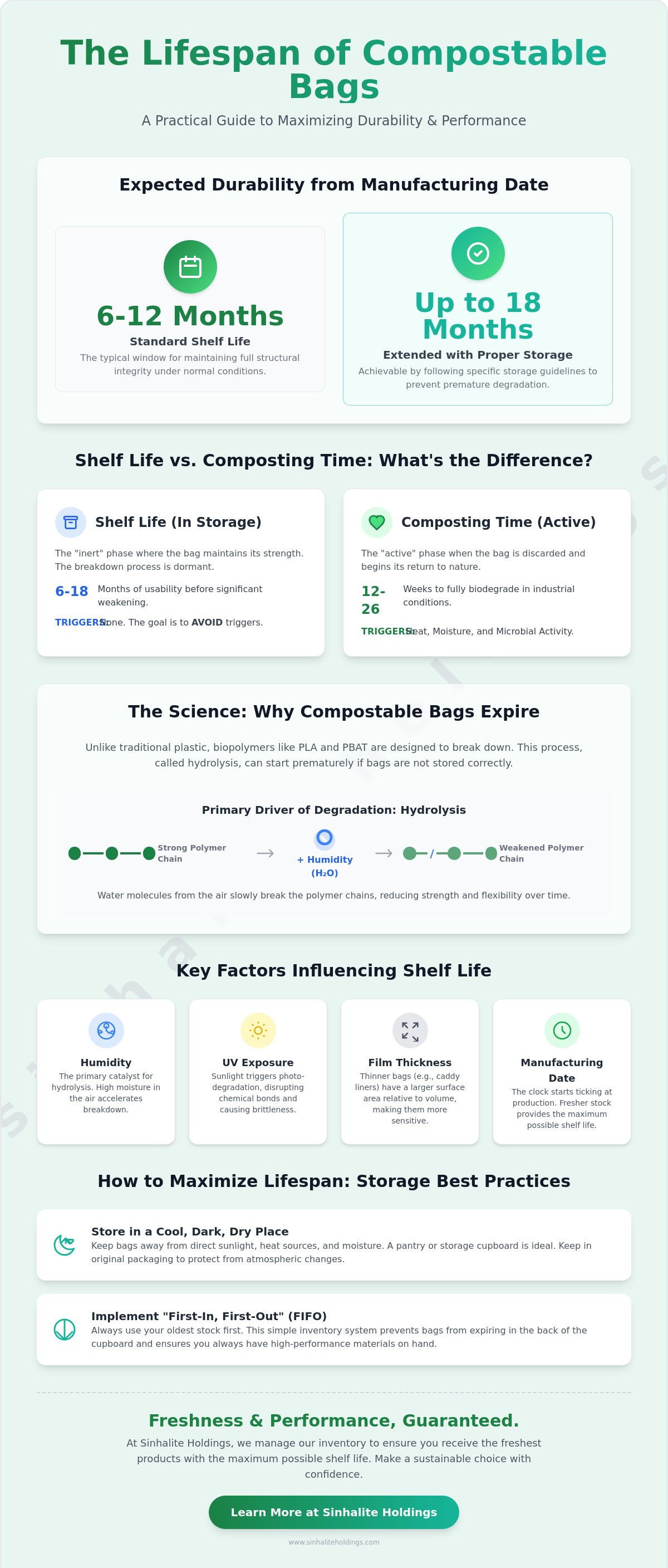
The shelf life of compostable bags refers to the specific duration during which the material maintains its full structural integrity and tensile strength. Unlike traditional plastics that remain chemically stable for centuries, compostable alternatives are designed with a purposeful, timed existence. For the majority of bioplastic products available in the UK, the industry standard for the shelf life of compostable bags is between 6 and 12 months. This timeframe ensures that the bags remain strong enough for daily tasks while remaining capable of meeting the strict EN 13432 biodegradation standards once they reach a composting environment.
A finite lifespan isn't a failure of the product; it's actually a vital indicator of authentic compostability. If a bag could sit in a warehouse for five years without any change in its molecular structure, it likely wouldn't break down efficiently in a composting facility. High-quality materials strike a delicate balance between industrial durability and environmental circularity. By choosing products with a defined window of utility, you're investing in a material that respects natural cycles rather than resisting them.
To better understand how these timelines work in a practical setting, watch this helpful video:
Shelf Life vs. Composting Time: Clearing the Confusion
It's common to confuse the time a bag lasts in a cupboard with how long it takes to disappear in a bin. Shelf life describes the "inert" state of the material. As long as the bags are kept in a dry, dark, and temperature-controlled environment, the biological breakdown process remains dormant. The composting window, which typically spans 12 to 26 weeks in industrial conditions, only begins when the material is exposed to specific triggers: heat, moisture, and microbial activity. Your bags won't simply vanish on the shelf. They require the active environment of a compost heap to fulfill their ecological purpose.
Factors Influencing the "Expiry Date"
Several variables determine how quickly a bag might reach its limit. Material composition is the primary factor. Bags made from cornstarch blends or PBAT (polybutylene terephthalate) react differently to atmospheric moisture than more rigid structures. Thickness also plays a crucial role. A thin compostable cling film or food roller bag has a higher surface-area-to-volume ratio than a heavy-duty refuse sack, making it more sensitive to humidity. Finally, the manufacturing date is paramount. Using fresh stock ensures you receive the maximum possible durability, as the shelf life of compostable bags begins the day they are produced at the factory.
The Science of Degradation: Why Compostable Materials Expire
Understanding why the shelf life of compostable bags is finite requires a look at the molecular level. Unlike petroleum-based plastics, which use long-chain polymers designed for permanence, compostable materials utilise biopolymers like Polylactic Acid (PLA) and Polybutylene Adipate Terephthalate (PBAT). These resins are engineered to be bio-available, meaning they're inherently susceptible to environmental breakdown. This vulnerability is a deliberate design choice that allows the material to return to the earth, but it also means the clock starts ticking from the moment of manufacture.
The primary driver of this expiration is a process called hydrolysis. This occurs when water molecules from atmospheric humidity penetrate the bag's surface and begin to sever the polymer chains. Over several months, these microscopic breaks accumulate, reducing the material's ability to hold weight. While you can't see this happening, it's the reason an old bag might suddenly fail when filled. Additionally, UV exposure triggers photo-degradation, where light waves disrupt chemical bonds, while the gradual evaporation of plant-based plasticisers causes the film to lose its flexibility. This combination eventually leads to the brittleness and splitting often seen in older stock.
The Role of Biopolymers: PLA, PBAT, and Cornstarch
Biopolymer degradation is a programmed molecular weakening that ensures the material doesn't persist in the environment. PLA, often derived from fermented cornstarch, provides the necessary rigidity for items like compostable shopping bags, while PBAT adds the flexibility required for liners. Manufacturers balance these resins to achieve high-performance utility during the useful life of the product. This sophisticated blend ensures that the bag remains strong enough for your weekly shop while remaining fully capable of breaking down in a composting facility.
Environmental Triggers in the UK Household
In a typical UK home, storage locations can inadvertently accelerate these natural processes. Many people store their caddy liners under the kitchen sink, which is often a high-humidity zone due to plumbing and household cleaning activities. This concentrated moisture speeds up hydrolysis significantly. Similarly, the seasonal fluctuations of UK central heating create cycles of expansion and contraction in the material, which can fatigue the polymer chains over time. Even oxygen exposure plays a role; once a roll of compostable film is opened, the increased surface area exposure to air begins a slow oxidative process that can reduce the effective shelf life of compostable bags if they aren't used within the recommended timeframe.
Durability Comparison: Shelf Life by Product Type
Not all compostable products are created equal. A heavy-duty shopping bag and a delicate food wrap serve different purposes, and their physical construction reflects this. The shelf life of compostable bags is largely dictated by the "gauge" or thickness of the material, measured in microns. Thinner films possess a higher surface-area-to-volume ratio, which exposes more of the biopolymer chains to atmospheric triggers like humidity and oxygen. Consequently, a product's intended application directly influences how long it can safely remain in your inventory before its performance begins to diminish.
For UK businesses and households, understanding these variations is the key to effective stock management. While a thick sack might feel indestructible after a year on the shelf, a thin food roller bag might have already begun its molecular transition. Recognising these differences allows for a more strategic approach to sustainable packaging, ensuring that ecological choices never result in operational failures.
Cling Film and Food Wraps
Maintaining the adhesive properties of compostable cling film that actually clings presents a unique engineering challenge. These films are exceptionally thin, often measuring under 10 microns. Over a 6-month period, the plant-based plasticisers that provide flexibility and "tack" can begin to migrate or degrade if the roll is left exposed to air. To preserve these properties, airtight secondary packaging is essential. We recommend keeping rolls in their original boxes and stored in climate-controlled environments to prevent the film from becoming brittle or losing its grip prematurely.
Caddy Liners and Refuse Sacks
Caddy liners and refuse sacks represent the mid-to-high range of durability within the bioplastic category. While a standard caddy liner is designed for rapid breakdown, a heavy-duty refuse sack is built with a higher micron count to withstand significant weight. This increased thickness provides a natural buffer against moisture penetration, often extending the shelf life of compostable bags in this category towards the 12-month mark. When considering how to keep a food waste bin from smelling, the integrity of the liner is paramount. If a liner has exceeded its storage window, its seams may weaken, leading to leaks that compromise kitchen hygiene.
For UK businesses, managing sustainable packaging requires a methodical approach to procurement. Adopting a "First-In, First-Out" (FIFO) system ensures that older stock is utilised before newer arrivals, preventing the accumulation of "expired" materials. It's advisable to order in quantities that match your 6-month consumption cycle rather than stockpiling for multiple years. This pragmatic strategy guarantees that every bag used in your operations meets the highest standards of strength and reliability, reinforcing your commitment to both performance and environmental integrity.
How to Maximise the Lifespan of Your Compostable Bags
Extending the utility of your sustainable materials is a matter of both environmental responsibility and operational efficiency. While the natural breakdown of biopolymers is inevitable, proactive storage management allows you to maintain the full performance of your stock for as long as possible. By treating these products as active biological materials rather than inert plastic, you ensure they remain a reliable tool for your waste management needs. The shelf life of compostable bags is not a fixed countdown, but a window of opportunity that you can actively preserve through mindful handling.
For UK households and businesses, the most effective inventory strategy is the "First-In, First-Out" (FIFO) method. This simple system ensures that the oldest rolls are always utilised before newer arrivals, preventing any single pack from sitting at the back of a cupboard for too long. When you receive a new shipment of compostable garbage bags, place them behind your existing stock. This disciplined approach guarantees that the bags you use today possess the highest possible tensile strength and flexibility.
The "Cool, Dark, and Dry" Rule
Temperature control is the most critical factor in preventing premature degradation. You should avoid "danger zones" in the kitchen, such as cupboards directly above the oven, near a dishwasher, or adjacent to a radiator. These areas experience frequent heat spikes that fatigue the polymer chains. Ideally, keep your bags in a pantry or a utility room where temperatures remain consistent, preferably below 25°C. Additionally, keep the rolls in their original cardboard packaging until they're ready for use. This provides a secondary barrier against light and fluctuating humidity, which are the primary catalysts for the molecular weakening described earlier in this guide.
Identifying and Handling "Expired" Bags
It's important to recognise when the shelf life of compostable bags has reached its limit before you face a failure during use. Bags that are past their prime often exhibit distinct visual and tactile changes. You might notice a slight yellowing of the film, a brittle feel when unrolling, or a fine "dusty" texture on the surface. To confirm their integrity, perform a simple "stretch test" by gently pulling the material between your hands. If the bag snaps or tears immediately without any elastic deformation, the plasticisers have likely evaporated, and the bag is no longer fit for heavy loads.
If you discover a roll of weakened bags, don't throw them into a standard refuse bin. Since they're still 100% compostable, they can still be processed by your local food waste collection or home compost heap. While they may no longer be strong enough to carry 10kg of waste, their chemical composition remains unchanged, and they will still return safely to the soil. For lighter tasks, such as lining a small paper-waste bin, they may still offer some utility, ensuring that no part of your investment is truly wasted.
Sinhalite Holdings: Freshness and Performance Guaranteed
Sinhalite Holdings understands that the utility of circular packaging depends on its freshness. Because these materials are biologically active, we prioritise a streamlined distribution model that ensures our inventory doesn't sit in warehouses for extended periods. This focus on fresh-stock management maximises the shelf life of compostable bags for our clients, providing the full 12-month window of reliability they expect. By choosing a partner dedicated to high-performance standards, you receive products that maintain their integrity from the moment of delivery until they are returned to the earth.
Our sourcing philosophy is rooted in both safety and sustainability. Every material we use is strictly PFAS-free and GMO-free, ensuring that no harmful "forever chemicals" enter the composting stream. We hold prestigious certifications from TUV Austria, including the OK compost HOME and Industrial marks. These are not merely badges; they represent a verified promise that our bags will disintegrate and biodegrade according to the most rigorous global standards. This level of transparency builds the confidence necessary for a successful transition away from traditional plastics.
Our Commitment to Quality Standards
Compliance with the European standard EN 13432 is a non-negotiable aspect of our production. This standard ensures that the material is compatible with UK industrial composting infrastructure, breaking down into CO2, water, and biomass without leaving toxic residues. To learn more about how these innovative materials differ from traditional polymers, you can read our guide on bioplastics. We meticulously test our products to ensure they meet the physical demands of modern life while remaining biologically available for rapid breakdown at the end of their useful life.
Transitioning to a Circular Future
Selecting a specialist provider like Sinhalite Holdings offers a distinct advantage in product longevity. Generalist suppliers often treat compostable items as a niche sideline, which can lead to older stock and diminished performance. We focus exclusively on high-performance compostable solutions. Our expertise is entirely dedicated to the science of biopolymers. We empower UK businesses and households to reduce their plastic reliance without compromising on strength or hygiene. When you align your operations with ethical standards, you deserve a partner that provides the tangible tools to reach those goals. We invite you to explore our range of compostable essentials and discover how durable, fresh, and responsible packaging can transform your environmental impact. The shelf life of compostable bags is a manageable factor when you have a partner committed to excellence in every batch.
Securing Your Sustainable Transition with Confidence
Adopting circular packaging is a significant step toward ecological responsibility. We've explored how the shelf life of compostable bags is a deliberate design feature that balances industrial utility with an environmental return. By prioritising cool, dry storage and implementing a first-in, first-out inventory system, you can ensure your materials remain strong and reliable for their intended lifespan. This proactive approach prevents stock waste and reinforces the integrity of your green initiatives.
Sinhalite Holdings is here to support your journey with fresh, high-performance stock. Our products are 100% plastic-free and PFAS-free, holding both TUV Austria and OK compost HOME certifications. As a specialist UK distributor, we guarantee that our supply chain delivers the durability you need without compromising on ethical standards. Switch to high-performance compostable solutions today to align your daily operations with a vision for a cleaner, more resilient future. Together, we can make responsible practices the new standard for UK excellence.
Frequently Asked Questions
Do compostable bags have an expiry date?
Yes, compostable bags possess a functional lifespan rather than a strict calendar expiry. Most manufacturers recommend using the products within 6 to 12 months of the production date to ensure maximum strength. This finite window is a hallmark of authentic environmental stewardship, as it confirms the material is designed to return to the earth rather than persist indefinitely. Always check the packaging for a batch number or manufacturing date to manage your stock effectively.
Can I use compostable bags after 12 months?
You can often use them beyond a year, but you must expect a reduction in weight-bearing capacity. The shelf life of compostable bags is a guideline for peak performance; after 12 months, the biopolymers may have weakened through natural atmospheric exposure. If you choose to use older liners, it's wise to double-bag or use them only for lighter, dry waste to prevent accidental spills or structural failures in your kitchen.
Why do my compostable bags keep splitting?
Splitting usually occurs when the material has been compromised by environmental triggers like high humidity or excessive heat. If your bags are relatively new, they might have been stored in a "danger zone" such as a cupboard near a kettle or toaster. This exposure triggers the early stages of biodegradation. Choosing high-quality, certified liners ensures you start with the best possible durability, but proper storage remains essential to prevent these premature failures.
Where is the best place to store compostable caddy liners?
The ideal location is a utility room or a pantry that remains at a consistent, room-temperature level. Avoid the common habit of storing liners under the kitchen sink, as this area is prone to dampness and plumbing heat. A dry, elevated shelf in a dark cupboard provides the stable environment needed to preserve the film's integrity. Keeping the bags in their original cardboard box adds an extra layer of protection against the elements.
Will compostable bags melt in a hot kitchen?
Compostable liners won't liquefy, but sustained high temperatures definitely compromise their molecular stability. In a typical UK summer or a busy commercial kitchen, temperatures near hobs can reach levels that soften the plant-based resins. This doesn't cause a literal melt, but it does make the bags feel "stretchy" and significantly less capable of holding heavy food waste. Maintaining a cool storage environment is the best way to safeguard their industrial-grade strength.
How can I tell if my compostable bags are still safe to use?
Safety in this context refers to the bag's ability to hold its contents without failing. You can identify compromised bags by a noticeable change in texture; they often feel "crispy" or leave a slight residue on your fingers. Discoloration, such as yellowing of a white bag, is another clear indicator that the shelf life of compostable bags has been exceeded. If the material feels brittle when unrolled, it's best to use it for lighter tasks.
Does light affect the shelf life of bioplastic bags?
Yes, ultraviolet (UV) light is a primary catalyst for photo-degradation in bioplastics. Even indirect sunlight can slowly break down the chemical bonds that give the bags their flexibility and strength. This is why most professional-grade compostable products are shipped in opaque or cardboard packaging. To ensure your bags last for the full recommended duration, always keep them away from windows and out of direct light until the moment you need to use them.
Can I store compostable bags in the garage or shed?
Storing these materials in an unheated garage or shed is not recommended in the UK. The significant temperature swings and high moisture levels characteristic of our climate can accelerate the breakdown of compostable resins. Frost can make the material brittle, while autumn dampness can trigger the hydrolysis process. For the best results and to ensure your investment remains useful, always store your compostable supplies within the climate-controlled environment of your main building.