
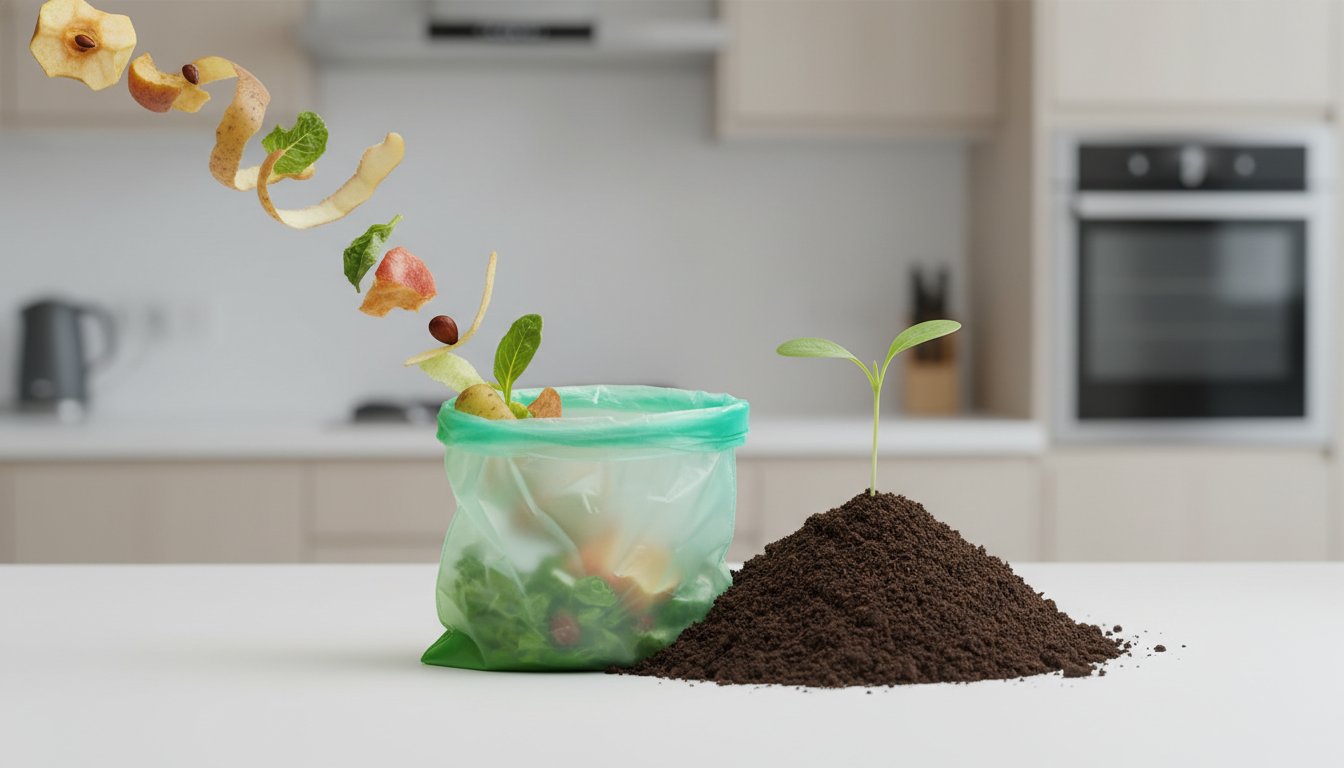
What if the simple act of using a standard plastic carrier bag for your kitchen scraps actually undermines the entire UK food waste mandate scheduled for March 2026? You aren't alone if you've felt tempted to reach for whatever bag is nearby to keep your caddy clean. However, it's vital to understand what happens if you put plastic bags in food waste bin uk, as these non-biodegradable materials often lead to entire batches of organic waste being rejected or shredded into harmful microplastics during processing.
We know that maintaining a hygienic kitchen while navigating the "Simpler Recycling" reforms feels like a balancing act. You want a solution that doesn't split or leak, yet you're committed to reducing your environmental footprint. This guide provides clarity on the 2026 regulations and the essential role of EN 13432 certified compostable liners in a functional circular economy. You'll learn how to keep your bin odour-free while ensuring your food waste successfully transforms into high-quality fertiliser and renewable energy rather than ending up in a landfill.
Key Takeaways
- Prepare for the mandatory March 2026 "Simpler Recycling" reforms that require separate food waste collections across England.
- Understand what happens if you put plastic bags in food waste bin uk and how mechanical screening can still lead to microplastic leakage in our food chain.
- Identify why EN 13432 certified compostable caddy bags are the only responsible choice for protecting soil quality and industrial composting standards.
- Learn how to maintain a clean, odour-free kitchen environment while ensuring your organic waste meets the strict PAS 110 criteria for bio-fertilisers.
The 2026 UK Food Waste Mandate: Can You Use Plastic Bags?
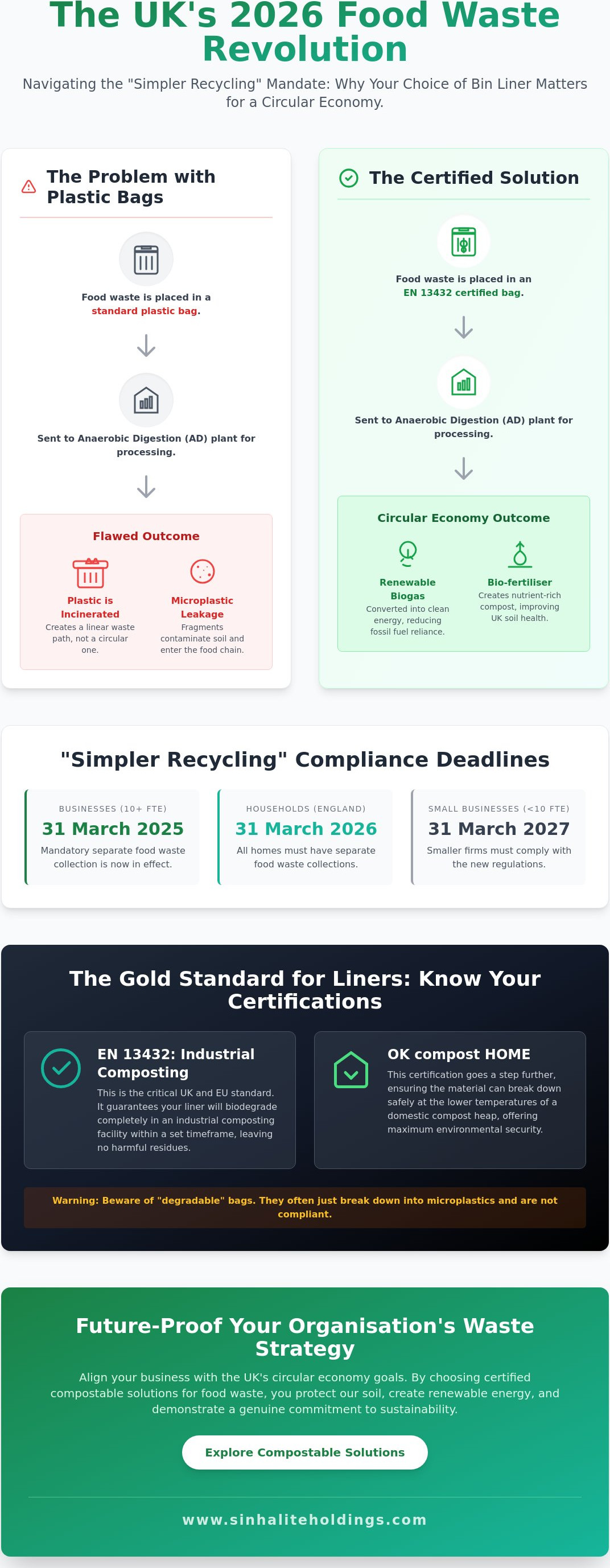
The United Kingdom is currently undergoing a systemic shift in how we manage organic resources. Under the "Simpler Recycling" reforms, which stem from the Environment Act 2021, separate food waste collections will become mandatory for all households in England by 31 March 2026. While this initiative aims to standardise recycling across the country, it often leads to confusion regarding caddy liners. Understanding what happens if you put plastic bags in food waste bin uk is essential for any organisation or resident aiming for genuine environmental stewardship.
Many local councils currently allow the use of standard plastic bags to line food caddies. This is a pragmatic choice designed to increase public participation by making the process cleaner and more convenient. These bags are sent to Anaerobic Digestion (AD) plants, where heavy-duty mechanical screens rip and remove the plastic before the organic matter is processed. However, this "screening reality" is not a perfect solution. The plastic bags removed during this stage are rarely recycled; instead, they are typically sent for incineration as part of Energy from Waste (EfW) processes. This creates a linear waste path for the plastic, failing to support a true circular economy.
Simpler Recycling 2026: What It Means for Businesses
The regulatory landscape is even more immediate for the commercial sector. For businesses in England with 10 or more full-time employees, the deadline for mandatory separate food waste collection was 31 March 2025. Smaller firms with fewer than 10 staff members have until 31 March 2027 to comply. For these entities, using traditional plastic liners presents a significant reputational risk. Businesses that promote sustainability while visibly contributing to plastic contamination in their waste streams may face scrutiny from stakeholders who demand higher environmental standards. Switching to certified compostable caddy bags ensures that the entire waste disposal process aligns with professional ethical commitments.
Anaerobic Digestion vs. Landfill
Anaerobic Digestion is a sophisticated process that converts food scraps into renewable biogas and nutrient-rich bio-fertiliser. This method is far superior to landfill, where food waste rots and produces methane, a potent greenhouse gas. According to UK food waste statistics, approximately 33% of the food waste generated in the UK is still lost to general waste bins. When plastic contaminants enter the AD stream, they can hinder the efficiency of the machinery and reduce the quality of the final fertiliser. By choosing high-quality compostable alternatives, we ensure that food waste becomes a valuable resource rather than a contaminated byproduct.
Plastic vs. Compostable: The Impact on UK Soil Health
While mechanical screening at processing plants attempts to filter out contaminants, it is rarely 100% efficient. When considering what happens if you put plastic bags in food waste bin uk, we must look beyond the facility to the fields where the resulting digestate is spread. Small fragments of traditional plastic often bypass filters, leading to microplastic leakage in our agricultural land. These particles don't disappear; they accumulate in the soil, potentially entering the food chain and degrading the very environment we aim to protect.
The long-term consequence of what happens if you put plastic bags in food waste bin uk is the potential failure to meet the PAS 110 specification. This UK standard sets strict limits on physical contaminants in digestate. If a batch of bio-fertiliser contains visible plastic fragments, farmers may rightfully reject it, forcing the material to be disposed of as waste rather than utilised as a nutrient-rich resource. It's also vital to distinguish between "degradable" bags, which simply fragment into smaller plastic pieces, and certified compostable liners. If you are curious about the material science involved, you can read our guide on do compostable bags contain plastic.
OK compost HOME and EN 13432 Standards
For UK businesses and households, the gold standard for responsible disposal is EN 13432. This certification ensures that the material will fully biodegrade in an industrial composting environment within a specific timeframe without leaving toxic residues. Products marked as "OK compost HOME" offer even greater environmental security, as they are designed to break down at the lower temperatures found in domestic compost heaps. Adopting these certified options as part of the 2026 UK Food Waste Mandate ensures that your liner becomes part of the ecological solution.
The Circular Economy Vision
The traditional "Take-Make-Waste" model of single-use plastic is inherently unsustainable. In contrast, a "Closed Loop" system treats food waste as a valuable biological nutrient. By using plant-based innovation, Sinhalite Holdings provides the practical tools needed to facilitate this transition. Our compostable caddy bags are engineered to provide the strength of plastic while ensuring that every part of the waste stream can return safely to the earth. This proactive approach turns a daily operational requirement into a meaningful contribution to national soil health.
Best Practices for a Sustainable Food Waste Stream
Implementing a successful waste strategy requires more than just compliance; it demands the right tools for daily operations. To avoid the negative outcomes of what happens if you put plastic bags in food waste bin uk, you must select liners that precisely match your caddy dimensions. Using a bag that's too small leads to overstretching and inevitable leaks, while an oversized bag creates unnecessary waste. For high-volume commercial environments, we recommend puncture resistant compostable garbage bags that can withstand the weight of heavy organic matter and sharp bones without failing.
Hygiene is often the biggest concern for staff and residents alike. Maintaining a clean system involves keeping your caddy in a cool, dry location and emptying it every 2-3 days. This frequency prevents the natural breakdown of the compostable material while it's still in your kitchen. If you find that odour is becoming an issue, you can follow our detailed guide on how to keep a food waste bin from smelling to ensure your workspace remains fresh and professional.
Preventing Bag Failure and Leaks
One common cause of liner failure is the disposal of steaming hot food. High temperatures can prematurely trigger the degradation process of plant-based materials. Let your kitchen scraps cool before placing them in the bin to maintain the bag's integrity. Unlike plastic, a breathable compostable liner allows moisture to evaporate. This process keeps the waste drier and significantly reduces the anaerobic conditions that cause foul smells, making the entire collection process more pleasant for everyone involved.
Transitioning Your Organisation to Compostables
Aligning with the 2026 mandate is an opportunity to review your entire procurement strategy. Sinhalite Holdings supports a holistic transition by providing a comprehensive range of SKUs beyond just caddy liners. Our inventory includes compostable aprons and gloves, allowing businesses to eliminate plastic across their entire food handling process. Taking immediate action to secure high-quality sustainable supplies ensures your organisation is prepared for the new regulations while demonstrating a clear commitment to the UK's circular economy goals.
Leading the Transition to a Plastic-Free UK
The upcoming 2026 food waste mandate is more than a regulatory hurdle; it's a profound opportunity to refine our relationship with the environment. As we've discussed, the screening processes at recycling facilities cannot fully eliminate the risks associated with traditional plastics. It's vital to understand what happens if you put plastic bags in food waste bin uk, as these materials often fragment into microplastics that degrade soil quality and threaten the integrity of our food systems. Choosing certified compostable alternatives ensures that every scrap of organic matter is successfully returned to the earth as high-quality fertiliser.
Adopting high-performance tools is the most effective way to align your daily operations with these essential ecological goals. Our products are rigorously tested to meet EN 13432 and OK compost HOME standards, providing the strength and puncture resistance required for both commercial kitchens and busy households. By investing in responsible procurement, you contribute directly to a plastic-free circular economy. Explore Sinhalite’s range of high-performance compostable caddy liners to secure a sustainable future for your organisation. We're here to help you turn a simple waste requirement into a visionary commitment to a cleaner, greener Britain.
Frequently Asked Questions
Can I use plastic carrier bags for my food waste caddy in 2026?
You should avoid using standard plastic carrier bags because they don't support a circular economy. While some local authorities permit them to encourage participation, these bags are mechanically screened out and sent for incineration. This process is energy-intensive and fails to utilise the bag's material. Using certified compostable liners ensures that the entire contents of your caddy can be processed into high-quality fertiliser without leaving synthetic residues behind.
What is the difference between biodegradable and compostable bags for council waste?
The primary difference lies in the certification and the end result of the material. "Biodegradable" is an unregulated term that often describes plastics that simply fragment into smaller, harmful microplastics. In contrast, "certified compostable" bags meet the EN 13432 standard, meaning they break down completely into organic matter. This distinction is vital when considering what happens if you put plastic bags in food waste bin uk, as only compostable options prevent long-term soil contamination.
Will my council refuse to collect food waste if I use my own bags?
Most councils will collect your food waste as long as the liners used don't interfere with their specific processing equipment. However, many local authorities strongly recommend EN 13432 certified liners to maintain the quality of the resulting digestate. If you persistently use non-compliant materials that cause visible contamination, your council may issue a warning or a fixed penalty notice of between £60 and £80. It's always best to verify specific local rules via your council’s website.
Are compostable bags strong enough for commercial food waste?
Modern compostable liners are engineered to provide industrial-grade strength and durability. High-quality plant-based bags are puncture-resistant and can handle heavy, wet waste and sharp objects like bones without leaking or splitting. This performance ensures that businesses can maintain high hygiene standards while transitioning away from traditional plastics. By selecting professional-grade compostable solutions, organisations can meet the 2026 mandate requirements without sacrificing operational efficiency or reliability.


