As of 31 March 2026, the era of inconsistent food waste recycling across England has ended with the implementation of the Simpler Recycling mandate. While universal weekly collections are now the national standard, many households are still left questioning which uk councils accept compostable caddy liners and which might reject a bin for using the wrong material. It's understandable to feel frustrated by the conflicting advice between vague biodegradable labels and actual local authority requirements, especially when your goal is simply to maintain a clean kitchen without contributing to plastic pollution.
We believe that a transition to responsible waste management should be straightforward and empowering for every citizen. This guide clarifies how the 2026 regulations affect your daily routine and explains why meeting the EN 13432 certification standard is the most reliable way to ensure your liners are accepted for industrial anaerobic digestion. You'll discover how to identify high-performance, plant-based solutions that prevent leaks and splitting while satisfying local council rules. We will outline the practical steps you can take to align your household habits with these national changes, supporting a more sustainable and circular future for the UK.
Key Takeaways
- Understand how the 2026 Simpler Recycling mandate standardises food waste collection across England and what this means for your household or business.
- Identify exactly which uk councils accept compostable caddy liners by looking for the EN 13432 certification, which ensures compatibility with industrial processing facilities.
- Learn to distinguish between the Seedling logo and home composting marks to prevent bin rejections and avoid potential local authority fines.
- Discover the practical benefits of switching to high-performance, puncture-resistant compostable bags that eliminate the common frustrations of leaks and splits.
- Adopt scalable, plastic-free waste strategies that align with national environmental goals while maintaining the highest standards of kitchen hygiene.
The 2026 UK Mandate: Why Almost Every Council Now Accepts Compostable Liners
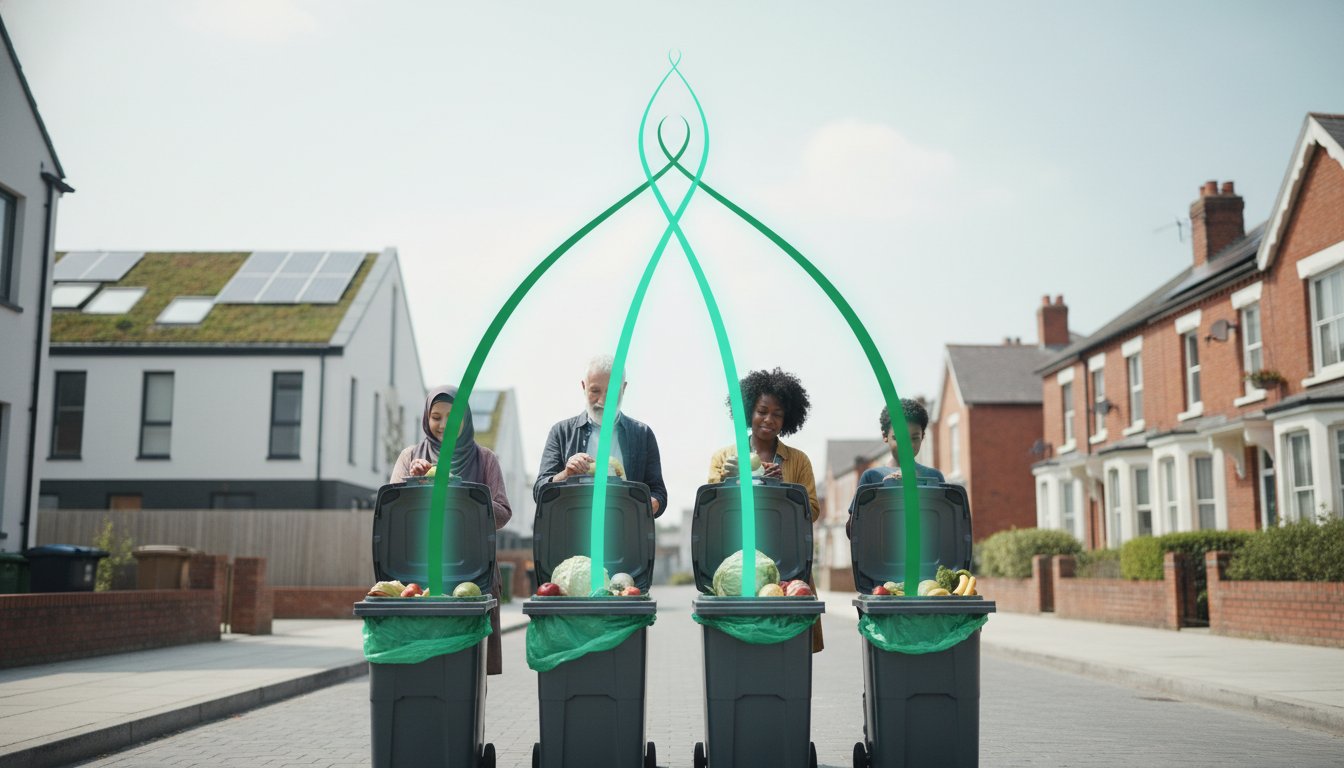
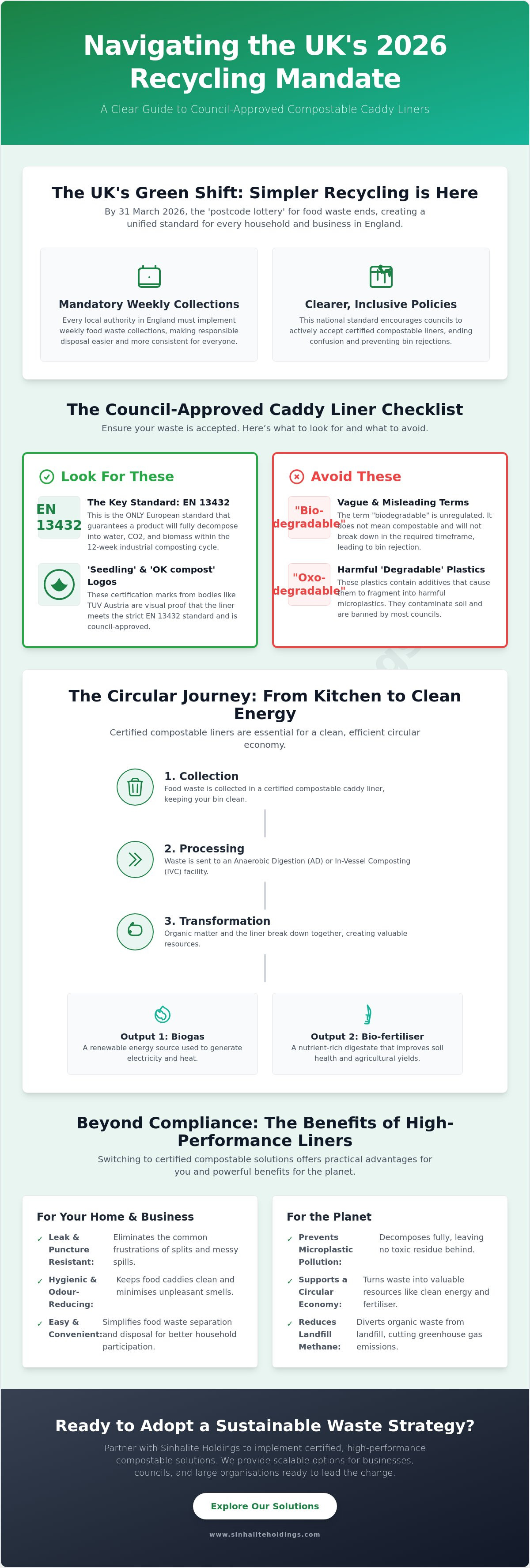
The United Kingdom is undergoing a fundamental shift in how we manage organic waste. The government's Simpler Recycling framework, established under the Environment Act 2021, requires all local authorities in England to implement weekly food waste collections by 31 March 2026. This legislation aims to eliminate the postcode lottery that previously left residents confused about which uk councils accept compostable caddy liners. By standardising these collections, the mandate addresses the significant challenge of food waste in the United Kingdom, ensuring that millions of tonnes of organic material are diverted from landfills each year.
A council-approved caddy liner is defined as a fully compostable bag that undergoes complete biological decomposition into water, CO2, and biomass within a 12-week timeframe. Historically, some local authorities were hesitant to accept these liners due to concerns about contamination or processing limitations. However, modern waste infrastructure has evolved significantly. Most councils now actively encourage the use of certified liners because they improve household participation rates by keeping caddies clean and reducing unpleasant odours. This shift from no liners to compostable-only options is a practical step toward a more hygienic and efficient recycling system.
To better understand how these solutions integrate into modern waste systems, watch this helpful overview:
Simpler Recycling: What it Means for Your Bin
This national policy standardises waste streams across England, Scotland, and Wales to reduce consumer confusion and increase recycling efficiency. By March 2026, weekly food waste collection will be the baseline standard for every household. This shift forces local authorities to adopt clearer, more inclusive policies regarding compostable caddy liners. It ensures that residents can confidently use sustainable alternatives without the fear of their bins being rejected or receiving fines for using incorrect materials.
The Role of Anaerobic Digestion in UK Waste
The transition is largely supported by advancements in Anaerobic Digestion (AD) and In-Vessel Composting (IVC) technology. These facilities are now specifically designed to process certified compostable materials alongside organic waste. When food waste is processed through AD, it creates biogas for renewable energy and nutrient-rich bio-fertiliser. Using high-quality, plant-based liners ensures that this process remains efficient and free from the microplastic contamination associated with traditional single-use plastics, creating a truly circular economy.
How to Identify Council-Approved Caddy Liners: The Compliance Checklist
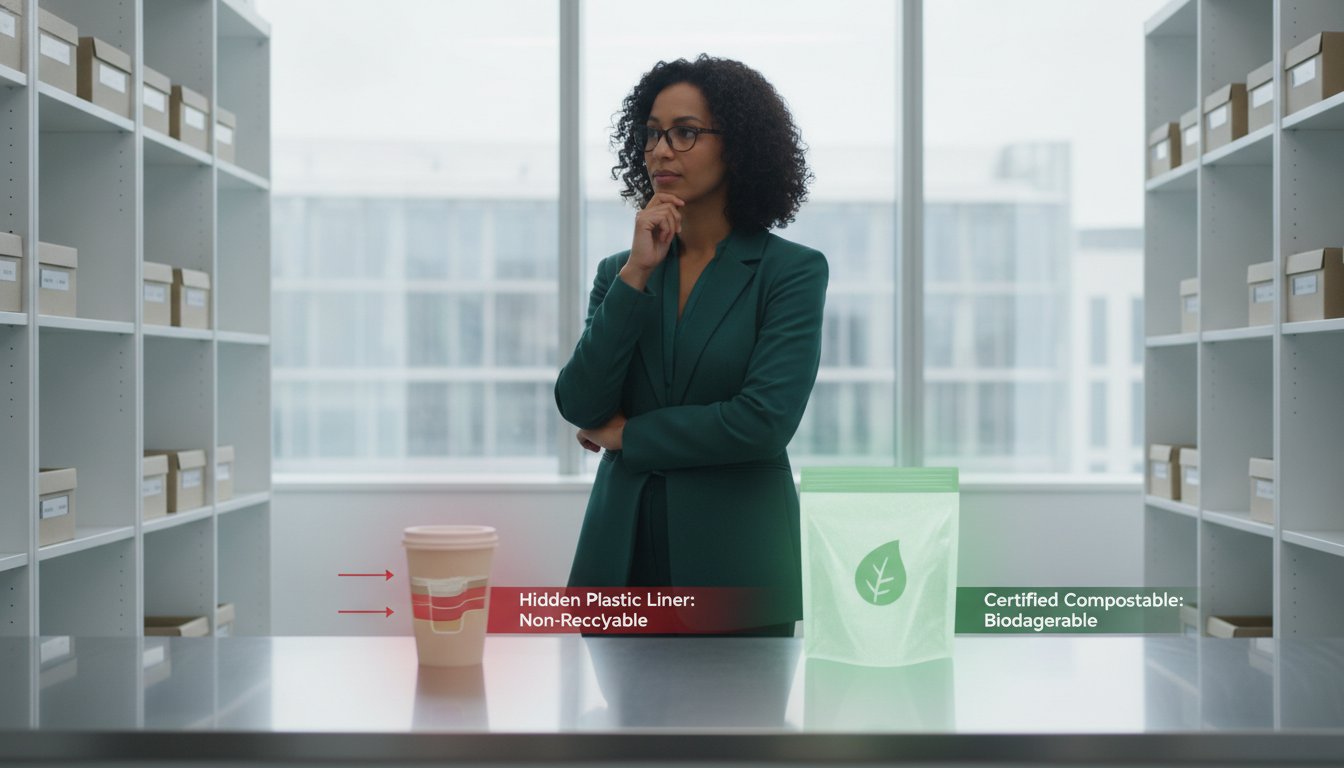
Understanding which uk councils accept compostable caddy liners requires a focus on technical certification rather than marketing claims. While many products use vague eco-friendly language, the EN 13432 standard is the only certification that matters for UK municipal collections. This European standard ensures that the material will break down completely within the specific timeframes of industrial composting and anaerobic digestion facilities. Without this specific code, a bag is likely to be flagged as a contaminant by collection crews, leading to uncollected bins or potential fines.
It is vital to distinguish between different types of degradable materials to avoid bin rejection. Oxo-degradable plastics contain chemical additives that cause the material to fragment into harmful microplastics, whereas true compostable polymers undergo a complete biological transformation into biomass, CO2, and water within industrial processing timeframes. Councils prioritising environmental integrity will always reject oxo-degradable or standard plastic bags because they compromise the quality of the final bio-fertiliser.
Decoding the Symbols on Your Liner Packaging
When selecting liners, look for the TUV Austria 'OK compost' logo, which signifies that the product meets stringent requirements for industrial processing. A common point of confusion for many organisations is do compostable bags contain plastic; the answer lies in the distinction between petroleum-based polymers and plant-derived biopolymers. If your packaging does not clearly display the EN 13432 code or the Seedling logo, it should be disposed of in general waste rather than the food caddy. Ensuring your supply chain uses certified materials is a responsible choice that supports national recycling goals. You can find a range of fully compliant solutions through Sinhalite Holdings to simplify this transition.
Why Councils Reject 'Biodegradable' Supermarket Bags
The term 'biodegradable' is often used as a catch-all phrase that lacks a defined timeframe for decomposition. Many standard supermarket bags labelled as biodegradable are actually designed to break down over years, not weeks, which causes significant operational risks at industrial plants. These non-compliant bags can jam heavy machinery and introduce microplastics into the organic waste stream. Councils are increasingly vigilant about these 'green' alternatives because they undermine the purity of the recycling process, making it essential for residents and businesses to use only specifically marked compostable liners.
Optimising Your Food Waste Strategy with High-Performance Liners
The success of any recycling programme depends on user participation, which is often hindered by the perceived mess of food waste. While residents and facility managers frequently ask which uk councils accept compostable caddy liners, the focus must also remain on the quality of the liner itself. Poor-quality bags that leak or split create a significant 'yuck factor' that discourages consistent recycling and frustrates collection crews. By choosing high-performance, plant-based materials, you can effectively manage organic waste while maintaining a hygienic environment.
Utilising certified liners is a proven method for how to keep a food waste bin from smelling by containing moisture and preventing the buildup of bacteria. This proactive approach not only increases household recycling rates but also ensures that the collected material is of the highest quality for anaerobic digestion. For larger operations, integrating puncture resistant compostable garbage bags into your waste strategy provides the durability needed for heavy commercial loads without compromising on environmental standards.
Strength and Durability: Preventing the 'Split'
Material thickness is a critical factor in preventing the splitting that leads to street littering during collection. Sinhalite’s liners are engineered with advanced biopolymers that provide exceptional tear resistance while remaining fully breathable. This breathability allows moisture to evaporate, which keeps the waste drier and significantly reduces the weight and odour of the caddy. It's a functional solution that bridges the gap between environmental responsibility and everyday practicality.
Transitioning Your Business to Compostable Operations
Businesses must act now to align with the 2026 mandate and meet their evolving ESG commitments. Sinhalite Holdings provides the tangible tools required for this transition, offering a range of certified products that replace traditional plastics in commercial kitchens and offices. Because knowing which uk councils accept compostable caddy liners is only part of the challenge, we offer solutions that are guaranteed to meet national standards. Adopting a holistic strategy that includes commercial compostable cling film UK alongside our caddy liners ensures your entire operation is ready for a plastic-free future. We invite you to explore our range of council-compliant compostable liners to begin your transition toward more responsible waste management today.
Leading the Transition to Plastic-Free Waste Management
The 2026 Simpler Recycling mandate represents a significant milestone in the United Kingdom's journey toward environmental stewardship. By standardising food waste collections, the government has simplified the landscape for households and businesses alike. Understanding which uk councils accept compostable caddy liners is now less about local guesswork and more about adhering to the rigorous EN 13432 certification. Choosing the right material ensures your waste is processed efficiently into renewable energy while preventing microplastic contamination in our soil. This transition isn't just a regulatory requirement; it's a collective opportunity to improve the health of our local ecosystems.
As a specialist UK supplier, we're dedicated to providing high-performance tools that make this transition seamless and professional. Our liners feature advanced puncture-resistant technology to eliminate the leaks and odours that often hinder recycling efforts. You can confidently upgrade to certified, council-compliant compostable liners from Sinhalite Holdings to meet your operational needs and ESG goals. Together, we can transform waste from a burden into a resource, fostering a cleaner and more resilient future for every community across the nation.
Frequently Asked Questions
Can I use any biodegradable bag for my council food waste caddy?
No, you shouldn't use generic biodegradable bags because they often lack the technical ability to break down within industrial processing timeframes. To understand which uk councils accept compostable caddy liners, it's essential to distinguish between "biodegradable" and "compostable" labels. Most local authorities only accept liners that meet the EN 13432 standard, as these ensure the material fully decomposes without leaving harmful microplastic residues in the final bio-fertiliser or compost.
What happens if I use the wrong type of liner in my green bin?
Using an unapproved liner typically leads to your bin being rejected and left uncollected by the waste disposal team. Collection crews are trained to spot non-compliant materials that could contaminate the organic waste stream or damage heavy machinery at anaerobic digestion plants. Under the 2026 Simpler Recycling framework, local authorities also have the power to issue fixed penalty notices to those who repeatedly fail to follow specific waste container guidelines.
Are compostable liners mandatory for food waste recycling in 2026?
There's no national mandate requiring households to use liners; however, the 2026 legislation makes separate weekly food waste collections a legal requirement for all councils in England. While you can technically place food waste directly into your caddy, most people find that using a certified liner is the most hygienic and practical way to participate. These solutions prevent unpleasant odours and moisture buildup, making the recycling process much more efficient for both residents and collection crews.
Where can I find a list of UK councils that provide free compostable liners?
You must check your specific local authority’s website, as there's no centralised national list of councils that provide free liners. While some authorities distribute a limited supply of bags annually or offer vouchers, many now require residents and businesses to source their own. Verifying your local rules is the only way to confirm which uk councils accept compostable caddy liners and whether they offer any financial support or specific brand recommendations for your area.
How can I tell if a caddy liner is officially EN 13432 certified?
Official certification is indicated by the presence of the "Seedling" logo or the TUV Austria "OK compost INDUSTRIAL" mark on the product packaging. These symbols are usually accompanied by a unique manufacturer registration number, confirming that the liner has passed rigorous testing for industrial composting environments. If a bag only uses vague terms like "eco-friendly" or "green" without these specific logos and the EN 13432 code, it isn't suitable for your council's food waste collection.