The most significant threat to your organisation’s 2026 sustainability targets isn't the plastic you can see, but the 'stealth' polymers buried deep within your daily operations. With the Plastic Packaging Tax now at £228.82 per tonne, the financial cost of overlooking these materials is as substantial as the environmental impact. Many UK procurement teams are finding that avoiding hidden plastics in products is increasingly difficult due to vague supplier claims and the prevalence of non-certified "biodegradable" materials in canteens and maintenance supplies.
We understand that transitioning to a circular economy requires more than just good intentions; it demands precision and reliable alternatives. This guide offers a clear audit framework to help your business identify hidden risks and move toward true compliance with 2026 ESG standards. You'll learn how to replace high-risk items with high-performance, certified compostable solutions, such as heavy-duty garbage bags and industrial-strength clingfilm, ensuring your operations remain both responsible and efficient.
Key Takeaways
- Understand how stealth polymers in seemingly organic materials shed microplastics into the ecosystem and impact your ESG reporting.
- Learn a systematic approach to avoiding hidden plastics in products by identifying polyethylene linings in canteen disposables and PVC in traditional storage films.
- Discover high-performance alternatives like certified compostable clingfilm and heavy-duty garbage bags that maintain industrial standards without environmental compromise.
- Master the verification process for international standards such as TUV Austria and OK compost HOME to eliminate greenwashing from your supply chain.
- Implement a scalable "Compostable First" procurement strategy to align your organisation with 2026 UK circular economy targets and tax regulations.
Understanding the Impact of Hidden Plastics in Commercial Environments
Hidden plastics are synthetic polymers embedded within seemingly organic materials or applied as invisible coatings to provide water resistance and structural integrity. Stealth polymers are synthetic resins used to enhance durability in traditional paper products. Because these materials are often visually indistinguishable from natural fibres, they frequently bypass standard recycling streams and contaminate organic waste. Successfully avoiding hidden plastics in products requires a shift in procurement perspective from surface-level aesthetics to deep material transparency.
These materials don't simply vanish once they leave your facility. As they degrade, they break down into persistent fragments that enter the environment. Understanding what are microplastics is essential for any organisation auditing its ecological footprint. These particles shed into water systems and soil, creating a long-term liability that traditional waste management cannot easily resolve. By identifying these stealth materials early, businesses can prevent the systematic release of synthetic pollutants into the circular economy.
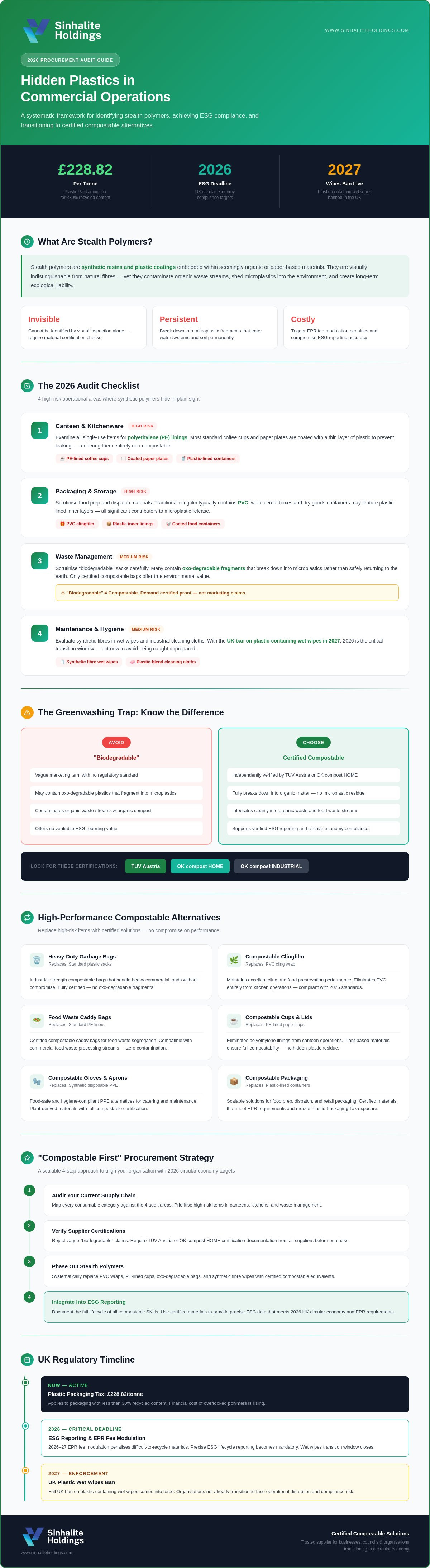
The 2026 UK regulatory environment has made this identification a financial necessity. With the Plastic Packaging Tax now set at £228.82 per tonne for packaging with less than 30% recycled content, the cost of overlooked polymers is rising. Additionally, the 2026-27 Extended Producer Responsibility (EPR) fee modulation penalises the use of difficult-to-recycle materials. Organisations must now provide precise ESG reporting that accounts for the entire lifecycle of their consumables, making the transition to certified alternatives a core business requirement.
The Business Case for Identifying Stealth Polymers
Eliminating hidden plastics isn't just a compliance exercise; it's a strategic advantage. Companies that remove stealth polymers from their supply chains strengthen their green credentials and align more closely with modern circular economy principles. Transitioning to high-performance compostable alternatives, such as certified caddy bags or heavy-duty garbage bags, allows for streamlined waste processing. This proactive approach leads to long-term cost savings in waste disposal and protects the brand from the reputational risks associated with greenwashing.
The 2026 Audit Checklist: Identifying Hidden Plastics in Your Operations
To achieve true environmental stewardship, organisations must look beyond the obvious. A systematic audit is the only reliable method for avoiding hidden plastics in products and ensuring your procurement aligns with 2026 circular economy standards. This checklist targets high-risk operational areas where synthetic polymers often hide in plain sight.
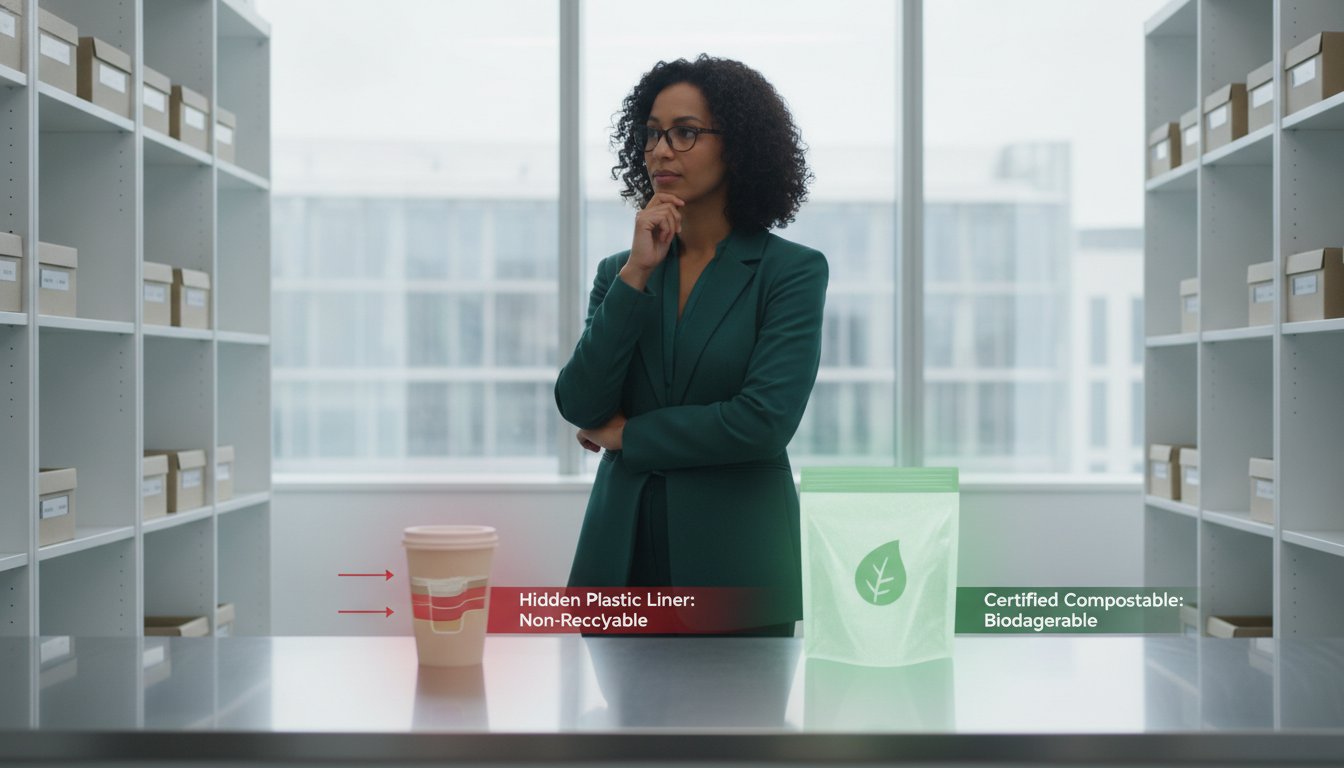
- Audit Point 1: Canteen and Kitchenware. Examine all single-use items for polyethylene (PE) linings. Most standard coffee cups and paper plates are coated with a thin layer of plastic to prevent leaking, which renders them non-compostable.
- Audit Point 2: Packaging and Storage. Scrutinise the materials used in food prep and dispatch. Traditional clingfilm often contains PVC, while cereal boxes and dry good containers may feature hidden plastic-lined inner layers. When identifying sources of microplastics, these coatings are significant contributors to environmental degradation.
- Audit Point 3: Waste Management. Scrutinise "biodegradable" sacks. Many traditional suppliers offer bags that contain oxo-degradable fragments, which break down into microplastics rather than returning to the earth.
- Audit Point 4: Maintenance and Hygiene. Evaluate synthetic fibres in wet wipes and industrial cleaning cloths. With the UK ban on plastic-containing wet wipes scheduled for 2027, 2026 is the critical year for transitioning to natural fibre alternatives.
Spotting Plastic in Food Service and Supply Chains
Food preparation areas are often the primary source of stealth polymers. To ensure your kitchen operations are truly sustainable, you should recognise the difference between vague "biodegradable" claims and certified compostable solutions that meet UK standards. A responsible procurement policy should replace traditional PVC wraps with compostable cling film that actually clings, providing the performance you need without the plastic legacy. Switching to Sinhalite Holdings' range of certified compostable commercial products ensures that your high standards of utility and strength are never sacrificed for the sake of sustainability.
Strategic Steps to Transition Toward a Plastic-Free Future
Identifying the problem is only the first step in a professional environmental strategy. To ensure your organisation is truly avoiding hidden plastics in products, you must adopt a rigorous verification process for all incoming materials. This begins with demanding third-party certifications such as TUV Austria. These standards provide the necessary assurance that materials will fully return to the earth without leaving synthetic residues or chemical pollutants behind.
Implementing a "Compostable First" procurement policy creates a clear mandate for all single-use items across your facility. This policy should be supported by ongoing staff training to help teams differentiate between traditional polymers and plant-based alternatives. Proper disposal is critical because mismanaged waste leads to contamination in organic streams, which can undermine your entire circular economy effort. Understanding the health risks of hidden plastics underscores the urgency of this transition for both employee wellbeing and wider environmental safety.
Performance remains a non-negotiable factor for commercial operations. Partnering with specialist suppliers ensures that your transition doesn't compromise industrial efficiency. For instance, moving to puncture resistant compostable garbage bags ensures that heavy-duty waste management remains reliable while meeting your 2026 ESG targets. High standards of utility and strength are achievable when you choose the right materials.
Implementing Certified Compostable Solutions
Successfully switching business to sustainable packaging requires a deep understanding of international labels. You should specifically look for the OK compost HOME certification, which guarantees that products break down in lower-temperature environments. Sinhalite Holdings acts as a dedicated partner in this journey, providing scalable, plastic-free alternatives that empower UK organisations to lead the way toward a cleaner, more resilient future.
Leading the Transition to a Plastic-Free UK Economy
The journey toward a circular economy is built on transparency and precise material choices. By implementing a systematic audit of your supply chain, you move beyond surface-level sustainability and address the systemic risk of stealth polymers. We've seen that avoiding hidden plastics in products requires a combination of rigorous certification checks and the adoption of high-performance alternatives that don't compromise on industrial strength. From heavy-duty refuse sacks to industrial clingfilm, the tools for a responsible transition are already within reach.
Sinhalite Holdings is your dedicated partner in this evolution. As a specialist UK supplier, we provide fully certified OK compost HOME and TUV Austria products that meet the highest standards of durability and environmental integrity. We're proud to be trusted by businesses and councils across the country for sustainable waste management solutions that deliver real impact. It's time to align your operations with 2026 ESG targets and eliminate the hidden costs of synthetic waste.
Upgrade your organisation to certified compostable solutions with Sinhalite Holdings and take a proactive step toward a cleaner, more resilient future. Together, we can transform commercial waste into a valuable resource for the natural world.
Frequently Asked Questions
Do all paper coffee cups contain hidden plastics?
Most conventional paper coffee cups feature a polyethylene (PE) lining to ensure the vessel remains waterproof and structurally sound. While the exterior appears to be organic paper, this internal coating is a synthetic polymer that prevents the cup from being composted or easily recycled. Transitioning to certified compostable cups or reusable systems is the only way to ensure your organisation is truly avoiding hidden plastics in products within the canteen environment.
How can I tell if a "biodegradable" bag actually contains plastic?
The term "biodegradable" is often used as a marketing catch-all and doesn't guarantee the absence of synthetic polymers. To verify a product’s integrity, you should look for specific certifications such as TUV Austria or OK compost HOME. These labels confirm the material will break down fully into organic matter. Without these certifications, a bag may simply be an oxo-degradable product that fragments into persistent microplastics rather than returning to the earth.
Are there hidden plastics in commercial-grade clingfilm?
Standard commercial-grade clingfilm is typically manufactured from Polyvinyl Chloride (PVC) or Low-Density Polyethylene (LDPE). These are traditional plastics that can't be composted and often contaminate recycling streams. Modern innovation has led to high-performance alternatives, such as certified compostable clingfilm. These products provide the necessary stretch and seal for food safety while adhering to circular economy principles and avoiding hidden plastics in products used for food storage.
What is the UK Plastic Packaging Tax, and does it apply to hidden plastics?
As of April 2026, the UK Plastic Packaging Tax is set at £228.82 per tonne for plastic packaging containing less than 30% recycled content. This tax applies to all plastic components within a packaging solution, including hidden linings, coatings, and laminates. Organisations that fail to identify these stealth polymers face increased operational costs and potential compliance risks under the Extended Producer Responsibility (EPR) framework.