
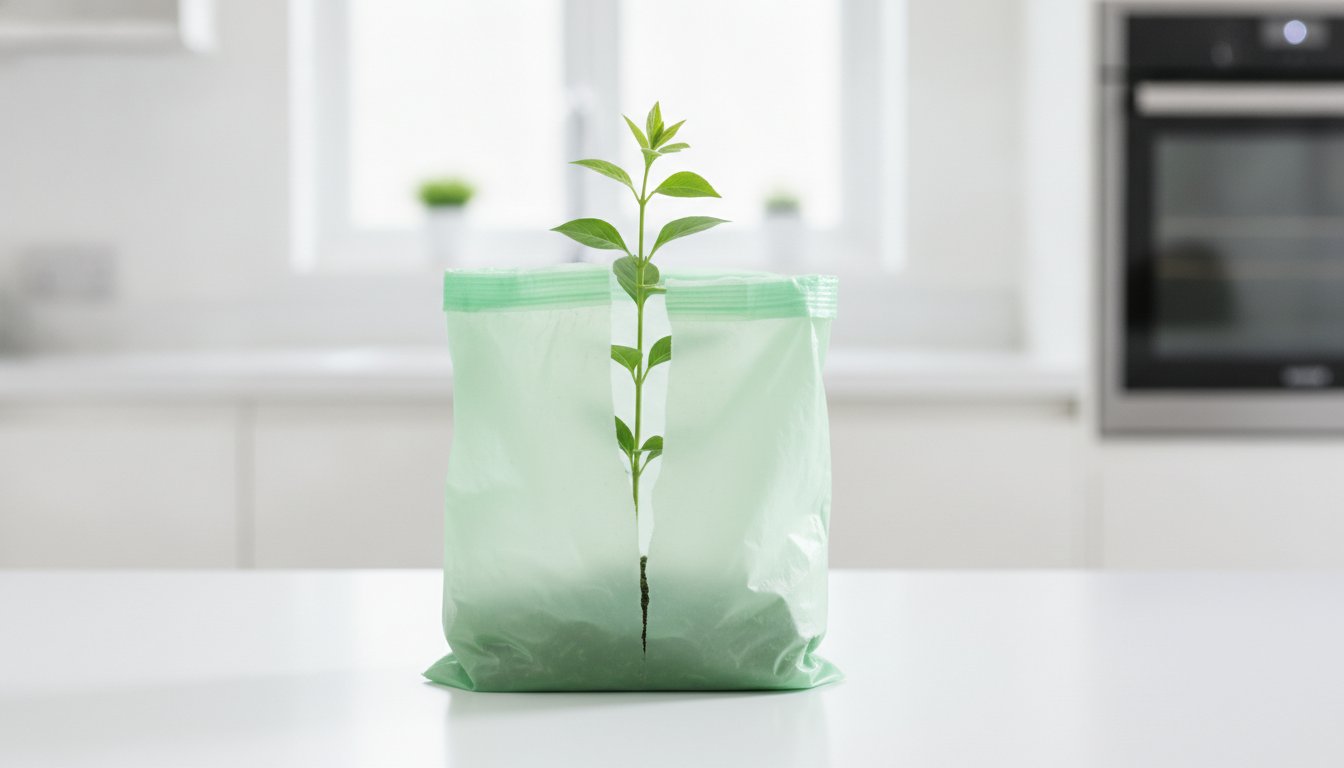
A splitting compostable bag isn't necessarily a sign of product failure; rather, it is often evidence of a high-performance biological material reacting to its immediate environment. If you've ever stood over a messy food waste caddy and wondered, "why are my compostable bags splitting when I'm trying to do the right thing?", you are certainly not alone. Many businesses and organisations feel that transitioning to sustainable alternatives means sacrificing the industrial durability they once expected from traditional plastics.
We understand the frustration of wasted resources and the logistical headaches caused by compromised liners. However, achieving a leak-proof and efficient waste system doesn't require a return to harmful single-use plastics. This guide will help you discover the scientific reasons behind bag failure and provide practical strategies to maintain liner integrity. We will debunk five common myths and share expert tips for 2026 to ensure your sustainable choices remain both high-performing and environmentally responsible as we move toward a circular economy.
Key Takeaways
- Understand the biological process of hydro-biodegradation and how plant-based starches react differently to moisture than traditional fossil fuel polymers.
- Identify the specific environmental triggers behind why are my compostable bags splitting; focusing on the impact of heat and liquid waste on liner shelf life.
- Discover practical storage strategies that prevent premature degradation and ensure your compostable garbage bags maintain their integrity during use.
- Learn how to evaluate technical specifications, such as micron thickness and certifications, to choose the most durable liners for commercial food waste management.
- Gain the expert knowledge needed to transition away from single-use plastics with confidence that your sustainable alternatives will perform reliably.
The Science of the Split: Why Compostable Liners Behave Differently than Plastic
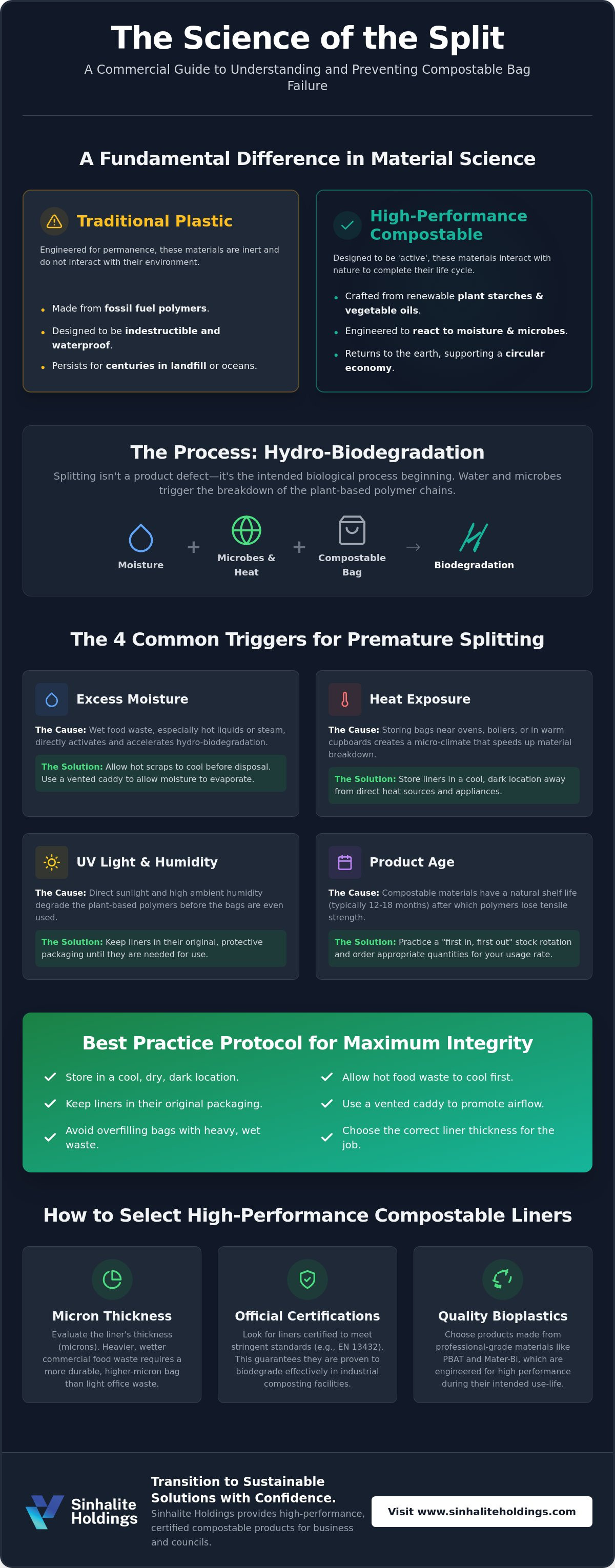
Traditional plastics are engineered for immortality. They rely on fossil fuel polymers to create carbon chains that persist in the environment for centuries. In contrast, compostable solutions are "active" materials. They are crafted from plant starches and vegetable oils specifically designed to return to the earth. This fundamental difference in chemistry is the primary reason behind the common query: why are my compostable bags splitting? While a plastic bag remains inert, a compostable liner is constantly interacting with its surroundings.
When these liners encounter moisture, a process known as hydro-biodegradation begins. This isn't a manufacturing defect; it's a programmed biological response. Water molecules penetrate the material, triggering the breakdown of polymer chains. Understanding the Science of Bioplastics reveals that these items are engineered to be sensitive to their environment. A bag that stays perfectly intact despite being filled with wet organic waste would likely fail to meet stringent UK composting standards, as it would lack the ability to break down in a commercial facility.
Myth: Compostable Bags are Just Low-Quality Plastic
Many organisations mistake biological activity for poor quality. Professional-grade bioplastics, such as PBAT and Mater-Bi, are engineered for high performance during their intended use-life. If a liner never showed signs of weakening when exposed to moisture, it would suggest the presence of permanent synthetic binders. These binders are exactly what we aim to eliminate to support a circular economy. While durability is a priority, success also depends on waste management. Learning how to keep a food waste bin from smelling can help you manage the moisture levels that often lead to premature splitting.
The Role of Micro-Organisms in Early Degradation
Composting is a living process that doesn't wait for a processing plant to begin. The bacteria and heat present in food scraps act as a catalyst, starting the degradation process inside your kitchen or warehouse. Certain "hot spots" accelerate this. Storing your compostable caddy bags near a warm oven, a dishwasher, or under-sink pipes creates a humid micro-climate that weakens the material. This heat-induced microbial activity is a major factor in why are my compostable bags splitting before they are even collected.
4 Common Reasons Your Compostable Bags Are Tearing (and How to Stop It)
Premature failure usually stems from environmental factors rather than manufacturing flaws. If you find yourself asking why are my compostable bags splitting; the answer often lies in the interaction between the liner and its surroundings. Unlike fossil fuel based plastic, these materials are sensitive to heat, moisture, and time. They are designed to react to their environment, which is exactly what makes them a responsible choice for the planet.
Wet food waste acts as a direct catalyst for the breakdown of polymer chains. When combined with heat, such as storing bags in a warm cupboard next to a boiler or oven, the shelf life of the product drops significantly. High humidity and UV light can also degrade the structural integrity of the bags before they even leave the roll. Finally, compostable items have a natural shelf life, typically 12 to 18 months. Beyond this point, the plant-based polymers begin to lose their tensile strength. Ensuring your liners meet established EPA compostable standards ensures they are designed for performance, but management of the storage environment remains vital.
Managing Moisture and Airflow in Your Caddy
Allowing food scraps to cool before disposal is a simple yet effective way to protect the liner. Hot steam creates a "sauna effect" inside the bin, which weakens the bag's base. Using a vented caddy allows moisture to evaporate, reducing the liquid buildup that leads to leaks. Proper airflow also helps in learning how to stop compostable liners sticking to the bin, which prevents the material from tearing when you lift it out for collection. If you need a more robust solution, switching to high-quality compostable garbage bags from a trusted partner can provide the extra strength required for heavy organic loads.
The Professional Storage Protocol
Keep liners in a cool, dark, and dry location to preserve the integrity of the plant-based polymers. For commercial entities managing larger volumes, we recommend the "First-In, First-Out" (FIFO) method. By using your oldest stock first, you ensure that no roll exceeds its intended shelf life, maintaining maximum puncture resistance across your entire waste management system. This methodical approach helps clarify why are my compostable bags splitting and provides a clear path to preventing it in the future.
Selecting High-Performance Compostable Solutions for Your Home or Business
Choosing the right liner is a strategic decision that balances environmental breakdown speed with functional durability. When organisations ask why are my compostable bags splitting, the answer often lies in a mismatch between the bag's technical specifications and its intended use. Understanding the distinction between 'OK compost HOME' and 'Industrial' certifications is the first step toward a more reliable waste system. Home-certified bags are designed to degrade at lower temperatures, making them thinner and more reactive. Industrial-certified liners are built for the high-heat environments of commercial facilities, often offering the increased density required for heavy-duty garbage bags.
The physical strength of a liner is measured by its micron thickness. For commercial entities or households with significant organic waste, a higher micron count provides the puncture resistance needed to prevent tears from sharp-edged food scraps. Specialist UK suppliers understand these nuances, ensuring that products are engineered to withstand local collection cycles. By selecting a bag with the appropriate density for your specific waste stream, you can maintain a clean, leak-proof food waste caddy without compromising your sustainability commitments.
Verifying Quality: What to Look for on the Box
Reliable performance is guaranteed by specific international standards. Always look for the Seedling logo or TUV Austria certification, which confirms the material meets EN 13432 requirements. While many people ask do councils provide food waste bags, these standard-issue items are often designed for cost-efficiency rather than industrial-strength resilience. Investing in secondary market bags from specialists ensures you receive a product with the tensile strength needed to answer the question of why are my compostable bags splitting once and for all.
The Sinhalite Advantage: Engineered for Resilience
Sinhalite caddy bags and garbage bags represent the intersection of modern innovation and natural processes. We engineer our products to withstand the rigours of both commercial and domestic waste management, providing a dependable tool for those transitioning away from plastic. Our commitment to a circular economy is reflected in our use of high-quality, plant-based materials that offer superior performance. By choosing a solution designed for strength, you can have full confidence that your sustainable choices are practical, scalable, and built to last.
Advancing Toward a Plastic-Free Future with Confidence
Transitioning to sustainable waste solutions represents a significant commitment to environmental stewardship and long-term systemic change. We've established that understanding the biological nature of bioplastics is the primary key to maintaining a clean and efficient waste management system. By proactively managing moisture levels and optimising storage conditions, you ensure that your environmental goals don't compromise operational performance. Addressing the specific environmental factors behind why are my compostable bags splitting allows your organisation to move beyond the frustration of messy clean-ups and embrace a truly circular economy with total confidence.
Choosing a dedicated ally who understands the technical demands of UK waste collection is essential for scalable success. Sinhalite Holdings provides the engineered resilience needed for both commercial and domestic applications. Our liners are TUV Austria and OK compost HOME certified, ensuring they meet the highest standards of global corporate reliability while offering high puncture resistance. Switch to resilient, UK-certified compostable bags from Sinhalite Holdings today to secure a cleaner, greener outlook for your operations. We're here to help you prove that responsible innovation is both practical and advantageous for a better future.
Frequently Asked Questions
Can I double-up compostable bags to prevent splitting?
Doubling up compostable bags provides a secondary barrier, but it's an inefficient use of resources that doesn't resolve the underlying issue of moisture buildup. Instead of using two liners, we recommend managing the internal environment of your bin through better ventilation or by allowing hot food scraps to cool. This approach ensures you aren't wasting high-quality plant-based materials while still achieving a clean, leak-proof food waste caddy for your organisation.
How long should a compostable bag last before it starts to break down?
A high-quality compostable bag typically maintains its structural integrity for 12 to 18 months when stored correctly in a cool, dark environment. Once in active use with organic waste, the degradation process begins within a few days due to bacterial activity and moisture. This biological reactivity is a primary factor in why are my compostable bags splitting when left in a caddy for too long; as the material starts its intended return to nature.
Are thicker compostable bags better for preventing leaks?
Increased micron thickness directly correlates with higher puncture resistance and tensile strength, making thicker bags more resilient against sharp or heavy organic waste. While thickness helps prevent physical tears during handling, it doesn't stop the natural chemical process of hydro-biodegradation. For heavy-duty commercial applications, choosing a thicker garbage bag ensures the material can withstand industrial rigours while still meeting essential UK composting standards for a truly sustainable waste management solution.
What happens if I use a compostable bag for regular non-organic rubbish?
Using compostable liners for general non-organic waste won't harm your operations, but it's an ineffective use of a material designed for a circular economy. In a landfill environment, the lack of oxygen often prevents these bags from breaking down as intended. To maximise the environmental benefit and understand why are my compostable bags splitting, it is best to reserve these specialised plant-based products for organic food waste streams where they can properly biodegrade.


