

In 2026, a bin liner is no longer just a waste receptacle; it is a critical instrument of corporate compliance and environmental integrity. Procurement teams across the UK are facing a perfect storm of rising Landfill Tax rates and the new £228.82 per tonne Plastic Packaging Tax. We understand that the frustration of a split bag is more than just a hygiene failure; it's a breakdown in your operational sustainability. If you've struggled to find heavy duty compostable bin bags uk that actually withstand industrial rigours, you're likely navigating a market filled with technical pitfalls.
This guide will empower you to master the technical and regulatory requirements for sourcing 140L liners that support your commercial waste goals. We'll examine the specific performance standards required for leak-proof management and the strict EN 13432 certifications that separate genuine compostable solutions from deceptive greenwashing. You'll gain a clear roadmap for aligning procurement with mandatory digital waste tracking and your organisation's wider ESG mandates.
Key Takeaways
- Understand how adopting 140L compostable liners helps your organisation mitigate the financial impact of the 2026 UK Plastic Packaging Tax.
- Identify the essential technical certifications, such as EN13432, required to ensure your liners fully biodegrade within industrial composting infrastructures.
- Learn why high-performance heavy duty compostable bin bags uk are necessary to maintain hygiene and prevent splits when handling wet or sharp organic waste.
- Discover practical strategies for staff training and bin labelling to eliminate contamination and protect the integrity of your organic waste stream.
The Strategic Role of 140 Litre Compostable Liners in 2026
The 140-litre wheelie bin has emerged as the definitive standard for UK commercial organic waste collection. This shift is driven by the "Simpler Recycling" regulations, which mandate the strict separation of food waste from general streams for all businesses. Using heavy duty compostable bin bags uk in these high-capacity bins ensures that organisations can manage large volumes of organic material without the risk of contamination or structural failure. These liners aren't just bags; they're essential tools for maintaining a clean and compliant waste stream.
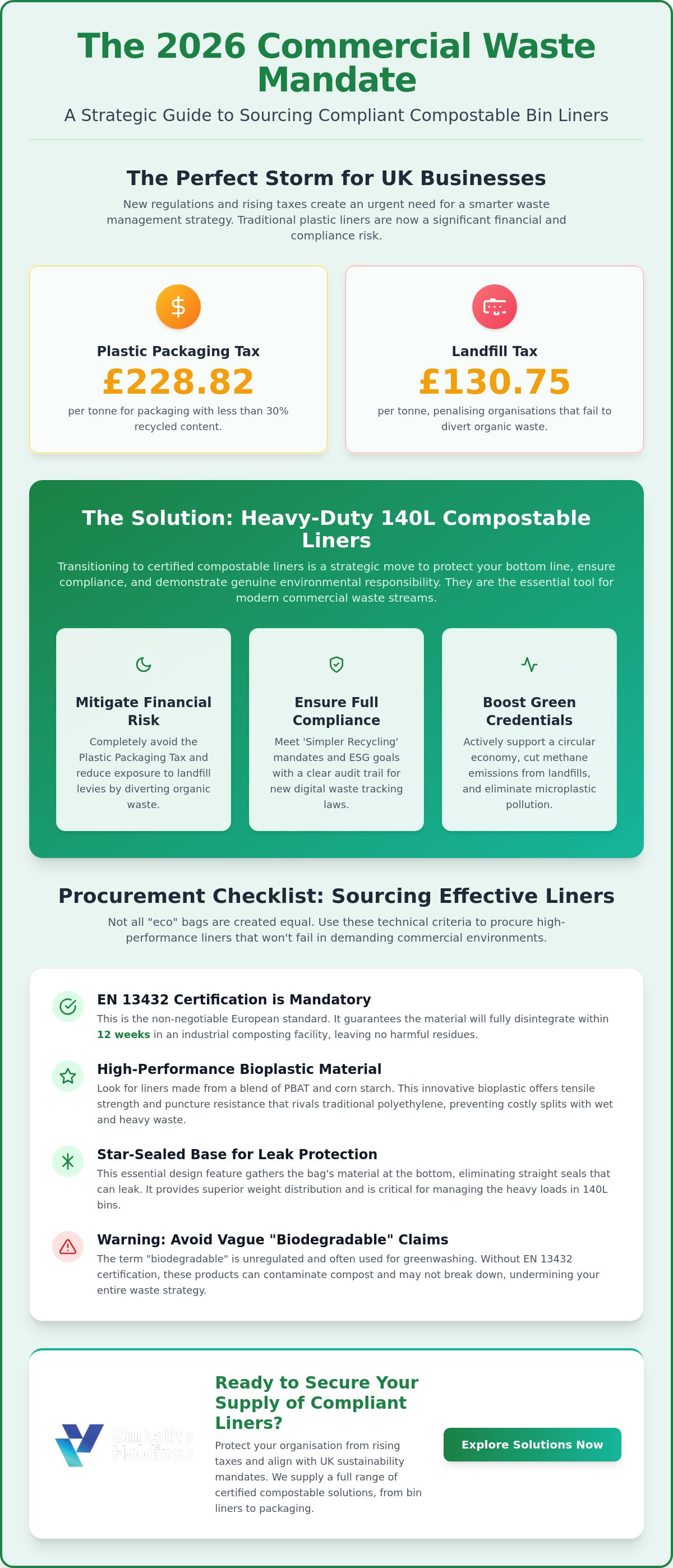
Transitioning to compostable solutions provides a robust financial hedge against the 2026 UK Plastic Packaging Tax. At a rate of £228.82 per tonne for plastic packaging with less than 30% recycled content, the fiscal burden on traditional liners has reached a critical tipping point. By choosing certified compostable alternatives, organisations avoid these specific levies while simultaneously reducing their exposure to the standard landfill tax rate of £130.75 per tonne. It's a strategic move that protects both the environment and the bottom line.
To better understand the practical application of these high-capacity solutions, watch this helpful video:
Diverting organics from landfill to industrial composting facilities is a primary lever for reducing a company's carbon footprint. This practice forms the bedrock of a circular UK economy, where waste is redefined as a renewable resource. High-capacity liners facilitate this transition by providing a reliable vessel for nutrient-rich waste to return to the earth, rather than contributing to methane emissions in a landfill site.
Navigating UK Regulatory Compliance and ESG Goals
Compliance in 2026 requires more than just good intentions; it demands data. The introduction of mandatory national digital waste tracking means every movement of waste is now recorded. Certified compostable solutions provide a transparent audit trail for procurement teams, making it easier to verify plastic-free mandates in corporate responsibility reports. These tools allow businesses to meet national sustainability targets with precision, ensuring that heavy duty compostable bin bags uk are a core part of their ESG strategy.
The Performance Advantage: PBAT and Bioplastic Innovation
There's a persistent myth that eco-friendly materials lack the strength of traditional plastics. Modern bioplastics, often derived from a blend of corn starch and PBAT, now offer tensile strength that rivals low-density polyethylene. By understanding the science of biodegradable bag materials, procurement officers can source high-micron films that resist puncturing even under the pressure of heavy, wet food waste. These innovations ensure that durability is never sacrificed for the sake of sustainability, providing a reliable solution for industrial handling.
Procurement Criteria for Heavy Duty Compostable Bin Bags
Selecting the right liner requires a technical eye. It's not enough to rely on the vague label of "biodegradable," which often lacks regulatory teeth. In the UK, procurement officers must verify that products carry the EN13432 certification. This specific standard guarantees that the material will fully break down in an industrial composting facility within 12 weeks. TUV Austria certifications provide an additional layer of trust, ensuring that your heavy duty compostable bin bags uk leave no toxic residues or microplastics behind in the resulting soil improver.
Mechanical strength is non-negotiable for large-scale commercial operations. When dealing with 140-litre capacities, the micron count must be significantly higher than that of a standard kitchen caddy liner to account for the increased physical pressure. You should specifically prioritise puncture resistant compostable garbage bags to mitigate the risks associated with sharp organic debris or heavy, saturated food waste. A star-sealed bottom is another essential design feature; it gathers the material at a single point to provide superior weight distribution and maximum leak protection during transit to the collection vehicle.
Understanding Commercial vs Home Compostable Standards
It's vital to distinguish between home compostable vs industrial compostable standards when sourcing for 140L bins. While home-compostable bags break down at lower temperatures, industrial-grade liners are engineered for the high-heat environments of professional processing plants. Third-party verification ensures these materials integrate seamlessly into the UK's waste infrastructure, supporting a system where waste is treated as a valuable resource rather than a burden.
Dimensions and Fit: Avoiding Bin Contamination
A common operational failure is the liner slipping into the bin under the weight of heavy refuse. To prevent this, ensure your chosen sacks provide a generous overhang that secures the bag firmly to the rim of the 140L wheelie bin. This correct fit doesn't just prevent messes; it's a cornerstone of effective odour control commercial food waste bags management. By keeping the bin rim clean and the bag taut, you significantly reduce the risk of pests and unpleasant smells in your waste storage areas. For organisations seeking to refine their procurement, switching to certified compostable garbage bags is a practical step toward a more responsible and hygienic future.
Optimising Commercial Waste with Industrial-Grade Sacks
Implementing a sustainable waste programme requires more than just a change in procurement; it demands a shift in operational culture. Integrating heavy duty compostable bin bags uk into your daily workflow is most effective when paired with a robust bin-labelling strategy. By providing clear visual cues, organisations can significantly reduce the risk of non-compostable contamination, which often renders entire batches of organic waste unusable. Success depends on the human element, making it vital to train facilities staff on the proper handling of compostable sacks for commercial food waste. This training ensures that bag integrity is maintained during the transition from internal collection points to large-scale 140L bins.
Scheduling regular waste collections is equally important. Because bioplastic materials are designed to return to the earth, they possess a natural breakdown cycle that must be respected. Partnering with a specialist supplier like Sinhalite Holdings provides your organisation with more than just consistent, high-volume inventory; it offers the technical support needed to synchronise your operations with the material science of your liners. This collaboration ensures that your transition to responsible waste management is both scalable and reliable.
Best Practices for Bulk Inventory Storage
Compostable liners are biologically active products. To prevent premature degradation, store your bulk stock in cool, dry conditions away from direct sunlight or high humidity. We recommend implementing a strict First-In, First-Out (FIFO) rotation system. This methodical approach ensures that every roll of heavy duty compostable bin bags uk performs at its peak tensile strength when it finally enters service, preventing the brittleness that can occur when stock is left dormant for too long.
Hygiene Benefits and Bin Maintenance
High-performance liners act as a protective barrier that preserves the longevity of your waste infrastructure. By using durable sacks that resist leaking and puncturing, businesses can reduce the frequency of intensive chemical bin cleaning. This saves water and reduces the volume of harsh detergents entering the drainage system. Ultimately, these industrial-grade solutions contribute to a cleaner, more professional environment that reflects your commitment to environmental stewardship and operational excellence.
Driving the Transition to a Plastic-Free Future
The 2026 regulatory landscape has redefined the standards for commercial waste management. By integrating heavy duty compostable bin bags uk into your operations, you're doing more than just avoiding the £228.82 per tonne Plastic Packaging Tax. You're building a resilient, circular system that values transparency and environmental stewardship. Choosing liners with TUV Austria and EN13432 certifications ensures that your waste stream is truly sustainable and free from microplastic residues. As a specialist supplier to UK councils and commercial entities, we've engineered our products for industrial durability and full regulatory compliance. We understand that your goals extend beyond mere compliance; you're seeking to lead your industry toward a more responsible future. Our team is dedicated to providing the technical support and consistent inventory needed to make that vision a reality.
Explore our range of high-performance compostable garbage bags to secure your supply of industrial-grade solutions. The path to a cleaner, greener UK is within reach, and we're here to provide the tools for your success.
Frequently Asked Questions
Are 140 litre compostable liners strong enough for heavy commercial food waste?
Yes, industrial-grade 140L liners are specifically engineered with a high-micron thickness to withstand the weight and moisture of commercial food waste. By utilising advanced bioplastic blends, these heavy duty compostable bin bags uk offer tensile strength comparable to traditional low-density polyethylene. This durability prevents splits and leaks during industrial handling, ensuring your facilities remain hygienic while supporting your transition toward more responsible and sustainable waste management practices.
Do these 140L liners meet the EN13432 European standard for industrial composting?
Yes, professional 140L liners must be certified to the EN13432 standard to ensure they fully biodegrade within industrial composting infrastructures. This certification guarantees that the material will break down into CO2, water, and biomass within 12 weeks without leaving harmful residues or microplastics in the soil. Verifying these credentials is a vital step for procurement teams to ensure their waste disposal methods align with national environmental regulations and corporate ESG targets.
How long can I store bulk orders of compostable bin bags before they start to degrade?
Most compostable liners have a shelf life of approximately 12 months when stored in a cool, dry environment away from direct sunlight. Because these bags are biologically active, exposure to high humidity or extreme temperatures can accelerate the natural breakdown process before they reach the bin. We recommend using a First-In, First-Out (FIFO) inventory system to ensure you're always using the freshest stock, which maintains the optimal puncture resistance required for heavy-duty refuse.
Will switching to compostable liners help my business avoid the UK Plastic Packaging Tax?
Switching to certified compostable liners provides a strategic advantage by allowing your business to divert heavy organic waste away from standard landfill streams. While the 2026 Plastic Packaging Tax impacts various materials, the primary financial benefit comes from significantly reducing your exposure to high landfill tax rates. By using heavy duty compostable bin bags uk to facilitate industrial composting, you move your waste into a more sustainable and cost-effective processing category that supports national circular economy goals.


