
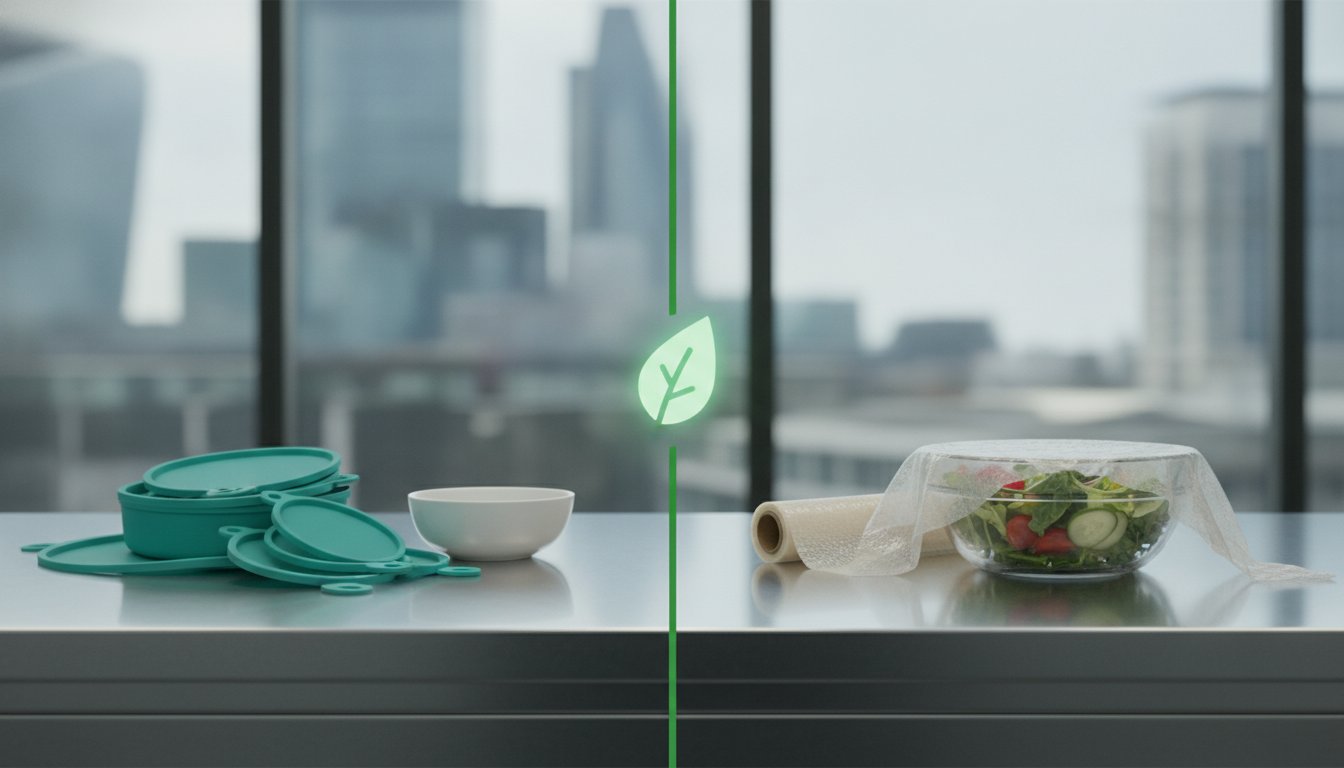
What if the reusable lid sitting in your kitchen drawer is actually less environmentally efficient than the plant-based wrap you discard? As global standards shift in 2026, many commercial leaders are asking: are silicone food covers better than compostable wrap for high-volume, professional environments? You likely share the common frustration of silicone lids that fail to grip oddly shaped containers or the persistent hygiene concerns that arise when re-washing tools in a fast-paced setting. Traditional plastic wrap isn't a viable option anymore, yet the path to true sustainability often feels clouded by conflicting claims about durability versus disposability.
We believe that a transition to responsible practices should be both achievable and commercially advantageous for every organisation. Discover whether reusable silicone or high-performance compostable wrap is the superior sustainable choice for your kitchen or commercial organisation. This comparison provides a transparent look at the carbon footprint of both materials while addressing the practicalities of the 2026 UK Plastic Packaging Tax and new EPR requirements. We will preview how each solution scales within a modern waste management system, ensuring your commitment to the environment never compromises your standards for food safety and operational integrity.
Key Takeaways
- Evaluate the manufacturing carbon footprint of both materials to identify the specific usage threshold where reusable silicone matches the efficiency of plant-based resin.
- Assess whether are silicone food covers better than compostable wrap for hygiene-critical environments where single-use solutions effectively eliminate the risk of cross-contamination.
- Compare the seal integrity of high-performance bioplastics against silicone lids to ensure consistent food safety when storing irregularly shaped containers.
- Understand how integrating compostable wrap into your operations can streamline waste management and support your organisation's transition toward a circular economy.
Analysing the Environmental Impact: Silicone vs. Compostable Wrap
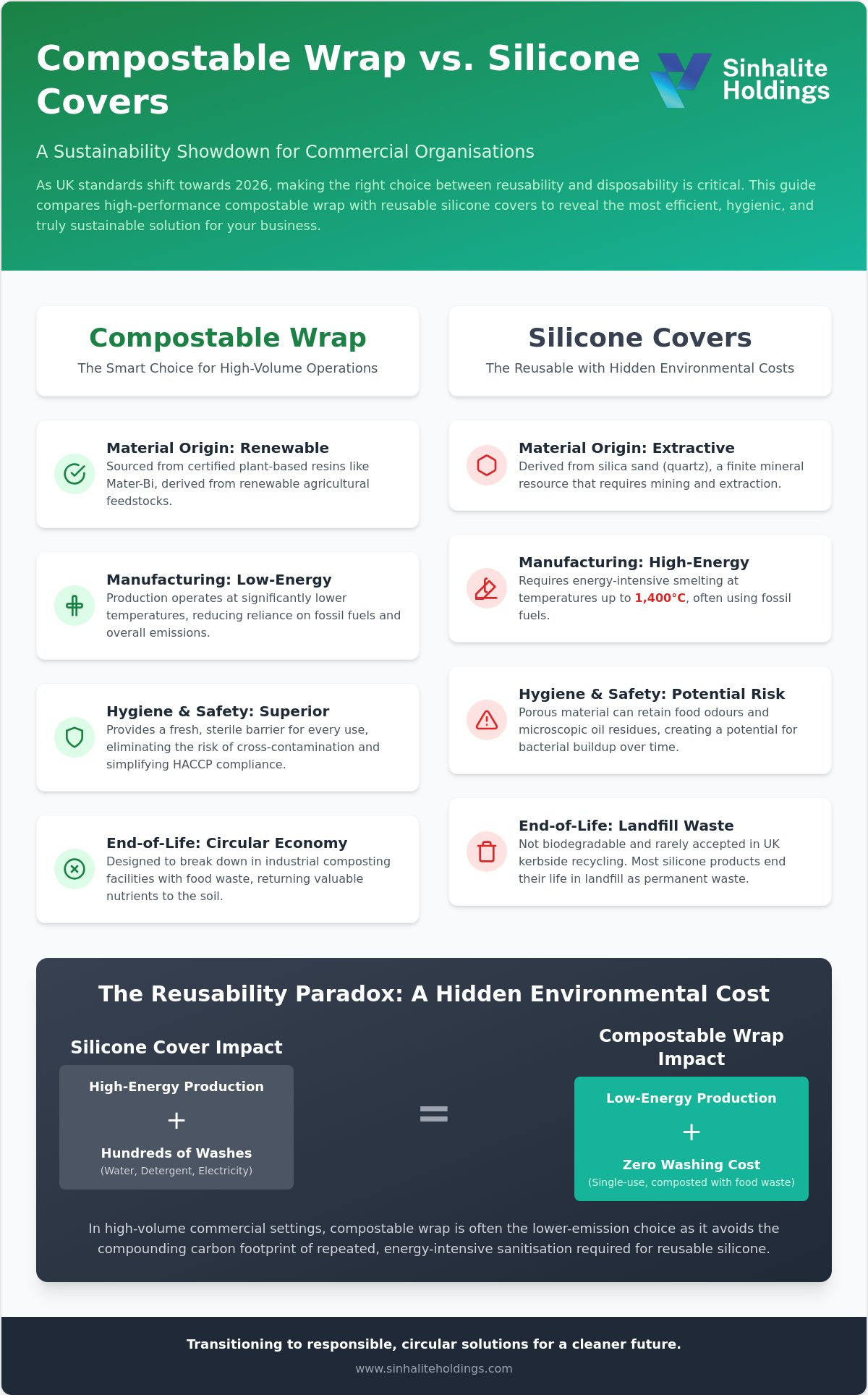
Determining whether are silicone food covers better than compostable wrap requires a look beyond the kitchen drawer and into the industrial lifecycle of each material. Silicone is a synthetic polymer derived from silica sand, but the journey from raw quartz to a food-grade lid involves high-heat chemical processing. To understand what silicone is and its environmental cost, we must acknowledge the energy-intensive smelting required to isolate silicon. In contrast, certified compostable wrap utilises plant-based resins, such as Mater-Bi, which are derived from renewable agricultural feedstocks. This fundamental difference in raw material sourcing sets the stage for their respective carbon footprints.
To better understand the complexities of silicone sustainability, watch this helpful video from NYT Wirecutter:
Production Energy and Resource Depletion
The manufacturing of silicone covers demands sustained temperatures of up to 1,400°C during the reduction of silica. This process relies heavily on industrial energy grids, which often still draw from fossil fuel sources. Conversely, the production of high-performance compostable wrap operates at significantly lower temperatures. Because the feedstock is biological rather than mineral, the initial resource depletion is substantially reduced. Organisations choosing plant-based alternatives support a supply chain rooted in regenerative cycles rather than extractive mining.
The Reusability Paradox: Washing vs. Composting
While reusability is a noble goal, it introduces a hidden environmental load through industrial maintenance. Every time a silicone lid is sanitised in a commercial dishwasher, it consumes water, detergent, and electricity for heating. This creates a 'break-even' point where the lid must be used hundreds of times to offset the combined cost of its production and maintenance. For high-volume catering, compostable wrap is often the lower-emission choice because it eliminates the carbon-intensive cycle of repeated hot-water washing.
The end-of-life reality further complicates the comparison. Silicone is not biodegradable and is rarely accepted in UK kerbside recycling programmes; this means most lids eventually reach a landfill. However, compostable clingfilm is designed to break down in industrial composting facilities alongside food waste. This integration into the UK’s evolving waste infrastructure allows businesses to contribute directly to a circular economy, returning nutrients to the soil rather than adding permanent synthetic waste to the environment.
Are Silicone Food Covers Better Than Compostable Wrap for Hygiene?
In a high-pressure commercial kitchen, hygiene isn't just a preference; it's a legal necessity. When asking are silicone food covers better than compostable wrap, we must consider the practicalities of allergen management and bacterial control. While reusables are often praised for their longevity, they introduce a significant variable in professional environments: the human element of sanitisation. Single-use compostable wrap provides a fresh, sterile barrier for every application, effectively eliminating the risk of cross-contamination that can occur when reusable lids aren't cleaned to industrial standards.
Food Safety Standards in Commercial Kitchens
Maintaining HACCP compliance is often more straightforward with disposable solutions. Silicone is a relatively porous material. Over time, it can retain food odours and microscopic oil residues that are difficult to strip away, even in commercial dishwashers. This retention can lead to bacterial buildup within the material's structure. Because of these challenges, many UK organisations are choosing compostable solutions to simplify their safety protocols. Using a new layer of plant-based wrap ensures that no residues from previous batches interfere with current food prep.
Practical Versatility for Oddly Shaped Ingredients
Fixed-size silicone lids present operational limitations during large-scale food preparation. They often fail to provide a secure seal on irregular items, such as a half-cut cabbage or oversized gastro-tins. Modern innovation has closed the performance gap, resulting in compostable cling film that actually clings to varied surfaces. This adaptability is vital for maintaining food freshness. These plant-based films also offer impressive temperature resilience, performing reliably in industrial freezers and microwave applications without the risk of chemical leaching.
Choosing the right tools allows your team to focus on quality rather than struggling with ill-fitting equipment. You can explore our full range of certified compostable kitchen supplies to see how these high-performance materials support both hygiene and efficiency. By prioritising materials that integrate into your existing workflows, you ensure that safety and sustainability work in tandem.
Operational Scalability: Why UK Organisations are Choosing Compostable Solutions
Managing the storage of varied silicone lids is a complex task for any commercial kitchen. While many ask are silicone food covers better than compostable wrap, the answer often hinges on logistical simplicity. A single pallet of bulk wrap rolls provides thousands of seals; an equivalent volume of silicone requires a vast inventory of specific sizes and shapes. This storage efficiency is a primary reason why switching business to sustainable packaging has become a strategic priority for UK entities seeking to optimise their floor space.
Compliance with the UK Plastic Packaging Tax, which reached £228.82 per tonne in April 2026, also drives this transition. Organisations must now report on their plastic usage with precision to meet evolving ESG reporting requirements. Selecting certified materials is the only way to guarantee these standards are met. Understanding the OK compost HOME certification explained in our guide ensures that your organisation invests in materials that truly biodegrade within natural cycles, protecting your brand from potential greenwashing claims.
Streamlining Waste Management
Operational flow improves when disposal matches existing waste streams. Compostable wrap can be discarded directly into food waste bins alongside organic leftovers. This process eliminates the manual labour required to sort, wash, and dry hundreds of silicone covers daily. It also ensures that hygiene and food safety standards remain consistent without adding a secondary cleaning cycle to your kitchen's schedule. By removing the need for separate handling, your team can focus on service rather than waste sorting.
Cost-Efficiency for Large-Scale Operations
Silicone lids demand a significant upfront capital investment, whereas compostable wrap offers a flexible operational cost that scales with your current output. This allows for immediate sustainability gains without the high entry cost of reusable inventory. Compostable wrap supports a circular economy by turning kitchen waste into nutrient-rich compost without disrupting your team's existing workflows. It doesn't require the same long-term maintenance or replacement costs associated with reusables that inevitably degrade or go missing in a busy professional environment.
Securing a Sustainable Future for Your Organisation
Choosing the right materials for your operations is a foundational step toward environmental stewardship. While silicone reusables offer longevity in domestic settings, the commercial reality often demands a different approach. We have examined how high-performance plant-based wraps provide superior hygiene by eliminating cross-contamination and how they integrate seamlessly into existing food waste collections. When evaluating whether are silicone food covers better than compostable wrap, the evidence suggests that for scalable, professional environments, the logistical and carbon-saving benefits of compostable solutions are decisive.
As a specialist UK supplier, Sinhalite Holdings provides the tangible tools needed for this transition. Our products feature puncture-resistant plant-based technology and carry both TUV Austria and OK compost HOME certifications, ensuring your sustainability claims are backed by rigorous standards. By aligning your business with these responsible innovations, you contribute to a circular economy while maintaining the highest operational standards. Explore Sinhalite Holdings' range of professional compostable clingfilm today and take a confident step toward a cleaner, greener outlook for your organisation.
Frequently Asked Questions
Is silicone actually biodegradable or just reusable?
Silicone is not biodegradable; it is a synthetic polymer designed specifically for long-term reusability. Unlike plant-based materials, silicone won't break down in natural environments or industrial composting facilities. While it offers a durable lifespan, it typically ends up in landfills at the end of its utility because it isn't accepted in standard UK household or commercial recycling streams. This makes it a permanent material rather than a circular one.
Can compostable wrap go in my council food waste bin?
Yes, certified compostable wrap can typically be disposed of in council food waste bins, provided it meets the EN 13432 standard. This certification ensures the material biodegrades by at least 90% within six months in industrial conditions. It's a practical choice for organisations looking to simplify waste management by allowing food scraps and their protective covering to be collected together for processing into nutrient-rich compost for agricultural use.
Does silicone leach chemicals into hot food compared to bioplastics?
Food-grade silicone is generally stable, but the primary concern for professional kitchens is the retention of oils and odours within its porous structure. High-quality bioplastics used in compostable wrap are designed to be inert and food-safe under current UK regulations. When asking are silicone food covers better than compostable wrap for hygiene, single-use plant-based options often provide a more consistent safety profile by eliminating the risk of bacterial carryover from previous uses.
How many times do I have to use a silicone lid to make it 'greener' than wrap?
A silicone lid must be used hundreds of times to offset the high carbon cost of its production and the energy required for repeated industrial washing. While reusables are durable, the "break-even" point is often difficult to reach in high-volume commercial settings. If a lid is lost or damaged before this point, its environmental impact exceeds that of a compostable alternative. Choosing plant-based wrap ensures a lower initial carbon footprint and a guaranteed end-of-life solution.


