
With the March 2026 deadline for mandatory food waste collections now active across England, your choice of waste management supplies has evolved from a simple purchase into a critical pillar of your organisation's environmental stewardship. Many procurement officers are looking to bulk buy compostable caddy liners to meet these new statutory requirements, yet high-volume orders often carry hidden operational risks. You likely recognise that a split bag or a leaking liner does more than just create a mess; it undermines your sustainability initiatives and erodes the confidence of your frontline staff.
We understand that balancing the pragmatism of industrial waste management with the idealism of a circular economy requires more than just a standard purchase order. This guide provides the strategic framework you need to master the logistics of bulk procurement while ensuring your liners maintain their structural integrity from the warehouse to the collection point. We will examine the importance of EN 13432 certification, the specific storage requirements of bioplastics, and how to build a resilient supply chain that supports your ESG reporting through genuine plastic reduction.
Key Takeaways
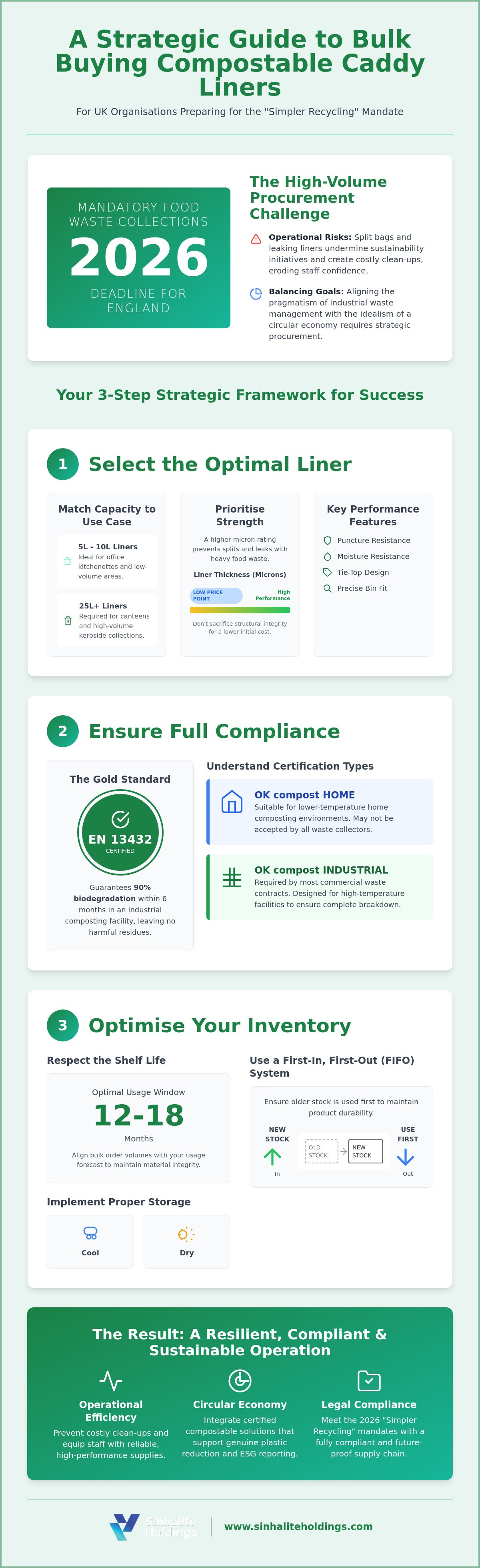
- Identify the correct micron thickness and capacity for your specific operational needs to prevent bag failure and leaks during waste collection.
- Verify that your supplies meet the EN 13432 standard to ensure full compliance with UK industrial composting regulations and waste disposal contracts.
- Optimise your supply chain when you bulk buy compostable caddy liners by aligning order volumes with a 12 to 18 month usage window to ensure material integrity.
- Protect your investment by implementing cool, dry storage conditions and a First-in, First-out (FIFO) rotation system to maintain product durability.
- Transition your organisation toward a circular economy by integrating high-performance compostable solutions that meet the 2026 "Simpler Recycling" mandates.
Selecting the Optimal Capacity and Strength for Bulk Requirements
Effective procurement begins with a forensic analysis of your organisation's waste streams. Selecting the incorrect size leads to unnecessary material waste or operational mess. For internal office kitchenettes where tea bags and fruit peels dominate, 5L to 10L liners provide a compact, hygienic solution. Conversely, larger 25L+ liners are required for kerbside collection points and high-volume canteen environments. When organisations decide to bulk buy compostable caddy liners, the most common pitfall is overlooking the micron rating in favour of the lowest price point. A liner's thickness, measured in microns, dictates its structural integrity. Choosing a higher micron count for heavy food waste ensures the bags won't stretch or split during transit, preventing costly clean-ups.
Understanding the material properties of compostable and biodegradable bags is essential for procurement managers who must differentiate between simple plastic alternatives and high-performance biopolymers. Your choice between vented and solid caddies also influences liner performance. Vented systems allow moisture to evaporate, which reduces odours and keeps the waste drier, though this requires a liner with specific breathability traits. Standardising your supply chain by selecting a single, reliable SKU for each bin type simplifies your internal logistics and ensures cleaning staff are always equipped with the right tools for the job.
Matching Liners to Commercial Bin Specifications
Precision is key to operational efficiency. You should measure both the circumference and the depth of your bins to ensure a secure fit. A liner that is too small will slip under the weight of waste, while one that is too large creates a trip hazard or unsightly excess. In high-traffic commercial environments, tie-top liners are often superior to flat-top versions. They allow staff to seal bags quickly and hygienically, which is vital for maintaining a professional and clean workspace.
Performance Features for High-Volume Use
Commercial food waste often includes heavy or sharp items like bones and shells. Your liners must offer high puncture resistance to maintain a clean circular economy. Condensation is another common challenge in large-scale waste management. You can learn how to stop compostable liners sticking to the bin by selecting products with natural moisture resistance. These performance-oriented SKUs ensure that waste disposal remains a seamless part of your daily operations rather than a source of frustration.
Performance Standards: Ensuring Certification Compliance
Securing compliance is a non-negotiable step for any organisation looking to align with the UK's evolving waste regulations. The gold standard for this transition is BS EN 13432. This standard guarantees that the material will biodegrade by 90% within six months in an industrial composting environment. It ensures that no harmful residues or heavy metals remain to contaminate the resulting soil improver. When you bulk buy compostable caddy liners, verifying this certification protects your organisation from the operational and reputational risks of using inferior materials that fail to break down.
Distinguishing between "OK compost HOME" and "Industrial" certifications is crucial for your waste disposal contract. Industrial composting facilities operate at higher, sustained temperatures that are necessary to break down robust liners. If your waste collector requires industrial-grade materials, providing home-compostable alternatives might lead to load rejection. The performance of these liners relies on a sophisticated blend of PBAT and cornstarch. This chemistry provides the necessary tensile strength for heavy food waste while maintaining the biological pathways required for complete decomposition. For deeper insights into these material choices, WRAP provides expert guidance on compostable packaging to help you make informed procurement decisions.
The Legal Framework for Waste Management in 2026
The "Simpler Recycling" reforms have made separate food waste collections mandatory for all English businesses as of March 2025, with households following in March 2026. Aligning your procurement with these dates is essential for legal compliance. Choosing certified liners also helps your organisation navigate the UK Plastic Packaging Tax by opting for truly plastic-free alternatives. You can find a detailed OK compost HOME certification explained in our dedicated guide to ensure your business remains transparent and compliant.
Avoiding Greenwashing in Tenders
Greenwashing remains a persistent hurdle in large-scale tenders. Many suppliers still offer "oxo-degradable" plastics, which merely fragment into microplastics rather than truly composting. To protect your supply chain, always request a valid certificate from an accredited body like TUV Austria. It's also worth addressing a common internal query: Do compostable bags contain plastic? Understanding the difference between traditional polymers and bioplastics is key to defending your sustainability ROI. To ensure your organisation is equipped with high-performance, compliant materials, you can explore our range of certified compostable solutions today.
Strategic Inventory Management: Shelf Life and Sustainability ROI
Traditional plastic liners might sit in a warehouse for years without any change in their structural integrity, but biopolymers are designed for a different lifecycle. To maximise the performance of your stock when you bulk buy compostable caddy liners, you must store them in cool, dark, and dry conditions. Exposure to high humidity or direct sunlight can accelerate the natural breakdown process, causing the material to become brittle before it even reaches a bin. Proper environmental control ensures that the liners remain strong enough to handle heavy organic waste without failing during collection.
Implementing a First-in, First-out (FIFO) rotation system is essential for managing bioplastic inventory. Most certified compostable liners have an optimal shelf life of 12 to 18 months. Beyond this window, the material may begin to lose the elasticity required for industrial use. By tracking batch dates and ensuring older stock is used first, your organisation maintains a reliable supply of high-performance bags. This methodical approach to inventory prevents material waste and aligns with the compostable liner certification standards required by many UK local authorities to prevent contamination in food waste streams.
Calculating the true return on investment for these products involves looking beyond the initial cost-per-bag. The real value lies in switching business to sustainable packaging to meet 2026 compliance targets and reduce plastic tax liabilities. Beyond the financial figures, a consistent bulk supply supports better operational hygiene. It allows staff to perform frequent liner changes, which is the most effective way to manage how to keep a food waste bin from smelling in high-traffic commercial kitchens.
Managing Large-Scale Inventory
Predicting consumption rates is vital to avoid over-ordering bioplastics that may degrade before use. Large organisations should audit their weekly food waste volume to calibrate their bulk buy compostable caddy liners orders effectively. You can identify degrading stock by looking for a loss of "stretch" or a chalky texture on the surface of the liner. If a bag tears easily along the seams when empty, it's a clear sign that the material's integrity has been compromised by poor storage or age.
Leading the Transition to a Circular Economy
Bulk procurement is a visible and tangible commitment to your corporate social responsibility (CSR) goals. By moving away from traditional plastic, your organisation can quantify its impact through precise ESG reporting on plastic reduction. This transition doesn't just satisfy regulatory requirements; it positions your brand as a responsible innovator that provides the practical tools needed for a cleaner, greener future. Every compostable liner used is a step toward a functional circular economy where waste becomes a valuable resource rather than a permanent pollutant.
Securing Your Organisation’s Sustainable Future
The 2026 mandates for food waste collection represent more than just a regulatory hurdle; they are a vital opportunity to refine your organisation's environmental impact. Success in this transition depends on selecting materials that balance industrial strength with genuine ecological integrity. By matching the correct micron thickness to your specific waste streams and ensuring every batch meets the EN 13432 standard, you protect your operations from the mess and reputational risk of bag failure.
When you choose to bulk buy compostable caddy liners, integrating a methodical storage and rotation system is the final step in securing your sustainability ROI. As a UK specialist in compostable solutions, Sinhalite Holdings provides the puncture-resistant, industrial-grade materials required to support a high-volume circular economy. Our focus on certified compliance ensures that your procurement strategy remains resilient, transparent, and fully aligned with modern ethical standards. We invite you to browse our range of high-performance compostable caddy liners for bulk order and take a proactive step toward a plastic-free future. Together, we can build a cleaner, more responsible waste management framework for your organisation.
Frequently Asked Questions
How long do compostable caddy liners last in storage when bought in bulk?
Compostable caddy liners typically have a shelf life of approximately 12 months when stored correctly. To maintain their structural integrity, you should keep bulk stock in a cool, dark, and dry environment away from direct sunlight. High temperatures or humidity can trigger the natural breakdown process prematurely. Implementing a First-in, First-out (FIFO) rotation system ensures that your organisation uses the liners while they remain at peak performance levels.
Can I use compostable caddy liners for commercial food waste collections in the UK?
Yes, you can use these liners for commercial collections, and they're increasingly essential for compliance. Since March 31, 2025, businesses in England have been required to separate food waste for collection. When you bulk buy compostable caddy liners for commercial use, ensure they are certified to the BS EN 13432 standard. This certification guarantees the material is compatible with UK industrial composting facilities and won't contaminate the organic waste stream.
What is the difference between biodegradable and certified compostable liners?
The primary difference lies in certification and the timeframe for decomposition. "Biodegradable" is a broad term that lacks a specific legal timeframe and doesn't guarantee the absence of harmful residues. Certified compostable liners must meet the EN 13432 standard, which proves they break down into organic matter within a set period. This distinction is vital for procurement managers who need to avoid "greenwashed" products that don't satisfy waste disposal contracts.
Do bulk compostable liners split more easily than plastic ones?
High-quality compostable liners don't inherently split more easily than plastic alternatives, provided you select the correct micron thickness. Modern biopolymers like PBAT and cornstarch blends offer excellent tensile strength and puncture resistance for heavy organic waste. When organisations bulk buy compostable caddy liners, choosing industrial-grade specifications prevents operational failure. Proper storage and using the bags within their recommended shelf life further ensures they remain as durable as traditional single-use plastics.


