What if the brittle, cracked mess at the bottom of your freezer isn't a failure of eco-friendly materials, but a simple misunderstanding of polymer science? Most people assume that sustainable swaps are inherently weaker than plastic, leading to fears of freezer burn on expensive organic produce. You've likely asked yourself, can you freeze food in compostable bags without the material splitting? With the UK's mandatory food waste separation rules coming into effect on 31 March 2026, finding a reliable solution is more important than ever.
We're here to prove that eco-friendly storage can be superior when you understand the glass transition of biopolymers. This guide explores the science-backed truth about freezing with certified materials and how to prevent common failures. You will learn which EN 13432 certifications ensure food safety and durability, alongside practical tips to keep your food fresh. By the end, you'll have the knowledge to transition to responsible practices with total confidence in your kitchen's performance.
Key Takeaways
- Learn the material requirements that answer the question, can you freeze food in compostable bags, by identifying the specific biopolymer blends designed for sub-zero durability.
- Understand the Glass Transition Temperature of compostable films to ensure your packaging remains flexible and intact at standard freezer temperatures.
- Discover how to manage the oxygen barrier properties of certified compostable materials to protect expensive organic produce from freezer burn.
- Gain practical techniques for preparing food for the freezer, including critical cooling steps that prevent premature material degradation.
- Prepare for the 2026 UK recycling mandates by integrating high-performance, EN 13432 certified compostable food roller bags into your daily routine.
Can You Freeze Food in Compostable Bags? The Short Answer
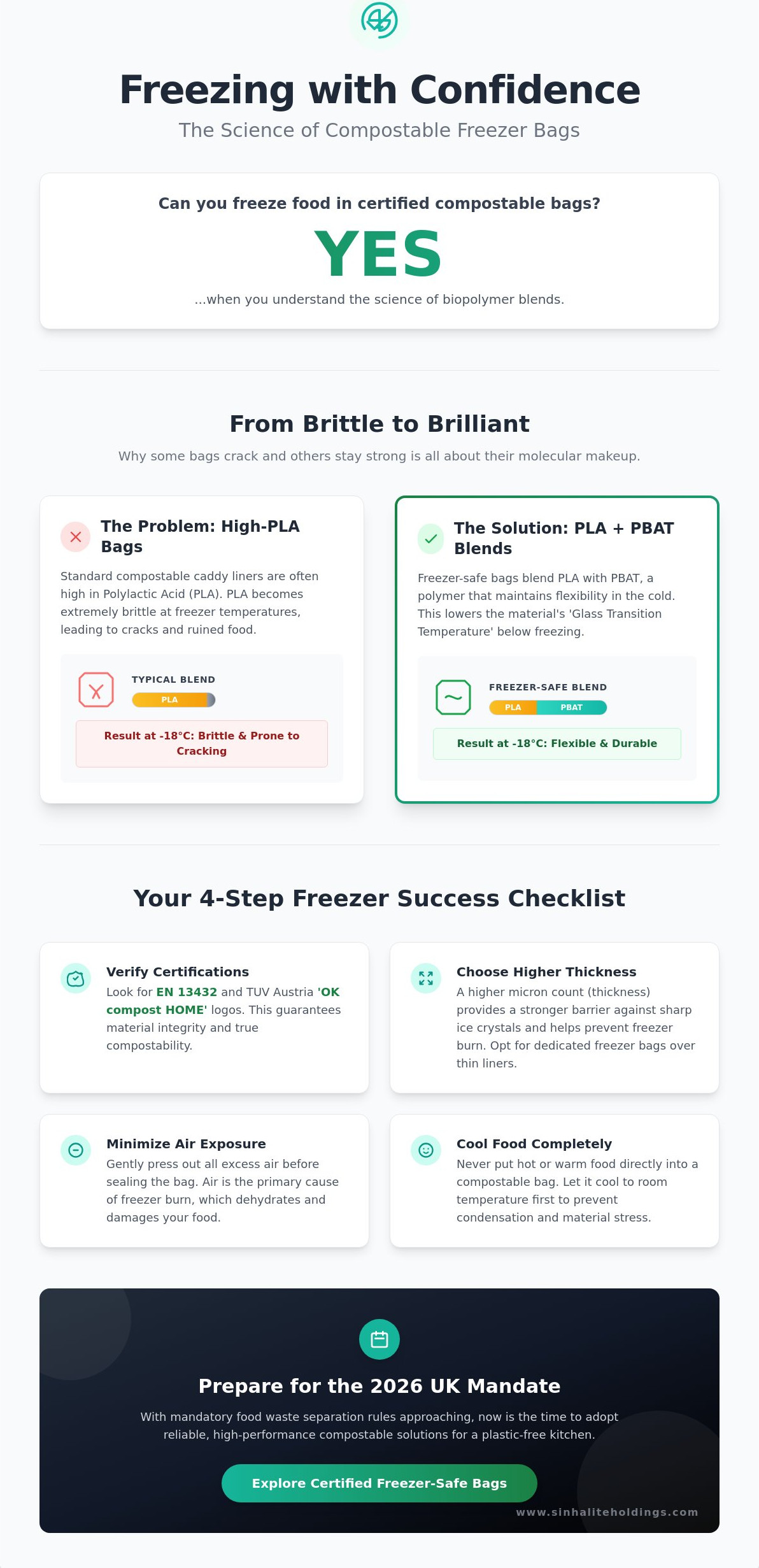
Yes, you can freeze food in compostable bags, but the success of your storage depends entirely on the material's structural integrity. While traditional polyethylene plastics are engineered for elasticity at low temperatures, compostable alternatives require a specific scientific balance to avoid failure. If you are wondering, can you freeze food in compostable bags without risking a brittle mess, the answer lies in the ratio of the polymers used in the manufacturing process.
Most modern compostable films are created from a blend of Polylactic Acid (PLA) and Polybutylene adipate terephthalate (PBAT). To understand the performance of these materials, it helps to look at what bioplastics are and how they react to thermal changes. PLA provides the rigid structure needed for strength, but it becomes notoriously brittle at sub-zero temperatures. High-quality freezer-safe bags compensate for this by increasing the PBAT content, which maintains flexibility even when your freezer reaches -18°C.
To better understand how these materials perform and break down, watch this helpful video:
Understanding the 'Freezer-Safe' Label in 2026
In the UK market for 2026, not all compostable products are created equal. A general-purpose caddy liner designed for kitchen waste often lacks the moisture resistance required for the freezer. Dedicated food roller bags are engineered with higher micron thickness to withstand ice crystal expansion. When selecting packaging, look for the TUV Austria 'OK compost HOME' or 'Industrial' certifications. These labels ensure the material meets the EN 13432 standard, providing a reliable baseline for both durability and environmental integrity during the freezing and thawing cycle.
Common Misconceptions About Frozen Bioplastics
A common myth suggests that compostable bags begin to decompose the moment they touch food. In reality, the freezing process effectively 'pauses' the microbial activity required for degradation. Your food won't be compromised by a bag that is prematurely breaking down. However, the distinction between 'biodegradable' and 'certified compostable' is vital. Only certified compostable bags are guaranteed to disintegrate within a specific timeframe once they reach the correct disposal environment. For long-term cold storage, thickness matters significantly. A bag with a higher micron count provides a better barrier against the air, which is the primary cause of freezer burn on your produce.
The Science of Sub-Zero Sustainability: Why Some Bags Crack
The primary reason some consumers experience bag failure is linked to a physical phenomenon known as the Glass Transition Temperature (Tg). Every polymer has a specific thermal point where it shifts from being flexible and rubber-like to becoming hard and brittle. For Polylactic Acid (PLA), this transition happens far above freezing temperatures. If a bag is made primarily of PLA, it will inevitably crack when exposed to the -18°C environment of a standard UK freezer. This brittleness is the root cause of the frustration many feel when attempting to use standard eco-friendly options for long-term storage.
To solve this, 2026 manufacturing standards rely on advanced biopolymer blending. By incorporating Polybutylene Adipate Terephthalate (PBAT), engineers can lower the overall Tg of the material. This ensures that the bag remains in a rubber-like state even at extreme temperatures, providing the reliability required for domestic and commercial food storage. When you ask, can you freeze food in compostable bags, the answer depends on this specific molecular engineering. Modern blends allow for a transition to sustainable practices without sacrificing the performance of traditional materials.
PLA vs. PBAT: The Balancing Act
Understanding the composition of these materials helps demystify why compostable bags contain plastic-like properties without the environmental cost of traditional oil-based films. Unlike polyethylene, which remains flexible through a different chemical pathway, bioplastics use PBAT to achieve elasticity. PBAT is the 'flexibility engine' of eco-friendly freezer bags. This blend allows the material to stretch and accommodate the expansion of food as it freezes, preventing the structural splits that plague lower-quality alternatives. It's a precise ratio that balances the strength of PLA with the resilience of PBAT.
Thermal Stability and Food Safety
Beyond physical durability, thermal stability is a prerequisite for responsible food storage. High-performance compostable films are rigorously tested to ensure no chemical migration occurs during the freezing process. According to established principles of Freezing and Food Safety, keeping food at -18°C or lower keeps microbes dormant, but the packaging must also manage the physical stress of ice crystal formation. Certified bags offer a breathability factor that manages moisture more effectively than greenwashed alternatives. This specific permeability helps reduce the accumulation of large ice crystals that can damage the texture of delicate produce. For those seeking to align their kitchen with these high standards, our range of certified food roller bags provides the necessary durability for long-term storage.
Compostable vs. Traditional Plastic: Preventing Freezer Burn
Traditional polyethylene plastic has long been the standard for cold storage because of its exceptional oxygen barrier properties. It creates a nearly airtight seal that prevents moisture from escaping. In contrast, certified compostable films are designed with a degree of permeability to facilitate the breakdown process in composting environments. This characteristic creates a breathability paradox. While this air exchange is beneficial for keeping fresh vegetables crisp in the fridge, it presents a challenge when you consider if can you freeze food in compostable bags for extended periods. Without a secondary barrier, the increased oxygen transmission can lead to faster moisture loss from the food's surface.
The transition to eco-friendly materials requires a shift in how we approach food preservation. While traditional plastic is cheap and effective at blocking air, it carries a heavy environmental cost. In the UK, the Plastic Packaging Tax now stands at £228.82 per tonne for materials with less than 30% recycled content. This economic shift, combined with the 2026 "Simpler Recycling" legislation, makes high-performance compostable alternatives a logical choice for responsible households. The goal is to match the protection of plastic while ensuring the packaging can return to the earth as organic matter.
The Battle Against Freezer Burn
Understanding what freezer burn is helps in choosing the right storage strategy. Freezer burn occurs through sublimation, where ice crystals turn directly into gas and escape into the freezer's dry air. Because compostable bags are more porous than plastic, they are best suited for short-term freezing of under three months. For longer storage or for high-value items like meat, double-wrapping is a necessary step. Using compostable cling film that actually clings as an inner layer provides that essential secondary oxygen barrier, significantly reducing the risk of surface dehydration.
Durability in the Defrost Cycle
The transition from -18°C to room temperature is when the material's integrity is tested most severely. As condensation forms on the bag's exterior during thawing, some lower-quality bioplastics can develop a 'sticky' texture. This happens when moisture begins to interact with the starch-based components of the film. To prevent tearing, it's best to handle the bags gently while they are still frozen. Once the food has reached a refrigerated temperature, the bag regains its standard flexibility. Choosing a bag with a higher micron thickness ensures that the material remains durable throughout this thermal shift, preventing leaks and protecting your kitchen surfaces from mess.
Best Practices for Freezing Food in Eco-Friendly Packaging
Adopting sustainable habits requires a shift in kitchen management to ensure that your environmental choices don't lead to unnecessary food waste. While the answer to can you freeze food in compostable bags is a definitive yes, the practical application requires more precision than traditional plastic. By following a structured approach, you can maintain the integrity of both your produce and the packaging. These steps are designed to work with the specific physical properties of biopolymers, ensuring a seamless transition to a plastic-free freezer.
- Step 1: Cool food completely. Never place warm items directly into a compostable bag. Excessive steam can begin to break down the starch-based materials prematurely, weakening the seals before the freezing process even begins.
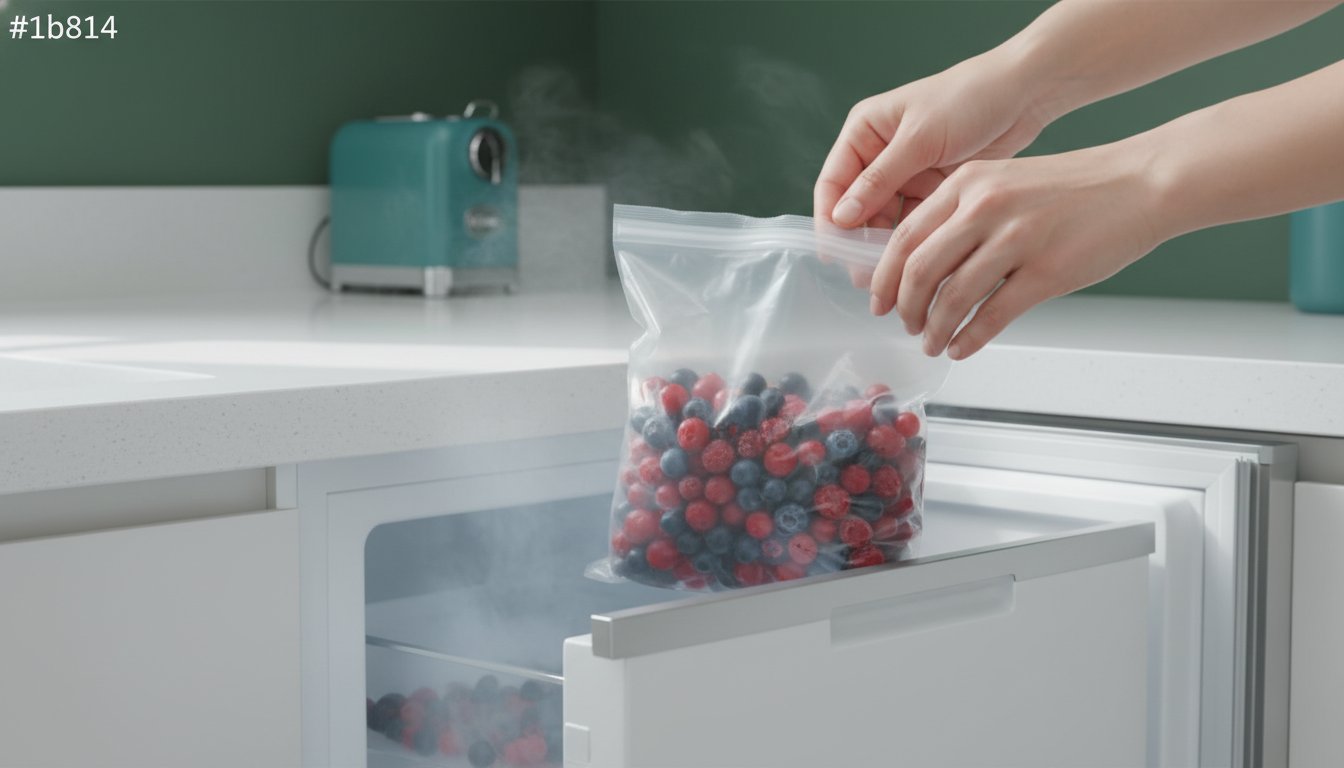
- Step 2: Remove all excess air. Minimising the oxygen inside the bag is the most effective way to prevent the sublimation that leads to freezer burn. Gently press the air out or use a straw to create a manual vacuum seal.
- Step 3: Account for expansion. Liquids and high-moisture foods expand by approximately 9% when frozen. Leave at least two centimetres of 'headroom' at the top of the bag to prevent the material from bursting under pressure.
- Step 4: Use plastic-free labeling. Standard adhesive tapes are often made of polypropylene, which will contaminate your compost heap later. Opt for water-based ink stamps or specialized compostable freezer labels.
- Step 5: Thaw with patience. Move items to the refrigerator to defrost slowly. Rapid temperature changes or warm water baths can make the material feel tacky and prone to tearing.
Optimising Your Freezer Layout
Organisation is essential when working with bioplastics. Unlike traditional polyethylene, compostable films can have a slightly higher friction coefficient, meaning they don't slide against each other as easily. Avoid overstuffing drawers, as the pressure from 'clutter' can cause bags to bond together during the freezing process. Utilising compostable food roller bags allows for precise portion control, making it easier to stack items neatly and maintain airflow between packages. This methodical layout protects the structural integrity of the bags while ensuring your freezer operates at peak efficiency.
Labeling and Rotation
The 'first in, first out' (FIFO) rule is critical because compostable materials have a natural shelf life of roughly 12 months. Storing them in a freezer does not extend the usable life of the bag itself. Clearly date each item to ensure you consume older stock first. If a bag appears unusually brittle or has changed colour significantly, it may have reached its performance limit. Consistent rotation ensures that your food remains fresh and your packaging remains reliable. To upgrade your kitchen with high-performance tools, explore our certified compostable range today.
Transitioning to a Plastic-Free Kitchen with Sinhalite Holdings
As we approach the pivotal 2026 shift in UK waste legislation, the demand for high-performance alternatives to single-use plastics has never been more urgent. At Sinhalite Holdings, we believe that environmental responsibility should never require a compromise in utility. While we have established that can you freeze food in compostable bags effectively by following specific cooling and air-removal steps, the quality of the material remains the foundation of success. Our commitment lies in providing UK-certified solutions that empower households to transition away from traditional plastics with absolute confidence in their food safety and storage durability.
Supporting the UK circular economy means ensuring that every product we manufacture can return to the earth without leaving behind microplastics or toxic residues. Our food roller bags and clingfilms are engineered specifically for the rigours of 2026 kitchen demands, where durability in the freezer must match the efficiency of industrial composting. By choosing materials that align with the EN 13432 standard, you're actively participating in a systemic solution that reduces the financial and ecological burden of plastic waste. Small changes in how you manage your freezer lead to massive systemic impacts when backed by the right technology.
Why Choose Sinhalite Compostable Solutions?
We focus on the scientific rationale behind our products, ensuring our clingfilms offer the grip needed for airtight seals and our bags possess the micron thickness to resist splitting at -18°C. Being a dedicated UK specialist provider allows us to tailor our offerings to local environmental standards and consumer needs. Beyond the freezer, our products integrate into your wider waste management routine. For instance, using our high-quality liners can significantly help keep a food waste bin from smelling by providing a reliable, moisture-resistant barrier for discarded scraps. This holistic approach ensures your transition to a plastic-free kitchen is both practical and advantageous.
Next Steps for Your Sustainable Home
Begin your journey by auditing your current plastic use and identifying high-volume areas where compostable swaps will have the most immediate impact. Selecting the correct bag size for your specific freezing needs prevents excess material waste and ensures a better fit for your freezer layout. When you consider if can you freeze food in compostable bags, remember that the right tools make the process effortless. We invite you to explore our full range of compostable food storage options to find the durable, certified tools needed for a responsible, zero-waste kitchen.
Securing a Sustainable Future for Your Kitchen
Transitioning to a circular kitchen is a journey of both scientific understanding and practical habit-shifting. We have explored how the precise balance of PLA and PBAT ensures structural integrity even at sub-zero temperatures. By following established best practices, such as cooling food thoroughly and removing excess air, you eliminate the common risks of bag failure and freezer burn. The evidence is clear that can you freeze food in compostable bags without compromise, provided you select materials specifically engineered for the task.
Our solutions are TUV Austria Certified and meticulously engineered for UK household standards. They remain 100% plastic-free and PFAS-free, ensuring your household food safety is never secondary to environmental goals. Switch to high-performance compostable food storage today to align your storage routines with the 2026 UK waste mandates. Every small adjustment in your kitchen contributes to a significant, positive shift in our global ecological footprint. You possess the tools to lead this change with confidence and integrity.
Frequently Asked Questions
Will compostable bags break in the freezer?
Compostable bags will only break if they lack the necessary biopolymer elasticity or thickness required for sub-zero temperatures. While standard caddy liners may become brittle and crack, dedicated food roller bags are engineered with higher PBAT content to remain flexible at -18°C. Selecting a product specifically designed for food storage prevents the material from failing under thermal stress, ensuring your produce remains protected throughout its time in cold storage.
Can I freeze liquids like soup in compostable bags?
You can freeze liquids like soup in these bags, provided you leave approximately 10% of the bag empty to accommodate expansion. As water turns to ice, it increases in volume, which can burst a bag that has been overfilled. Placing the bag in a rigid container during the initial freezing phase provides an extra layer of security against leaks, ensuring a clean and organised freezer environment.
How long can food stay frozen in a compostable bag before freezer burn sets in?
Food typically remains protected from freezer burn for up to three months in a single-layered compostable bag. Because these materials are breathable by design, they have naturally higher oxygen transmission rates than traditional oil-based plastics. If you're wondering, can you freeze food in compostable bags for longer durations, consider double-wrapping with compostable clingfilm to create a more robust barrier against moisture loss and surface dehydration.
Do I need to wash compostable bags before putting them in the food waste bin?
You don't need to wash compostable bags before disposal in your organic waste bin. Small amounts of food residue don't interfere with the decomposition process and can actually assist microbial activity in a composting environment. Under the UK's 2026 recycling mandates, these bags are designed to be processed alongside food scraps, making them a seamless and efficient part of your daily waste reduction routine.
Are compostable bags microwave-safe for defrosting?
Most compostable bags are not microwave-safe because intense heat can cause the biopolymers to melt or lose their structural integrity. Rapid heating triggers the degradation process that these materials are specifically designed for, which may lead to leaks or material failure. It's safer to defrost food slowly in the refrigerator or transfer the contents to a glass or ceramic container before using a microwave for reheating.
What is the difference between home compostable and industrially compostable freezer bags?
Home compostable bags are designed to break down at the lower, inconsistent temperatures found in domestic compost heaps. Industrially compostable bags require the sustained high heat of professional facilities to meet the EN 13432 standard. For freezer applications, both types can be effective, but home compostable versions often offer superior flexibility at low temperatures due to their specific starch-based polymer blends and lower glass transition points.
Can I reuse compostable bags after they have been in the freezer?
Reusing compostable bags after they have been frozen is generally discouraged because the material undergoes significant physical stress during the freeze-thaw cycle. The expansion of ice crystals and subsequent exposure to condensation can weaken the molecular bonds of the film. To maintain high standards of food safety and prevent accidental tearing, it's best to treat these as single-use items before placing them in your organic waste collection.
How can I tell if a bag is actually freezer-safe?
You can identify a freezer-safe bag by checking for the TUV Austria 'OK compost' certification and a thickness of at least 20 microns. Truly durable options will explicitly state their suitability for cold storage on the outer packaging. When asking can you freeze food in compostable bags, looking for the EN 13432 mark ensures the product has been tested against rigorous standards for integrity, safety, and environmental responsibility in the UK market.