
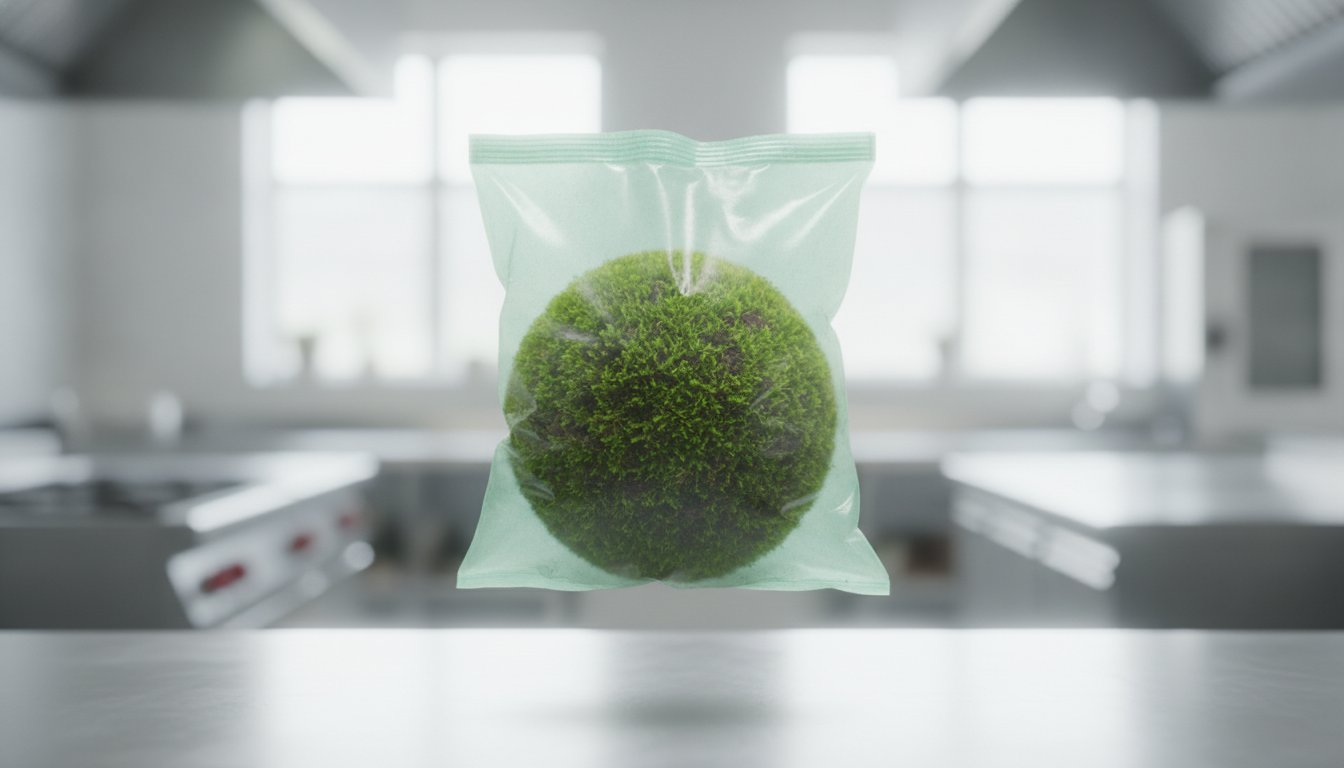
Why does the transition to sustainability so often feel like a step backward in operational reliability? For many commercial kitchen managers and waste operators, the switch to eco-friendly liners has historically meant dealing with leaking "bin juice" and the inevitable mess of bags tearing mid-transport to the skip. It is a frustrating compromise that drives up costs through double-bagging and undermines your environmental goals. However, the search for compostable bags that don't tear is no longer a pursuit of the impossible; it is now a matter of choosing precision-engineered materials designed for the rigours of 2026 waste standards.
We understand that a truly sustainable solution must be as durable as it is responsible. You deserve a waste management system that allows you to focus on your operations rather than cleaning up avoidable spills. This guide explores the sophisticated engineering behind puncture-resistant compostable bags, helping you identify reliable solutions that won't split or leak under pressure. We will examine how the right PBAT and cornstarch ratios ensure compliance with the UK’s "Simpler Recycling" legislation, which now mandates separate food waste collection for all businesses, while simultaneously reducing your Plastic Packaging Tax liability through high-performance, circular alternatives.
Key Takeaways
- Identify the hidden environmental factors, such as organic waste acidity and moisture, that compromise liner integrity before disposal.
- Discover the material science behind PBAT and cornstarch ratios used to manufacture compostable bags that don't tear even under heavy commercial loads.
- Learn how to evaluate micron density and gauge to select the most resilient solutions for diverse waste streams and operational requirements.
- Master the art of "fit and forget" procurement by matching bag dimensions to bin specifications to eliminate the stretching that leads to punctures.
Why Do Compostable Bags Tear? Identifying the Performance Gap
The transition to sustainable waste management often hits a roadblock when procurement teams discover that standard liners fail under pressure. This performance gap isn't a flaw in the concept of sustainability; it's a result of selecting materials that aren't matched to the rigours of commercial use. Many organisations struggle to find compostable bags that don't tear because they overlook the complex science of Bioplastics and how they interact with organic waste. When a bag fails, it isn't just a mess; it's a failure of the circular economy model you are trying to build.
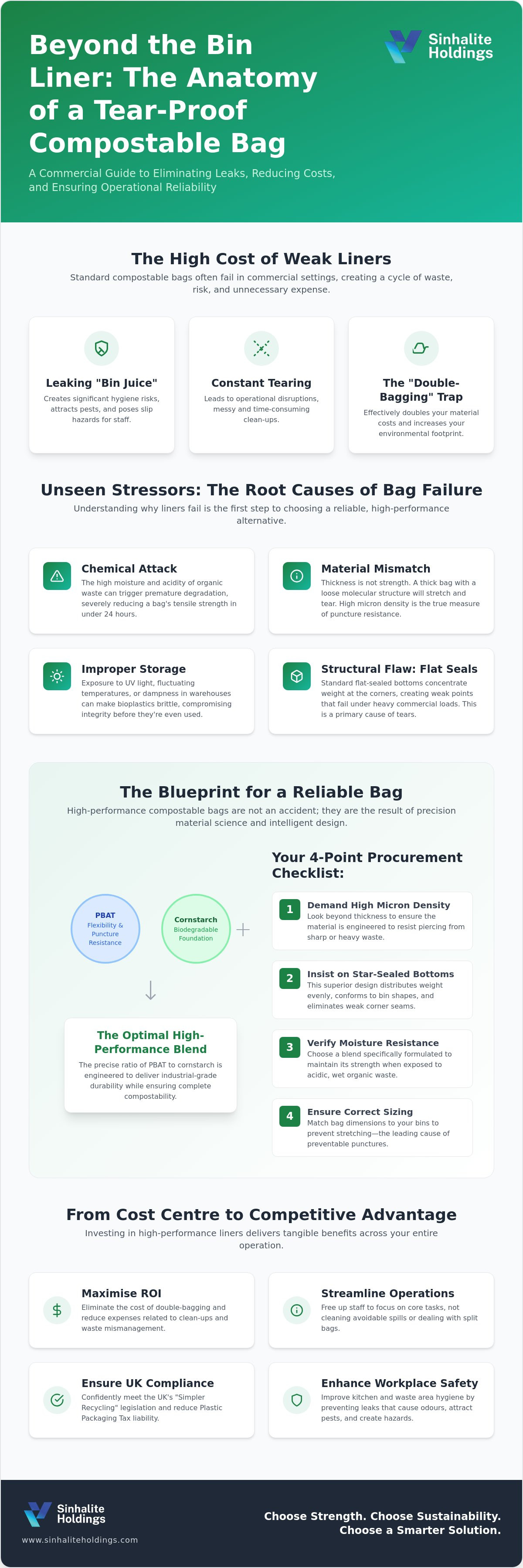
Organic waste is naturally acidic and moisture-heavy. In low-grade compostable liners, this acidity can actually trigger the degradation process prematurely. If a bag sits in a bin for more than 24 hours, the moisture begins to soften the polymer chains, significantly reducing its tensile strength. This is why a bag that feels sturdy when dry might split the moment a staff member attempts to lift it. Choosing a solution with a higher resistance to moisture-induced weakening is essential for any high-volume kitchen or facility.
To better understand the practical application of durable waste solutions, watch this helpful video:
Many buyers assume that a "thick" bag is naturally a puncture-resistant one. However, thickness and micron density are not the same thing. A thick bag made from a loose molecular structure will still stretch and tear easily. In contrast, a high-density bag uses precision engineering to ensure the material resists piercing even at a lower gauge. This material integrity is vital for handling diverse waste streams that include sharp objects or heavy, compacted materials.
Environmental factors before the bag even reaches the bin also play a role. UK warehouses can be prone to dampness or fluctuating temperatures, and improper storage near heat sources or in direct UV light can make bioplastics brittle. This degradation happens at a molecular level, meaning the bag might look fine on the roll but will lack the elasticity required to hold weight. Ensuring your supply chain uses climate-controlled storage is a simple way to maintain product integrity.
The common response to weak liners is the "double-bagging" trap. While it might seem like a quick fix, it effectively doubles your waste costs and increases your environmental footprint. It also fails to solve the underlying issue of material quality. By investing in high-performance compostable bags that don't tear, you eliminate the need for redundant layers, streamlining your operations and ensuring your sustainability targets remain cost-effective.
Common Failure Points in Commercial Waste
Most tears occur at the seams or where sharp edges meet the material. Standard flat-sealed bags often fail at the corners because the weight isn't distributed evenly. We recommend looking for star-sealed bottoms, which allow the bag to conform to the shape of the bin and gather the weight in the centre. This structural choice, combined with a material that can withstand the "sharp-edge vulnerability" of bones, shells, and rigid packaging, is what separates industrial-grade solutions from domestic alternatives.
The Impact of "Bin Juice" and Leaks
Leaking waste, often referred to as "bin juice," creates significant hygiene risks. It attracts pests, creates foul odours, and poses a slip hazard for hospitality staff. High-quality compostable garbage bags act as a critical preventative hygiene measure. When the liner remains intact, the bin stays clean, reducing the need for aggressive chemical cleaning and improving the overall safety and morale of your commercial kitchen environment.
The Science of Strength: Puncture Resistance and Material Innovation
Engineering compostable bags that don't tear requires a deep understanding of polymer science and molecular architecture. The core of this durability lies in the synergy between Polybutylene adipate terephthalate (PBAT) and cornstarch. While cornstarch provides the organic foundation necessary for rapid biodegradation, PBAT is the essential component that grants the material its "plastic-like" elasticity. This flexibility allows the bag to stretch under the weight of heavy waste rather than snapping, providing a level of resilience that matches traditional polyethylene.
Many procurement officers ask do compostable bags contain plastic when reviewing technical specifications. It is a valid question that deserves clarity. Certified bioplastics use biodegradable polymers that mimic the performance of traditional resins without leaving microplastics behind. Manufacturers measure this performance through rigorous tensile strength testing, identifying the exact "break point" where a sack fails. This data ensures that every roll meets the high standards required for commercial waste management, protecting your staff from the operational mess of bag failure.
Certifications That Guarantee Performance
Reliability is often validated by third-party standards. Finding an OK compost HOME certification explained in a product's documentation is a strong marker of material quality. This certification, alongside the TUV Austria standard, confirms that the bag will break down safely in specific conditions while maintaining its integrity during use. It provides a level of transparency that traditional plastic products simply cannot match, giving you the confidence to transition away from single-use plastics.
Innovation in 2026: The New Standard for Bioplastics
The landscape of 2026 has introduced significant advancements in molecular bonding. Modern manufacturing techniques now allow for thinner films that possess greater puncture resistance than the heavy-gauge plastics of the past. This evolution is critical for businesses seeking compostable bags that don't tear during intensive daily operations. We integrate these breakthroughs into our range of puncture resistant compostable garbage bags to ensure operational efficiency. If you are looking to upgrade your waste solutions, you can explore our full range of compostable liners to see how innovation meets practical utility.
Selecting Heavy-Duty Compostable Bags for UK Organisations
Choosing the right waste solution is a strategic decision that impacts both operational costs and sustainability metrics. For UK organisations, the goal is to find compostable bags that don't tear while meeting the 2026 "Simpler Recycling" mandates. This begins with matching the bag dimensions exactly to your bin specifications. When a liner is too small, staff are forced to stretch the material over the rim. This physical stress creates micro-tears and thins the polymer, leading to the failures discussed earlier. Selecting a slightly larger capacity ensures the material remains at its engineered thickness, providing the maximum possible protection against punctures.
Evaluating the gauge is equally critical. While light office waste might only require a thin liner, heavy organic waste from commercial kitchens demands a heavy-duty industrial sack. A professional buyer should look for a gauge that corresponds to the weight and density of the specific waste stream. High-capacity 100-litre sacks must possess a higher micron density to remain stable during transport to the skip. This attention to detail is a cornerstone of switching business to sustainable packaging effectively.
To preserve the integrity of your stock, storage conditions are paramount. UK businesses should keep their supplies in cool, dry environments away from direct sunlight. High humidity or heat can degrade the bioplastic on the roll before it is even used. By maintaining these conditions, you ensure that every bag performs exactly as intended when it is finally deployed. It's a simple step that protects your investment and ensures compostable bags that don't tear remain reliable until the moment they are disposed of.
Bulk Procurement and Scalability
For high-volume environments like hospitals or large-scale food courts, efficiency is key. "Bags on a roll" are the preferred format because they allow for rapid replacement and easy storage in janitorial trolleys. UK councils and large facilities require a consistent supply chain to maintain operational standards across multiple sites. We focus on providing scalable solutions that allow these organisations to meet their environmental obligations without compromising on the reliability of their daily waste collection.
The Circular Economy Advantage
High-strength compostable bags do more than just hold waste; they facilitate the entire nutrient recovery process. When liners don't leak or break, staff are more likely to comply with food waste separation protocols. This leads to cleaner waste streams for industrial composting facilities, supporting the UK’s transition to a circular economy. Sinhalite Holdings acts as a strategic partner in this journey, providing the tangible tools needed for a plastic-free future.
Securing a Durable and Sustainable Future
Transitioning to a circular economy shouldn't mean compromising on the operational standards that keep your organisation running smoothly. We've explored how the intersection of material science and precise engineering has finally bridged the performance gap. By understanding the synergy between PBAT and cornstarch, your business can move beyond the frustration of weak liners and invest in compostable bags that don't tear under commercial pressure. This shift not only ensures compliance with the 2026 "Simpler Recycling" mandates but also eliminates the hidden costs and mess associated with double-bagging.
As a UK-based specialist in compostable technology, Sinhalite Holdings provides solutions that are fully certified to OK compost HOME and TUV Austria standards. We are a trusted partner for commercial and industrial waste management, dedicated to helping you align your operations with modern ethical standards without sacrificing utility or strength. It's time to replace outdated plastic habits with high-performance alternatives that support a cleaner, greener outlook for your facility.
Explore Sinhalite’s range of heavy-duty compostable sacks today and discover how reliable waste solutions can empower your sustainability journey. Together, we can build a future where responsible practices and industrial durability go hand in hand.
Frequently Asked Questions
Why do my compostable bags keep splitting at the bottom?
Bags typically split at the bottom because the weight of the waste is concentrated on a single flat seal. This structural stress is often exacerbated when the liner is too small for the bin, forcing the material to stretch beyond its intended capacity. Switching to star-sealed bottoms allows the weight to be distributed more evenly, providing a much higher level of reliability for heavy commercial loads.
Are thicker compostable bags always stronger than thin ones?
Thickness isn't the only indicator of strength; micron density and the quality of the PBAT and cornstarch blend are far more important. A thinner, high-density bag can often outperform a thicker, low-grade liner because its molecular structure is more resistant to punctures. Professional buyers should focus on certified performance standards and material integrity rather than simply looking for the highest gauge to ensure durability.
How long can I store compostable bags before they start to break down?
Most high-quality compostable liners have a shelf life of approximately 12 months when kept in the correct conditions. It's essential to store your stock in a cool, dry environment away from direct sunlight and humidity to prevent premature degradation. Proper inventory management ensures you always have access to compostable bags that don't tear during daily operations and waste collection cycles.
Can compostable bags handle heavy commercial food waste?
Heavy-duty compostable sacks are specifically engineered to handle the weight and acidity of commercial food waste. By utilising advanced molecular bonding and reinforced seals, these bags provide a reliable solution for busy kitchens and hospitality environments. Choosing industrial-grade liners ensures your organisation meets UK sustainability targets without the operational mess of leaks, split bags, or the need for costly double-bagging.
Do compostable bags tear more easily when they get wet?
Moisture and organic acids act as catalysts for biodegradation, which can soften lower-grade materials over time. However, premium compostable bags that don't tear are designed with a higher resistance to moisture-induced weakening. This durability ensures they remain intact even when holding wet food scraps, protecting your staff from the hygiene risks and unpleasant cleanup associated with leaking "bin juice" in commercial settings.
What is the best way to prevent compostable liners from sticking to the bin?
Sticking usually occurs due to condensation and the vacuum effect created in a sealed bin. Using a ventilated bin or ensuring there is a small air gap at the bottom can significantly reduce this issue. Additionally, matching the bag size correctly to the bin prevents the material from being pulled too tight against the sides, making the liner much easier to remove when full.


