
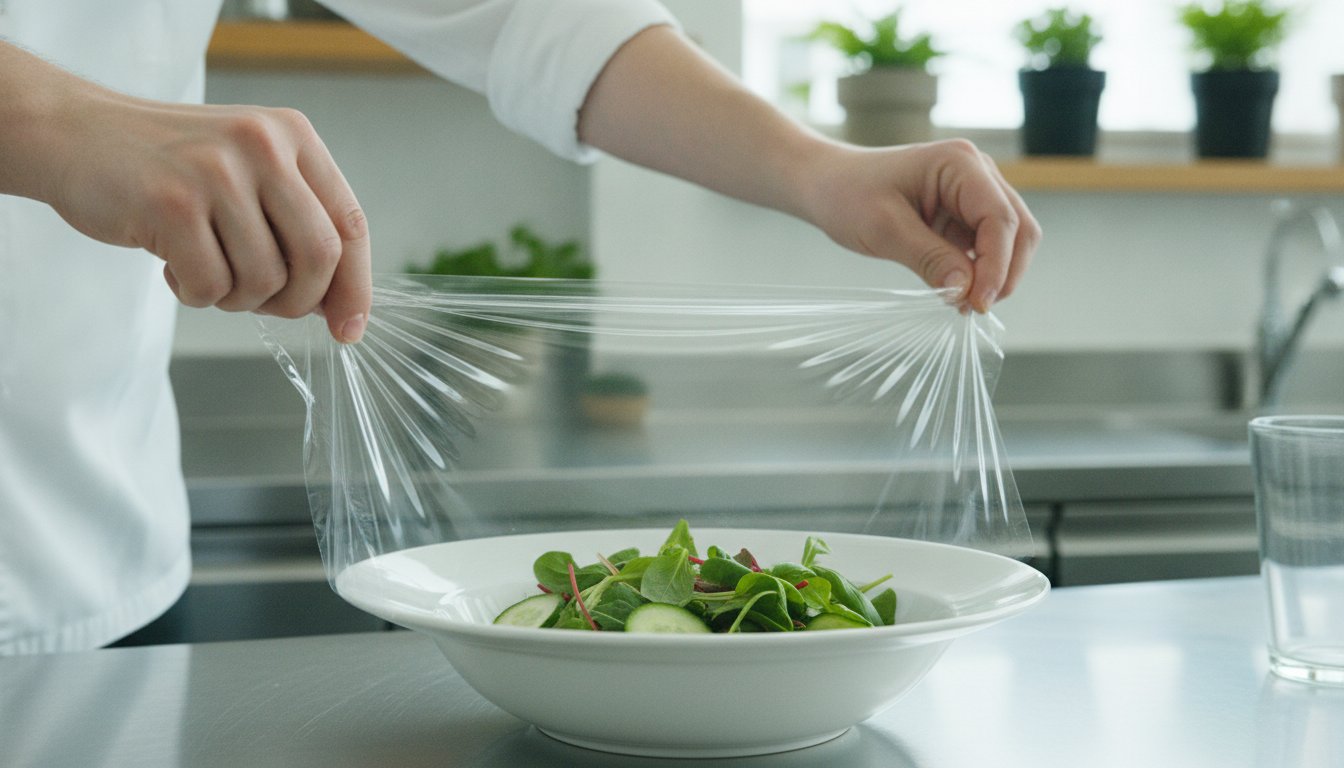
What if the reason your eco-friendly wrap isn't adhering to your containers has nothing to do with poor quality and everything to do with chemistry? It's incredibly frustrating when you're working in a high-pressure commercial environment, only to find your sustainable wrap won't stay put, leading to concerns about food spoilage and wasted time. Many professionals initially feel skeptical about switching to bioplastics when they don't behave exactly like the plastic films they've used for decades.
If you've been searching for compostable cling film not sticking help, you've likely realised that these innovative materials require a slightly different approach. We're here to provide the science-backed techniques needed to achieve a perfect seal every time. By understanding why bioplastics lack the harmful plasticisers found in PVC, you can master the shift from pressing to tension-based sealing. This guide explores the practical steps your organisation can take to ensure high performance while staying compliant with the latest 2026 packaging regulations, confirming that your commitment to a circular economy doesn't have to come at the cost of operational efficiency.
Key Takeaways
- Understand the molecular science behind bioplastics like PBAT and PLA, explaining why eco-friendly wraps rely on physical tension rather than chemical plasticisers.
- Access immediate compostable cling film not sticking help by mastering the over-wrap technique to ensure a secure, airtight seal for food preservation.
- Learn why maintaining dry, grease-free container rims is essential for achieving the high-performance results required in professional environments.
- Discover how transitioning to certified compostable solutions supports your organisation’s ESG targets and ensures compliance with 2026 packaging regulations.
Understanding the Science: Why Compostable Cling Film Feels Different
To transition effectively to sustainable packaging, it's essential to understand that compostable cling film is a sophisticated bioplastic, not a direct chemical clone of traditional PVC. Most eco-friendly wraps are engineered from materials such as PBAT (Polybutylene Adipate Terephthalate) or PLA (Polylactic Acid). These polymers are specifically designed to break down in composting environments, returning to the earth without leaving microplastics behind. You can explore the science of bioplastics to see how these plant based or biodegradable resins differ fundamentally from petroleum based alternatives.
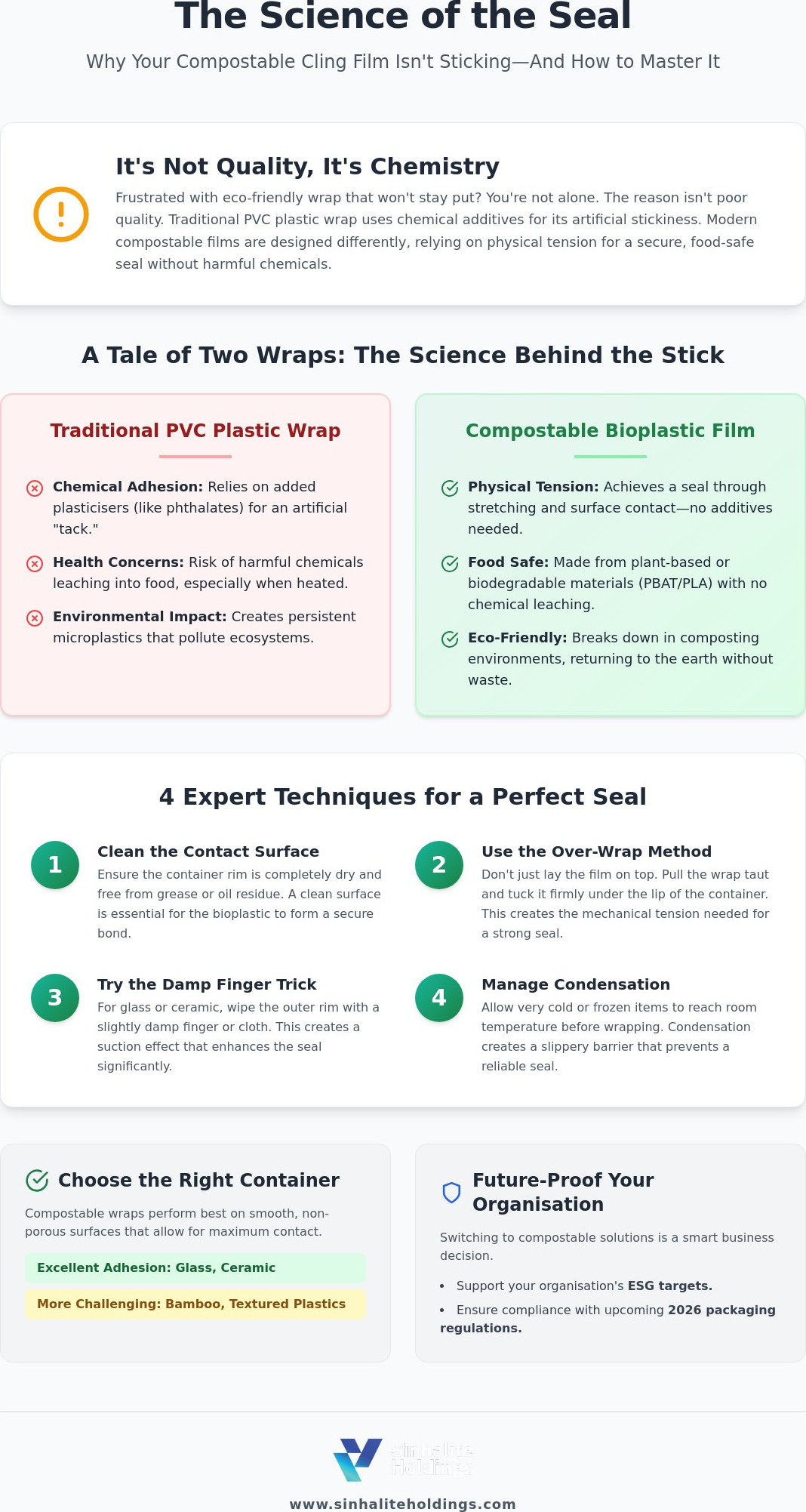
Traditional plastic wrap achieves its famous tack through the addition of chemical plasticisers, such as phthalates. These additives give the film an artificial stickiness that allows it to adhere to almost any surface with minimal effort. Compostable versions intentionally omit these chemicals to maintain their environmental integrity. This absence of PVC and harmful plasticisers provides a significant health benefit, as it eliminates the risk of synthetic chemicals leaching into your food during storage or heating. Because these bioplastics behave differently, many commercial users find themselves seeking compostable cling film not sticking help during their first few weeks of implementation.
The Role of Static and Surface Tension
Traditional polyethylene films are highly prone to generating static electricity, which helps them jump onto containers. Bioplastics are naturally less prone to static buildup. This means the film doesn't wrap around itself or the bowl automatically. The bond also depends heavily on the container material; while compostable wrap creates a reliable seal on glass and ceramic, it may struggle to bond with other plastic surfaces because the materials don't share the same surface tension properties.
Breathability vs. Airtight Seals
One of the primary advantages for professional kitchens is that compostable wraps are often breathable. This gas exchange is superior for keeping fresh produce, such as leafy greens and berries, crisp for longer periods. It's vital to distinguish between a chemical cling and a functional seal. While you might miss the aggressive stick of PVC, a properly applied compostable wrap provides a secure barrier that protects food quality without the environmental baggage of single-use plastics.
How to Make Your Compostable Cling Film Stick: 5 Expert Techniques
Adopting sustainable practices often requires a small shift in operational technique. Because compostable wraps don't rely on synthetic chemical tack, the application method is the primary driver of success. If you've been looking for compostable cling film not sticking help, these four steps will transform your kitchen's efficiency and reduce food waste.
- Clean the Contact Surface: Ensure the rim of your container is completely dry and free from grease or oil residue. Even a microscopic layer of fat can prevent the bioplastic from forming a secure physical bond.
- The Over-Wrap Method: Don't simply lay the film over the top. Pull the wrap tight and tuck it under the lip of the bowl. This creates mechanical tension, which is essential for the structural integrity of materials like PBAT.
- The Damp Finger Trick: For glass or ceramic vessels, apply a tiny amount of moisture to the outer rim with a damp cloth or finger. This creates a suction bond that effectively mimics the stickiness of traditional plastic.
- Manage Condensation: Temperature affects performance. Allow frozen or very cold containers to reach room temperature before wrapping. Condensation forms a slippery barrier that makes a reliable seal impossible to maintain.
The Tension-Seal Method
Achieving a secure fit requires a purposeful "pull and press" movement. Unlike PVC, which simply falls into place, compostable film needs to be stretched slightly to activate its natural grip. This process increases the surface-to-surface contact between the film and the vessel. If your team is struggling with the transition, switching to high-quality compostable household clingfilm ensures you're working with a product designed for professional reliability and strength.
Choosing the Right Container for Bioplastics
Not all storage vessels are created equal when it comes to bioplastic adhesion. Compostable wraps perform best on smooth, non-porous surfaces that allow for maximum contact. While glass and ceramic offer excellent adhesion, textured materials like bamboo or certain recycled plastics can be more challenging. For commercial kitchens, prioritising smooth-rimmed containers will significantly improve the efficacy of your sustainable packaging strategy and ensure your seals remain airtight.
Scaling Sustainability: Why Your Choice of Wrap Matters in 2026
Large organisations now face increasing pressure to align with national sustainability goals. Moving beyond the immediate need for compostable cling film not sticking help, businesses must view their choice of packaging as a core component of their Environmental, Social, and Governance (ESG) strategy. Integrating high-quality compostable clingfilm uk into daily operations does more than just preserve food; it signals a commitment to a circular economy model that prioritises resource recovery over disposal.
Adopting these solutions is a significant reputational win. For many entities, switching business to sustainable packaging serves as a tangible proof point of corporate responsibility. Sinhalite Holdings provides performance-oriented SKUs, including compostable household Clingfilm and food roller bags, that meet the rigorous durability requirements of commercial kitchens while upholding the highest environmental standards. This transition ensures that high standards of utility are never sacrificed for the sake of ecological integrity.
Meeting UK Regulatory Standards
Compliance is a critical driver for modern businesses. Understanding OK compost HOME certification explained is vital for ensuring your supplies meet recognised benchmarks for biodegradation. By choosing certified compostables, organisations can effectively navigate the complexities of the UK Plastic Packaging Tax. These choices protect the bottom line while removing traditional polymers from the waste stream, ensuring long-term operational resilience in a changing legislative landscape.
The Future of Food Waste Management
A holistic approach to waste simplifies commercial workflows. When your wrap is fully compostable, it can be disposed of alongside organic scraps in the same bin. This synergy is enhanced when using specialist caddy liners to manage food waste efficiently. This unified system reduces contamination in recycling streams and supports the systemic change needed for a cleaner, greener future. By choosing reliable, certified products, your organisation becomes a proactive leader in the transition away from single-use plastics.
Securing a Sustainable Future for Your Organisation
Transitioning to bioplastics is a vital step toward achieving a circular economy. While the material behaves differently than traditional PVC, mastering the "pull and press" method ensures your operations remain efficient and professional. Success relies on understanding that these wraps prioritise food safety and environmental health over synthetic chemical tack. By focusing on surface preparation and mechanical tension, you can maintain the high standards of utility your business demands.
If you require compostable cling film not sticking help, implementing the techniques discussed will provide the reliable seal your kitchen needs. Our solutions are 100% plastic-free and non-toxic, currently trusted by leading UK organisations to meet stringent ESG targets. These high-quality products carry the Certified OK compost HOME mark, providing a clear path to avoiding the Plastic Packaging Tax while supporting systemic environmental change.
Explore our range of professional-grade compostable clingfilm to align your business with the responsible innovations of 2026. Making the switch today positions your brand as a visionary leader in the global movement toward a cleaner, greener future. It's a practical, scalable choice that proves high performance and environmental stewardship go hand in hand.
Frequently Asked Questions
Is compostable cling film microwave safe for heating leftovers?
Yes, professional-grade compostable cling film is safe for microwave use when reheating food. It's important to leave a small vent for steam to escape and avoid direct contact between the film and foods with high fat or sugar content. These substances can reach temperatures that might cause the bioplastic to soften. This functionality allows commercial kitchens to maintain operational speed without compromising their sustainability goals.
Can I use compostable wrap in the freezer to prevent freezer burn?
You can use compostable wrap in the freezer to protect food from freezer burn effectively. While bioplastics like PBAT are durable at low temperatures, they may become slightly less flexible when frozen. If you find you need compostable cling film not sticking help after removing an item from the cold, allow the container to reach room temperature before attempting to reseal or adjust the wrap.
Does compostable cling film contain any hidden microplastics or PFAS?
Certified compostable films are 100% plastic-free and don't contain hidden microplastics or PFAS "forever chemicals." These products are engineered from natural resins that biodegrade into water, CO2, and biomass. This ensures your organisation remains compliant with 2026 packaging regulations, including strict bans on PFAS in food packaging. It provides a non-toxic storage solution that protects both consumer health and the wider ecosystem.
How long does it take for compostable cling film to break down in a home compost bin?
High-quality wraps with the OK compost HOME certification typically break down within 180 days in a well-maintained home compost bin. The exact timeframe depends on environmental factors such as moisture, aeration, and temperature. In commercial settings, these films disintegrate efficiently. This allows businesses to integrate their food wrap disposal directly into organic waste streams, supporting a more circular and responsible waste management process.


