
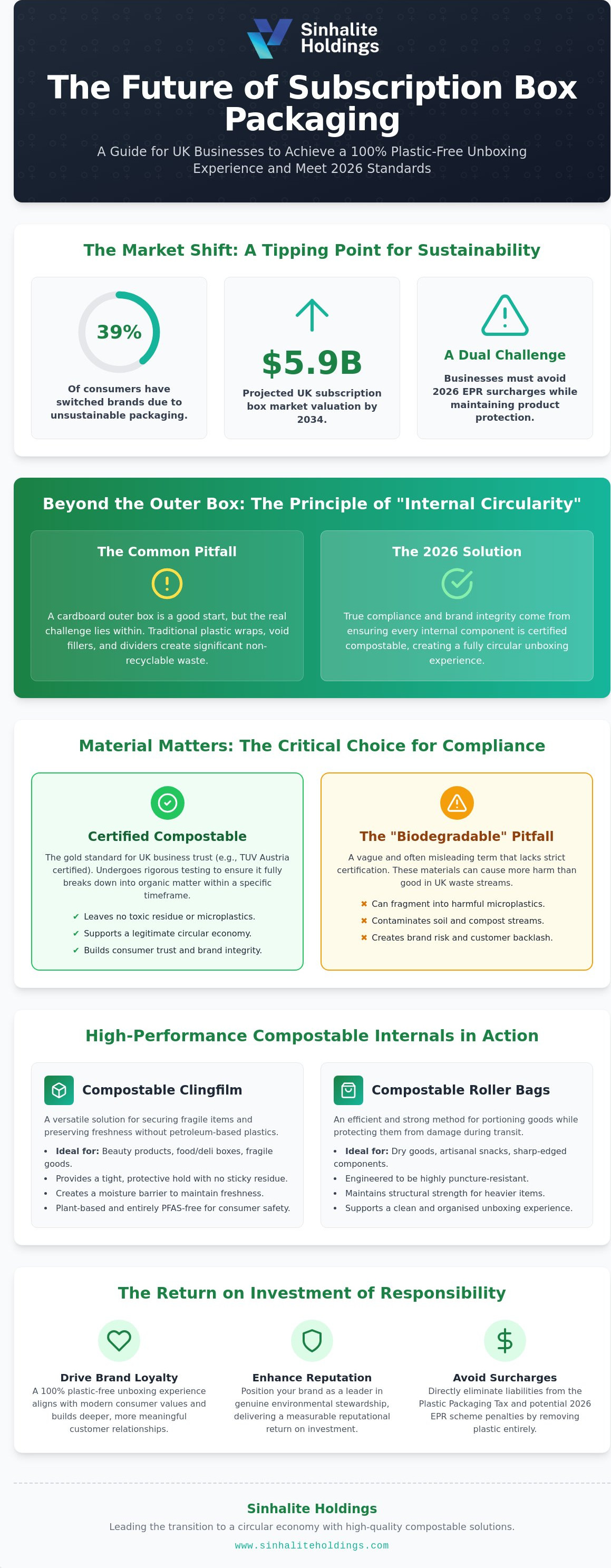
Did you know that 39% of consumers have already switched brands specifically because of unsustainable packaging? As the UK subscription box market scales toward a projected valuation of $5.9 billion by 2034, the pressure to move beyond traditional plastics has reached a definitive tipping point. Businesses now face a dual challenge; they must avoid the heavy surcharges of the 2026 Extended Producer Responsibility (EPR) scheme while maintaining the high functional standards their products require. Finding high-performance compostable packaging for subscription boxes is no longer a luxury. It's a strategic necessity for any organisation that values long-term growth and genuine environmental stewardship.
You likely recognise that your customers are increasingly wary of vague claims and expect authentic, plastic-free solutions that protect their items effectively. This guide provides the practical clarity you need to align your operations with the 2026 UK sustainability standards. We will explore how to integrate certified compostable internals, such as specialist clingfilm and food bags, to create a fully circular unboxing experience. You'll discover how to eliminate plastic tax liabilities and build deeper brand loyalty through responsible, innovative packaging choices that mirror the performance of plastic without its environmental legacy.
Key Takeaways
- Understand how the 2026 UK Extended Producer Responsibility (EPR) framework rewards businesses that transition from standard cardboard outers to fully circular packaging models.
- Learn to select high-performance compostable packaging for subscription boxes, specifically internals like clingfilm and food roller bags that secure products without plastic waste.
- Discover how a 100% plastic-free unboxing experience drives brand loyalty and delivers a measurable reputational return on investment.
- Master the use of transparent disposal instructions to guide your customers toward responsible waste management and prevent "wish-cycling" errors.
Navigating the 2026 UK Subscription Landscape: Beyond the Outer Box
The 2026 UK circular economy demands more than just token gestures toward sustainability. As the subscription model evolves, businesses are finding that the regulatory environment, specifically the Plastic Packaging Tax, is no longer a peripheral concern; it's a central operational driver. Adopting compostable packaging for subscription boxes is the most direct route to ensuring your brand remains compliant and competitive. While many companies feel they've done enough by choosing cardboard mailers, the reality is that the internal components often remain a significant source of non-recyclable waste.
True sustainability requires a holistic approach that follows sustainable packaging principles to eliminate every trace of single-use plastic. We call this "Internal Circularity." By replacing traditional plastic wraps and dividers with compostable alternatives like clingfilm or food bags, you ensure that every part of the unboxing experience aligns with modern ethical standards and systemic change.
To better understand this concept, watch this helpful video:
Understanding 2026 UK Compostability Standards
Navigating the technical landscape requires a clear understanding of where your materials end up. Industrial composting requires specific facility conditions, whereas home compostable materials break down in domestic heaps. For a deeper look at these distinctions, read our guide on OK compost HOME certification explained. The TUV Austria certification remains the gold standard for UK business trust because it guarantees that materials leave no toxic residue behind.
The Problem with "Biodegradable" vs. Certified Compostable
The term "biodegradable" is often used loosely, but it lacks the rigorous testing required for certified compostability. Many materials marketed as biodegradable simply fragment into microplastics, which can contaminate UK soil and waste streams. Certified compostable packaging for subscription boxes undergoes strict validation to ensure it converts into organic matter within a set timeframe. Relying on non-certified bioplastics creates a residue risk that can damage your brand's integrity and lead to customer backlash.
Selecting Compostable Internals: A Material Matching Guide
Transitioning to compostable packaging for subscription boxes involves matching specific materials to the unique physical requirements of your contents. While outer boxes provide structural integrity, the internal layers ensure product safety and presentation. High-performance compostable clingfilm offers a versatile solution for securing fragile items during transit. It provides a tight, protective hold without the sticky adhesive residue often left by traditional tapes, ensuring that your products arrive in pristine condition.
For businesses handling dry goods or artisanal snacks, compostable food roller bags provide an efficient method for portioning while maintaining structural strength. These liners are engineered to be puncture-resistant. This makes them suitable for heavier or sharp-edged components that might otherwise compromise standard packaging. Following WRAP's guidance on compostable packaging ensures that these material choices support a legitimate circular workflow rather than contributing to waste stream contamination.
Food and Perishable Subscriptions
Maintaining freshness is critical for meal-kit and deli box providers. Utilising compostable clingfilm allows brands to preserve moisture levels without relying on petroleum-based films. It's essential that these moisture barriers remain plant-based and entirely PFAS-free. This commitment to material purity ensures consumer safety and aligns with 2026 health standards. It's a practical way to protect your perishables while upholding your environmental promises.
Beauty and Wellness Box Logistics
The "clean beauty" movement relies on packaging that reflects the purity of the product inside. High-clarity compostable wraps allow for a premium unboxing experience while replacing non-recyclable plastic bubble wrap with protective bags on a roll for small vials. Additionally, compostable caddy bags can be cleverly repurposed as "return bags" for reusable elements, fostering a deeper sense of partnership with your customers. If you're ready to upgrade your internals, you can explore our range of certified compostable solutions to see how innovation meets utility.
Implementing a Circular Unboxing Experience: ROI and Brand Integrity
Creating a 100% plastic-free unboxing experience delivers a significant reputational return on investment. It's a calculated move that goes beyond mere aesthetics. When a customer opens a box and finds every internal component is earth-friendly, it reinforces their trust in your brand's mission. A UK Parliament report on compostable packaging highlights the systemic shift toward these materials as national waste infrastructure evolves. Using compostable packaging for subscription boxes removes the cognitive dissonance customers feel when they find plastic internals hidden within a sustainable outer shell.
Clear disposal instructions are vital to prevent "wish-cycling", where consumers place compostable materials into standard recycling streams by mistake. Providing explicit guidance ensures that your packaging reaches the correct composting environment, protecting your brand's integrity. Integrating Sinhalite’s compostable SKUs, such as our caddy liners or food roller bags, into your current fulfilment workflow doesn't require a sacrifice in speed. It's a practical swap that maintains high-volume efficiency while positioning your organisation as a leader in switching business to sustainable packaging.
Logistics and Scalability for Large Organisations
Large-scale operations require a partner that understands the demands of high-volume throughput. Sourcing wholesale compostable solutions from UK-based specialists ensures supply chain reliability and reduces lead times. It's about industrial pragmatism. Our distribution network supports the rigorous pace of modern subscription models, providing the durability needed for complex shipments without the environmental legacy of plastic.
The Future: Trends in Subscription Packaging for 2026
Looking toward the horizon, future compostable food packaging trends suggest a move toward smart-labels that provide real-time disposal data to consumers. We're seeing a decisive shift toward "zero-residue" packaging across the UK retail and hospitality sectors. This evolution reflects a broader commitment to the circular economy, where every internal wrap and protective bag returns safely to the soil, leaving no microplastics behind.
Securing Your Brand's Future in the Circular Economy
It's clear that transitioning to a fully circular model is a strategic investment in your brand's longevity and consumer trust. We've explored how navigating the 2026 UK regulatory landscape requires a decisive shift toward internal circularity. By selecting high-performance internals such as certified clingfilm and food roller bags, you protect both your products and the environment. Adopting compostable packaging for subscription boxes ensures your unboxing experience remains authentic, so you don't face the reputational risks associated with hidden single-use plastics. Responsibility drives growth.
Sinhalite Holdings is dedicated to supporting your transition with reliable UK-wide distribution and specialist expertise in high-performance compostable clingfilm. Our materials carry the rigorous OK compost HOME certification, providing the tangible proof of responsibility that modern organisations require. You can view our range of commercial compostable packaging solutions to begin aligning your fulfillment workflows with the highest environmental standards. Embracing these practical, scalable innovations today builds a cleaner, more resilient future for your business and the circular economy.
Frequently Asked Questions
Is compostable packaging for subscription boxes more expensive than plastic?
While the initial unit cost for compostable materials can be higher than traditional plastics, the total cost of ownership is often lower when accounting for the 2026 UK regulatory landscape. By adopting these materials, businesses can avoid the heavy surcharges associated with the Plastic Packaging Tax and the "Red" rating under the Extended Producer Responsibility (EPR) scheme. Compostable packaging for subscription boxes essentially acts as a hedge against rising environmental levies while simultaneously protecting your brand from the costs of customer churn.
Can I use home compostable bags for shipping food items in the UK?
Home compostable bags are an excellent solution for UK food subscriptions, provided they are certified food-safe and plant-based. These bags are particularly effective for portioning dry ingredients or artisanal snacks within a box. Because they are designed to break down in domestic composting environments, they offer a convenient disposal route for your customers, ensuring that your packaging stays out of the landfill and supports a truly circular economy.
How long does compostable subscription packaging take to break down?
The time required for degradation depends on the certification; industrially compostable materials typically break down within 12 weeks in a controlled facility. Home compostable alternatives are designed to degrade within 6 to 12 months in a domestic compost heap, depending on local conditions. This natural process ensures that no microplastics or toxic residues remain in the soil, which is a critical distinction for businesses aiming to meet 2026 UK environmental standards.
Will compostable clingfilm protect my products during long transit times?
High-performance compostable clingfilm is engineered to provide the same tensile strength and moisture barrier properties as conventional plastic films. It's specifically designed to secure fragile items and maintain freshness throughout the fulfilment and delivery process. This ensures that your products remain protected during long transit times across the UK, allowing you to maintain high quality-control standards without relying on single-use plastics.


