
What if the primary barrier to a sustainable home isn't a lack of environmental concern, but a simple fear of losing convenience? Most of us feel a persistent sense of responsibility when we see our household waste levels. However, the thought of convincing your family to reduce plastic often feels like an invitation to an argument over daily habits. It's a common struggle in 2026, particularly as global regulations like the UAE's expanded ban on plastic cups and California's total grocery bag ban remind us that systemic change is already here.
We believe that for a transition to last, it must be frictionless. This guide provides the psychological and practical strategies you need to lead your household toward a plastic-free future without sacrificing performance. You'll learn how high-quality compostable alternatives, such as durable garbage bags and reliable food roller bags, can replace traditional plastics so effectively that your family won't feel the need to compromise. We will outline a clear path to a low-waste home that prioritises both environmental stewardship and practical utility.
Key Takeaways
- Understand why performance-led swaps are more effective than moral persuasion when overcoming the "inconvenience barrier" within a busy household.
- Learn how to implement a "silent swap" by replacing traditional materials with high-performance compostable clingfilm and durable, leak-proof garbage bags.
- Discover the specific psychological techniques for convincing your family to reduce plastic by focusing on functional utility rather than perceived sacrifice.
- Master the technical aspects of waste management by identifying verified "OK compost HOME" certifications to ensure your household alternatives meet global standards.
- Explore how establishing sustainable habits at home serves as a practical foundation for driving corporate ESG initiatives and professional leadership in the circular economy.
The Psychology of Environmental Stewardship: Why Performance Trumps Persuasion
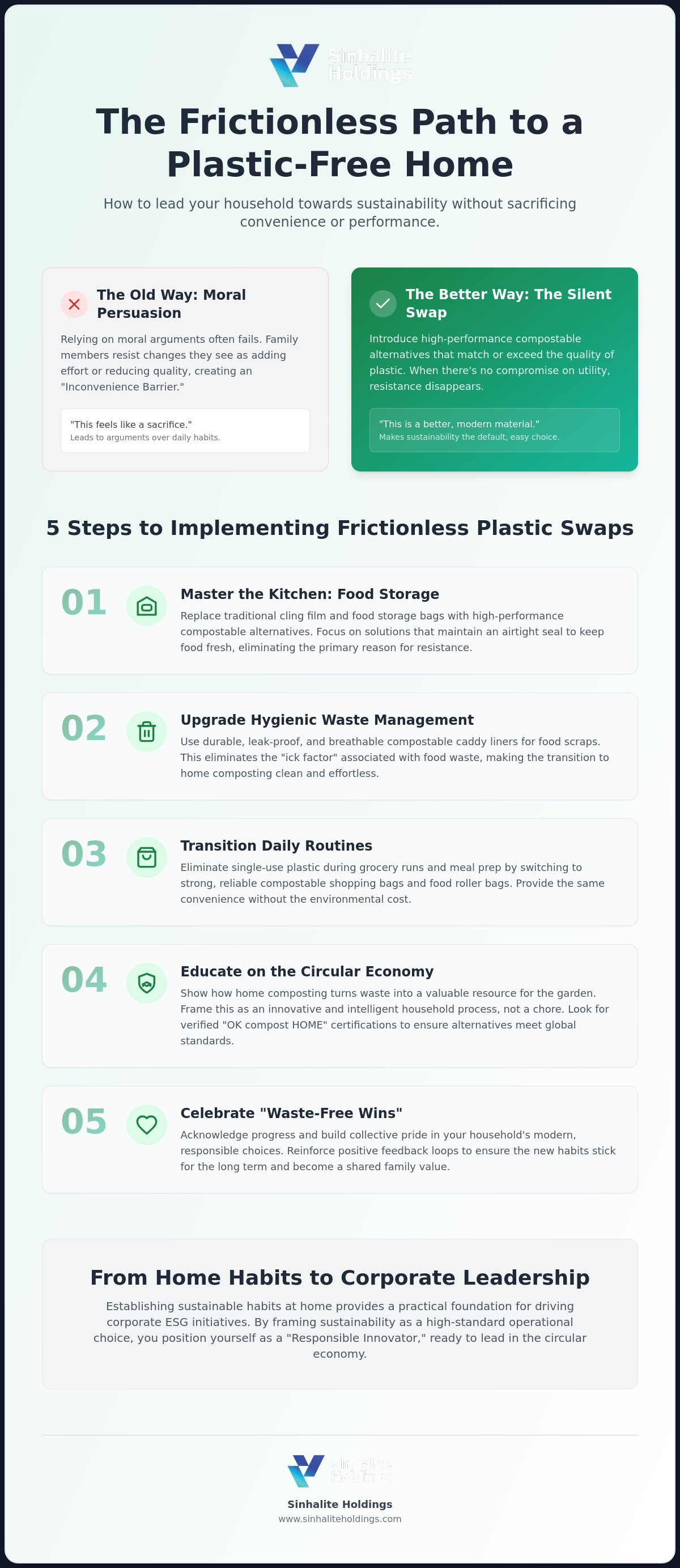
Sustainable change often fails when it relies solely on moral arguments or emotional appeals. While most people acknowledge the necessity of protecting our environment, daily habits are usually dictated by ease and reliability. This creates the "Inconvenience Barrier," where family members resist changes that they perceive as adding extra effort or reducing quality. When you're convincing your family to reduce plastic, you're often fighting against the friction of established routines and the fear of inferior alternatives.
To better understand this concept, watch this helpful video:
Instead of debating the ethics of waste, we recommend implementing the "Silent Swap." This strategy involves replacing plastic items with high-performance compostable alternatives that require zero behaviour change. If a compostable garbage bag doesn't leak and compostable clingfilm seals tightly, the excuse for using plastic disappears. This shift addresses the global plastic pollution crisis through practical utility rather than constant reminders. By focusing on performance, you remove the burden of choice and make sustainability the default setting for the home.
Identifying Household Friction Points
Audit your kitchen and bathroom to identify where single-use plastic is currently a default choice. Focus on high-frequency items like food storage and waste management. Evaluate whether these are used for hygiene, speed, or a perceived lack of viable alternatives. Identifying these specific friction points allows you to introduce a high-performance compostable solution, such as leak-proof caddy liners, before a conflict over convenience even arises.
The "Responsible Innovator" Approach
Framing these changes as a visionary upgrade is the most effective way of convincing your family to reduce plastic long-term. A modern household uses modern materials. By choosing compostable food roller bags or shopping bags, you aren't just "cutting back"; you're adopting superior, innovative technology. This logic-based approach removes alarmism and replaces it with optimism. Your professional commitment to excellence can inspire household pride when sustainability is presented as a high-standard operational choice for the family.
5 Steps to Implementing Frictionless Plastic Swaps at Home
Transitioning a household away from single-use materials succeeds when the new solutions match the performance of the old ones. Implementing frictionless plastic swaps requires a focus on utility. If the alternative works perfectly, the resistance to change vanishes. Follow these five steps to ensure convincing your family to reduce plastic becomes a natural progression rather than a daily struggle.
- Step 1: Replace traditional cling film with high-performance compostable alternatives that maintain an airtight seal.
- Step 2: Upgrade waste management by using leak-proof compostable caddy liners for food scraps.
- Step 3: Transition to compostable shopping and food roller bags to eliminate plastic during grocery runs and meal prep.
- Step 4: Educate the family on the circular economy by demonstrating how home composting turns waste into a resource.
- Step 5: Celebrate "Waste-Free Wins" to reinforce positive feedback loops and build collective pride.
Mastering the Kitchen: Cling Film and Food Storage
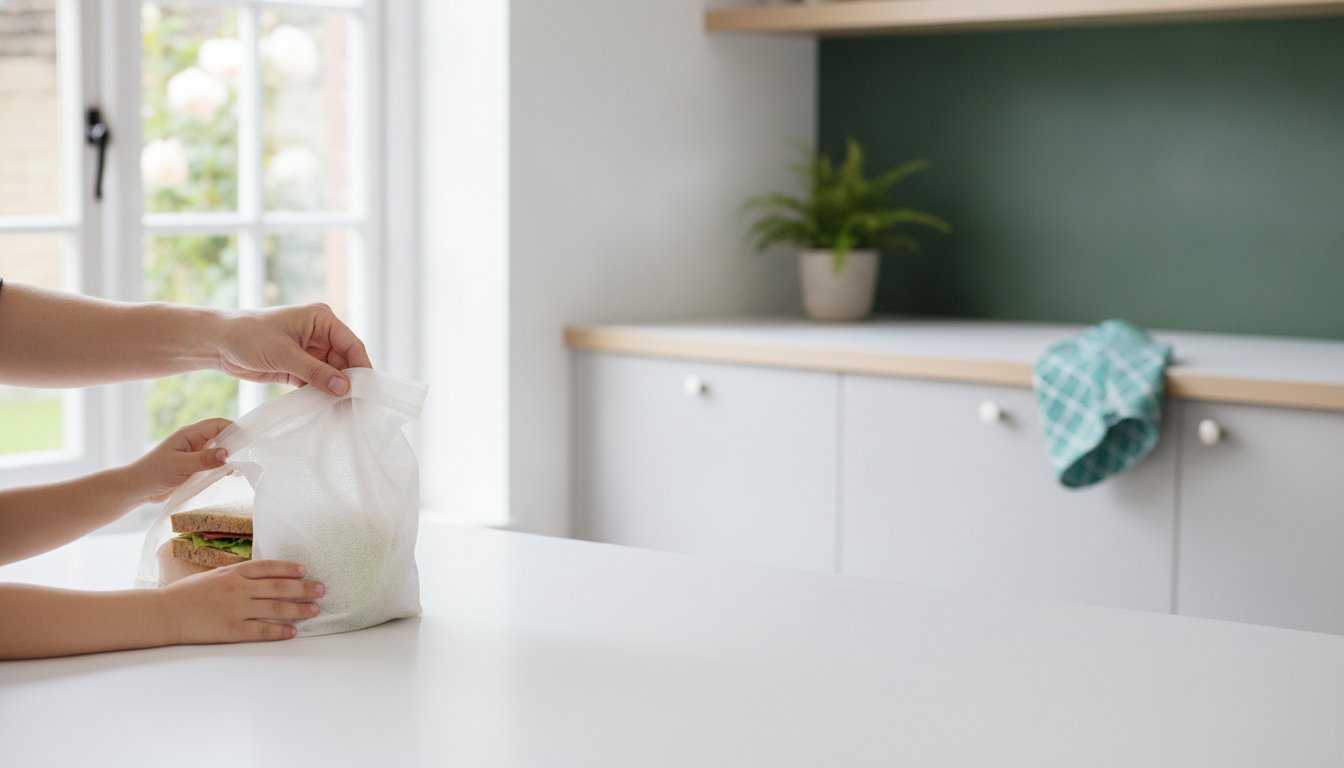
The kitchen is often the primary source of household plastic waste. Many people resist eco-friendly wraps because they believe they don't adhere well to containers. You can find compostable cling film that actually clings, ensuring food stays fresh without the environmental cost. Additionally, using compostable food roller bags for school lunches or meal prep provides the same convenience as plastic while supporting a zero-waste lifestyle.
Hygienic Waste Management
Eliminating the "ick factor" is essential for long-term habit formation. Breathable compostable caddy bags prevent moisture build-up, which is a key factor in odour control. Learn how to keep a food waste bin from smelling by using these specialised liners. High-quality compostable garbage bags also prove that durability isn't sacrificed for sustainability. When a bag doesn't tear or leak, it validates the choice to switch. Explore our range of high-performance compostable solutions to begin your household transition with confidence.
Scaling Impact: Connecting Household Change to Global Standards
Individual efforts at home are the foundation for larger systemic shifts. When you succeed in convincing your family to reduce plastic, you aren't just managing waste; you're developing the literacy required for corporate ESG leadership. These small-scale successes prove that sustainable transitions are achievable without compromising performance or quality. By following resources like the EPA guide to reducing plastic waste, households can align their daily operations with the UK’s 2026 circular economy goals. This national strategy relies on a shift from a "take-make-waste" culture toward one where materials are valued as long-term assets.
Decoding Eco-Labels for the Family
Identifying high-performance materials requires an understanding of technical standards. Teaching your family to recognise the "OK compost HOME" seal ensures that the products you buy actually break down in domestic environments. You can find a detailed OK compost HOME certification explained to help distinguish between industrial-only compostables and those suitable for your backyard. This knowledge empowers family members to spot "greenwashing" in supermarket packaging, where vague claims of "eco-friendliness" often mask a lack of true recyclability or compostability.
From Home to Organisation
The strategies used for convincing your family to reduce plastic are directly transferable to professional environments. Your household's transition serves as a powerful case study for switching business to sustainable packaging. When children and partners see that compostable shopping bags and food storage solutions perform as well as their plastic predecessors, they become natural advocates for these materials in their own schools and workplaces. This ripple effect transforms a personal commitment into a legacy of environmental stewardship, positioning your family as proactive participants in a cleaner, greener future.
Leading the Transition to a Plastic-Free Future
Achieving a low-waste household is no longer a matter of sacrifice; it's a strategic adoption of superior materials. By prioritising performance over persuasion, you eliminate the friction that often prevents long-term habit change. Convincing your family to reduce plastic becomes a seamless process when the alternatives, from leak-proof garbage bags to reliable food roller bags, meet the high standards of a modern UK kitchen. These small, daily choices form the essential training ground for broader corporate leadership and national sustainability goals.
As a specialist provider of OK compost HOME certified solutions, we're dedicated to supporting this transition with products designed for durability and strength. We act as a trusted partner for those seeking to align their personal and professional lives with the principles of a circular economy. The tools for a cleaner, greener future are already available and ready for immediate implementation. Explore our range of high-performance compostable essentials for your home and take the first step toward a lasting environmental legacy. Together, we can turn the vision of a plastic-free society into a practical, everyday reality.
Frequently Asked Questions
How do I start the conversation about plastic reduction without sounding judgmental?
Initiate the dialogue by focusing on the collective benefits of a forward-thinking household rather than highlighting past waste habits. Framing the transition as an upgrade to high-performance, modern materials removes the sense of criticism. You can explain that adopting these practices aligns the family with global environmental standards. This solution-oriented approach fosters a sense of shared stewardship and responsibility, making the transition feel like a proactive choice rather than a restrictive mandate.
What are the most effective plastic swaps for a busy family that values convenience?
The most successful swaps are those that integrate seamlessly into existing routines without requiring extra time or effort. When convincing your family to reduce plastic, start with compostable clingfilm and food roller bags that match the utility of traditional versions. These items offer the same speed and convenience for meal prep and school lunches. By providing a direct replacement that performs reliably, you remove the "inconvenience barrier" that often leads to household resistance.
Are compostable bags really better for the environment than recycling traditional plastic?
Compostable bags are superior because they offer a guaranteed circular end-of-life path, whereas traditional plastic recycling is often inefficient. With only about 9% of plastic waste actually being recycled globally, compostables provide a more reliable way to manage household waste. These materials break down into natural elements, returning nutrients to the soil. This process is particularly effective for food waste, where traditional plastic liners would contaminate the organic matter and prevent effective processing.
How can I convince my family that compostable alternatives are just as strong as plastic?
The best way to prove the strength of these materials is through consistent, everyday performance. Introduce durable compostable garbage bags and leak-proof caddy liners that clearly demonstrate their ability to handle heavy or wet waste without failure. Once family members see that these innovative materials don't leak or tear, their skepticism usually fades. Focusing on the technical integrity and industrial-grade strength of the products makes convincing your family to reduce plastic a matter of logic rather than debate.


