

Did you know that as of July 2026, any packaging entering the EU must meet the rigorous new EN 13432:2026+AC:2026 standards or risk being rejected at customs? For many organisations, the debate over cornstarch vs pla bags isn't just about environmental ethics; it's now a matter of strict legal compliance and operational survival. You've likely felt the pressure to move away from traditional polythene, yet the fear of falling into a greenwashing trap or choosing a material that won't actually break down in a home compost bin remains a significant hurdle.
We understand that you want to do the right thing for the planet without sacrificing the durability your business requires. This guide will demystify the technical jargon and provide a clear framework for selecting the most responsible packaging for your specific needs. We'll examine the performance of cornstarch blends, the industrial requirements of PLA, and how to align your procurement with the latest 2026 global standards to ensure your transition is both seamless and sustainable.
Key Takeaways
- Gain a clear understanding of the technical differences between natural starch polymers and fermented PLA to select the most appropriate material for your specific operational requirements.
- Resolve the cornstarch vs pla bags dilemma by discovering how innovative material blends provide the durability needed for high-performance items like puncture-resistant garbage bags.
- Align your procurement strategy with the 2026 EU and international standards to ensure full compliance and avoid the risks associated with outdated packaging materials.
- Identify practical opportunities to replace single-use plastics with certified compostable mailer bags and shopping bags through a structured organisational waste audit.
- Learn to manage the shelf life and disposal requirements of bioplastics to guarantee that your commitment to sustainability translates into tangible environmental benefits.
Understanding the Bioplastic Landscape: Cornstarch vs PLA
The shift toward sustainable packaging requires a clear understanding of the materials driving the industry forward. Bioplastics are plant-based polymers designed to return to the earth without leaving microplastics. When evaluating cornstarch vs pla bags, we're looking at two distinct pathways toward the same goal: reducing our reliance on finite resources. These materials aren't just alternatives; they represent a fundamental change in how we manufacture and dispose of essential goods.
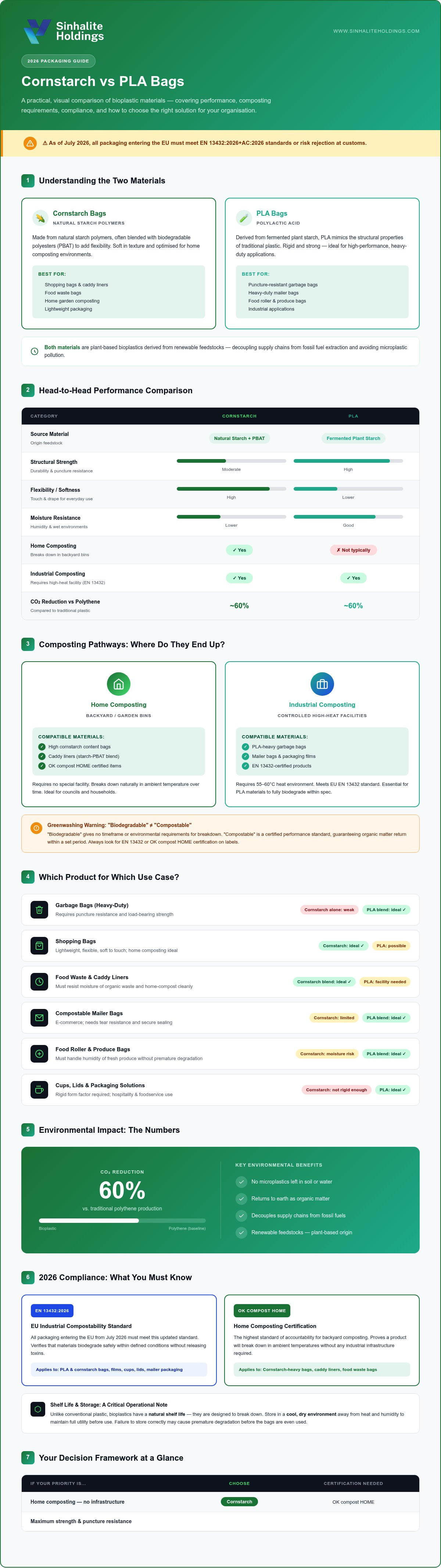
When comparing cornstarch vs pla bags, it's evident that the choice depends on the intended end-of-life scenario. Cornstarch bags utilize natural starch polymers, which are frequently blended with biodegradable polyesters such as PBAT to provide the flexibility required for shopping bags and caddy liners. On the other hand, Polylactic Acid (PLA) is a bioplastic derived from fermented plant starch that mimics the structural properties of traditional plastic. These bioplastics allow us to create high-performance products that integrate seamlessly into modern waste management systems.
To better understand this concept, watch this helpful video:
The Source: Renewable Feedstocks vs Petrochemicals
Transitioning to renewable feedstocks is a critical strategy for any organisation committed to environmental stewardship. By choosing plant-based sources, we effectively decouple our supply chains from fossil fuel extraction. This choice results in a 60% reduction in CO2 emissions compared to traditional polythene production. It's a logical, cause-and-effect solution that links corporate responsibility with measurable ecological benefits, ensuring that your packaging choices support a healthier climate.
The Greenwashing Trap: Biodegradable vs Compostable
Vague terminology often leads to confusion and accusations of greenwashing. The term "biodegradable" can be misleading because it doesn't specify how long a material takes to break down or the environment it requires. In contrast, "compostable" is a rigorous performance standard. It guarantees that a material will return to the earth as organic matter within a set timeframe. For true transparency, look for the OK compost HOME certification explained to ensure your products meet the highest standards of accountability in a backyard setting.
Performance and Disposal: Comparing Bags in Action
Choosing between cornstarch vs pla bags requires a deep dive into how these materials perform under stress. While pure cornstarch provides a soft touch, it often lacks the structural integrity required for heavy-duty applications. This is why PLA-blends are essential for puncture resistant compostable garbage bags. By combining the flexibility of starch with the rigid strength of polylactic acid, we create a product that withstands significant weight without the environmental cost of traditional polythene.
Technical research plays a vital role in perfecting these formulations. Scientists characterizing cornstarch bioplastic films have noted how various plasticizers influence moisture resistance and thermal stability. In practical terms, this means compostable food roller bags must be engineered to handle the humidity of fresh produce without premature degradation. Storage is equally important. Unlike plastic, bioplastics have a natural shelf life; they're designed to break down, so keeping them in a cool, dry environment is essential to maintain their utility before use.
Home vs Industrial Composting
The disposal pathway is perhaps the most critical distinction in the cornstarch vs pla bags debate. Bags with a higher cornstarch content are typically more accessible for home caddy liners and garden composting systems. In contrast, PLA-heavy materials often require the controlled, high-heat environment of an industrial composting facility to meet the EN 13432 standard. It's a common concern for businesses to ask, do compostable bags contain plastic? Understanding that these are plant-based polymers rather than petrochemical-derived synthetics is key to accurate waste sorting and environmental transparency.
Tensile Strength and Visual Clarity
Visual presentation often dictates the choice of material. PLA is the preferred option for clear shopping bags and mailers because it offers a transparency that closely mimics conventional plastic. Conversely, cornstarch provides a soft, matte feel that's ideal for caddy bags and household liners. This tactile difference helps users identify the product's purpose while ensuring the high standards of durability are met. If you're ready to transition your operations, you can explore our range of certified compostable solutions to find the perfect fit for your organisation.
Implementing Compostable Solutions for Your Organisation
Transitioning from traditional plastics to earth-friendly alternatives is a strategic move that requires a methodical waste audit. By identifying every point where single-use plastic enters your workflow, you can pinpoint specific opportunities for replacement. For instance, replacing standard shipping materials with compostable mailer bags or swapping plastic protective wear for compostable aprons significantly reduces your environmental footprint. This process isn't just about waste reduction; it's about aligning your operational reality with the ethical expectations of a modern, conscious audience.
The commercial advantage of this shift is profound. Transparency regarding your material choices builds deep-seated brand loyalty. When weighing up the benefits of cornstarch vs pla bags for your specific supply chain, the decision often rests on the intensity of use and the required durability. Understanding the nuances of cornstarch vs pla bags allows procurement officers to select the right material for the right application, whether that's a lightweight caddy liner or a heavy-duty mailer. Aligning your procurement with the future of compostable food packaging UK trends ensures your organisation remains ahead of regulatory shifts and consumer demands.
Strategic Procurement for 2026
Bulk-buying certified compostable options is a sensible business model that secures your supply chain against the rising costs of petrochemical-based products. Success in this transition also relies on education. You must ensure that stakeholders and customers understand the correct disposal methods for compostable packaging to prevent contamination in recycling streams. Clear communication turns a simple bag into a powerful statement of environmental stewardship.
The Sinhalite Commitment
Sinhalite Holdings acts as a visionary partner for councils and businesses seeking to scale their sustainability efforts. We provide the tangible tools needed for this change, serving as a trusted supplier of compostable shopping bags and garbage bags that meet rigorous industrial standards. Moving toward bioplastics is a decisive step toward a cleaner future. We're here to ensure that your transition is supported by expertise, reliability, and a shared belief in positive systemic change.
#SustainabilitySL #EcoFriendlySriLanka #CompostableInnovation #GreenBusiness2026 #ZeroWasteLanka #SinhaliteHoldings #CircularEconomy #PlasticFreeFuture
Leading the Transition to a Plastic-Free Future
The evolution of sustainable packaging has reached a critical turning point where performance and environmental responsibility are no longer mutually exclusive. Your choice between cornstarch vs pla bags should be guided by a clear understanding of your disposal infrastructure and the specific durability needs of your supply chain. Whether you require the soft flexibility of starch-based liners or the rigid strength of PLA-blends, the priority remains clear. Moving away from petrochemicals is essential for long-term commercial and ecological viability.
Sinhalite Holdings acts as a visionary partner in this systemic shift. We're specialists in high-performance compostable mailers and garbage bags, offering expert guidance on OK compost HOME and industrial certifications. Our mission is to replace single-use plastics with scalable innovations that support your business goals while protecting the planet. We provide the tangible tools you need to meet 2026 standards with confidence and integrity.
Switch your organisation to sustainable packaging with Sinhalite Holdings today. Every step toward responsible innovation is a step toward a cleaner, more resilient future for everyone. It's time to lead the way.
#SustainabilitySL #EcoFriendlySriLanka #SinhaliteHoldings #PlasticFreeFuture #CompostablePackaging #GreenBusiness2026 #CircularEconomy #SriLankaEco
Frequently Asked Questions
Is cornstarch better for the environment than PLA?
Both materials offer significant ecological advantages over petrochemical plastics. While cornstarch blends often achieve OK compost HOME certification more easily, PLA provides a higher degree of structural durability for complex packaging. The superior choice in the cornstarch vs pla bags debate depends on your specific waste management infrastructure. Both reduce CO2 emissions by approximately 60% compared to traditional polythene, making them responsible choices for any 2026 sustainability strategy.
Will cornstarch bags melt if they get wet or hot?
Cornstarch bags are engineered to maintain their integrity during standard use and don't simply dissolve when exposed to water. However, they are sensitive to extreme heat and prolonged moisture, which is why they have a finite shelf life. Storing your compostable caddy bags in a cool, dry place ensures they remain strong and reliable until they are ready for disposal in a composting environment.
How long do PLA bags take to decompose in a landfill?
PLA bags are not designed for disposal in a landfill environment where the lack of oxygen and heat prevents natural decomposition. In these anaerobic conditions, they may persist for many years without breaking down effectively. To achieve the intended environmental benefits, these bags should be processed in industrial composting facilities where temperatures reach the levels required by the EN 13432 standard.
Can I put PLA bags in my home compost bin?
Most PLA bags are not suitable for home compost bins because they require the sustained high temperatures found in industrial facilities to break down effectively. When comparing cornstarch vs pla bags, cornstarch-heavy blends are generally the preferred option for backyard composting. Always check for the OK compost HOME certification to ensure the material is compatible with domestic composting conditions and won't leave residues.

