
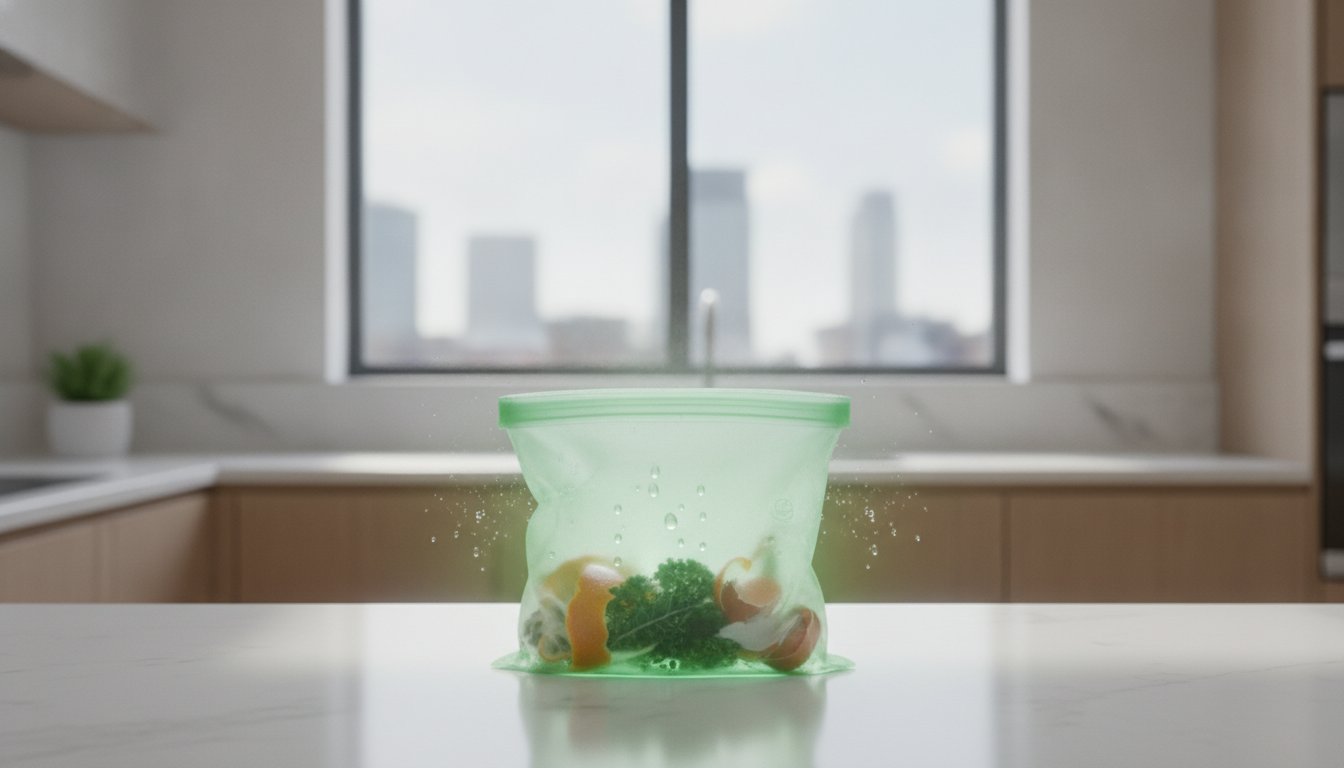
You might assume that tightly sealing food waste in a traditional plastic liner is the best way to trap pungent scents, yet this airtight environment is exactly what creates the foul stench that attracts flies. When organic waste is deprived of oxygen, it undergoes anaerobic decomposition, resulting in the sour, lingering odours that plague many commercial kitchens and household bins. We have all faced the frustration of maggot infestations during warmer months or the mess of a leaking liner. Many responsible organisations now ask, do compostable bags reduce bin smell, or are they merely an ethical swap that lacks the durability of plastic?
The answer lies in the science of breathability. This 2026 guide demonstrates how certified compostable liners, such as those meeting the EN 13432 standard, allow moisture to evaporate rather than pool at the bottom of the bag. This process effectively halts the growth of odour-producing bacteria and makes your waste far less attractive to pests. You'll learn how to implement a clean, odour-free waste management system that aligns with the latest UK "Simpler Recycling" legislation while ensuring your operations remain both efficient and environmentally responsible. By understanding the functional advantages of these innovative materials, you can eliminate pests and transition toward a more sustainable, circular economy with confidence.
Key Takeaways
- Understand the molecular science behind why do compostable bags reduce bin smell by facilitating moisture evaporation and preventing the anaerobic rot associated with plastic.
- Master a practical, step-by-step hygiene routine to eliminate fly infestations through thorough bin preparation and precise liner fitting techniques.
- Discover how switching business to sustainable packaging empowers UK organisations to meet ambitious ESG targets without compromising on operational durability.
- Learn why heavy-duty compostable garbage bags and caddy liners are essential for preventing leaks and maintaining high hygiene standards in commercial waste areas.
- Navigate the 2026 "Simpler Recycling" legislation with confidence by adopting high-performance, compliant materials that support a circular economy.
Do Compostable Bags Reduce Bin Smell? The Science of Breathability
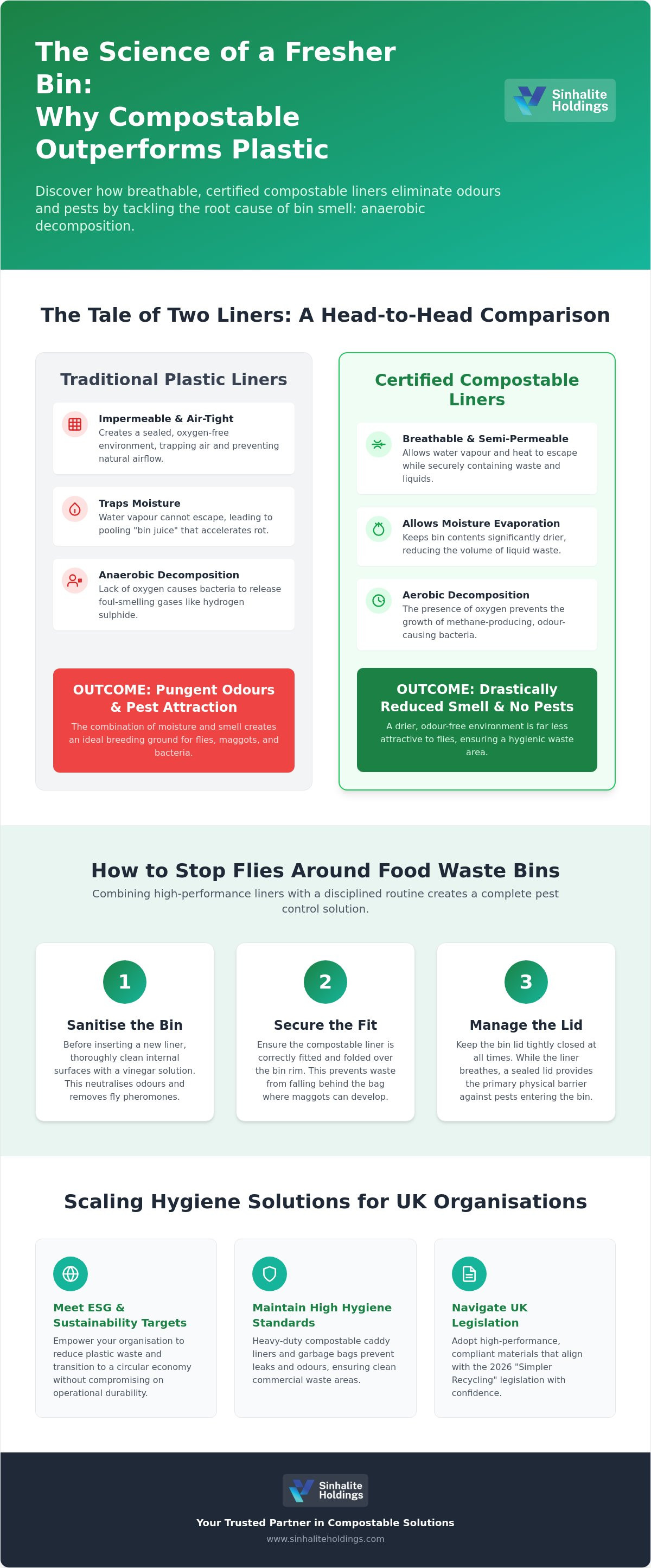
Traditional single-use plastic liners are designed to be impermeable. While this seems beneficial for containing liquids, it creates a sealed, oxygen-free environment. When food waste is trapped without air, it begins to rot through anaerobic decomposition. This process creates the familiar, pungent odour often associated with waste bins. Many facility managers and homeowners ask, do compostable bags reduce bin smell more effectively than these plastic counterparts?
The answer is found in the Science of compostable materials. Unlike plastic, compostable liners made from plant-based starches and PBAT are semi-permeable. This means they allow water vapour to pass through the material while still containing solid waste and liquids. By allowing the waste to breathe, these bags prevent the build-up of heat and humidity that accelerates rot. It's a functional innovation that addresses the root cause of waste odours rather than just masking them.
To better understand this concept, watch this helpful video:
Anaerobic vs. Aerobic Decomposition
In a sealed plastic bag, the lack of oxygen forces bacteria to break down organic matter anaerobically, releasing hydrogen sulphide and other foul-smelling gases. Aerobic decomposition facilitated by a compostable liner prevents the growth of methane-producing bacteria, which typically thrive in oxygen-deprived environments. Ensuring your waste management strategy includes an OK compost HOME certification explained ensures these liners function correctly in domestic or commercial caddies, supporting a cleaner, more hygienic process. This transition is a vital step for organisations aiming for higher environmental standards.
The Role of Moisture Control
Moisture is the primary catalyst for "bin juice," the nutrient-rich liquid that pools at the bottom of bins and generates intense odours. High-quality compostable caddy bags facilitate evaporation, keeping the contents drier and significantly reducing the volume of liquid. This drier environment is less hospitable to the bacteria that cause smells. It proves that do compostable bags reduce bin smell by fundamentally changing the biological environment within the bin. By maintaining structural integrity while breathing, these bags offer a practical solution for modern waste challenges.
How to Stop Flies Around Food Waste Bins: A Step-by-Step Guide
Stopping fly infestations is not about reactive sprays; it's about eliminating the olfactory cues that attract them. While we have established how breathable bag technology mitigates odour, a comprehensive hygiene routine is essential for complete pest control. Organisations that ask, do compostable bags reduce bin smell, often find the most success when combining high-performance liners with disciplined maintenance. By addressing the root cause of the attraction, you can maintain a professional and hygienic waste area.
Follow these practical steps to maintain a fly-free environment:
- Sanitise the bin: Thoroughly clean the internal bin surfaces with a vinegar solution before inserting a new liner. This natural acid neutralises alkaline odours and removes existing fly pheromones.
- Secure the fit: Ensure the compostable liner is properly fitted and folded over the rim. This prevents organic matter from falling behind the bag, which is a common site for maggot development.
- Manage the lid: Keep the bin lid tightly closed. While the liner handles internal gas exchange through its breathable surface, the lid acts as a physical barrier against female flies seeking a place to lay eggs.
- Frequent disposal: Empty the caddy every 48 to 72 hours. Even if the bag isn't full, this disrupts the fly egg-laying cycle, ensuring larvae cannot reach maturity before the waste is removed.
Preventing Maggots and Infestations
Flies are instinctively drawn to volatile organic compounds (VOCs) released during the breakdown of proteins and fats. High-protein waste, such as meat or fish remains, should be wrapped in compostable cling film before being placed in the main bag. This additional layer of protection contains the most potent VOCs, making the bin far less detectable to pests. It's a simple step that significantly enhances the overall hygiene of your waste management system.
Optimising Bin Placement
The physical location of your waste station significantly impacts the rate of decomposition. Heat accelerates the breakdown of organic matter, so bins should be positioned away from direct sunlight and heat-generating appliances. Using a ventilated caddy in conjunction with a breathable liner allows for maximum airflow, further reducing the moisture that attracts flies. For businesses seeking to upgrade their infrastructure, exploring a range of heavy-duty compostable garbage bags can provide the durability and performance needed for high-volume environments while supporting your sustainability goals.
Scaling Hygiene: Solutions for UK Businesses and Councils
Managing organic waste at scale requires more than just domestic solutions; it demands a robust infrastructure. For large organisations, switching business to sustainable packaging is a strategic move that addresses both ESG commitments and rigorous hygiene standards. In high-volume environments like hospitals or school canteens, the question of do compostable bags reduce bin smell becomes even more critical due to the sheer quantity of organic matter processed daily. Heavy-duty compostable garbage bags are engineered to withstand significant weight and prevent the leaks that often lead to contaminated wheelie bins.
By using puncture resistant compostable garbage bags, facility managers can reduce the frequency of intensive bin washing, saving both water and labour costs. This operational efficiency is vital for local councils managing nationwide food waste programmes. Bulk-buying these solutions ensures that every household and business has access to the tools needed to meet the 2026 "Simpler Recycling" requirements effectively.
Commercial Kitchen Hygiene Standards
Efficiency is paramount in professional kitchens. Integrating compostable aprons and gloves into the food waste stream allows staff to dispose of contaminated items alongside food scraps, streamlining operations. High-quality compostable liners maintain a fly-free environment even in peak catering hours by controlling the moisture levels that attract pests. This integrated approach confirms that do compostable bags reduce bin smell while improving overall site safety and preventing maggot infestations in large-scale waste storage areas.
The Circular Economy in Practice
Sinhalite Holdings acts as a steady ally for UK organisations transitioning to plastic-free waste streams. By providing certified compostable products, we ensure full compatibility with UK industrial composting facilities, turning waste into a valuable resource rather than a landfill burden. Adopting these materials is a visionary step toward a sustainable future. It empowers businesses to align their daily operations with modern ethical standards while maintaining the high utility and durability required for industrial waste management.
Advancing Toward a More Responsible Waste Future
Transitioning to a circular economy is no longer just a philosophical commitment; it's a practical operational advantage. We've explored how the structural integrity and breathability of modern liners solve the age-old problem of foul odours and pest infestations. By understanding that do compostable bags reduce bin smell through advanced moisture management, you can make an informed choice for your facility. These innovations ensure your waste areas remain hygienic while meeting the stringent requirements of 2026 legislation.
As a specialist UK provider of sustainable packaging, Sinhalite Holdings offers products that bridge the gap between industrial pragmatism and ecological responsibility. Our solutions feature puncture-resistant technology and carry trusted certifications from TUV Austria and OK compost HOME. This ensures your organisation can scale its sustainability efforts without sacrificing performance or hygiene standards. It's a reliable way to align your operations with modern ethical expectations while maintaining high standards of utility.
Take the next step toward a cleaner, greener waste management system today. Explore our range of professional compostable waste solutions and join the movement toward a responsible future.
Frequently Asked Questions
Do compostable bags break down and smell faster than plastic?
Compostable bags don't smell faster than plastic; in fact, they are designed to mitigate odour through advanced breathability. While they are engineered to break down in composting conditions, they maintain their structural integrity during use in your kitchen or commercial space. By allowing moisture to evaporate, they prevent the anaerobic conditions that cause traditional plastic liners to develop foul, lingering scents during storage.
Can I use compostable liners in my council-provided food waste bin?
Most UK councils accept compostable liners in food waste bins, provided they meet the EN 13432 standard and carry the seedling logo. Under the 2026 "Simpler Recycling" legislation, weekly food waste collections are becoming a nationwide standard for all households. It's always advisable to check your local authority's specific guidelines, as some transitional arrangements may still vary across different regions as the rollout continues.
How do I stop my compostable bag from leaking "bin juice"?
To prevent leaks, ensure you are using high-quality compostable caddy bags and place them in a ventilated bin. Ventilation allows moisture to escape as vapour rather than pooling as liquid at the bottom of the liner. This evaporation process is a key reason why do compostable bags reduce bin smell, as it keeps the organic matter drier and more stable during its time in your kitchen.
Are compostable bags strong enough to hold heavy food waste without tearing?
Modern compostable garbage bags are engineered for high durability and are capable of holding heavy food waste without tearing or stretching. Advanced plant-based polymers provide the tensile strength required for both commercial and domestic waste management. Choosing puncture-resistant options ensures that even sharp or heavy organic waste can be transported securely to your collection point without the risk of bags splitting or failing.
Why are flies attracted to my compost bin even if I use a lid?
Flies are attracted to the volatile organic compounds (VOCs) that escape even through small gaps in a bin lid. If your waste is undergoing anaerobic rot in a plastic bag, these scents are particularly strong and act as a beacon for pests. Switching to a breathable system helps because do compostable bags reduce bin smell by preventing the specific chemical signals that flies use to locate egg-laying sites.


