
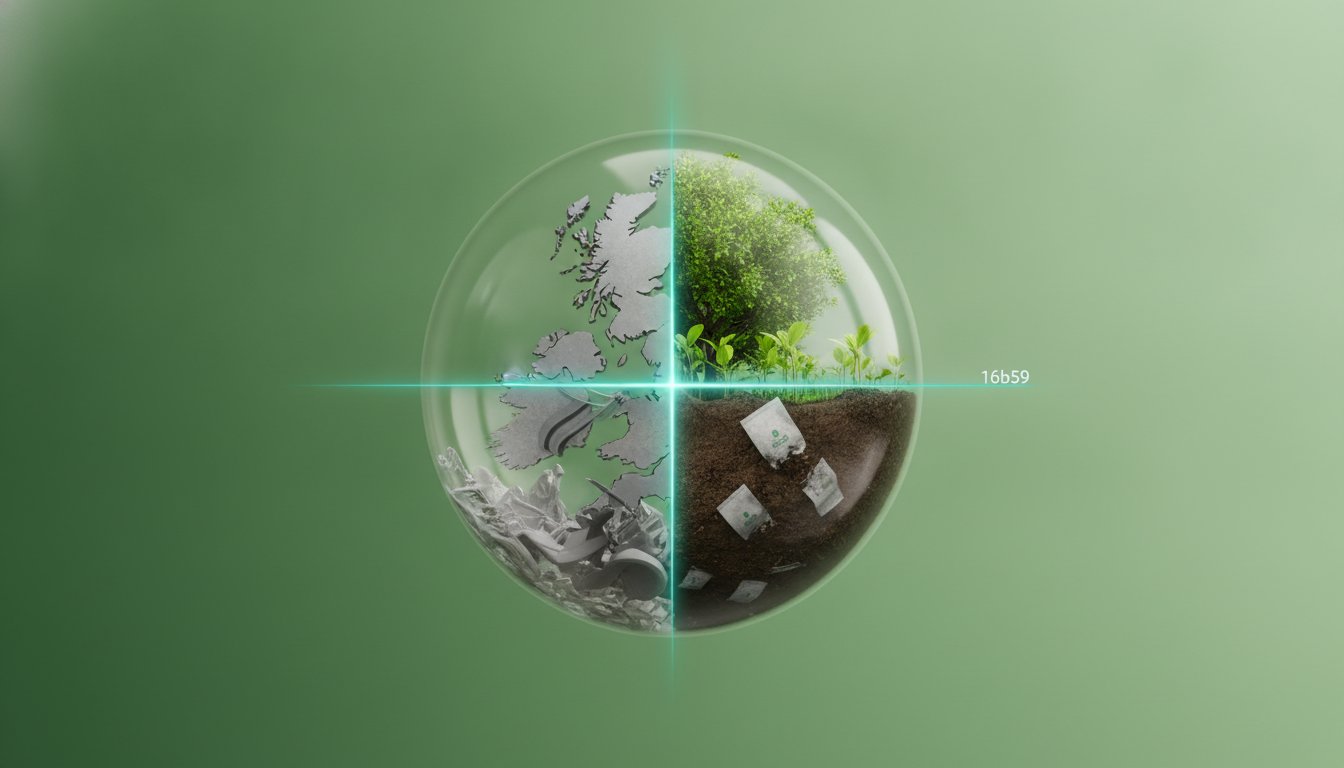
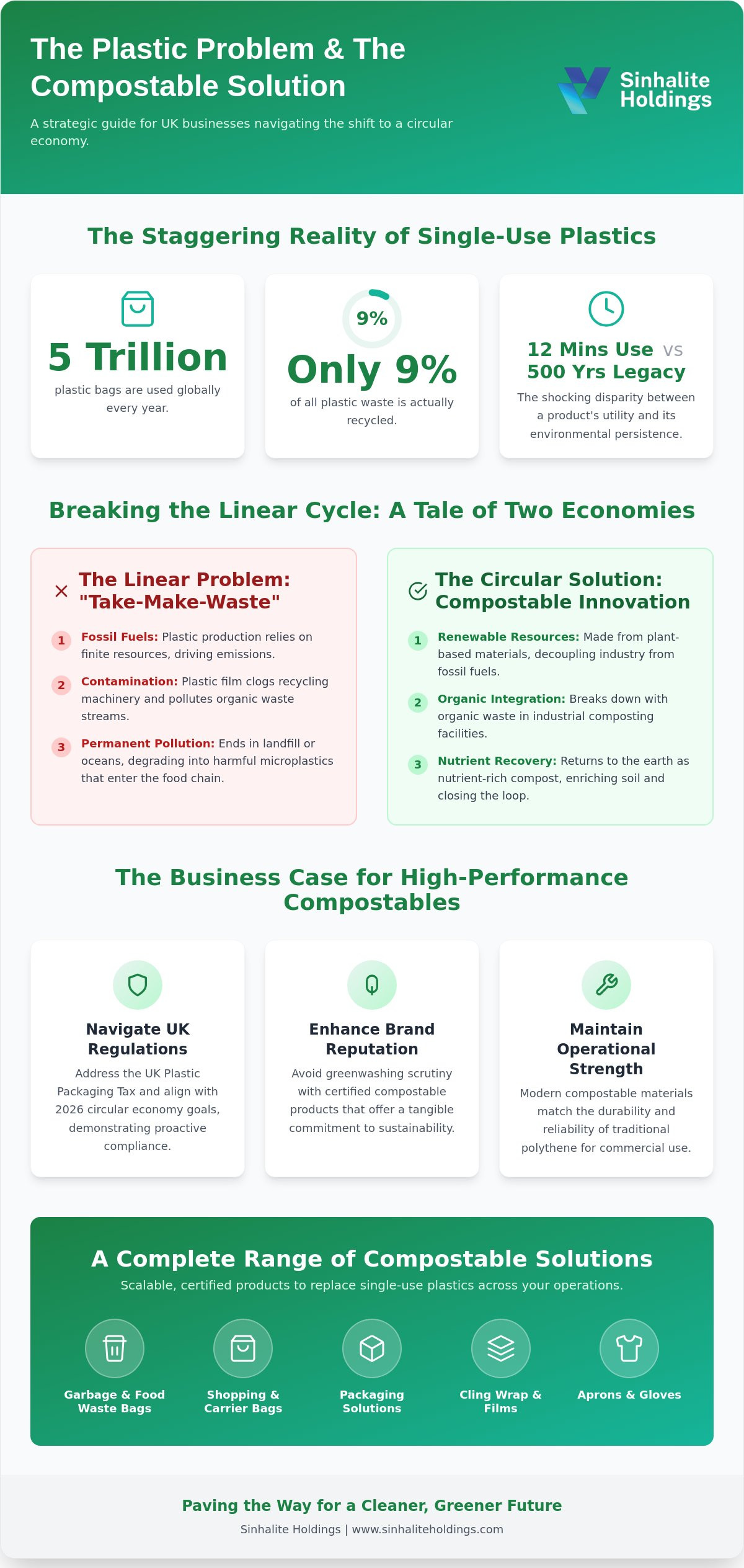
Did you know that an estimated 5 trillion plastic bags are used globally every year, yet only about 9% of all plastic waste actually finds its way into a recycling stream? This staggering reality highlights the profound environmental impact of single-use plastic bags, which has moved from a simple litter concern to a systemic industrial crisis. Most UK organisations now feel the weight of the UK Plastic Packaging Tax and the sharp gaze of a public tired of ineffective greenwashing. You likely recognise that traditional recycling isn't the silver bullet it was once promised to be, especially when commercial waste requires high-strength solutions that don't fail under pressure.
This strategic review provides the clear evidence base you need for internal sustainability reports while offering a practical roadmap for replacing plastic shopping and garbage bags. We'll explore how shifting to high-performance, compostable alternatives allows your business to align with the UK’s transition to a circular economy. By choosing materials that integrate naturally into the organic waste stream, you can ensure that your commitment to the planet is backed by tangible, scalable results that don't compromise on durability or operational efficiency.
Key Takeaways
- Examine the multi-century environmental impact of single-use plastic bags and the escalating microplastic crisis currently affecting the national food chain.
- Identify how traditional plastic waste compromises the UK’s 2026 circular economy goals by contaminating high-quality organic waste streams.
- Evaluate the business case for sustainable materials to help your organisation navigate the UK Plastic Packaging Tax and avoid greenwashing scrutiny.
- Compare the industrial strength of modern compostable garbage bags against traditional polythene to ensure operational reliability during your transition.
- Access a structured roadmap for integrating compostable shopping and food waste bags into your commercial operations for long-term ecological impact.
The Persistent Environmental Legacy of Single-Use Plastic Bags
The environmental impact of single-use plastic bags is often measured in centuries rather than years. While a single bag is used for an average of twelve minutes, its chemical legacy persists for up to 500 years in our natural environment. Understanding the history of plastic bags reveals how a material designed for durability became a systemic ecological burden. Today, over 430 million tonnes of plastic are produced annually, with nearly half dedicated to single-use items that frequently bypass the UK's strained recycling infrastructure, where global recycling rates still hover around a mere 9%.
To better understand the systemic nature of this challenge, watch this helpful video:
As these bags degrade, they don't disappear; they fragment into microplastics. These microscopic particles now permeate our national food chain, carrying toxic additives into terrestrial and marine ecosystems alike. It's no longer just a matter of visible litter on British beaches. It's a fundamental disruption of biological health, where an estimated 8 to 11 million tons of plastic enter the global ocean annually, affecting everything from soil quality to the health of marine life.
The Persistence of Polythene in UK Ecosystems
High-density polyethylene (HDPE) and low-density polyethylene (LDPE) are engineered with strong carbon-to-carbon bonds that resist natural biological breakdown. By 2026, UK coastal environments face increased pressure as these fragments accumulate in sediment and local wildlife habitats. It is essential to recognise that 'oxo-degradable' plastic is a misleading term for materials that simply fragment into smaller plastic particles rather than truly returning to the earth through biological processes.
Resource Depletion and the Fossil Fuel Link
Traditional manufacturing relies heavily on virgin oil, linking every standard garbage bag or shopping carrier directly to the fossil fuel industry. This reliance drives global greenhouse gas emissions and accelerates resource depletion. By contrast, the shift toward plant-based, compostable materials offers a way to decouple industrial utility from fossil fuel extraction, supporting a more responsible and visionary approach to commercial waste management.
Disrupting the Circular Economy: Plastic Waste vs. Compostable Innovation
The linear "take-make-waste" model has reached its limit in the UK. As we move toward 2026 circular economy goals, the environmental impact of single-use plastic bags remains a primary obstacle to efficient waste management. While traditional plastics end their journey in landfills or incinerators, compostable innovation allows materials to flow back into the earth. This shift isn't just about reducing litter. It's about ensuring that every shopping bag or caddy liner serves as a vehicle for nutrient recovery rather than a source of permanent pollution.
Contamination in the Recycling Stream
Municipal recycling facilities across the UK frequently cite plastic film as their most significant contaminant. When thin plastics tangle in sorting machinery, they drive up operational costs for local councils and degrade the quality of organic compost. Transitioning to certified materials solves these hygiene and logistical hurdles. For instance, understanding how to keep a food waste bin from smelling often starts with using breathable, compostable liners that encourage food waste capture without the moisture-trapping risks of polythene.
Bioplastics and the Nutrient Cycle
The true value of bioplastics lies in the nutrient cycle. Policies like New York City's plastic bag ban demonstrate a global trend toward removing these contaminants from the waste stream to mitigate the environmental impact of single-use plastic bags. To ensure zero ecotoxicity, businesses should look for products with OK compost HOME certification. This standard, verified by TUV Austria, guarantees that the material will break down into carbon dioxide, water, and biomass without leaving toxic residues in the soil.
By integrating high-performance compostable bags into your operations, you support a system where waste becomes a resource. This proactive choice strengthens the UK's soil health and ensures your organisation meets its environmental obligations with integrity.
The Strategic Transition: Implementing Compostable Solutions in 2026
Transitioning away from traditional polymers is no longer merely a choice for the environmentally conscious; it's a strategic necessity for the modern enterprise. As the UK Plastic Packaging Tax continues to evolve, the financial cost of ignoring the environmental impact of single-use plastic bags has become as significant as the ecological toll. Organisations that act now to integrate plant-based alternatives don't just avoid levies. They build lasting trust with a public that increasingly demands transparency and genuine accountability. This shift represents a move toward a future where commercial utility and planetary health exist in balance.
One primary hurdle in large-scale adoption is the perceived trade-off between sustainability and durability. However, modern manufacturing has closed this gap. High-performance puncture resistant compostable garbage bags now offer the same tensile strength and reliability as their polythene counterparts. This ensures that your operational standards remain uncompromised while you actively reduce your plastic footprint.
Compliance and Corporate Responsibility
Moving toward a circular model is a powerful way to enhance brand equity. By switching business to sustainable packaging, organisations demonstrate alignment with the UK’s 2026 goal for zero avoidable plastic waste. This proactive stance transforms a regulatory requirement into a competitive advantage, positioning your brand as a leader in the responsible innovation space. It's about being a partner in progress rather than just a follower of policy.
Practical Steps for UK Procurement Managers
For councils and large organisations, scalability is achieved through methodical planning. Use this 3-step checklist to begin your transition:
- Audit Usage: Quantify your current plastic bag consumption across all departments to identify high-volume waste streams.
- Verify Standards: Ensure all alternatives carry the EN 13432 certification to prevent falling into the trap of greenwashing or using ineffective fragments.
- Pilot and Scale: Start with specific SKUs, such as food roller bags or shopping carriers, before moving to full-scale adoption across garbage collection.
It is vital to understand that commercial-grade sacks must meet the industrial composting requirement to ensure they break down effectively within municipal waste streams. Sinhalite Holdings stands as your visionary partner in this journey, providing the high-quality compostable shopping and food roller bags needed to meet today's ethical and industrial demands. By making the switch today, you're investing in a cleaner, more resilient UK economy.
Leading the Transition to a Plastic-Free Future
The evidence is clear. We've moved beyond the era of simply managing litter toward a time of systemic ecological responsibility. By integrating high-performance compostable solutions, your organisation can effectively decouple its operations from fossil fuel reliance and ensure that every caddy liner or shopping bag contributes to soil health rather than microplastic pollution. It's a practical, scalable way to align with the UK’s 2026 circular economy goals while enhancing your brand’s reputation in an increasingly green-conscious market.
Addressing the environmental impact of single-use plastic bags is no longer a logistical burden; it's a strategic opportunity for growth and compliance. As a UK-based specialist in compostable packaging, Sinhalite Holdings provides high-performance alternatives for commercial waste management that carry both TUV Austria and OK compost HOME certifications. These products ensure that durability and sustainability work in tandem to protect our ecosystems and meet the highest industrial standards.
The path toward a cleaner, more resilient future is open. Explore Sinhalite’s range of certified compostable shopping and garbage bags to begin your transition today. We're here to support your mission with reliable, visionary tools that reflect your commitment to the planet and your community.
Frequently Asked Questions
What is the primary difference between biodegradable and compostable bags?
Understanding the environmental impact of single-use plastic bags involves recognising that 'biodegradable' is often a vague and unregulated label. While compostable bags must meet strict standards like EN 13432 to ensure they disintegrate into water, CO2, and biomass, biodegradable products have no such guarantee. They often fragment into microplastics over an indefinite period. Choosing certified compostable alternatives ensures a clean return to the earth without leaving behind toxic chemical residues.
How do single-use plastic bags affect the UK's carbon neutrality goals for 2026?
The environmental impact of single-use plastic bags directly hinders the UK's 2026 carbon neutrality goals due to their reliance on fossil fuel extraction. Every traditional bag produced adds to industrial greenhouse gas emissions during manufacturing and eventual disposal. Transitioning to plant-based alternatives helps organisations reduce their scope 3 emissions. This shift supports the national mandate to eliminate avoidable plastic waste through a more circular and responsible waste management approach.
Do compostable bags break down in the ocean if they become litter?
Compostable bags are specifically engineered to break down in soil or industrial composting facilities rather than marine environments. While they represent a more responsible choice than traditional polythene, they shouldn't be viewed as a solution to ocean littering. To ensure the best ecological outcome, these products must be disposed of via organic waste streams. This allows them to properly return nutrients to the earth as part of a functioning circular economy.
Can businesses save money by switching from plastic to compostable bags?
Businesses can achieve significant long-term value by mitigating the rising costs associated with the UK Plastic Packaging Tax. While initial unit costs for compostable items like garbage bags or caddy liners may differ, the reduction in waste contamination fees and the boost in brand equity provide a stronger commercial return. Adopting these solutions now helps organisations future-proof their operations against increasingly stringent environmental regulations and evolving consumer expectations.


