
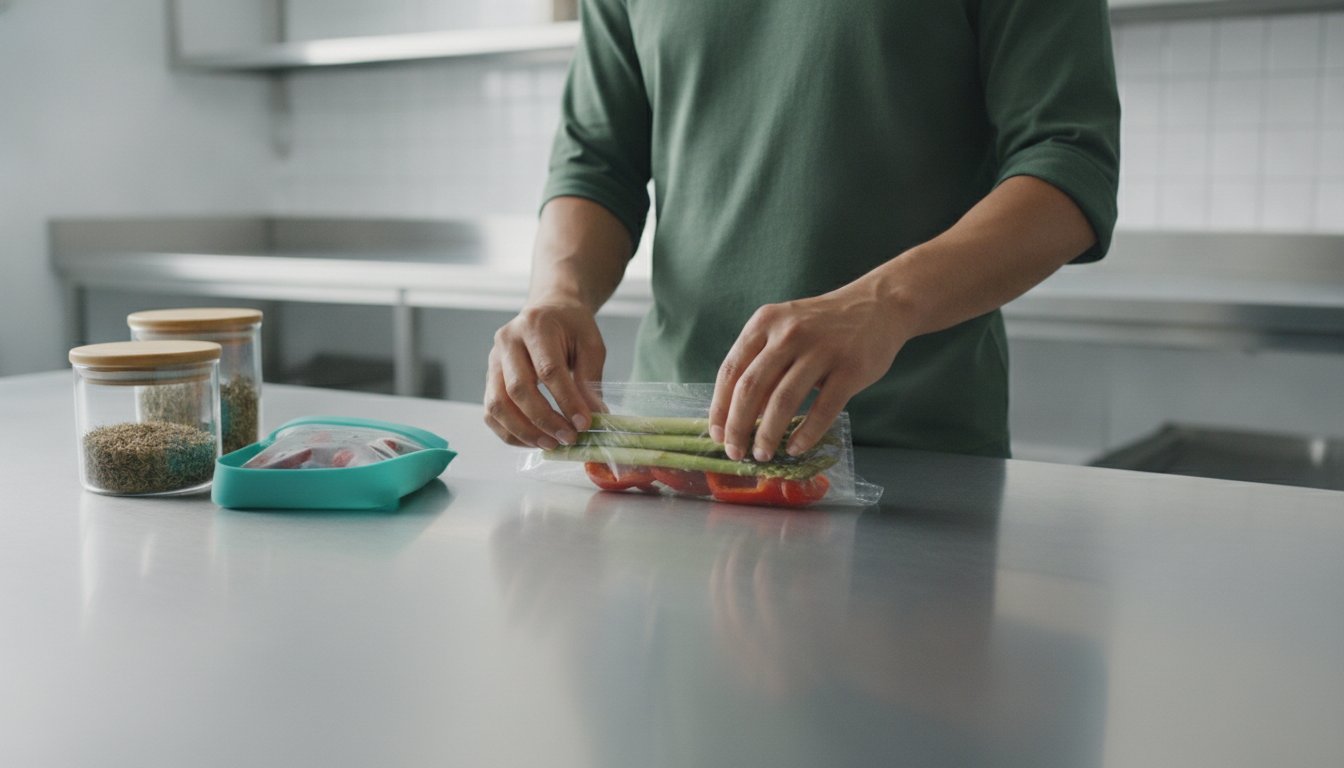
The pursuit of a truly sustainable kitchen often feels like a battle against a rising tide of non-degradable waste. You've likely experienced the frustration of eco-alternatives that fail to seal or preserve food, leading to unnecessary spoilage and increased costs. With the UK Plastic Packaging Tax rising to £228.82 per tonne in April 2026, the financial and ethical pressure to find reliable guilt-free food storage options has never been more intense. It's clear that the traditional reliance on single-use plastics is no longer a viable strategy for responsible organisations.
We understand that maintaining high hygiene standards while reducing your environmental footprint is a complex challenge. This guide promises to simplify that transition by highlighting high-performance, compostable alternatives that actually work in demanding commercial environments. You'll discover how to navigate 2026 regulations, such as the EU ban on PFAS in food packaging, while implementing practical storage solutions that support a circular economy. From industrial-strength food roller bags to advanced compostable cling wrap, we provide the clarity you need to eliminate eco-anxiety and lead your kitchen into a plastic-free future.
Key Takeaways
- Learn how to address the environmental impact of traditional kitchen waste by understanding the global shift toward plastic-free operational standards.
- Discover the most effective guilt-free food storage options by comparing the performance of durable reusables with high-quality compostable alternatives.
- Follow a practical, two-step framework for auditing your current plastic usage and sourcing certified materials that meet UK composting requirements.
- Gain the expertise to distinguish between genuine sustainable materials and greenwashed products to ensure your kitchen remains truly eco-friendly.
- Understand how transitioning to a circular food storage system can enhance your brand's reputation while maintaining the highest food hygiene standards.
Understanding Eco-Guilt: Why Our Food Storage Choices Matter
Many commercial kitchen managers and procurement officers now experience a distinct sense of unease when discarding rolls of used plastic film. This emotional response, often termed eco-anxiety, stems from a growing awareness of the discrepancy between corporate sustainability goals and the reality of daily operational waste. In UK households and large organisations alike, the sheer volume of single-use plastic has become a visible symbol of environmental neglect. Transitioning to guilt-free food storage options isn't just an ethical preference; it's a strategic response to a shifting regulatory landscape where plastic waste is increasingly penalised.
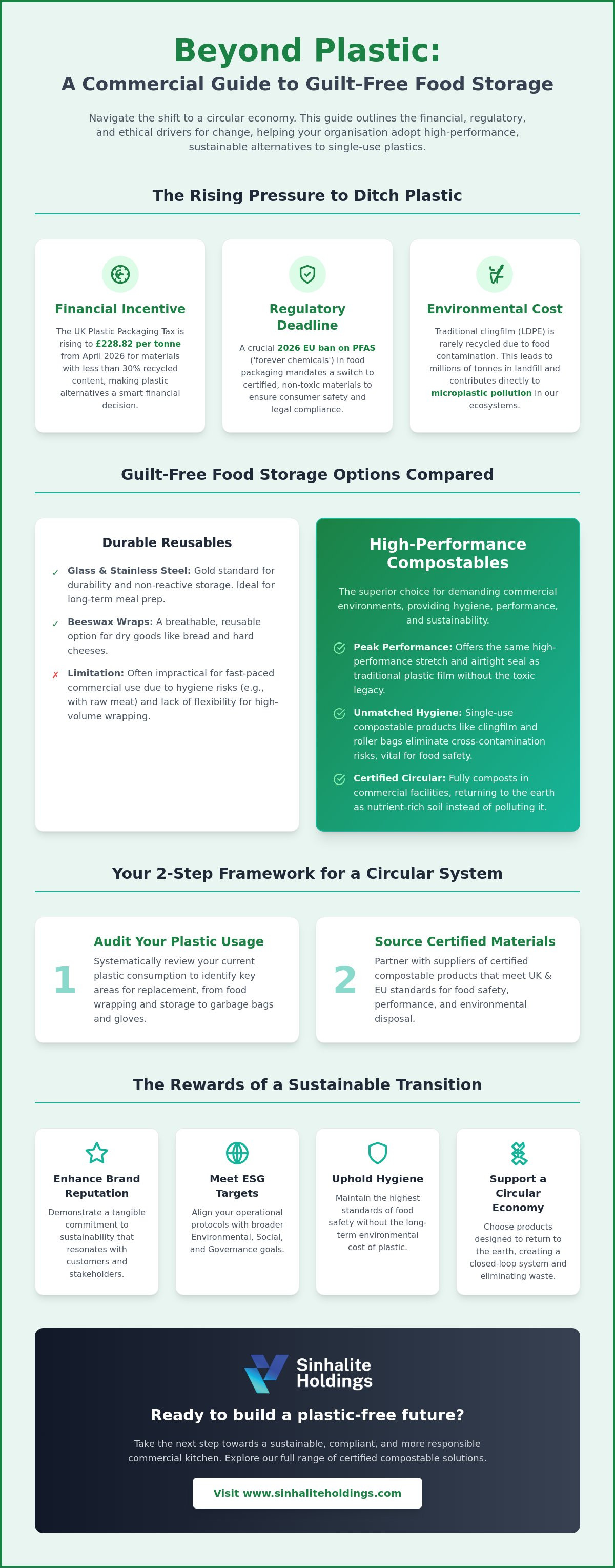
The UK's commitment to a circular economy is accelerating this transition. With the Plastic Packaging Tax rate set at £228.82 per tonne from April 2026 for materials with less than 30% recycled content, the financial incentive to innovate is as strong as the moral one. Adopting truly sustainable solutions allows businesses to maintain rigorous hygiene standards without the heavy psychological and financial burden of traditional plastic waste.
The Environmental Impact of Traditional Food Wrap
Traditional clingfilm is primarily composed of low-density polyethylene (LDPE), a material designed for convenience but notorious for its environmental persistence. Because it's thin and frequently contaminated with food residue, it's rarely recycled. This means millions of tonnes end up in landfills or contribute to microplastic pollution. Beyond the physical waste, many health-conscious organisations are concerned about hidden chemical additives in conventional plastics that may migrate into food. Adhering to Sustainable packaging principles requires moving away from these linear, "take-make-waste" materials toward high-performance, circular alternatives that protect both the planet and the consumer.
Transitioning from Guilt to Action
Forward-thinking businesses are now using this discomfort as a springboard for systemic change. By replacing standard LDPE film with compostable household clingfilm or industrial food roller bags, companies can align their food hygiene protocols with broader Environmental, Social, and Governance (ESG) targets. We define eco-guilt as the emotional catalyst for adopting sustainable food packaging. This shift empowers teams to maintain the highest standards of food safety while knowing their guilt-free food storage options leave no toxic legacy. True sustainability is achieved when storage choices are non-toxic, derived from renewable sources, and certified to fully compost, ensuring they return to the earth rather than polluting it.
The Top Guilt-Free Food Storage Options Compared
Selecting the right materials for your kitchen requires a balance between operational efficiency and ecological responsibility. Modern guilt-free food storage options generally fall into two categories: durable reusables and high-performance compostables. Glass and stainless steel remain the gold standard for long-term meal prep due to their non-reactive surfaces and resistance to staining. When reviewing a comparison of food storage containers, these materials consistently lead for durability, though they lack the flexibility needed for high-volume commercial wrapping.
Beeswax wraps offer a breathable, reusable solution for dry goods like bread and hard cheeses. Similarly, silicone lids provide a stretchable, airtight seal for existing containers, reducing the need for single-use covers. However, in fast-paced commercial environments where hygiene is paramount, these reusables aren't always practical. This is where compostable clingfilm excels as one of the most versatile guilt-free food storage options available. It provides the same high-performance stretch and seal as traditional plastic but without the toxic legacy.
Beeswax vs. Compostable Clingfilm: When to Use Which?
While beeswax is excellent for room-temperature dry goods, it cannot be used with raw meats or oily foods due to hygiene risks and temperature limitations. In these instances, compostable clingfilm is the superior choice. It ensures an airtight, hygienic barrier that can be safely discarded in organic waste streams after use. It offers a practical way to maintain safety standards while meeting the growing demand for PFAS-free packaging as mandated by 2026 EU regulations.
The Role of Compostable Food Roller Bags
The shift toward a circular economy also includes the transition away from single-use produce bags. Compostable food roller bags serve as a plant-based alternative that facilitates better food waste management. These bags allow businesses to collect organic waste directly at the source, ensuring that both the packaging and the food scraps can be processed together in industrial composting facilities. Adopting these innovative compostable solutions helps organisations meet their sustainability targets without sacrificing the speed of service. This approach directly supports the projected growth of the global food storage container market, which is expected to reach USD 177.1 billion in 2026.
Implementing a Circular Food Storage System in Your Business
Establishing a circular system requires moving beyond simple product replacement to a holistic operational shift. It starts with a comprehensive plastic audit to identify exactly where your high-waste areas exist. By quantifying the daily use of traditional films and bags, you can better understand the scale of your transition to guilt-free food storage options. Once these areas are mapped, the following steps ensure a successful transition:
- Source Certified Materials: Select products that meet rigorous UK composting standards to ensure they leave no toxic residue.
- Disposal Training: Educate your team or family on correct disposal protocols; even the best materials fail to support a circular economy if they end up in general landfill bins.
- Monitor Performance: Track the durability and hygiene of your new systems to ensure standards remain high.
- Evaluate ROI: Analyse the long-term benefits of switching business to sustainable packaging by measuring reduced waste disposal costs and improved brand loyalty.
Identifying Genuine Compostable Certifications
The marketplace is often crowded with "greenwashed" terms like "degradable" or "oxo-degradable." These materials are particularly deceptive because they simply break down into microplastics rather than returning to the earth. To ensure you're using true guilt-free food storage options, look for the OK compost HOME certification. This standard guarantees that the material will break down in a domestic compost heap or a lower-temperature environment, making it ideal for both home use and smaller commercial settings.
Optimising Food Waste Collection
A circular system is only as strong as its waste collection process. Using compostable caddy bags allows you to streamline the collection of organic scraps without the mess or odour often associated with traditional bins. These bags are designed to breathe, which helps to reduce moisture build-up and slow down the decomposition process before the waste reaches the main heap. Implementing these high-quality, guilt-free storage solutions leads to easier food waste bin management. By aligning your storage choices with your disposal methods, you create a seamless, waste-free loop that benefits both your operations and the environment.
Securing a Plastic-Free Future for Your Kitchen
Transitioning to a sustainable model is more than an environmental necessity; it's a strategic advantage for modern organisations. By understanding the functional differences between reusables and compostables, you can maintain food safety while eliminating the burden of persistent plastic waste. Implementing a circular system through rigorous audits and the adoption of certified materials ensures your operations remain compliant with 2026 standards. Choosing guilt-free food storage options empowers your team to deliver excellence without compromising the health of our planet.
As a UK-based specialist in plastic-free packaging, Sinhalite Holdings provides the tools needed to close the loop effectively. Our products utilise high-performance biopolymer technology and are TUV Austria OK compost HOME Certified, ensuring they return to the earth as nutrients rather than pollutants. Whether you require industrial-strength food roller bags or compostable caddy bags, our solutions are designed for durability and environmental integrity. Explore Sinhalite's Range of Certified Compostable Food Storage Solutions today to align your business with a cleaner, greener future. We're ready to support your journey toward a truly waste-free operation.
Frequently Asked Questions
Is compostable clingfilm really as effective as traditional plastic wrap?
Modern compostable clingfilm is engineered to match the performance of traditional LDPE wrap. It provides the high-performance stretch and cling properties necessary for busy commercial kitchens. These biopolymer films offer a reliable barrier against moisture and oxygen, ensuring food hygiene standards are never compromised. By choosing these materials, businesses can implement guilt-free food storage options that perform exactly like plastic but leave no harmful microplastic legacy behind.
Can I use guilt-free food storage options in the microwave or freezer?
Most compostable storage solutions are designed to remain durable in freezing temperatures, though microwave suitability depends on the specific material composition. High-quality compostable food roller bags and films stay flexible in the freezer to prevent spoilage. For heating, you should verify the manufacturer's rating on the packaging. While some biopolymers are safe for short microwave intervals, others may lose structural integrity when exposed to high heat for extended periods.
How do I dispose of compostable food storage if I don't have a home compost bin?
You should dispose of certified compostable items in your local authority's organic waste or food waste collection if home composting isn't available. Most UK councils now offer dedicated food waste bins that accept compostable caddy bags and food-soiled packaging for industrial processing. This infrastructure ensures that materials reach the high temperatures required for rapid decomposition, effectively closing the circular loop and preventing these sustainable resources from entering general landfill streams.
Are plant-based food storage options safe for people with allergies?
Plant-based food storage options are considered safe because the manufacturing process removes the proteins that typically trigger allergic reactions. Most certified compostable films and bags are derived from starch sources like corn or potato, which are non-allergenic in their final polymerised form. We recommend that commercial entities review the technical data sheets for their chosen guilt-free food storage options to confirm they meet all necessary health and safety standards for their specific environment.


