
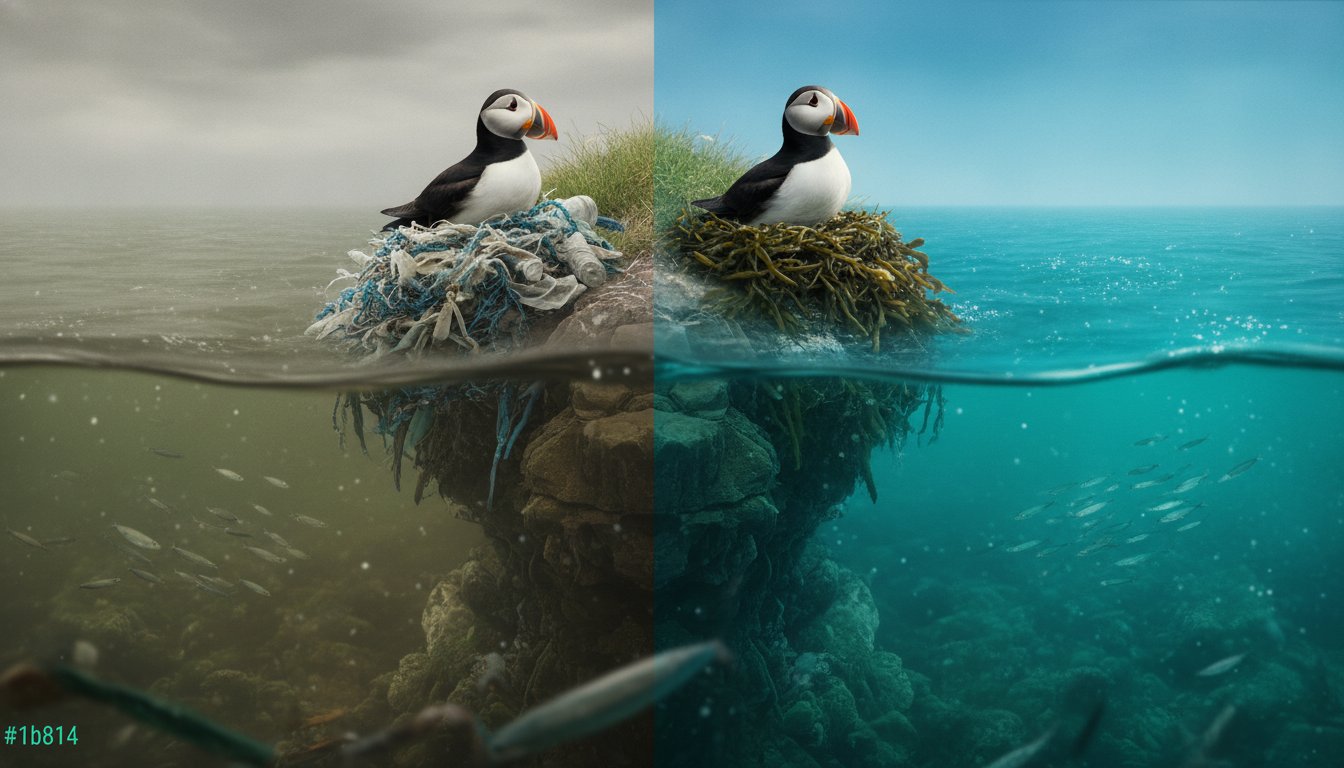
Did you know that UK households still discard an estimated 100 billion pieces of plastic packaging every year? While global statistics often dominate the conversation, understanding how plastic pollution affects uk wildlife on our own shores is essential for any responsible organisation. It's easy to feel that recycling is a sufficient solution, yet the reality for British species often reveals a different story of persistent risk and habitat degradation. You're likely looking for a way to align your ESG goals with tangible local impact without getting lost in generic, non-specific data.
We've created this guide to help you discover the specific ways plastic waste impacts British species and how transitioning to compostable solutions can safeguard our national biodiversity. We'll examine the immediate risks of ingestion and entanglement facing creatures from the Welsh rivers to the North Sea. You'll also find a clear, evidence-based argument for switching to materials like compostable garbage bags and caddy bags to present to your stakeholders. We'll identify which commercial plastics cause the most harm and how your organisation can lead the transition to a truly circular economy.
Key Takeaways
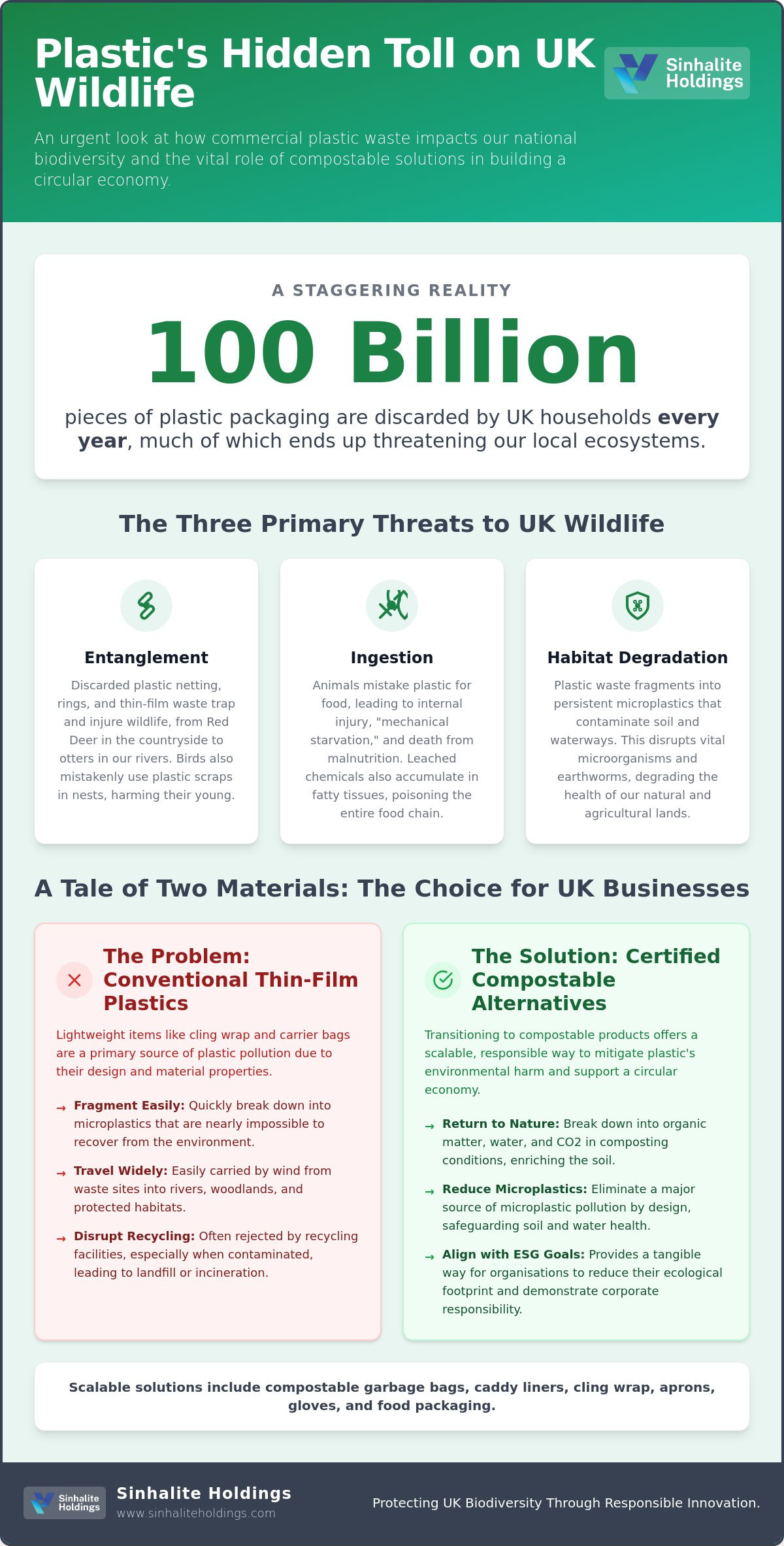
- Understand the three primary vectors of entanglement, ingestion, and habitat degradation that define how plastic pollution affects uk wildlife in 2026.
- Identify the specific risks associated with conventional thin-film plastics, which fragment into microplastics that persist in British soil and water systems.
- Discover the operational benefits of switching business to sustainable packaging to mitigate the long-term ecological impact of commercial waste.
- Learn how transitioning to certified compostable alternatives, such as caddy bags and garbage bags, provides a scalable solution for safeguarding local biodiversity.
- Gain a logical, evidence-based argument to support the adoption of circular economy practices within your organisation’s ESG and procurement strategies.
The Direct Impact of Plastic Pollution on UK Terrestrial and Aquatic Species
Traditional conservation discussions often focus on distant oceans, yet the reality of how plastic pollution affects uk wildlife is an immediate concern for our local ecosystems. While the global plastic pollution crisis is well-documented, British species face unique threats through three primary vectors: entanglement, ingestion, and habitat degradation. Our river systems act as plastic highways, transporting inland waste from urban centres directly into protected coastal habitats and rural landscapes.
To better understand this concept, watch this helpful video:
Entanglement and Physical Hazards in the British Countryside
Discarded commercial packaging and agricultural plastics present severe physical hazards to our native land mammals. Large species like Red Deer often find themselves trapped in discarded plastic netting or bale wrap, while birds like Grey Herons suffer from discarded rings and thin-film waste. Plastic waste in UK rivers creates a ghost-fishing effect where discarded materials continue to trap fish and otters long after they've entered the water. During the nesting season, many British birds mistakenly use plastic scraps as building material, which can lead to chick entanglement and fatalities within the nest itself. These physical barriers don't just cause injury; they restrict movement and prevent animals from foraging effectively.
Ingestion: How Plastic Replaces Nutrition in Local Ecosystems
Ingestion is a silent killer because the damage occurs internally, away from the human eye. Understanding how plastic pollution affects uk wildlife requires looking at the process of mechanical starvation. When animals consume plastic debris, it occupies space in the stomach without providing any nutritional value, eventually leading to death by malnutrition. Beyond physical blockage, traditional plastics can leach harmful chemicals into the digestive systems of local fauna. These toxins can accumulate in the fatty tissues of predators, leading to long-term health issues that ripple through the entire food chain. By replacing genuine nutrition with synthetic waste, plastic pollution fundamentally undermines the health of our national biodiversity.
Hidden Hazards: How Commercial Thin-Film Plastics Enter the UK Food Chain
While the previous section detailed the visible trauma of entanglement, the subtle ways how plastic pollution affects uk wildlife through ingestion are often more pervasive. Commercial thin-film plastics, including traditional clingfilm and lightweight shopping bags, present a unique threat due to their structural vulnerability. Unlike rigid plastics, these films fragment rapidly into secondary microplastics that infiltrate the very foundation of our ecosystems. This transition from macro-litter to microscopic particles makes the pollution nearly impossible to recover once it enters the British countryside.
The Problem with Traditional Clingfilm and Lightweight Bags
These materials are exceptionally lightweight, allowing them to be carried by wind from waste collection points into nearby woodlands and waterways. Once in the environment, conventional clingfilm doesn't disappear; it breaks down into smaller and smaller pieces through a process of fragmentation. Traditional recycling systems often struggle to process these films, especially when they're contaminated by food waste, which frequently leads to their exclusion from circular processing. This failure in the waste stream means that thin-film plastics are among the most common pollutants found in non-marine UK habitats.
Microplastics in UK Soil and Waterways
In the soil, microplastics disrupt the health of earthworms and microorganisms that are vital for UK agriculture and soil aeration. Research into plastic ingestion in UK mammals has already identified plastic presence in several native species, confirming that these synthetics have successfully climbed the food chain. Recent data from December 2025 found microplastics in 50% of freshwater invertebrate samples in South Wales, indicating that these particles have entered the base of our freshwater food webs. Major river systems like the Thames continue to act as conduits for this microscopic waste, carrying inland pollution toward our coastlines.
It's vital for organisations to distinguish between materials that simply break apart and those that truly return to the earth. You can learn more about this distinction by reading our guide on do compostable bags contain plastic. By understanding the material science, businesses can make informed choices about the products they procure. For organisations seeking to eliminate these hidden hazards, exploring the range of certified alternatives at Sinhalite Holdings is a practical step toward responsible environmental stewardship.
Transitioning to a Circular Economy: Protecting UK Biodiversity with Compostable Solutions
Transitioning from traditional plastics to compostable alternatives represents a proactive conservation strategy for UK businesses and local authorities. While the previous sections established exactly how plastic pollution affects uk wildlife through physical and chemical harm, the solution lies in a systemic shift toward materials that return safely to the earth. By adopting a circular economy model, organisations can eliminate persistent waste before it ever reaches our rivers or rural habitats.
The environmental benefit of switching business to sustainable packaging extends beyond mere waste reduction; it actively safeguards local biodiversity. Utilising certified solutions, such as puncture resistant compostable garbage bags, ensures that waste management remains effective without introducing lethal hazards to wildlife. These products offer the durability required for commercial use while maintaining a clean end-of-life profile that supports our national conservation goals.
Scaling Sustainability in Large UK Organisations
Councils and large commercial entities have the unique capacity to drive landscape-scale change by replacing high-risk plastics with compostable alternatives. In sectors like healthcare and hospitality, the introduction of compostable aprons and gloves can significantly reduce an organisation's environmental footprint. These practical swaps demonstrate that high standards of utility and hygiene don't have to come at the cost of our native species. When implemented across an entire supply chain, these choices create a meaningful shield for the British countryside.
The Future of Wildlife-Safe Packaging
Innovation in plant-based materials, such as Mater-Bi, ensures that packaging does not produce harmful microplastics that disrupt the UK food chain. A circular approach reduces the mounting pressure on our landfills and incineration sites, preserving more land for nature. To ensure these materials perform as promised, understanding OK compost HOME certification explained is vital for procurement teams. This verification guarantees that materials truly return to nature, leaving no toxic trace in the soil or water systems that support our local fauna.
Advancing Toward a Resilient British Ecosystem
Protecting our national biodiversity requires more than just awareness; it demands a systemic shift in how we manage commercial waste. We've explored the profound ways how plastic pollution affects uk wildlife, from the physical trauma of entanglement to the silent infiltration of microplastics into our soil and waterways. By acknowledging that traditional recycling often fails to address the unique risks of thin-film plastics, organisations can pivot toward a future where packaging truly returns to nature without leaving a toxic trace.
As a UK-based specialist in compostable packaging, Sinhalite Holdings provides the practical tools needed for this transition. Our products meet rigorous OK compost HOME and TUV Austria standards, ensuring that your switch to sustainable materials is backed by scientific integrity and operational reliability. We are a trusted partner for UK councils and commercial organisations seeking to align their operations with modern ethical standards. Explore our range of certified compostable solutions for UK businesses to begin your journey toward a cleaner, greener outlook. We can build a future where British wildlife thrives in a landscape free from persistent synthetic waste.
Frequently Asked Questions
How does plastic pollution specifically affect hedgehogs in the UK?
Hedgehogs are primarily threatened by entanglement in discarded plastic rings and the ingestion of small fragments found in garden waste. These animals often get their heads trapped in plastic food containers or four-pack yokes, which leads to restricted movement and eventual starvation. By replacing traditional plastics with compostable alternatives in commercial catering and urban settings, organisations can reduce the volume of lethal litter that enters these sensitive terrestrial habitats.
Can UK birds mistake microplastics for food?
Yes, many British bird species mistake microplastics for seeds or small insects, which directly impacts their nutritional intake. This ingestion often leads to a false sense of fullness, causing the bird to stop foraging for actual food. This process is a critical part of how plastic pollution affects uk wildlife, as it introduces synthetic chemicals into the avian food chain and can cause internal injuries or long-term reproductive issues for native populations.
Why is compostable clingfilm safer for wildlife than traditional plastic wrap?
Compostable clingfilm is safer because it is designed to biodegrade into organic matter rather than fragmenting into persistent microplastics. Traditional plastic wrap is made from polymers that last for centuries, often breaking down into microscopic particles that are impossible to remove from the environment. Our compostable solutions ensure that if a fragment escapes the waste stream, it won't contribute to the long-term chemical contamination of British soil and water systems.
What happens to compostable bags if they accidentally enter a UK river?
If a certified compostable bag enters a UK river, it will eventually break down through natural biological processes into water, CO2, and biomass. Unlike conventional plastic bags that remain as a physical hazard for decades, compostable materials are engineered to be consumed by microorganisms. Products that meet OK compost HOME standards provide an additional layer of security, as they are designed to decompose even in the lower temperatures typical of natural UK environments.


