
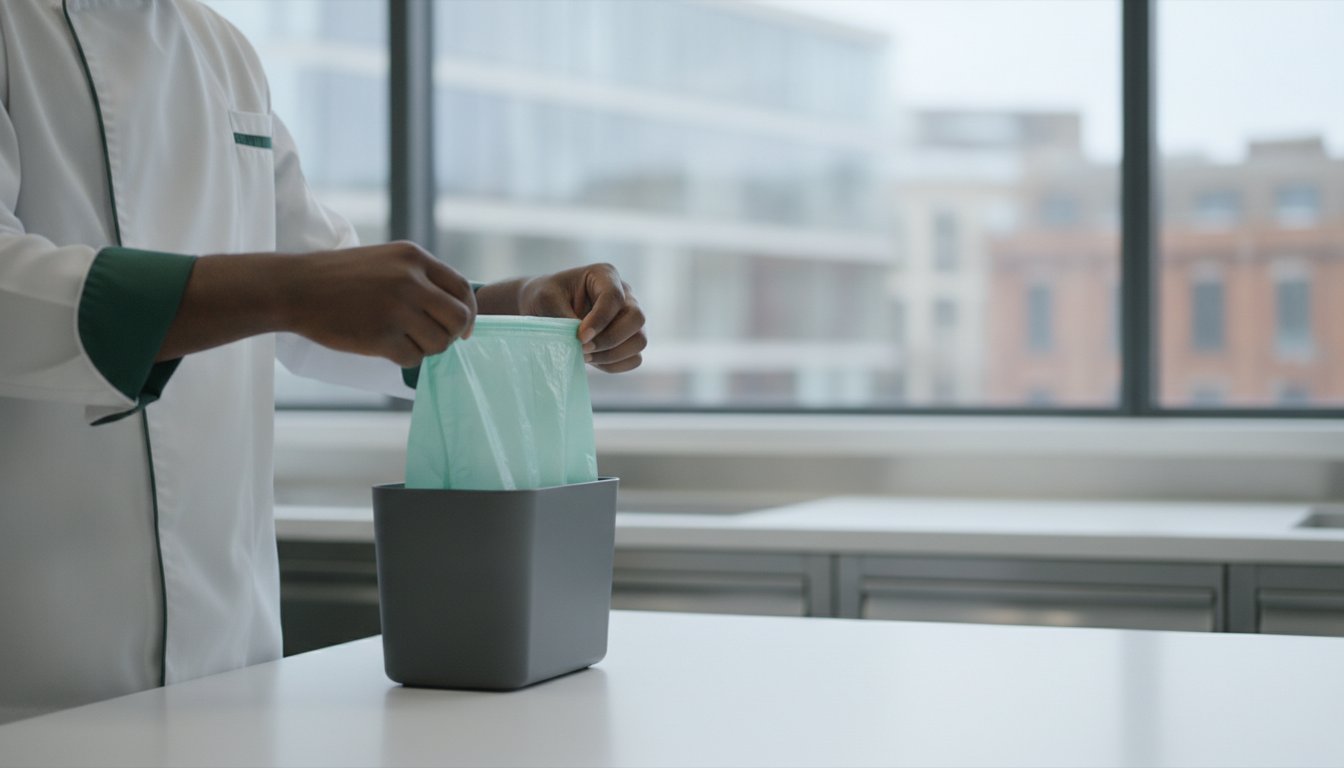
Did you know that food waste costs the UK hospitality sector an estimated £3.2 billion every year; a figure that reflects not just financial loss, but a significant challenge to operational hygiene? Most business leaders recognise that the sharp, unpleasant odour of decomposing organic matter is more than just a nuisance. It's a challenge that degrades staff morale, drives away customers, and creates unwanted risks regarding pests and regulatory compliance. You are likely searching for how to deal with smelly commercial food waste because you want a solution that balances rigorous hygiene with your organisation's sustainability targets.
With the recent ban on macerators and the mandatory separation of food waste under the Environment Act 2021, the pressure to maintain a clean waste area has never been higher. This guide provides professional strategies to neutralise these odours while simultaneously enhancing your ESG performance. We will explore how transitioning to high-performance compostable infrastructure, such as EN 13432 certified caddy bags and liners, can transform your waste management area into a clean, odour-free environment that supports a circular economy and reinforces your commitment to responsible business practices.
Key Takeaways
- Understand the science of anaerobic decomposition and why traditional plastic liners exacerbate the release of volatile organic compounds (VOCs).
- Learn how to deal with smelly commercial food waste by establishing daily collection cycles and positioning internal caddies away from kitchen heat sources.
- Discover how the natural breathability of high-performance compostable liners regulates moisture to prevent the bacterial growth that causes foul smells.
- Enhance your organisation’s sustainability credentials by adopting industrial-strength compostable garbage bags that offer superior puncture resistance and leak protection.
The Science of Scents: Why Commercial Food Waste Smells and How It Impacts Operations
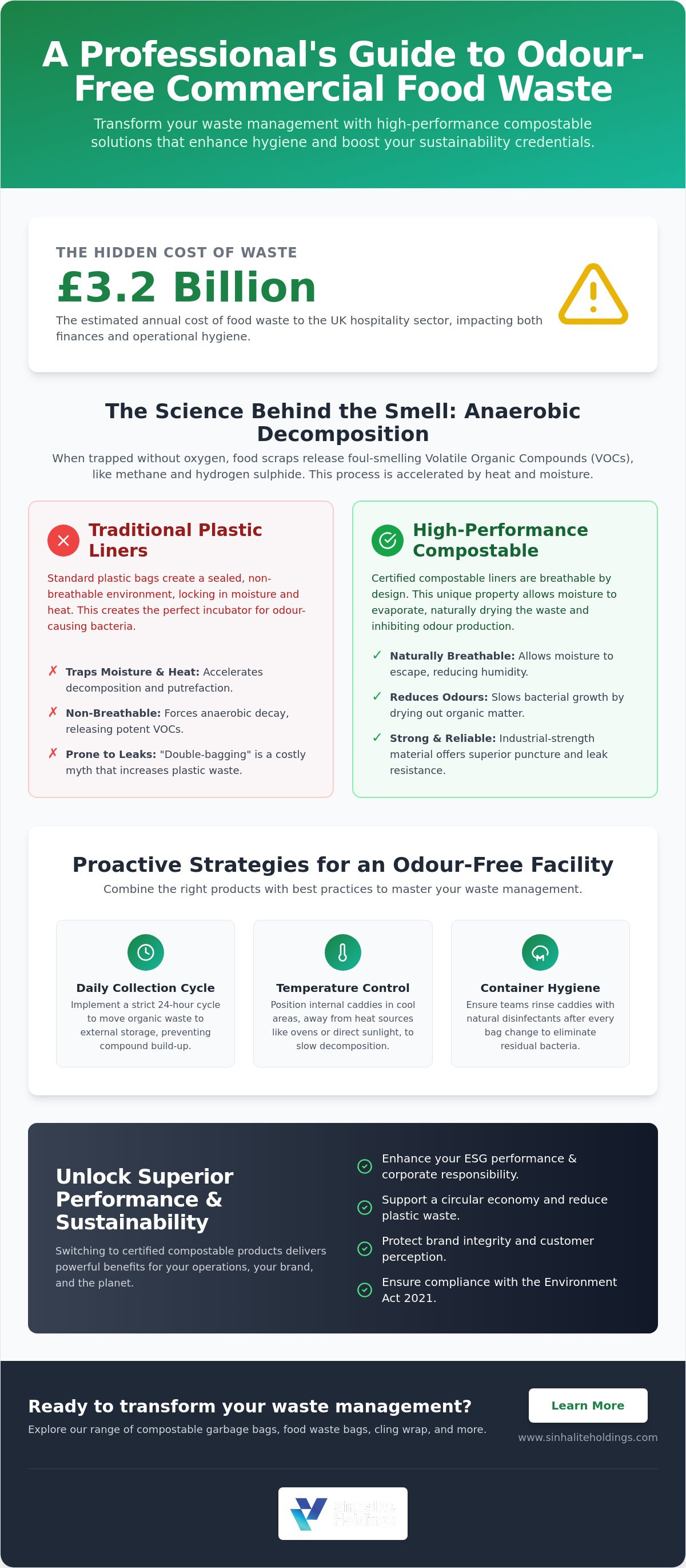
The pungent scents often found in commercial waste areas are the direct result of the biological decomposition of organic waste. When food scraps are discarded, they immediately begin a process of anaerobic decomposition if oxygen is restricted. This chemical breakdown releases volatile organic compounds (VOCs), including methane and hydrogen sulphide. In the intense heat and humidity typical of UK professional kitchens, bacterial growth happens almost instantly. This rapid microbial activity is why learning how to deal with smelly commercial food waste is a priority for any facility manager focused on hygiene and operational excellence.
Foul odours carry a heavy operational price. They act as a beacon for pests and can lead to serious health and safety citations during inspections. Beyond these risks, there's the matter of brand integrity. A single whiff of decaying organic matter can permanently damage a customer's perception of your establishment. It's also vital to distinguish between the 'fresh' smell of recently discarded scraps and the 'residual' odours that linger on bin surfaces. If liquid waste leaks from a bag, it creates a permanent bacterial colony at the base of the container that continues to smell long after the rubbish has been collected.
To better understand how to manage these issues at the source, watch this helpful video:
The Problem with Traditional Plastic Liners
Standard single-use plastic bags are fundamentally ill-suited for organic waste. Because plastic is non-breathable, it locks in heat and moisture, creating a perfect incubator for putrefaction. This lack of airflow forces the waste into an anaerobic state, which is the primary cause of the most offensive smells. Many teams attempt to solve this using the 'double-bagging' method, but this is a costly myth. Adding more plastic doesn't stop the chemical process; it only delays the inevitable leak while increasing your plastic waste footprint. Switching to breathable, compostable alternatives allows moisture to evaporate, effectively drying out the waste and naturally reducing the intensity of the odour.
Operational Strategies to Neutralise Odours in Professional Kitchens and Facilities
Managing a professional facility requires more than just reactive cleaning; it demands a proactive system. To master how to deal with smelly commercial food waste, your operations must prioritise a strict 24-hour collection cycle. Moving organic matter to external storage every day prevents the build-up of the volatile compounds discussed earlier. This frequency is particularly vital for compliance with food safety regulations, ensuring that waste doesn't become a breeding ground for pathogens or pests within the kitchen perimeter.
Temperature control plays an equally critical role. Positioning internal caddies near heat sources like ovens, dishwashers, or in direct sunlight accelerates bacterial activity, leading to rapid odour production. By keeping waste containers in the coolest part of the facility, you effectively slow down the decomposition process. You can also utilise moisture absorbents, such as compostable paper or eco-friendly powders, to manage liquid runoff. Standardising container hygiene is the final step; ensure your team rinses caddies with natural disinfectants after every bag change to eliminate residual bacteria.
Best Practices for Caddy Management and Staff Training
Effective odour management relies on staff engagement. Train your team to separate high-odour waste, such as proteins and dairy, into smaller containers for more frequent disposal. Using correctly sized liners is essential to prevent bags from slumping or tearing, which often leads to spills inside the bin. For a deeper dive into maintenance, read our related guide on how to keep a food waste bin from smelling: The 2026 UK Guide. Implementing these steps with high-performance compostable caddy bags ensures a hygienic, professional environment that aligns with modern sustainability standards.
The Role of High-Performance Compostable Liners in Sustainable Waste Management
The most effective way to address the chemical cause of bin odours is through superior material science. Traditional plastic liners create a sealed environment that traps moisture and heat, which accelerates the putrefaction process. In contrast, high-performance compostable liners are engineered with a microscopic breathability that allows water vapour to escape. This process effectively dries out organic matter before it can enter an advanced state of anaerobic decomposition. Reducing moisture at the source is a sophisticated strategy for how to deal with smelly commercial food waste, as it denies bacteria the humid environment they need to thrive.
Durability remains a primary concern for facility managers, yet modern plant-based polymers provide industrial-grade strength that rivals conventional plastic. These liners offer high puncture resistance, ensuring that heavy or sharp food scraps don't lead to messy leaks. Adopting these solutions aligns with the best practice for odour control recommended for professional facilities. To ensure these materials perform as promised under UK conditions, organisations should look for specific standards, such as those found in this OK compost HOME certification explained guide. This verification guarantees that the product will break down completely without leaving behind harmful microplastics.
Transitioning to a Circular Economy with Certified Solutions
Switching to puncture resistant compostable garbage bags transforms your waste management from a daily chore into a pillar of your sustainability strategy. These liners simplify the collection process for waste contractors by removing the risk of plastic contamination in organic recycling streams. This allows your food waste to be efficiently converted into nutrient-rich compost or renewable energy. Beyond the environmental impact, there's a clear long-term ROI through reduced bin cleaning costs and improved scores in green audits. Integrating these high-quality liners is a foundational step when switching business to sustainable packaging, reinforcing your organisation's commitment to a cleaner, circular future.
Advancing Toward a Cleaner, More Responsible Future
Mastering the complexities of waste management is no longer just a matter of back-of-house hygiene; it's a vital component of your organisation's commitment to environmental stewardship. By moving away from non-breathable plastic and adopting rigorous operational cycles, your facility can eliminate the root causes of foul odours. This transition ensures a safer environment for staff and customers while maintaining full compliance with evolving UK recycling regulations. Integrating high-performance, breathable liners is the most effective strategy for any business seeking how to deal with smelly commercial food waste without compromising on performance or sustainability.
As a specialist UK-based sustainable supplier, Sinhalite Holdings provides the industrial-grade tools needed for this transition. Our puncture-resistant compostable garbage bags and caddy liners are designed for the rigours of commercial use and are fully certified by OK compost HOME and TUV Austria. Choosing these solutions allows you to turn a traditional disposal chore into a meaningful contribution to the circular economy. We invite you to explore our range of heavy-duty compostable sacks and caddy liners today. Together, we can build a future that is as clean as it is conscientious.
Frequently Asked Questions
Can I use baking soda in commercial food waste bins to stop smells?
Yes, baking soda acts as a natural neutraliser for acidic odours and can be sprinkled at the base of bins for temporary relief. However, it's a reactive measure that doesn't address the underlying cause of decomposition. For a proactive solution, businesses should focus on moisture regulation through breathable liners, which prevent the humid environment where bacteria thrive most aggressively.
How often should commercial food waste be collected in the UK?
Internal caddies should be moved to external storage every 24 hours to prevent indoor air quality issues. For external collections, a weekly or bi-weekly schedule is standard for most UK businesses, though high-volume kitchens may require more frequent pickups. Understanding these cycles is a vital part of how to deal with smelly commercial food waste, especially since the March 31, 2025, deadline mandated food waste separation for most organisations.
Do compostable bin liners make food waste smell worse?
No, compostable liners actually improve odour control because they allow for better moisture evaporation than traditional plastic. While plastic traps heat and liquids to create a pungent anaerobic environment, compostable materials are breathable. This allows the waste to dry out slightly, which slows down the chemical processes that produce the most offensive volatile organic compounds.
What is the best way to clean a smelly commercial wheelie bin?
The most effective method is a high-pressure wash with a biodegradable disinfectant after every scheduled collection. It's essential to ensure the bin is completely dry before reuse, as any residual moisture will immediately restart the bacterial growth cycle. Using industrial-strength compostable garbage bags provides a protective barrier that keeps the bin surfaces clean, significantly reducing the frequency of deep cleaning required to maintain hygiene standards.


