
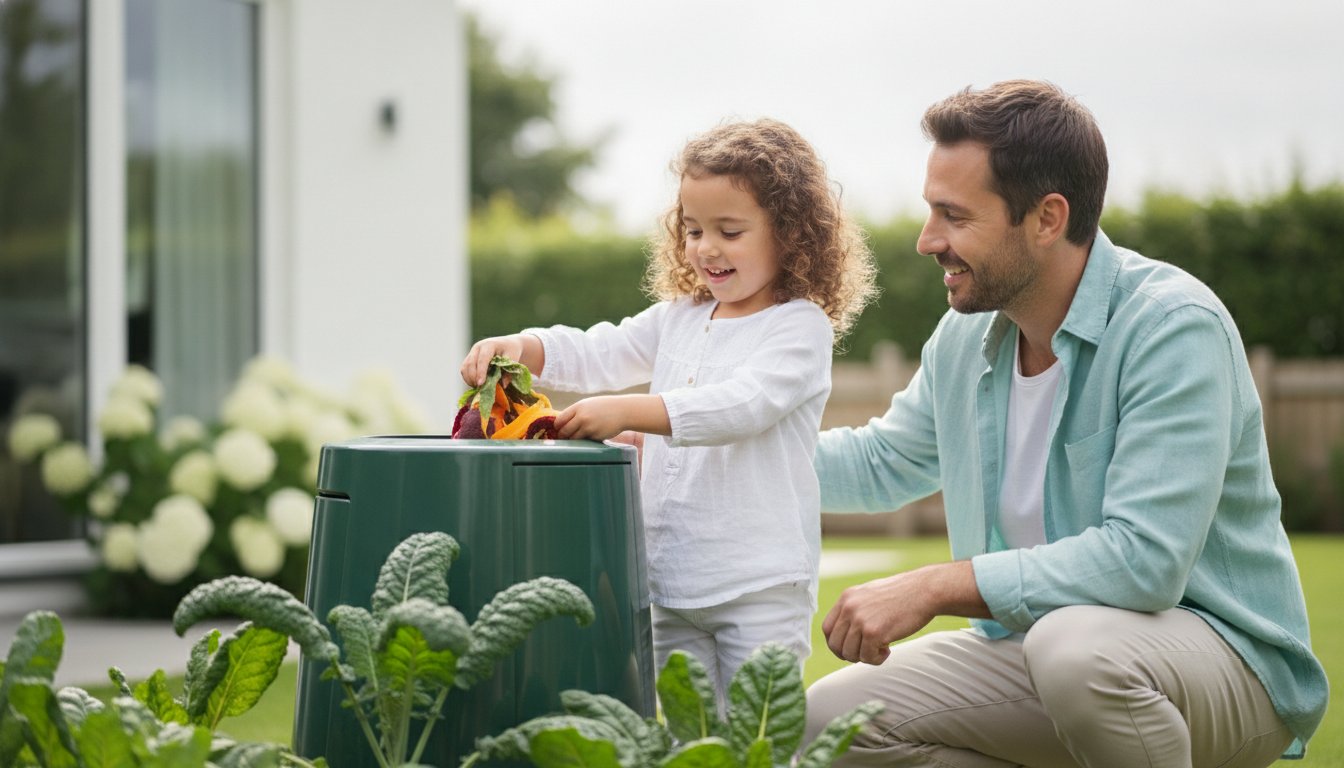
Did you know that food waste currently accounts for 24 per cent of all material sent to municipal landfills, making it the single largest category of waste? This staggering figure represents more than just lost resources; it is a missed opportunity to teach the next generation about the circular economy. Many organisations and community leaders find that the biggest hurdle in how to explain composting to kids is moving past the "gross" factor. It is natural for children to be wary of decaying scraps, yet this process is actually nature's most sophisticated recycling system.
We understand that you want to foster environmental responsibility without losing their interest in complex scientific details. You can transform this essential science into an engaging, actionable lesson that inspires future stewards to take pride in their ecological impact. This guide provides clear methods to simplify the concept of decomposition, identifies exactly what belongs in a compostable caddy bag, and helps establish sustainable habits that last a lifetime. By the end, you will have the tools to turn a simple waste management task into a meaningful contribution toward a cleaner, greener future.
Key Takeaways
- Understand why composting is nature's ultimate recycling system and how it transforms organic waste into nutrient-rich fuel for the planet.
- Learn a simple "Lego" metaphor to help children visualise how microscopic organisms dismantle food scraps to build healthy soil structures.
- Discover how to explain composting to kids by categorising household waste into "Greens" for energy and "Browns" for bedding.
- Master the practical steps of layering a compost bin, starting with a protective "nest" to ensure a healthy and odour-free decomposition process.
- Identify the role of certified compostable caddy bags in making waste sorting a clean, practical, and everyday habit for young environmental stewards.
Nature’s Recycling System: Explaining the Science of Composting
Composting is essentially nature's way of turning organic leftovers into high-performance fuel for the soil. To understand the science of composting, it helps to imagine a Lego castle. Every apple core or potato peel is made of tiny "bricks" of energy and nutrients. In a compost bin, millions of tiny workers take those bricks apart so they can be reused to build new plants. This process is the foundation of a circular economy, where nothing is wasted and every resource remains in a continuous loop of productivity.
When you are considering how to explain composting to kids, focus on this cycle of renewal. Instead of a dead end, waste becomes a beginning. This transition from a linear "take-make-waste" model to a circular one is vital for the health of our planet. By sorting scraps into compostable caddy bags, children aren't just cleaning up; they're participating in a global movement toward environmental restoration.
To better understand this concept, watch this helpful video:
The Secret Workers: Meet the Microbes
A healthy compost pile is alive with activity. We often call these workers the "FBI": Fungi, Bacteria, and Invertebrates. These microscopic teams and small insects are the primary decomposers. Just like us, they need three things to stay productive: fresh air, enough water to stay damp, and a steady supply of food. When these conditions are met, they work tirelessly to convert waste into nutrient-rich humus that makes gardens grow stronger.
Why We Don’t Just Use Landfills
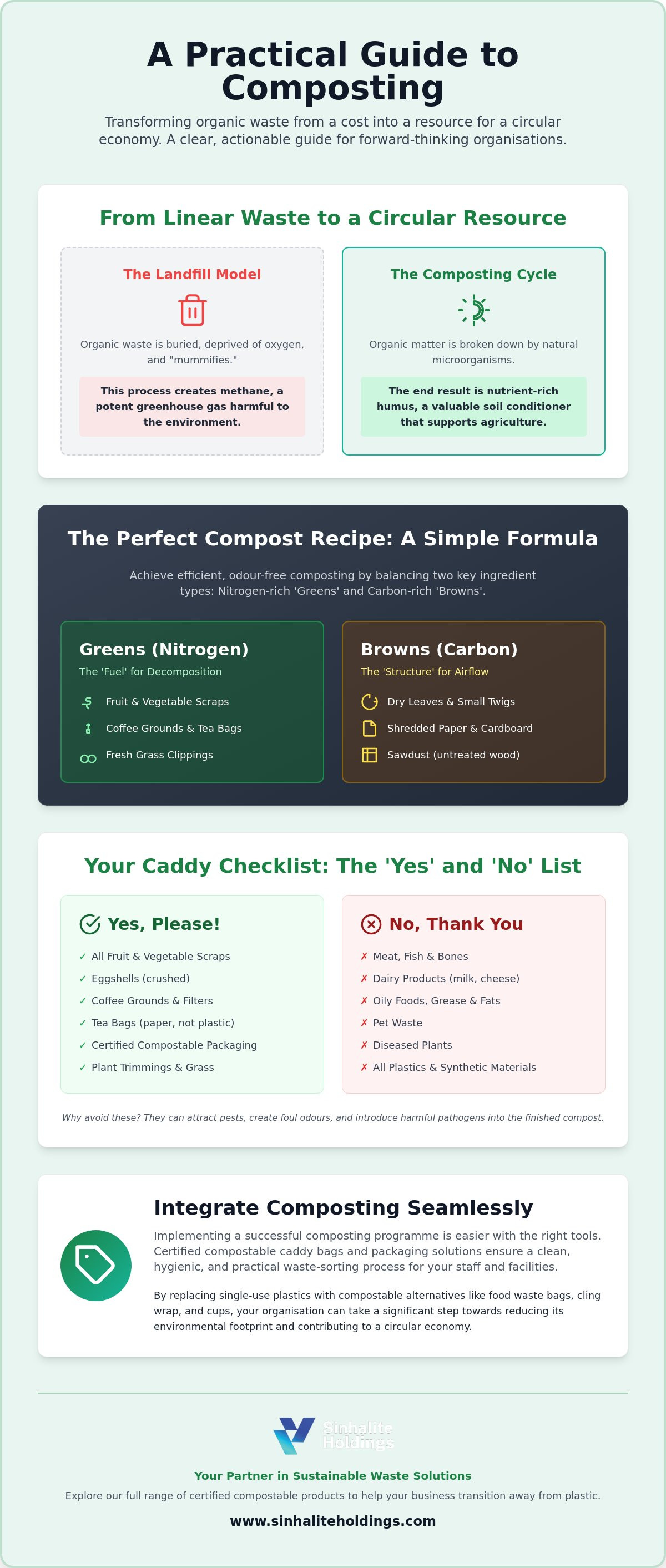
Landfills are essentially giant holes where waste is buried and crushed. Because there is no oxygen, the materials don't break down properly; they "mummify" instead. This lack of air creates harmful gases like methane. By choosing to compost, we ensure that organic matter returns to the earth naturally. Establishing a clean system for preventing food waste bin smells is the first step in showing children that responsible waste management is both practical and hygienic.
The Perfect Recipe: Sorting Greens and Browns for Kids
Creating the perfect compost is like following a precise recipe for a healthy meal. When considering how to explain composting to kids, it is helpful to balance two main ingredients: "Greens" and "Browns." Greens are nitrogen-rich materials that provide high-energy food for our microbial workers. These include fruit scraps, vegetable peels, and fresh grass clippings. Browns are carbon-rich materials that act as the bedding and structural support for the pile. Items like shredded cardboard, dry leaves, and certified paper ensure the mixture remains airy and functional.
A practical way of how to explain composting to kids is through the "Name that Scrap" game. Ask them to identify whether an item is a Green or a Brown before it goes into the bin. This interactive approach helps children internalise the scientific categories of nitrogen and carbon without needing to memorise complex terminology. For more detailed activities and educational resources, you might reference this KidsGardening.org guide to composting.
The "Yes" List for the Caddy
A successful caddy starts with a clear list of acceptable items. Most fruit and vegetable leftovers, such as apple cores and banana skins, are ideal candidates. Eggshells also provide valuable minerals to the soil. Innovation has expanded what we can safely divert from landfills; for example, certified compostable clingfilm is now a practical addition to the household sorting routine. Using these modern alternatives ensures that even food preparation waste supports the circular economy. You can explore a full range of sustainable waste solutions to make this transition seamless and hygienic.
The "No" List: Keeping the Workers Safe
Just as some foods might upset a human stomach, certain materials cause "tummy aches" for the compost pile. Plastic, dairy, and meat products should never be included because they attract pests and disrupt the natural decomposition process. It is vital to teach children that not everything that looks like plastic is harmful. They should learn to identify the OK compost HOME certification on packaging. This mark guarantees the product will break down safely, protecting our microbial workers and the soil they create.
Hands-On Sustainability: Starting Your Composting Journey
Transitioning from theory to practice requires a structured approach that children can easily follow. The first step involves selecting an appropriate container. For many, this begins with a small kitchen caddy for daily scraps, eventually moving to a larger garden bin or a community composting site. When teaching how to explain composting to kids, emphasise that the initial setup is just as important as the ingredients themselves. Begin by creating a "nest" of brown materials, such as twigs or shredded cardboard, at the base. This layer provides essential drainage and airflow from the very start.
Once the foundation is set, the "Turn and Toss" becomes a vital part of the routine. This step ensures that our FBI workers receive the oxygen they need to thrive. Without regular turning, the pile can become compacted and lose its efficiency. Eventually, the waste transforms into "Black Gold," a nutrient-dense soil amendment. Using this finished compost to nourish new plants completes the circular economy, providing a tangible example of how responsible choices lead to restorative outcomes.
Making it Mess-Free with Compostable Liners
Maintaining a clean environment is crucial for keeping young stewards engaged in the process. Using puncture resistant compostable garbage bags ensures the task remains hygienic and manageable for both schools and households. It is important to show children that these bags are part of the solution; unlike traditional plastic, the bag itself breaks down into soil alongside the food scraps. This practical demonstration reinforces the value of choosing high-quality alternatives that leave no lasting footprint on the environment.
Measuring Success: The Compost Diary
Encouraging kids to maintain a Compost Diary fosters a deeper connection to the decomposition process. By tracking what they "feed" the bin and observing the physical changes over several weeks, they gain a sense of ownership over their environmental impact. Visible changes in the texture and colour of the materials prove that the microscopic workers are successfully converting waste into wealth.
Cultivating a Sustainable Legacy Through Practical Action
By transforming the complex science of decomposition into a tangible, rewarding activity, you're providing the next generation with the tools they need to protect our planet. We've seen how the microscopic "FBI" workers turn leftovers into fuel and how a simple balance of greens and browns creates a thriving ecosystem. Mastering how to explain composting to kids is an essential step in establishing the sustainable habits required for a functional circular economy.
Sinhalite Holdings is dedicated to supporting this transition as your trusted UK-based sustainable packaging specialists. Our high-performance, puncture-resistant materials are crafted from plant-based sources to ensure that environmental responsibility never compromises on utility. Because our offerings are Certified OK compost HOME products, you can be confident that every bag used will break down completely and safely in a domestic or commercial bin.
Explore our range of compostable solutions for your home and business to start your journey today. Every small change in how we manage waste contributes to a more resilient and prosperous future for everyone.
Frequently Asked Questions
What is the easiest way to explain composting to a preschooler?
The most effective way is to describe it as "nature's magic kitchen." Explain that the earth eats the bits of food we don't want, like apple cores or vegetable skins, to make itself strong. When preschoolers see that their leftovers become "soil vitamins" for new plants, they grasp the circular concept immediately. This is the foundation of how to explain composting to kids before they learn the formal science.
Can I put compostable cling film in my home compost bin?
You can certainly add compostable cling film to your home bin if it's specifically certified for domestic composting. Standard plastic cling film will never break down, but certified versions are engineered to be consumed by microbes alongside your food scraps. Always check the packaging for the OK compost HOME logo to ensure the material is safe for your garden soil and won't leave microplastics behind.
Why does my compost bin smell, and how can I fix it with kids?
An unpleasant odour usually means your compost recipe is out of balance or needs more air. This happens when there are too many "Greens" and not enough "Browns" to soak up the moisture. You can fix this with a "Browns hunt," where kids find dry leaves or shredded cardboard to mix into the bin. This simple adjustment restores the oxygen flow and helps the microbial workers breathe again.
How long does it take for food to turn into soil?
Food scraps generally transform into usable soil within three to twelve months. This timeframe varies based on the temperature, moisture levels, and how frequently you turn the mixture. During the warmer months, the process accelerates as the microbes become more active. Using a compost diary allows children to observe these gradual transitions and understand the patience involved in natural recycling.


