
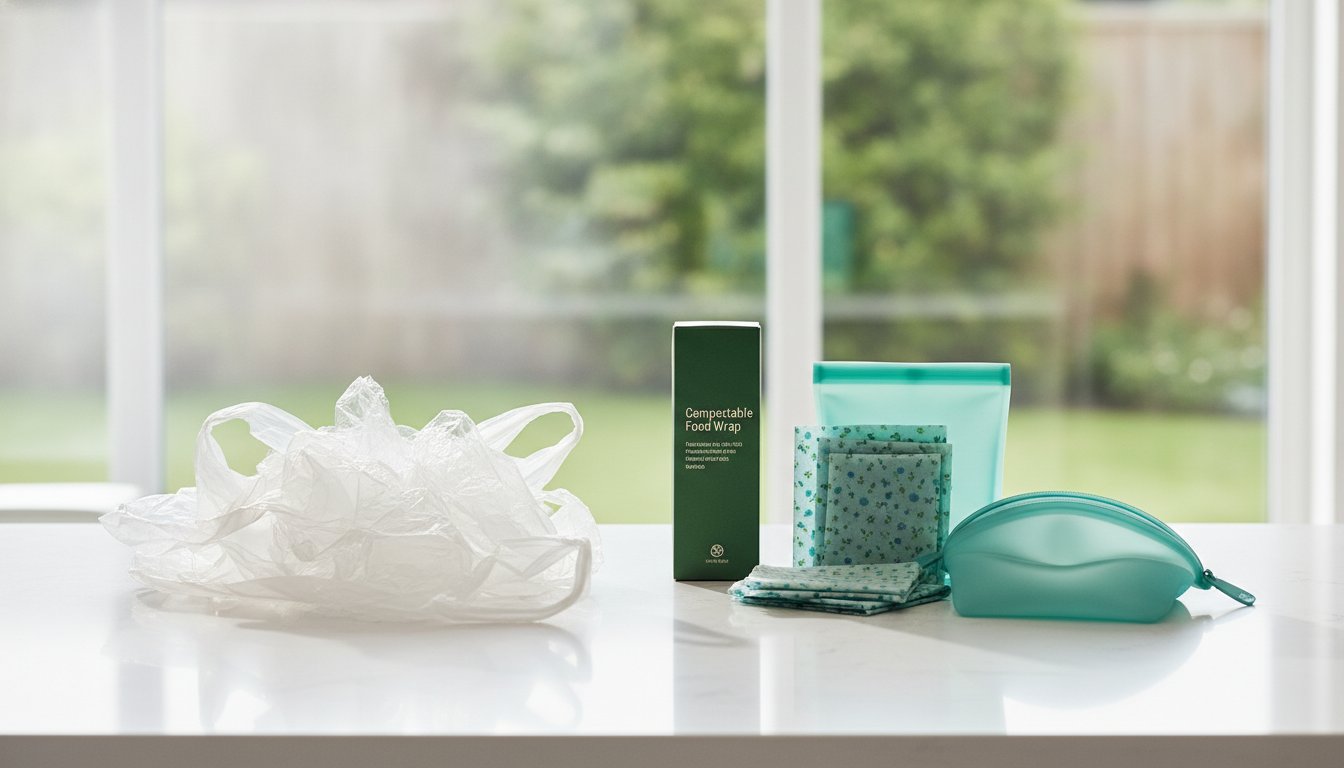
Why does the heart of the home often remain the primary source of non-recyclable waste, even as the UK moves toward a circular economy? Most households feel the daily frustration of wrestling with plastic clingfilm that cannot be recycled or managing the unpleasant task of emptying a poorly lined food waste bin. It's common to feel confused by misleading labels that fail to perform or don't actually break down in your garden heap. Transitioning to a plastic-free home shouldn't mean sacrificing the hygiene and durability you rely on for daily food preparation. This is particularly relevant as 2026 regulations continue to raise the standards for waste management across the country.
This authoritative guide is designed to eliminate that confusion and help you master sustainable kitchen swaps uk with confidence. We promise to provide you with a clear, actionable checklist that bridges the gap between environmental responsibility and practical utility. You will learn which certifications, such as OK compost HOME, are truly trustworthy for your specific composting needs. We will preview the most effective compostable and reusable alternatives available today, ensuring your kitchen supports a cleaner future without the compromise of inferior performance or reliability.
Key Takeaways
- Conduct a rapid 10-minute inventory to identify high-impact plastic waste sources in your pantry and under-sink cupboards.
- Explore performance-led sustainable kitchen swaps uk including compostable clingfilm and food roller bags that protect your food without environmental harm.
- Learn to distinguish between Home Composting and Industrial Composting certifications to ensure your waste management practices are truly effective.
- Implement a "Circular Kitchen" workflow to streamline your transition toward a plastic-free home while maintaining high standards of hygiene and durability.
The 2026 Kitchen Plastic Audit: Identifying High-Impact Swaps
Achieving a plastic-free home requires more than just buying new products; it demands a clear understanding of your current consumption patterns. Spend just ten minutes auditing your pantry and under-sink cupboards to reveal the hidden volume of non-recyclable waste. This intentional assessment is a practical first step toward Sustainable living in a modern household. By identifying exactly where plastic enters your kitchen, you can prioritise sustainable kitchen swaps uk that offer the highest environmental return.
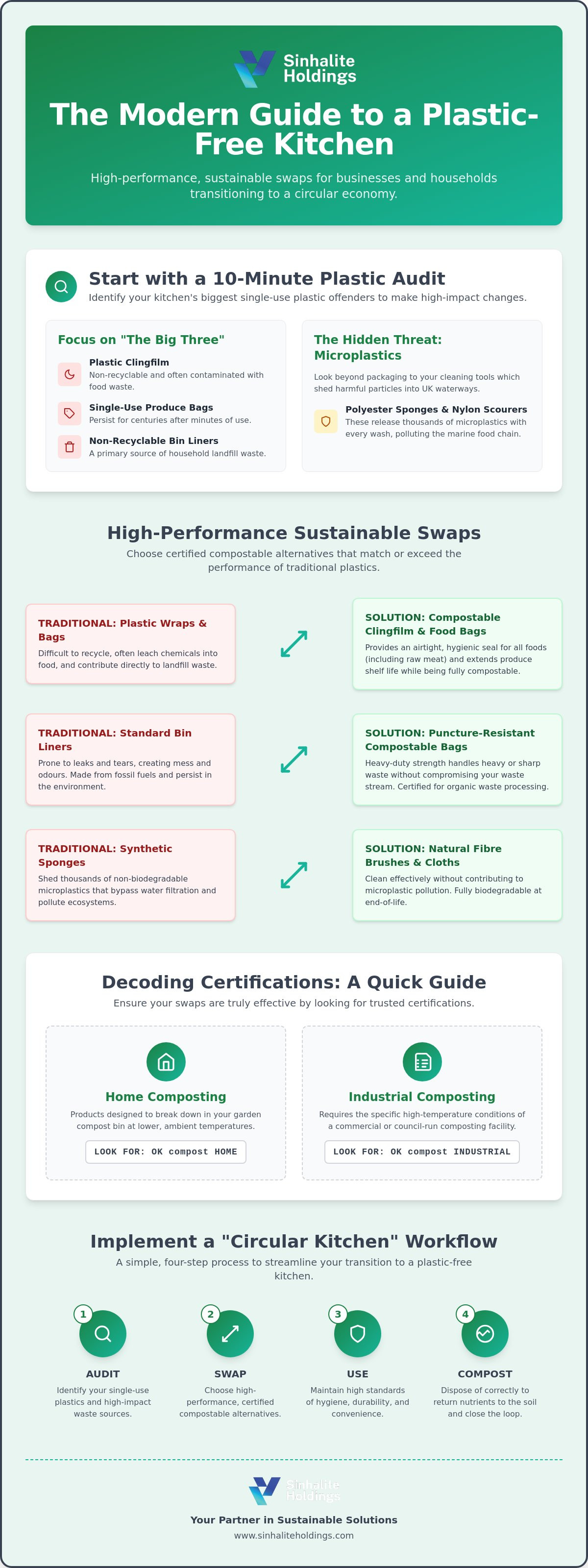
Most audits reveal "The Big Three" culprits: traditional plastic clingfilm, non-recyclable bin liners, and single-use produce bags. These items are often used for minutes but persist in the environment for centuries. Beyond these, evaluate your food waste system. If your current bin liners are prone to leaks or unpleasant odours, it's a sign that your waste management lacks the durability required for a modern, responsible kitchen.
To better understand how these changes translate into practical daily benefits, watch this helpful video:
Identifying Single-Use Culprits
Focus your initial efforts on items that cannot be placed in kerbside recycling. Pay close attention to materials that come into direct contact with food. Traditional PVC wraps and plastic produce bags are prime candidates for replacement because they're frequently contaminated by organic matter, making them impossible to recycle through standard UK infrastructure. Replacing these with high-quality compostable alternatives ensures food safety while adhering to a circular economy model.
The Microplastic Check
Look beyond visible packaging to your cleaning tools. Traditional polyester sponges and nylon scourers shed thousands of microplastics into UK waterways with every wash. These invisible pollutants bypass filtration systems and enter the marine food chain. Transitioning to natural fibre brushes or certified compostable cloths prevents this shedding at the source. This shift ensures your cleaning routine remains effective without contributing to long-term ecological damage.
The Essential Sustainable Kitchen Checklist: Performance-Led Swaps
Once your audit is complete, the focus shifts to selecting replacements that match or exceed the performance of traditional materials. Integrating sustainable kitchen swaps uk into a busy household or commercial environment requires products that don't fail under pressure. Choosing high-performance alternatives ensures your transition is permanent rather than a temporary experiment. This commitment to quality is essential when considering the scale of the challenge presented by UK plastic pollution facts, which highlight the urgent need for systemic change in how we manage disposable items.
Food Storage: Beyond Beeswax
While beeswax wraps are popular for bread and dry goods, they often fall short in high-hygiene environments or when dealing with raw proteins. For these tasks, compostable clingfilm is the superior choice. It provides the necessary airtight seal for raw meat and high-fat foods that reusables cannot always safely manage. In professional-standard kitchens, this film offers a sterile, single-use solution that fully breaks down in a composting environment. For fruit and vegetable storage, replacing plastic produce bags with compostable food roller bags allows produce to breathe, extending shelf life while eliminating the need for virgin plastic packaging.
Waste Management Swaps
Strength is the primary concern when moving away from traditional bin liners. Transitioning to puncture resistant compostable garbage bags ensures that heavy or sharp waste doesn't compromise your waste stream. These heavy-duty sacks offer the durability required for general household refuse while remaining fully compatible with organic waste processing. Effective collection also relies on certified caddy liners. These are critical for keeping a food waste bin from smelling, especially as UK regulations increasingly mandate the separation of food waste. Adopting these high-quality compostable solutions allows organisations to meet modern ethical standards with confidence and ease.
Beyond the Swap: Integrating Sustainability into Your Kitchen Routine
Adopting sustainable kitchen swaps uk is a significant first step, but true environmental stewardship requires a shift in daily operational habits. Establishing a "Circular Kitchen" workflow ensures that every material entering your space has a defined, responsible exit strategy. This workflow follows a logical sequence: Prep with natural tools, Store using certified compostable films, and Compost all organic waste. By viewing your kitchen as a closed-loop system, you reduce the volume of packaging waste before it even reaches your bin.
Mindful consumption also includes evaluating how products arrive at your door. Incorporating bulk-buying for dry goods and household staples reduces the frequency of secondary packaging entering your home or business. This proactive approach, combined with the use of high-performance compostable tools, creates a scalable model for waste reduction that aligns with modern ethical standards.
Mastering the Food Waste Caddy
With UK councils increasingly standardising food waste collections in 2026, maintaining a hygienic caddy is essential for compliance and comfort. Using high-quality compostable caddy bags prevents the common issues of moisture build-up and lingering odours that often discourage consistent recycling. To maintain peak hygiene, replace liners every two to three days and ensure the caddy is kept in a ventilated area. This simple routine ensures your kitchen waste aligns perfectly with local recovery goals, turning scraps into valuable soil nutrients rather than landfill methane.
Verifying Your Swaps: Certifications Matter
The rise of sophisticated "greenwashing" makes it difficult to distinguish between genuine bioplastics and traditional plastics with misleading additives. To ensure your choices are effective, you must look for specific 2026 eco-labels. An OK compost HOME certification explained provides the critical assurance that a product will fully break down in domestic composting conditions without the need for industrial heat.
TUV Austria standards remain the gold standard for verifying these claims in the UK market. Prioritising these certifications ensures you avoid "fake" bioplastics that merely fragment into microplastics. You can find further inspiration for a regenerative home by exploring various green kitchen swaps that balance professional culinary performance with ecological responsibility. This level of scrutiny ensures that your commitment to a plastic-free future is backed by rigorous, scientific validation.
Securing a Plastic-Free Future for the UK Kitchen
Establishing a plastic-free home is an achievable transition when you combine a structured audit with high-performance alternatives. We've explored how identifying high-impact waste sources allows for a targeted approach to sustainable kitchen swaps uk. By prioritising materials that carry the OK compost HOME certification, you ensure that your choices are backed by rigorous environmental standards. Transitioning to performance-tested options like compostable clingfilm and heavy-duty sacks ensures that your kitchen remains hygienic and efficient while actively supporting the UK circular economy.
Sinhalite Holdings is a UK-based specialist in compostable packaging, dedicated to providing the tools needed for this systemic change. Our products are engineered to meet industrial-strength requirements without sacrificing ecological integrity. It's time to take the next step in your sustainability journey. Explore Sinhalite’s range of certified compostable kitchen essentials to discover how practical innovation can transform your daily routine. We're here to help you build a kitchen that reflects your values and protects our environment for years to come.
Frequently Asked Questions
How do I know if a kitchen swap is actually compostable or just greenwashed?
Verify a product's authenticity by looking for the OK compost HOME or TUV Austria certification logos on the packaging. These labels provide assurance that the material has undergone rigorous testing for disintegration and safety in domestic environments. Avoid products that use vague, unregulated terms such as "earth-friendly" or "bio-based" without displaying a recognised third-party certification that confirms they meet 2026 UK standards.
Can compostable clingfilm be used in the microwave or freezer?
High-quality compostable clingfilm is engineered for temperature versatility, making it safe for both freezer storage and microwave use. It maintains a strong seal to prevent freezer burn and remains stable during reheating without leaching the chemicals often found in traditional PVC wraps. This ensures that your sustainable kitchen swaps uk provide the same functional utility as the plastic items they replace.
What is the difference between "biodegradable" and "compostable" in the UK?
Compostable materials are designed to break down into nutrient-rich organic matter within a specific timeframe without leaving toxic residues or microplastics. In contrast, "biodegradable" is a broad and often unregulated term meaning a material will break down eventually, which could take decades. Choosing certified compostable products ensures your kitchen waste actively contributes to a circular economy rather than simply fragmenting into smaller pollutants.
Will compostable bin liners start to break down if the food waste is wet?
Professional-grade compostable bin liners and caddy bags are manufactured with moisture resistance to ensure they don't fail when holding damp food waste. They're designed to maintain their structural integrity throughout the duration of a standard weekly collection cycle. The active decomposition process only begins once the liners are exposed to the specific microbial conditions and heat levels found in a dedicated composting environment.


