
Did you know that by April 2026, UK businesses using packaging rated "red" for recyclability will face a 20% surcharge on their Extended Producer Responsibility (EPR) fees? This financial pressure, combined with the Plastic Packaging Tax rising to £228.82 per tonne, means the future of sustainable packaging in the UK is no longer a distant concern; it's a pressing operational priority. Many commercial entities feel a justified sense of urgency as they attempt to balance these evolving regulations with the need for high-performance materials that don't compromise on durability or strength.
We understand that transitioning away from traditional plastics can feel complex, especially when you're searching for viable alternatives to flexible films and single-use items. This analysis provides a clear roadmap for your packaging procurement, detailing the regulatory shifts and circular economy strategies that will define the market in 2026. You'll gain a deeper understanding of how compostable innovations, from caddy bags to industrial cling wrap, offer a scalable solution to the plastic waste crisis. By aligning your business with these responsible practices today, you can ensure long-term compliance and demonstrate a genuine commitment to environmental stewardship.
Key Takeaways
- Understand how the 2026 Plastic Packaging Tax and Extended Producer Responsibility (EPR) fee modulations will impact your procurement costs and compliance requirements.
- Explore the material innovations, such as high-performance biopolymers, that are defining the future of sustainable packaging in the UK and replacing traditional flexible plastics.
- Learn how modern compostable films solve the barrier challenges of moisture and grease resistance while maintaining the strength required for commercial applications.
- Discover a practical methodology for conducting packaging audits to identify high-impact opportunities for integrating compostable essentials like food roller bags and caddy bags.
- Gain a strategic roadmap for future-proofing your organisation against evolving plastic bans by adopting scalable, circular solutions that align with corporate ESG targets.
The Regulatory Landscape and Market Evolution in 2026
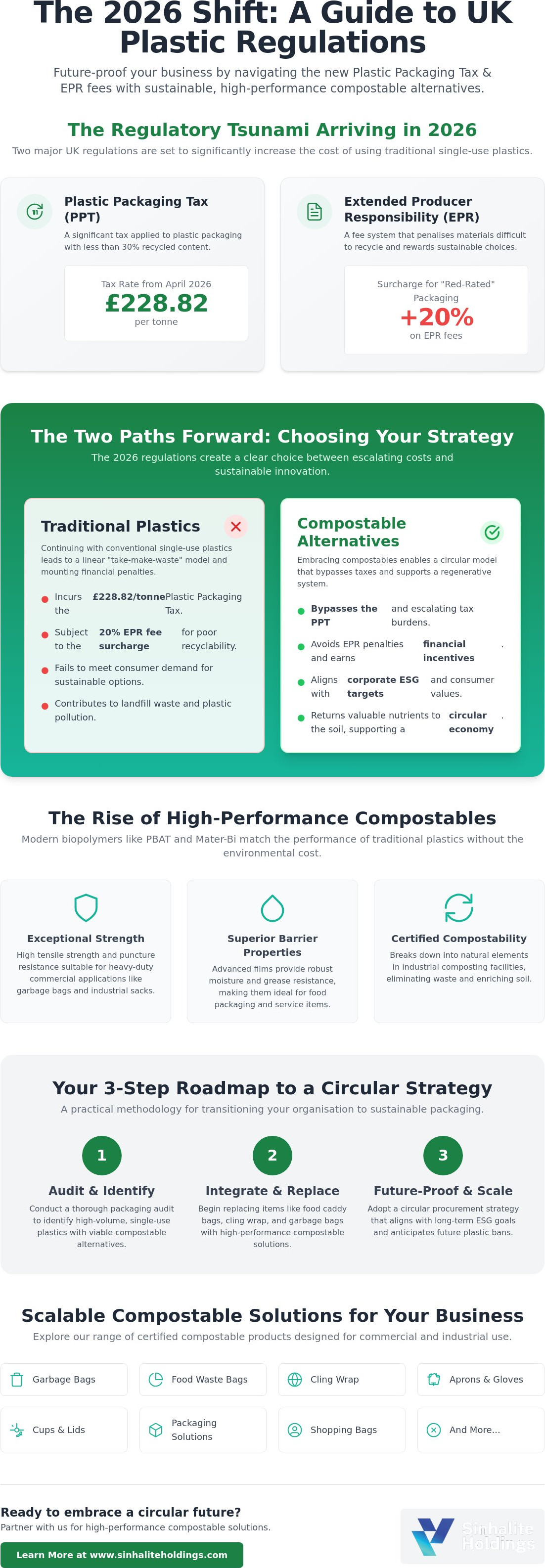
The UK regulatory environment has entered a decisive era where environmental impact is directly tied to financial viability. As of April 2026, the Plastic Packaging Tax (PPT) has risen to £228.82 per tonne for any packaging containing less than 30% recycled content. This increase serves as a clear signal that the future of sustainable packaging in the UK depends on aggressive innovation rather than incremental change. Organisations must now navigate a dual-layer fiscal framework where traditional single-use plastics are increasingly cost-prohibitive. Utilising Sustainable packaging is no longer a niche CSR goal; it's a fundamental requirement for corporate resilience.
To better understand this concept, watch this helpful video:
Beyond the PPT, the modulation of Extended Producer Responsibility (EPR) fees creates a tiered system that rewards circular design. Packaging rated as "red" under the Recyclability Assessment Methodology now incurs a 20% surcharge, while "green" materials receive financial incentives. This shift pushes brands to look beyond basic recyclability toward regenerative solutions that return nutrients to the soil. Consumer sentiment has mirrored this evolution. Modern UK buyers demand transparent, plastic-free supply chains, often prioritising brands that utilise high-performance compostable alternatives for items like shopping bags and garbage bags.
The Impact of the 2026 Plastic Packaging Tax
The £228.82 per tonne tax rate provides a powerful economic incentive for procurement teams to transition toward certified compostable materials. Unlike traditional plastics that struggle to meet recycled content thresholds, compostable polymers offer a clean break from the tax burden while maintaining industrial strength. This 2026 regulatory shift acts as a fundamental catalyst for industrial innovation across the entire packaging sector. By choosing compostable caddy bags or food roller bags, businesses effectively bypass the escalating costs associated with fossil-fuel-based polymers while satisfying both regulators and eco-conscious customers.
From Linear to Circular: The UK Market Shift
The UK market is rapidly moving away from the "take-make-waste" model in favour of closed-loop systems that align with the new UK Packaging Pact. This transition requires a holistic view of the product lifecycle, ensuring that materials like household clingfilm don't end up in landfill. Many organisations are already switching business to sustainable packaging to stay ahead of these systemic changes. By integrating compostable solutions into their operations, councils and large organisations can support the future of sustainable packaging in the UK while meeting their ambitious ESG targets and reducing their environmental footprint.
Emerging Material Trends: The Rise of High-Performance Compostables
The evolution of material science has moved beyond simple substitutes to create high-performance biopolymers that rival fossil-fuel plastics in every metric. While traditional polyethylene dominated the market for decades, modern alternatives like PBAT and Mater-Bi now offer the same tensile strength and flexibility required for commercial use. These materials are essential for addressing the flexible plastic crisis, especially as organisations seek to align their operations with the circular economy and sustainable manufacturing principles outlined by UK policymakers.
One of the most significant breakthroughs involves overcoming the barrier challenge. In the past, compostable films often struggled with moisture and grease resistance, limiting their use in food service. Today's advanced biopolymers provide robust protection, making them ideal for heavy-duty garbage bags and commercial sacks that must withstand significant loads without puncturing. This performance-oriented approach ensures that the future of sustainable packaging in the UK is defined by reliability as much as by ecological responsibility. Businesses don't have to sacrifice utility to meet their environmental commitments.
The Science of Compostable Flexible Packaging
Traditional cling wraps rely on PVC or LDPE and often contain toxic plasticisers to achieve their adhesive properties. Modern innovation has replaced these chemicals with bio-based resins that provide a natural "cling" through molecular structure rather than additives. Choosing a compostable cling film that actually clings allows businesses to maintain food safety and freshness while removing persistent microplastics from their supply chain. It's a practical, scalable solution for any commercial kitchen or food packing facility.
Why Home Compostability is the 2026 Gold Standard
While industrial composting requires specific temperature and pressure conditions, home-compostable materials break down in ambient environments. This distinction is vital for UK waste streams where industrial infrastructure may vary by region. Understanding OK compost HOME certification explained helps procurement officers select products that truly disappear, regardless of local waste management capabilities. You can explore our range of certified compostable solutions to find the right fit for your organisation's ESG goals.
Building a Circular Strategy: Implementation for UK Organisations
Transitioning to a circular model requires a methodical approach that moves beyond high-level ESG commitments toward practical operational changes. A comprehensive packaging audit is the primary step. This process allows organisations to identify high-impact plastic reduction opportunities within their current supply chains. By evaluating the lifecycle of every item, from back-of-house waste management to consumer-facing shopping bags, businesses can pinpoint where compostable alternatives provide the greatest environmental and financial relief. Integrating essentials such as caddy liners and food roller bags allows for the immediate diversion of organic waste from landfills, directly supporting the strategic goals of the UK's EPR for Packaging Scheme.
While procurement teams often focus on initial unit costs, the true ROI of the future of sustainable packaging in the UK lies in long-term brand equity and regulatory resilience. Avoiding modulated fee surcharges and the escalating Plastic Packaging Tax creates a compelling business case for early adoption. Collaborating with specialist suppliers ensures these solutions are scalable and meet the rigorous performance standards required for high-volume commercial operations. This partnership approach acts as a catalyst for innovation, allowing businesses to stay ahead of legislative shifts while fulfilling their role as responsible stewards of the environment.
Operationalising Sustainability in Commercial Environments
Practicality is paramount in commercial environments like hospitality and healthcare. Introducing compostable aprons and gloves provides a hygienic, plastic-free alternative that doesn't sacrifice durability or user safety. Success hinges on clear communication. Stakeholders and end-consumers need to understand why these changes are occurring and how to dispose of the materials correctly. This transparency builds trust and ensures the circular loop remains closed, preventing contamination in organic waste streams.
The Future of Compostable Food Packaging
Looking toward 2027 and beyond, we expect a greater convergence of digital tracking and material innovation. The food service sector will likely lead this charge by adopting fully integrated systems where every piece of packaging is designed for regenerative disposal. You can explore deeper insights into these upcoming shifts in our guide on the future of compostable food packaging uk. This forward-looking perspective ensures your organisation remains a leader in the transition to a cleaner, greener economy.
Leading the Transition to a Plastic-Free Future
The transition toward regenerative materials is no longer a choice but a strategic necessity for UK organisations. We've explored how evolving fiscal policies and the rise of high-performance biopolymers are fundamentally reshaping the commercial landscape. By moving beyond basic recycling and adopting home-compostable standards, businesses can effectively eliminate persistent waste from their operations. This proactive approach ensures compliance with new mandates while meeting the growing consumer demand for authentic environmental stewardship.
The future of sustainable packaging in the uk belongs to those who embrace innovation today. Sinhalite Holdings acts as a steady ally for businesses transitioning to a circular economy, offering proven performance in puncture-resistant garbage bags and advanced household clingfilm. As a specialist provider of OK compost HOME certified solutions, we provide the tangible tools needed to align your commercial operations with modern ethical standards. Explore Sinhalite Holdings’ range of professional compostable solutions to begin your journey toward a cleaner, greener outlook. Positive change is achievable, and together, we can build a more responsible industrial future.
Frequently Asked Questions
What is the most sustainable packaging material in the UK for 2026?
High-performance compostable biopolymers are the most sustainable choice for flexible applications in 2026. These advanced materials provide the industrial strength required for garbage bags and shopping bags while ensuring they return nutrients to the soil rather than leaving persistent microplastics. Adopting these biopolymers is a critical step in the future of sustainable packaging in the uk because they solve the waste crisis for items that are historically difficult to recycle.
How does the UK Plastic Packaging Tax affect small businesses in 2026?
Small businesses must evaluate if their total plastic packaging usage exceeds the 10-tonne annual threshold for the Plastic Packaging Tax. If you meet this criteria, you'll be liable for the £228.82 per tonne rate on any packaging with less than 30% recycled content. Transitioning to compostable food roller bags or clingfilm allows smaller organisations to bypass these tax burdens entirely while aligning their operations with modern environmental standards and reducing administrative complexity.
Can compostable packaging be recycled with traditional plastics?
No, you shouldn't place compostable packaging in traditional plastic recycling bins as it can contaminate the mechanical recycling stream. Compostable items like caddy bags and household clingfilm are specifically designed to break down in organic waste environments. Proper disposal in a home compost bin or industrial composting facility ensures these materials complete their circular lifecycle. Clear internal signage is essential to help your staff and customers separate these streams correctly.
What certifications should I look for in sustainable packaging?
You should primarily look for the OK compost HOME and EN 13432 certifications to verify a product's environmental claims. The OK compost HOME mark is especially important for the future of sustainable packaging in the uk as it guarantees the material will degrade in ambient conditions without requiring industrial processing. These standards provide the transparency needed to ensure your procurement of compostable garbage bags and aprons truly supports your organisation's long-term ESG commitments.


