
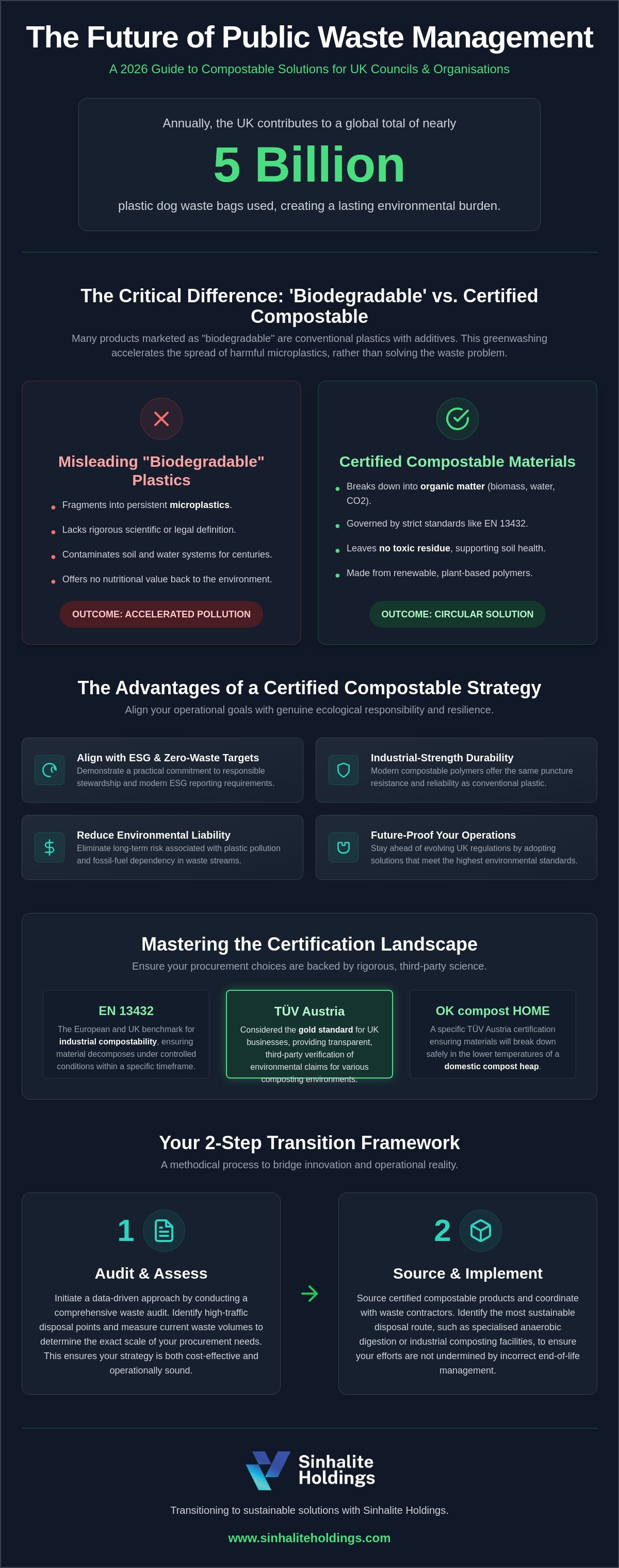
Nearly five billion plastic dog waste bags are used annually, creating a persistent environmental burden that traditional waste management systems struggle to contain. For councils and commercial entities, the challenge isn't just about picking up waste; it's about ensuring the vehicle for that waste doesn't outlast the material inside it by centuries. You've likely felt the frustration of navigating a market saturated with vague claims, where the distinction between biodegradable and compostable remains confusing. Using compostable bags for dog poop offers a sophisticated, industrial-strength alternative that aligns your operational goals with genuine ecological responsibility.
We understand that reliability is non-negotiable for high-volume public spaces. This 2026 guide promises to clarify the complexities of certification standards like EN 13432 and TUV Austria, ensuring your procurement choices are backed by rigorous science. You'll discover how to implement a sustainable waste strategy that reduces plastic pollution while maintaining the puncture resistance and strength required for professional use. We will explore the latest UK regulations and disposal methods to give you total confidence in your transition to a cleaner, more resilient future.
Key Takeaways
- Identify the fundamental differences between "biodegradable" additives and certified compostable materials to prevent microplastic accumulation in the environment.
- Develop a scalable strategy for using compostable bags for dog poop that balances environmental goals with the practical demands of high-volume waste management.
- Master the certification landscape by learning how OK compost HOME standards ensure material safety and compliance with modern UK disposal regulations.
- Implement a clear two-step audit process to transition your organisation from traditional plastic to high-performance, sustainable alternatives.
- Evaluate the durability advantage of modern compostable polymers that offer the same puncture resistance and reliability as conventional plastic garbage bags.
The Case for Using Compostable Bags for Dog Poop in 2026
Transitioning to a circular economy requires more than just picking up waste; it demands a fundamental shift in the materials we use for disposal. Using compostable bags for dog poop is a proactive step toward eliminating fossil-fuel dependency in public waste streams. While traditional plastics persist for centuries, compostable bioplastics are materials that undergo biological decomposition in a compost site at a rate consistent with other known compostable materials. This distinction is critical for councils and businesses aiming to reduce their long-term environmental liability.
Understanding 'biodegradable' vs. 'compostable' is essential because the former often lacks a legal or scientific definition, leading to widespread confusion. When conventional plastic bags break down, they don't disappear; they fragment into microplastics that have now been documented throughout the UK food chain. By choosing plant-based polymers, organisations reduce their carbon footprint during production and prevent the introduction of these persistent pollutants into our soil and water systems.
To better understand how these eco-friendly solutions perform in real-world conditions, watch this helpful review:
Moving Beyond Biodegradable Greenwashing
Many products marketed as "biodegradable" are simply traditional plastics with additives that cause them to shatter into smaller pieces. This process accelerates the spread of microplastics rather than solving the waste problem. Before making procurement decisions, it's vital to investigate do compostable bags contain plastic to ensure they meet strict EN 13432 standards. Genuine compostable materials leave no toxic residue, providing a clean end-of-life solution that supports soil health.
Why UK Organisations are Leading the Switch
UK councils and large organisations are increasingly integrating compostable solutions into their zero-waste targets. Using compostable bags for dog poop allows these entities to align their public services with modern ESG reporting requirements. This shift isn't just about optics; it's a practical commitment to responsible stewardship. By replacing single-use plastics with durable, plant-based alternatives, businesses demonstrate a visionary approach to waste management that resonates with environmentally conscious citizens.
How to Implement a Compostable Waste Strategy
Transitioning to a plastic-free disposal model requires a methodical framework that bridges the gap between material innovation and operational reality. For organisations, the process begins with a comprehensive waste audit. By identifying high-traffic disposal points and measuring current waste volumes, you can determine the exact scale of your procurement needs. This data-driven approach ensures that your strategy for using compostable bags for dog poop is both cost-effective and operationally sound.
Material safety is the next pillar of a successful strategy. It is essential to source bags with a verified OK compost HOME certification to ensure the polymers break down without leaving harmful residues. Coordination with your waste contractors is equally vital. Because pet waste contains pathogens, many municipal pet waste disposal rules prohibit its inclusion in standard green waste streams. Identifying the most sustainable route, such as specialised anaerobic digestion or industrial composting facilities, prevents your efforts from being undermined by incorrect disposal.
Identifying Certified Compostable Standards
The EN13432 standard is the benchmark for industrial compostability in the UK, ensuring that materials decompose within a specific timeframe under controlled conditions. TUV Austria certifications are considered the gold standard for UK businesses because they provide a transparent, third-party verification of environmental claims. For high-volume waste management, choosing certified materials ensures that your organisation meets its ESG commitments while adhering to rigorous safety protocols.
Best Practices for High-Volume Collection
Public waste collection demands extreme durability. Using puncture resistant compostable garbage bags is critical for public bins where sharp objects or heavy loads can cause traditional bio-bags to fail. These high-performance polymers are designed to manage moisture and contain odours more effectively than standard plastic, making them ideal for large-scale containers. By providing clear signage at disposal points, you can educate users on the benefits of using compostable bags for dog poop and prevent the contamination of your sustainable waste streams. If you are ready to upgrade your facility's waste equipment, exploring commercial-grade compostable solutions can help streamline your transition.
Transitioning to Sustainable Solutions with Sinhalite Holdings
Sinhalite Holdings serves as a dedicated ally for organisations ready to move beyond fossil-fuel plastics. We provide the infrastructure and high-performance materials necessary for a seamless transition to sustainable packaging across all operational levels. By focusing on industrial-scale supply, we ensure that councils, parks, and commercial facilities can implement large-scale changes without compromising on budget or utility. Using compostable bags for dog poop at a wholesale level allows public entities to lead by example, demonstrating a commitment to the circular economy of 2030 through tangible, daily actions.
The durability of our materials is a result of advanced polymer science. Our compostable garbage bags and caddy liners offer the same tensile strength and puncture resistance as traditional polyethylene. This performance ensures that the transition doesn't result in increased maintenance costs or public dissatisfaction. We believe that high standards of utility and durability are essential for systemic change to take root.
Reliability for Commercial Waste Management
One of the primary barriers to adoption has been the fear of material failure. We've overcome the "split bag" objection by engineering plant-based polymers that maintain their integrity under heavy loads. Beyond strength, these materials offer distinct hygiene benefits. The breathable nature of our plant-based liners reduces moisture build-up and heat retention in commercial bins. This leads to fewer odours and a more sanitary environment for waste collection staff and the public alike.
A Partner in the UK Circular Economy
Sinhalite Holdings is more than a supplier; we're a partner in plastic-free innovation and environmental stewardship. We understand that the move to 100% compostable waste disposal is a journey that requires reliable logistics and expert guidance. By choosing high-quality alternatives, your organisation isn't just managing waste; it's actively reducing the microplastic burden on our ecosystems. Using compostable bags for dog poop is a practical, scalable starting point for any business looking to align its operations with modern ethical standards and a cleaner, greener outlook.
Building a Plastic-Free Legacy for UK Communities
The transition toward sustainable waste management is a fundamental commitment to the health of our local ecosystems. By moving beyond the ambiguity of "biodegradable" labels and embracing certified compostable materials, your organisation can effectively eliminate its contribution to microplastic pollution. Using compostable bags for dog poop is a practical, high-impact starting point that demonstrates visionary leadership to your stakeholders and the public. Success lies in choosing materials that don't compromise on performance, ensuring that environmental goals are met with industrial-strength reliability.
As UK-based sustainable specialists, Sinhalite Holdings provides the high-tensile strength plant-based polymers required for demanding commercial environments. Our TUV Austria Certified solutions offer the durability needed to scale your plastic-free initiatives with total confidence. It's time to align your operational practices with the ethical standards of a circular economy. Explore our range of certified compostable waste solutions for your organisation and take a decisive step toward a cleaner, more resilient future. Together, we can ensure that our public spaces remain vibrant and protected for generations to come.
Frequently Asked Questions
Do compostable dog poop bags actually break down in landfill?
Compostable bags are designed to break down in oxygen-rich environments like industrial composting facilities rather than anaerobic landfills. While they won't decompose as intended in a landfill, choosing these bags still removes fossil-fuel plastics from the manufacturing cycle. Using compostable bags for dog poop ensures that if the waste is diverted to the correct stream, it will return to the earth without leaving microplastics behind.
Can I put compostable poop bags in my home compost heap?
You should only home compost bags that carry the TUV OK Compost HOME certification, which confirms they break down at lower temperatures. However, it's generally discouraged to add pet waste to home compost heaps meant for garden use. Pathogens found in animal waste require the sustained high temperatures of industrial facilities to be neutralized safely; this protects your soil and local ecosystem from contamination.
Are compostable bags strong enough to handle large amounts of waste?
Modern plant-based polymers are engineered to match the high-tensile strength and puncture resistance of traditional polyethylene. Sinhalite Holdings provides durable compostable garbage bags designed specifically for the rigours of commercial waste collection. These advanced materials ensure that using compostable bags for dog poop doesn't lead to splits or leaks, even when managing high-volume public waste bins in high-traffic park or urban areas.
What is the difference between home compostable and industrial compostable bags?
The primary difference lies in the environmental conditions required for the material to biodegrade safely. Industrial compostable bags, certified under EN 13432, require the high, consistent heat of professional facilities to break down within 180 days. Home compostable bags are designed to decompose in the lower, more variable temperatures of a domestic heap. Both standards ensure that no toxic residues or microplastics remain after the process is complete.


