
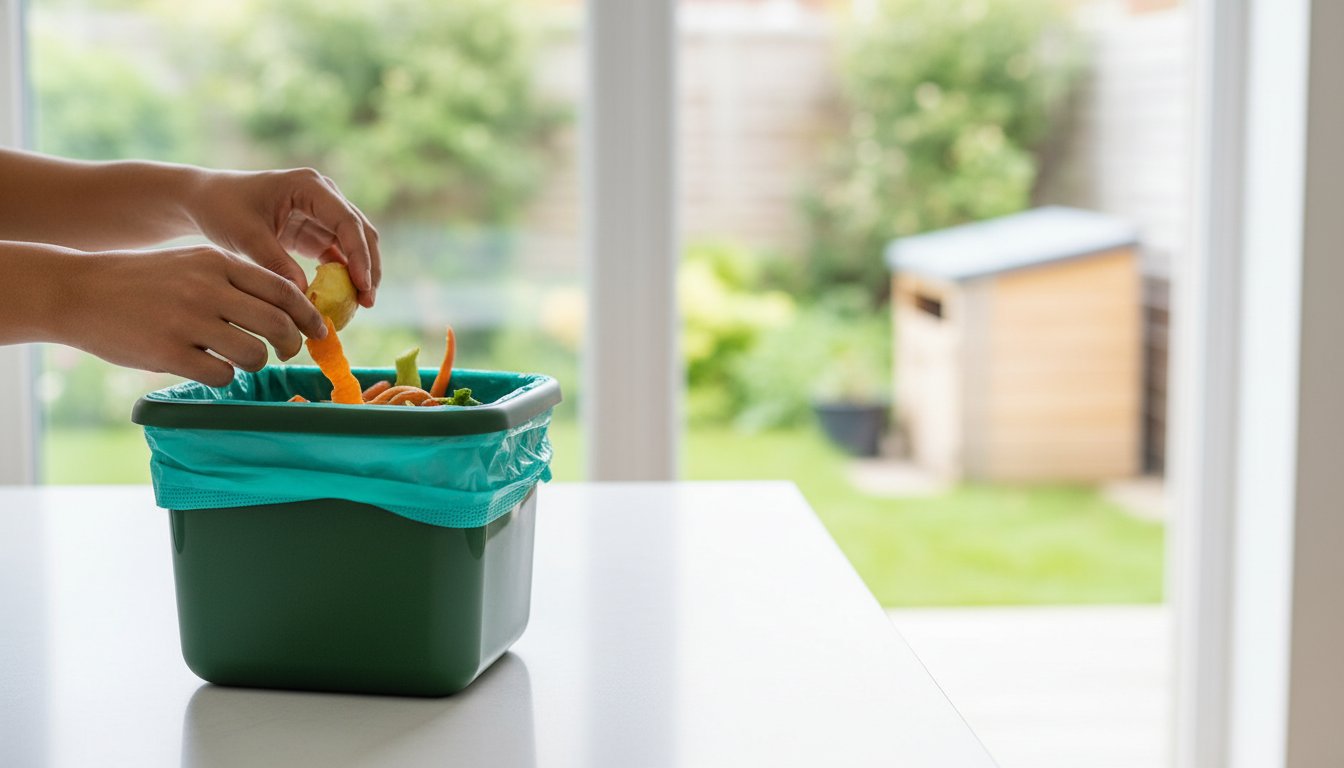
Did you know that UK households account for 70% of the nation's total food waste, discarding approximately 6.7 million tonnes every year? As the 2026 Simpler Recycling reforms mandate weekly collections across England, understanding exactly what goes in a food waste caddy has become a vital operational priority for businesses and a daily responsibility for residents.
It's common to feel a sense of hesitation when facing confusing rules about dairy or bones, especially when dealing with the practical nuisances of split liners and kitchen odours. We believe that transitioning to responsible waste practices should be seamless and empowering rather than a source of frustration. This article provides a definitive checklist of what to include and exclude from your caddy, ensuring you meet the 2026 standards with confidence. You'll learn how to manage food waste hygienically using high performance compostable solutions that support a circular economy and keep your premises clean.
Key Takeaways
- Identify the specific food groups, such as dairy and meat bones, that are now officially accepted under the 2026 UK recycling standards.
- Master the definitive checklist of what goes in a food waste caddy to ensure your household or business remains fully compliant with the Simpler Recycling reforms.
- Learn why transitioning to certified compostable caddy bags is essential for preventing leaks and maintaining a hygienic, odour-free kitchen environment.
- Explore practical strategies for businesses to implement mandatory food waste separation while advancing their long-term sustainability and ESG objectives.
- Discover how accurate waste sorting facilitates the production of renewable energy and biofertilisers through anaerobic digestion.
The Definitive Food Waste Caddy Checklist: What Can and Cannot Go In
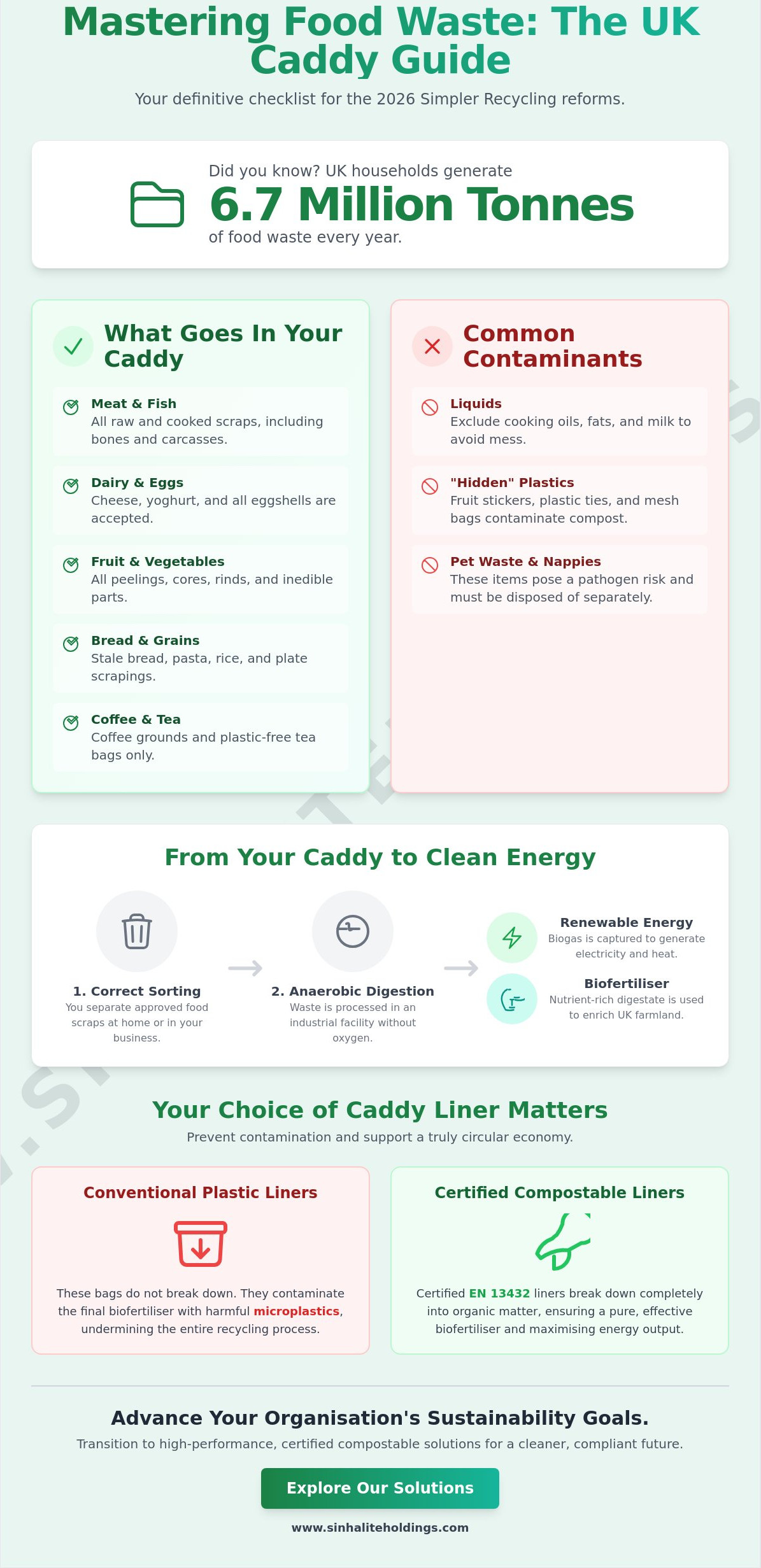
Understanding the systemic challenges of food waste in the United Kingdom is the first step toward building a more circular economy. Knowing exactly what goes in a food waste caddy is essential for maintaining a clean and efficient recycling system. Industrial anaerobic digestion facilities are designed to process organic matter, turning your scraps into renewable energy and nutrient-rich biofertiliser.
The following items are officially accepted in your kitchen caddy:
- Meat and fish: All raw and cooked scraps, including poultry bones and carcasses.
- Dairy and eggs: Cheese, yogurt, and eggshells are perfectly suitable for collection.
- Fruit and vegetables: All inedible parts, including peelings, citrus rinds, cores, and fruit stones.
- Bread and grains: Stale bread, pasta, rice, and general plate scrapings.
- Coffee and tea: Coffee grounds and plastic-free tea bags. If you aren't certain your tea bags are plastic-free, it's safer to split them and only compost the leaves.
The "Never" List: Common Contaminants to Avoid
Liquids, including milk and cooking oils, must be excluded to maintain the correct moisture balance for industrial processing. These substances can cause leaks and mess during collection. You should also be vigilant about "hidden" plastics. Tiny fruit stickers, plastic ties, and the mesh bags used for citrus fruits are frequent contaminants that degrade the quality of the final compost. Finally, pet waste and nappies are strictly prohibited due to the risk of pathogens; these items require separate, specialist disposal routes and should never enter the food waste stream.
Special Considerations for 2026 UK Regulations
The "Simpler Recycling" reforms mandate that by 31 March 2026, weekly food waste collections will be standard for all English households. This legislative shift aims to standardise recycling across the country. While some councils may suggest using newspaper or nothing at all, understanding what goes in a food waste caddy includes choosing the right infrastructure. Using EN 13432 certified compostable caddy bags is the most reliable way to ensure hygiene. These liners are engineered to break down completely in industrial facilities, preventing the persistent microplastic pollution associated with traditional thin-film plastic bags.
Beyond the Scraps: Why Your Choice of Caddy Liner Matters
While identifying what goes in a food waste caddy is a critical first step, the vessel used to transport those scraps determines the ultimate success of the recycling process. Many organisations and local authorities still suggest using old bread bags or newspaper as liners. However, these traditional plastic liners compromise the integrity of industrial compost. When conventional plastics enter an Anaerobic Digestion (AD) plant, they break down into microplastics that contaminate the biofertiliser used on British farmland, undermining the very purpose of organic recycling.
Switching to plant-based, breathable materials represents a significant leap in waste management performance. These materials allow moisture to evaporate, which reduces the weight of the waste and prevents the buildup of anaerobic bacteria. A common frustration for many users is why are my compostable bags splitting; this typically occurs because the bag is actively responding to heat and moisture. Choosing high-quality, durable compostable caddy bags ensures that environmental responsibility doesn't sacrifice kitchen convenience or durability.
The Science of Truly Compostable Liners
For a liner to be effective in the UK system, it should meet the EN 13432 standard. This certification guarantees that the material will fully biodegrade in industrial conditions without leaving toxic residues behind. Data from WRAP suggests that consistency in how we collect food waste is essential for hitting national recycling targets. Certified liners facilitate AD plant efficiency by ensuring the organic stream remains pure, allowing the facility to maximise biogas production and renewable energy output.
Hygiene and Maintenance Tips
Maintaining a fresh kitchen environment is a primary concern for households and businesses alike. Learning how to keep a food waste bin from smelling involves simple but effective moisture management. Always let hot food scraps, such as pasta or vegetable mash, cool down before placing them in the caddy. Excess heat accelerates the breakdown of compostable liners and creates condensation, which leads to odours and potential leaks. Keeping your caddy in a ventilated area and emptying it at least every two to three days will ensure your transition to 2026 waste standards remains a positive, hygienic experience.
Optimising Food Waste Management for UK Businesses and Organisations
Since 31 March 2025, businesses in England with 10 or more full-time equivalent employees have been legally required to separate food waste from their general waste streams. This regulatory shift is a significant step toward a more sustainable industrial landscape; it requires a methodical approach to kitchen infrastructure and staff behaviour. For commercial entities, identifying what goes in a food waste caddy is only the beginning. True operational excellence involves integrating these practices into broader Environmental, Social, and Governance (ESG) goals to drive long-term value.
The logistics of high-volume commercial waste demand robust solutions that can withstand the rigours of a professional kitchen. Organic waste is often heavy and saturated, which can lead to failures in standard liners. Utilising puncture resistant compostable garbage bags ensures that waste remains contained from the prep station to the external collection point. Effective staff training is the final piece of the puzzle. Clear, visual signage that reinforces what goes in a food waste caddy helps reduce contamination, ensuring your business remains compliant with the requirements of registered waste carriers.
Reducing Plastic in the Commercial Food Chain
Operational efficiency increases when you remove the need for complex sorting at the point of disposal. By swapping traditional PVC wraps for compostable clingfilm uk, kitchen teams can discard wrapped food scraps directly into the organic bin without risk of plastic contamination. This transition streamlines the prep process and supports a fully compostable kitchen inventory. While this requires a proactive change in procurement, the reduction in plastic waste provides a clear advantage for businesses seeking to lead in environmental stewardship.
Compliance and Reporting
Accurate waste data has become a vital component of corporate transparency. Tracking the volume of food diverted to anaerobic digestion allows organisations to support their green credentials with verifiable data. This proactive stance also provides a strategic advantage in navigating the UK Plastic Packaging Tax. By choosing certified compostable alternatives, businesses reduce their reliance on taxed plastic materials while contributing to a circular economy. Preparing for these mandates now ensures that your organisation is resilient and ready for the 2027 micro-business deadline.
Driving the Transition toward a Circular Economy
Mastering the 2026 regulations begins with a clear understanding of what goes in a food waste caddy; this knowledge prevents contamination and ensures the purity of the organic waste stream. By choosing high performance infrastructure, businesses and households can eliminate the common nuisances of kitchen odours and split bags while directly supporting the production of renewable energy. This proactive approach turns a daily chore into a powerful act of environmental stewardship.
Our commitment to innovation is reflected in our plant-based technology, which is engineered to be puncture-resistant and fully certified for both OK compost HOME and Industrial standards. These solutions are already trusted by UK organisations to navigate 2026 compliance with confidence and operational ease. Explore our range of high-performance compostable caddy liners for your home or business to secure a cleaner, plastic-free future for your premises. Together, we can ensure that every scrap of food waste becomes a resource for a greener Britain.
Frequently Asked Questions
Can I put meat bones and fish skins in my food waste caddy?
Yes, you can include all meat bones and fish skins in your collection. Unlike traditional home composting heaps which struggle to break down dense animal proteins, industrial anaerobic digestion facilities are designed to process these materials safely at high temperatures. This ensures that every part of your meal preparation, from poultry carcasses to fish remains, can be successfully diverted from landfills and converted into renewable energy.
What happens if I use a regular plastic bag instead of a compostable liner?
Using a regular plastic bag introduces persistent contaminants into the organic recycling stream. These bags don't biodegrade and instead break down into microplastics that pollute the resulting biofertiliser used on agricultural land. Most industrial plants will attempt to screen out plastic liners, but this process is costly and often leads to the entire batch of food waste being rejected and sent to landfill.
Can pet food be recycled in the food waste bin?
Leftover pet food is generally permitted in your collection. Whether it's dry kibble or wet canned food, these organic materials are processed alongside other food scraps. However, you must never include pet waste, such as cat litter or dog faeces, in your caddy. These items carry pathogens that industrial food waste processes aren't equipped to neutralise, making them a strict contaminant in the organic stream.
How often should I empty my kitchen caddy to prevent smells?
We recommend emptying your kitchen caddy every two to three days to maintain optimal hygiene. This frequency prevents the buildup of moisture and heat, which are the primary drivers of anaerobic bacteria and unpleasant odours. When you use breathable, plant-based liners, moisture can evaporate more effectively. This simple routine keeps your kitchen environment fresh while ensuring that what goes in a food waste caddy remains manageable.
Are tea bags allowed in the food waste caddy in 2026?
Tea bags are only permitted if they're verified as plastic-free. While many brands are transitioning to compostable materials, some still use a small amount of polypropylene plastic to heat-seal the bags. These plastics don't break down and contaminate the final compost. To be safe, we suggest checking the packaging for a plastic-free certification or simply splitting the bag and composting the leaves alone.
What is the difference between home compostable and industrially compostable bags?
The primary difference lies in the environment required for biodegradation. Home compostable bags are engineered to break down at the lower, variable temperatures found in a garden compost heap. In contrast, industrially compostable bags, which meet the EN 13432 standard, require the consistent high-heat conditions of a professional facility to decompose. Understanding these distinctions is essential for correctly managing what goes in a food waste caddy in a commercial setting.


