
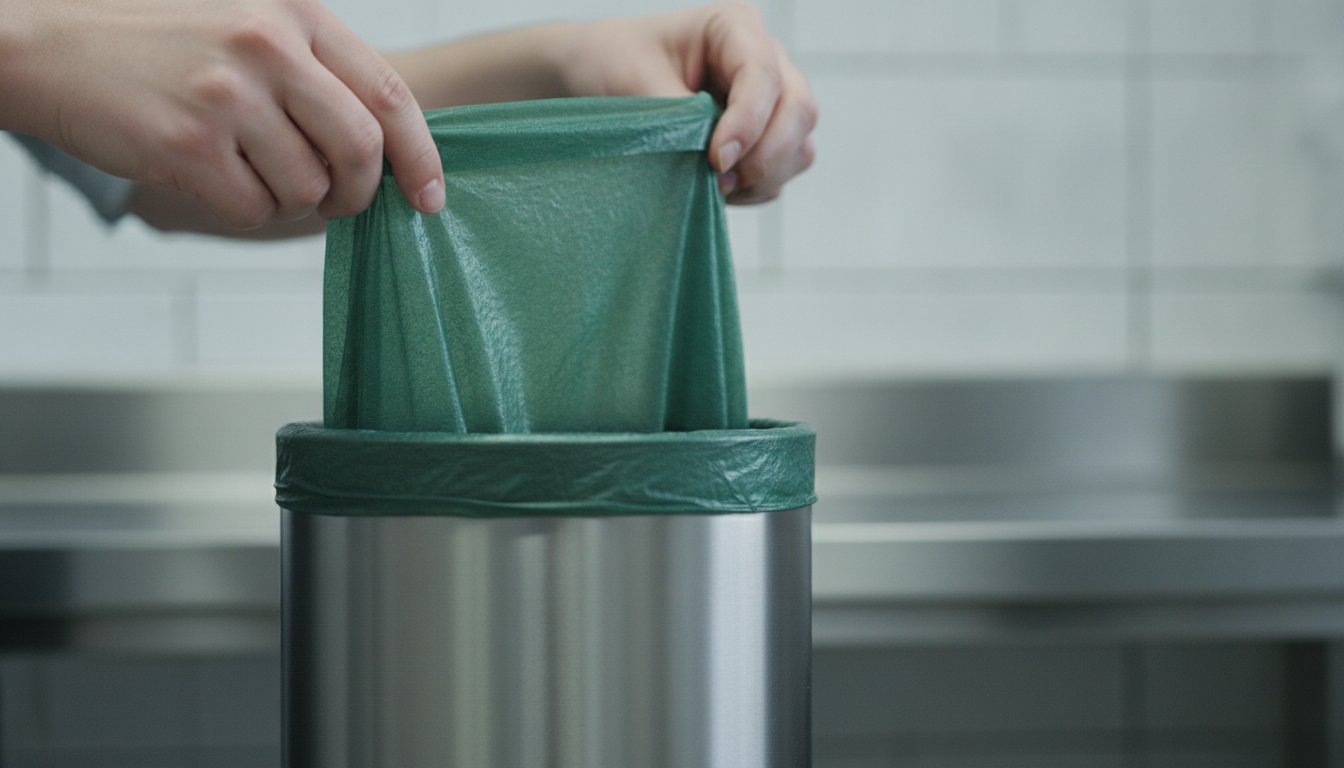
In 2026, the humble bin liner has evolved from a back-of-house afterthought into a critical pillar of UK commercial compliance. You likely understand the frustration of a standard liner splitting under the weight of wet food waste, or the pressure of ensuring your kitchen meets the latest 'Simpler Recycling' mandates without slowing down service. Transitioning to high-performance compostable bin liners for restaurants isn't just about avoiding the £126.15 per tonne landfill tax. It's about building a resilient, future-proof operation that respects both your bottom line and the environment.
We recognize that managing high-volume organic waste shouldn't involve guesswork or the fear of greenwashing. This guide reveals how to select puncture-resistant, EN 13432 certified liners that streamline your waste management while meeting the stringent UK environmental standards. We'll examine the specific requirements for different regions and provide a clear roadmap to reduce your business's plastic footprint without any operational disruption.
Key Takeaways
- Clarify your specific obligations under the 2026 UK food waste mandates to ensure full legal compliance across all restaurant locations.
- Learn how to identify high-performance compostable bin liners for restaurants that provide the industrial-grade strength needed for heavy organic waste.
- Bridge the "strength gap" by selecting liners specifically engineered to resist punctures from bones, shells, and fibrous vegetable matter.
- Access a structured four-step roadmap for implementing a circular waste strategy that prioritises operational efficiency and staff training.
- Understand why switching to certified compostable materials is a strategic move for long-term ESG performance and plastic waste reduction.
Navigating UK Food Waste Mandates for Restaurants in 2026
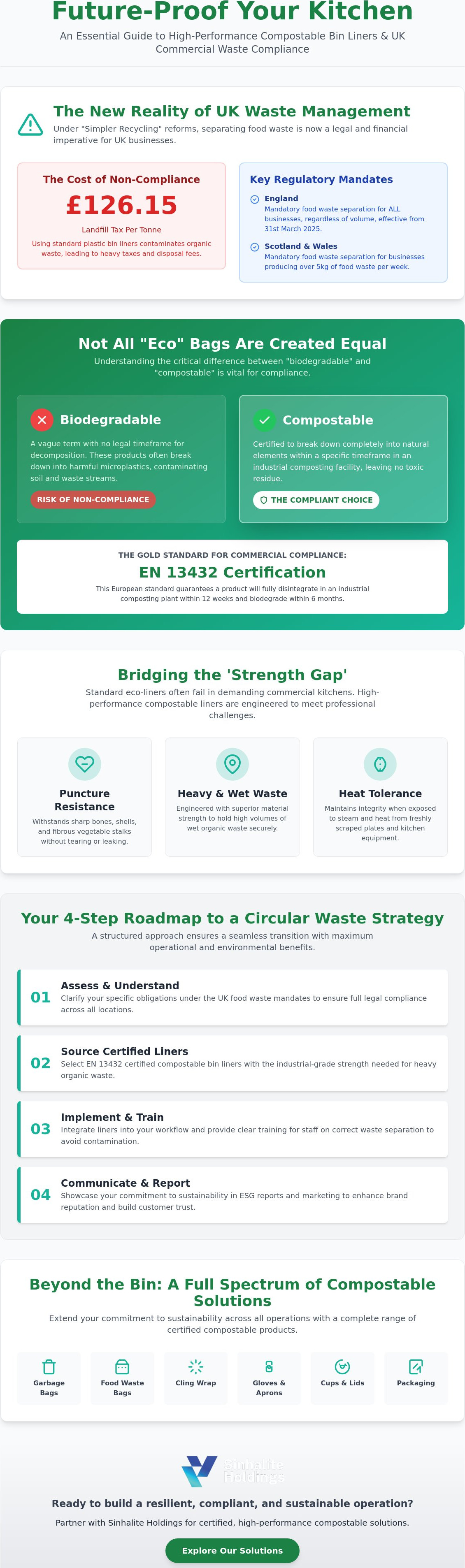
The UK waste landscape is undergoing a systemic transformation. Under the "Simpler Recycling" reforms, the days of sending mixed waste to landfill are over. For restaurants in England, the requirement to separate food waste from general waste applies regardless of the volume produced; this mandate came into effect for most businesses on March 31, 2025. While establishments in Scotland and Wales currently operate under a 5kg per week threshold, the overarching national objective remains a cleaner, circular economy. Using traditional plastic liners in this environment has become a significant operational liability. These non-compostable materials contaminate the organic feedstock required for anaerobic digestion (AD) plants, which are the preferred method for creating renewable biogas and nutrient-rich fertiliser.
To better understand the practical application of these products, watch this helpful video:
Transitioning to high-quality compostable bin liners for restaurants allows your business to bypass these contamination issues entirely. Beyond operational efficiency, this shift helps you mitigate the impact of the UK Plastic Packaging Tax. By choosing certified compostable garbage bags, you're investing in materials designed to integrate with natural processes rather than persist as environmental pollutants. It's a proactive step that aligns your daily kitchen habits with the broader goal of systemic change.
Understanding Commercial Composting Standards
In a professional kitchen, clarity is essential for effective waste management. You'll often see terms like "biodegradable" and "compostable" used interchangeably, but they carry very different legal and functional weights. A basic level of understanding compostable materials reveals that "biodegradable" products often lack a defined timeframe for breaking down, which can lead to microplastic residue in the soil. In contrast, compostable bin liners for restaurants must meet rigorous industrial criteria. The EN 13432 standard serves as the definitive benchmark for UK commercial waste compliance, ensuring that liners fully biodegrade within the specific conditions of an industrial composting facility. While "OK compost HOME" certifications are excellent for domestic caddy bags, they don't always provide the industrial-strength performance required for high-volume commercial settings.
ESG and Brand Reputation in Hospitality
Modern diners are increasingly discerning about the ethical footprint of the establishments they frequent. Transparent waste management isn't just a back-of-house necessity; it's a powerful statement of brand integrity. Integrating compostable refuse sacks into your annual sustainability report demonstrates a professional commitment to environmental stewardship. This level of transparency builds trust with stakeholders and aligns your operations with global ESG standards. For those looking at a more comprehensive transition, switching business to sustainable packaging is a vital step toward long-term resilience. By documenting these changes, you turn a regulatory requirement into a distinct competitive advantage.
Selecting Commercial-Grade Liners: Strength vs. Sustainability
Many restaurants encounter the 'Strength Gap' when they first trial eco-friendly alternatives. Standard household liners often fail in a high-volume commercial kitchen because they aren't designed for the intense moisture and physical weight of professional food waste. For a kitchen to remain efficient, compostable bin liners for restaurants must withstand sharp bones, heavy shells, and fibrous vegetable stalks without leaking. Selecting the right size is also crucial; your needs will range from 10L prep caddies for individual stations to 240L commercial wheelie bin liners for collection days.
Heat tolerance is another critical factor for operational success. Steam from freshly scraped plates can cause inferior materials to degrade prematurely, leading to bin failures at the worst possible times. By choosing industrial-grade options that align with UK food waste mandates, you ensure your waste stream remains compliant and your kitchen stays clean. Investing in robust compostable bin liners for restaurants ensures that your kitchen staff don't have to deal with messy clean-ups during peak hours.
The Science of Puncture-Resistant Compostable Bags
Modern material science has bridged the gap between sustainability and durability. Advanced biopolymers, such as PBAT, provide the essential elasticity required to handle heavy organic loads without tearing. In a professional kitchen, the micron thickness of a bag directly determines its load-bearing capacity and tensile strength. For more technical specifications on choosing the right gauge for your needs, see the 2026 guide to puncture resistant compostable garbage bags.
Odour Control and Hygiene Management
Effective waste management relies on balancing breathability with moisture retention. The right liner allows for a degree of evaporation, which is vital for the composting process, while preventing the buildup of 'bin juice' that attracts pests and creates foul smells. This reduces the need for frequent chemical cleaning and maintains a professional atmosphere. You can find more operational tips on how to keep a food waste bin from smelling to ensure your kitchen remains a pleasant environment for staff. Exploring a range of high-quality compostable garbage bags is an excellent way to support these hygiene standards while meeting your environmental goals.
Implementing a Circular Waste Strategy with Sinhalite Holdings
Adopting a circular waste strategy requires a methodical approach to ensure long-term success. We recommend a four-step rollout plan: first, audit your waste volume across all sites; second, select the appropriate micron thickness based on commercial-grade liner standards; third, implement comprehensive staff training; and finally, monitor your collection compliance. Sinhalite Holdings supports this transition with a robust UK-wide distribution network, providing the heavy-duty, plant-based refuse solutions needed for high-volume hospitality environments. Our partnership approach ensures that your move away from traditional plastics is both scalable and operationally sound.
Staff engagement is the engine of any sustainable initiative. It's essential that both front-of-house and back-of-house teams clearly understand which materials belong in the organic stream to prevent contamination. While the initial investment in compostable bin liners for restaurants may differ from conventional plastic, the broader business case is compelling. You'll likely offset these costs through reduced general waste levies and the significant brand value gained from a superior ESG standing. This proactive stance positions your business as a leader in responsible innovation.
Beyond the Bin: A Holistic Approach to Eco-Friendly Kitchens
A truly circular kitchen looks past the refuse sack to eliminate single-use plastics at every stage of production. You can enhance your prep station efficiency by complementing your bin liners with compostable clingfilm. Additionally, using compostable food roller bags for hygienic ingredient storage ensures your entire waste output is compatible with industrial composting processes. Sinhalite Holdings acts as your dedicated partner in this transition, offering the tangible tools required to align your daily operations with natural cycles.
Future-Proofing Your Operations
Strategic procurement is your best defence against an evolving regulatory landscape. By staying ahead of upcoming UK plastic bans, you avoid the risks of non-compliance and the disruption of last-minute operational changes. Success in this area relies on verifying eco-labels accurately to ensure every product meets industrial standards. To secure a more sustainable and resilient future for your establishment, explore Sinhalite's commercial range of compostable garbage bags and join the movement toward a cleaner, greener UK hospitality sector.
Leading the Transition to a Circular Hospitality Sector
The 2026 regulatory landscape has established food waste separation as a fundamental operational pillar for the UK hospitality industry. Successfully meeting these mandates requires moving beyond basic compliance; it's about choosing materials that can withstand the rigours of a professional kitchen. By integrating compostable bin liners for restaurants into your daily workflow, you're not just ticking a box. You're actively contributing to a systemic shift toward a circular economy.
Sinhalite Holdings acts as a dedicated partner for businesses seeking to align their operations with modern ethical standards. As a specialist UK-wide provider, we offer commercial solutions that don't compromise on durability. Our liners are certified to EN 13432 industrial composting standards and feature puncture-resistant designs specifically engineered for heavy organic waste. This ensures your transition is both seamless and advantageous for your long-term ESG performance.
Switch to high-performance compostable bin liners for your restaurant today. Taking a decisive step toward a cleaner, more sustainable future starts with the right equipment. We're proud to support your journey toward responsible innovation and operational excellence.
Frequently Asked Questions
Are compostable bin liners strong enough for heavy restaurant food waste?
Yes, industrial-grade liners are specifically engineered to handle the substantial weight of organic kitchen waste. High-performance compostable bin liners for restaurants utilize advanced biopolymers that offer the necessary tensile strength and elasticity to resist punctures from sharp objects like bones or shells. Choosing the correct micron thickness ensures the bag maintains its integrity during transport to collection points, which prevents the operational disruptions often caused by traditional plastic failures.
Can I put compostable bin liners in my council's brown food waste bin?
Most UK councils accept compostable liners in brown food waste bins as long as they carry the EN 13432 industrial certification. This standard guarantees the material will break down fully in an anaerobic digestion plant or commercial composting facility without leaving microplastic residues. It's essential to verify your specific local authority's collection guidelines, as some regions have unique processing requirements for organic feedstock under the 2026 recycling reforms.
What is the difference between biodegradable and compostable liners for businesses?
The primary difference lies in the certification and the specific timeframe for decomposition. While "biodegradable" is a broad term that often lacks a defined legal timeframe, "certified compostable" products must break down within a set period under industrial conditions. Using compostable bin liners for restaurants ensures your material is compatible with commercial waste streams, whereas unregulated biodegradable plastics can contaminate organic recycling processes and potentially lead to regulatory fines.
How long can food waste sit in a compostable liner before it begins to leak?
High-quality compostable liners typically maintain their structural integrity for three to five days under standard kitchen conditions. Because these bags are designed with breathability to manage odours, excessive moisture or high heat from freshly scraped food can accelerate the natural breakdown process. To ensure maximum hygiene and prevent any moisture seepage, we recommend a regular collection schedule that aligns with your kitchen's daily output and volume requirements.


