
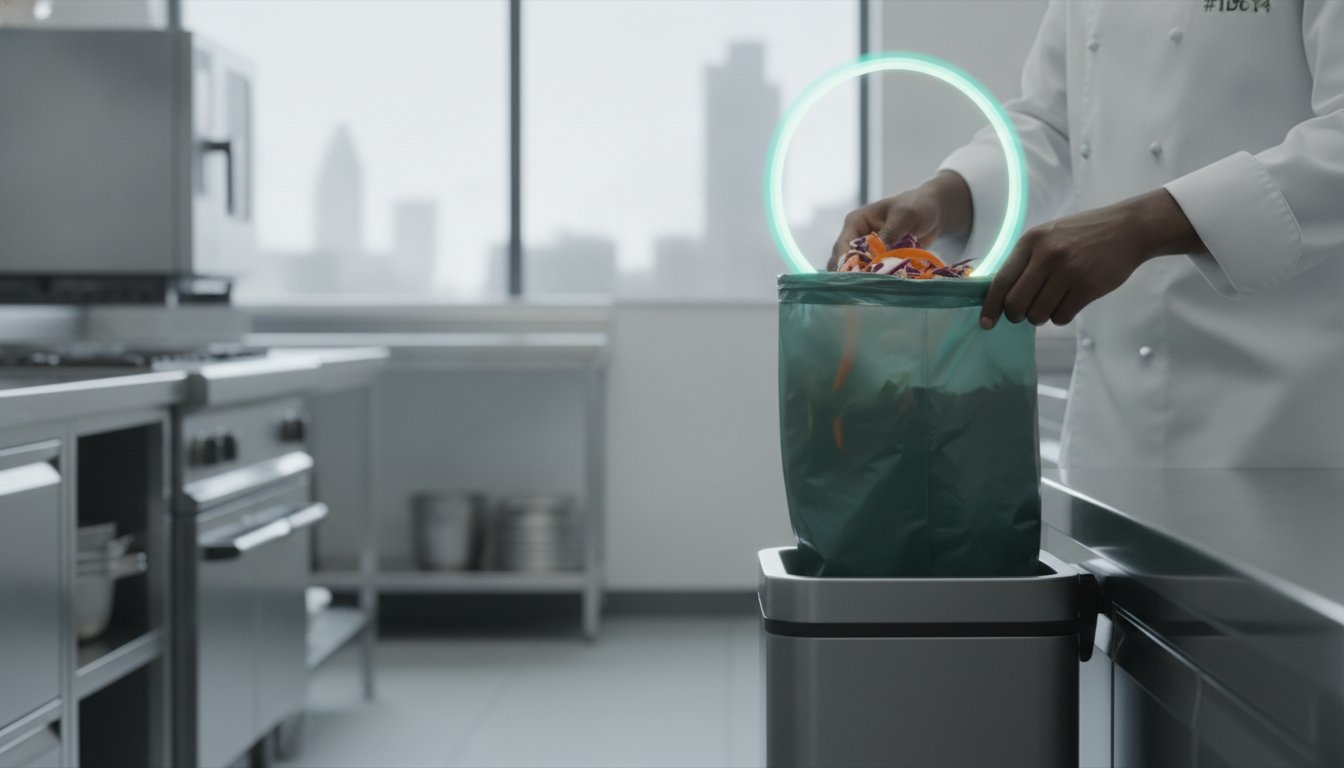
By the end of 2026, the benchmark for operational excellence in food service will no longer be defined solely by what happens on the plate, but by the integrity of the waste stream leaving the back door. For many facility managers, the transition to sustainable practices has been hindered by the practical failures of early bioplastics. You've likely experienced the frustration of liners splitting under heavy, wet organic matter or the persistent odour issues that arise when waste containment fails. It's a common challenge where environmental goals often seem at odds with the rigorous hygiene demands of a high-volume environment.
We believe that responsible innovation should never require a compromise on performance. This article explains how to implement high-performance compostable food waste bags for commercial kitchens that provide a leak-proof, durable solution for your team. You'll discover how to navigate the complexities of international certifications and ensure your business meets the 2026 UK waste regulations with confidence. We'll examine the specific material advancements that prevent structural failure; this allows you to enhance your green credentials while maintaining a pristine, odour-controlled workspace.
Key Takeaways
- Discover how the breathable biopolymers used in compostable food waste bags for commercial kitchens help suppress anaerobic bacteria and neutralise common kitchen odours.
- Explore the technical advancements in puncture-resistant bioplastic formulations that ensure your waste containment stays secure under heavy or wet loads.
- Gain clarity on the precise sizing requirements for your facility, from compact 10L caddy bags to high-capacity 240L garbage bags.
- Learn how to align your kitchen operations with 2026 UK waste regulations to mitigate compliance risks and strengthen your environmental credentials.
- Understand the commercial logic of a circular waste strategy, where sustainable procurement supports both brand reputation and long-term operational efficiency.
The Strategic Role of Compostable Bags in Commercial Kitchen Hygiene
Transitioning to compostable food waste bags for commercial kitchens represents more than just a procurement change; it's a fundamental shift toward a circular economy. These bags are engineered from plant-based polymers designed specifically to facilitate the diversion of organic matter from landfill sites. Unlike traditional polyethylene liners that trap heat and moisture, these solutions use advanced compostable materials that work in harmony with natural decomposition processes. By choosing these alternatives, businesses proactively align their operations with the 2026 UK environmental standards that mandate stricter organic waste separation and reporting.
To better understand how these solutions function in a practical setting, watch this helpful video:
Breathability and Odour Control
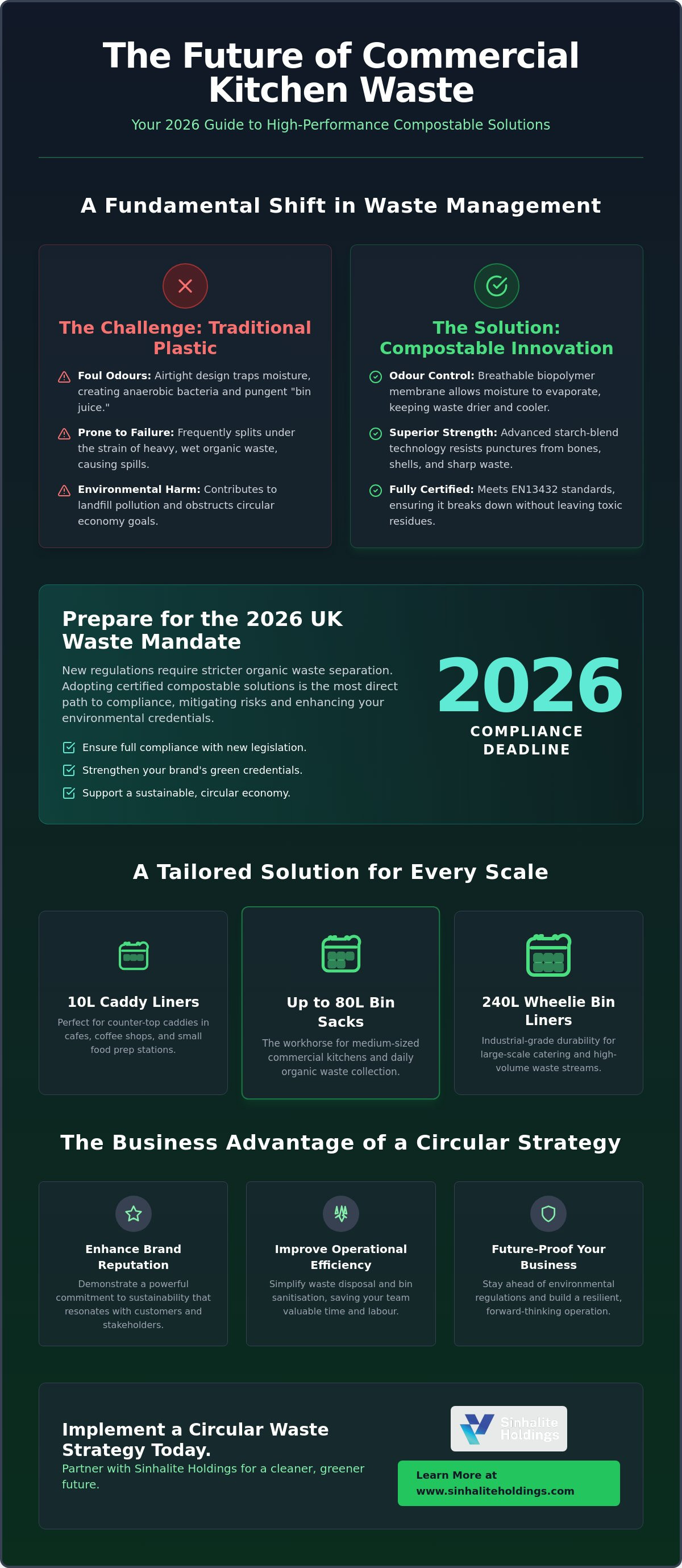
Traditional plastic liners create an airtight environment that accelerates the growth of anaerobic bacteria, which is the primary cause of foul kitchen odours. High-quality compostable membranes are semi-permeable, allowing moisture to evaporate through the material. This breathability keeps organic waste significantly drier and cooler. When moisture levels are managed, the production of "bin juice"—the pungent liquid that often pools at the bottom of containers—is drastically reduced. This dryer environment is also less attractive to pests, directly improving the air quality and overall safety of your food preparation areas.
Hygiene Solutions for Commercial Kitchens
Maintaining a sanitary environment is a non-negotiable requirement for any professional kitchen. Dedicated compostable liners simplify bin sanitisation protocols by acting as a reliable barrier between organic scraps and the bin surface. Because the liners are designed to be disposed of along with their contents, the risk of cross-contamination during waste removal is minimised. If you're looking for additional ways to maintain your facility, you can find detailed advice on how to keep a food waste bin from smelling. Implementing these systems ensures that your hygiene strategy is both robust and environmentally responsible, fostering a workplace culture that values both cleanliness and sustainability.
Evaluating Performance: Strength, Capacity, and Certification
Reliability in a fast-paced environment is the primary concern for any facility manager. Historically, the "strength gap" between traditional plastic and bio-based alternatives was a significant barrier to adoption. Modern engineering has closed this gap, providing compostable food waste bags for commercial kitchens that withstand the rigours of heavy, wet organic waste without the risk of catastrophic failure. These advancements ensure that your team can focus on service rather than cleaning up avoidable spills.
The 2026 Guide to Puncture Resistance
Choosing puncture resistant compostable garbage bags is essential for handling jagged waste like bones, shells, or dense vegetable stalks. These products utilise a sophisticated starch-blend technology that creates a cross-linked molecular structure to prevent splitting under heavy loads. While a small cafe might prioritise 10L caddy liners for coffee grounds, a large-scale industrial catering operation requires the industrial-grade durability of 240L wheelie bin sacks to maintain commercial kitchen hygiene standards. This contrast in scale demands a tailored approach to bag thickness and tensile strength.
Understanding UK Certifications
Certification acts as your guarantee that a product will truly break down in industrial composting facilities. For commercial waste collection contracts, the EN13432 standard is the critical benchmark; it ensures the material disintegrates within a set timeframe without leaving toxic residues. For businesses operating home-office hybrids or smaller satellite sites, the OK compost HOME certification explained guide provides a framework for managing waste where industrial collection isn't available. Verifying these standards is the only way to avoid greenwashing and ensure your business remains compliant with evolving environmental regulations.
Using the right capacity is just as vital as the material itself. We offer a full range of sizes to ensure your team has the tools they need for every station. You can view our full selection of compostable garbage bags to find the perfect fit for your specific operational needs.
Implementing a Circular Waste Strategy with Sinhalite Holdings
Sinhalite Holdings acts as a visionary partner for organisations ready to embrace the circular economy. Adopting compostable food waste bags for commercial kitchens is a foundational step toward systemic environmental stewardship. It's a choice that moves beyond simple procurement; it's about aligning your daily operations with the philosophy of a waste-free future. By choosing high-quality alternatives, you demonstrate a commitment to long-term impact that resonates with both stakeholders and customers alike.
The return on investment for sustainability is multifaceted. While initial procurement costs for bioplastics may differ from traditional options, the balance is found in enhanced brand reputation and strict tax compliance. As UK regulations tighten, avoiding the financial implications of non-compliance becomes a key operational advantage. Integrating these products into a wider sustainable packaging strategy ensures that your business remains resilient in a changing market. However, the success of this strategy relies on staff training. Educating your team on proper waste segregation is vital to prevent batch contamination, ensuring that organic waste actually reaches the composting facility as intended.
Scaling Sustainability Across the Operation
Scaling sustainability across your entire operation requires a holistic view of food contact and waste materials. It's effective to use compostable food roller bags and commercial compostable cling film in your food preparation areas alongside your waste sacks. This integrated approach ensures that your environmental commitments aren't limited to the bin. When prep-area materials and disposal liners share the same compostable profile, you simplify the waste stream and reduce the risk of plastic film accidentally entering organic recycling bins.
The Future of Commercial Waste
2026 represents a pivotal year for UK waste legislation. New mandates for organic waste separation mean that businesses must act now to avoid future non-compliance penalties. Future-proofing your facility with 100% compostable solutions is the most efficient way to stay ahead of these regulatory curves. It's a proactive measure that secures your operational integrity while contributing to a cleaner, greener outlook. Switching to our range of compostable caddy bags and compostable garbage bags provides the tangible tools needed to lead your industry into a more responsible future.
Securing Your Operational Future with Sustainable Innovation
Establishing a resilient hygiene strategy for 2026 requires a proactive shift from traditional plastics to high-performance biopolymers. We've explored how the natural breathability of compostable membranes significantly reduces anaerobic bacteria and moisture; this creates a cleaner, more pleasant workspace for your team. By prioritising EN13432 and OK compost certified solutions, your facility can achieve the perfect balance between industrial strength and environmental responsibility.
Implementing compostable food waste bags for commercial kitchens is a practical, scalable step toward meeting upcoming UK waste mandates while enhancing your brand's green credentials. As a UK-based specialist in sustainable packaging, Sinhalite Holdings provides the technical expertise and puncture-resistant technology needed to support your transition to a circular economy. We're dedicated to helping you replace single-use plastics with reliable alternatives that don't compromise on durability or hygiene. It's a transition that's both achievable and advantageous for the modern business.
Explore our range of professional compostable waste solutions and take a decisive step toward a cleaner, more sustainable future today. Together, we can build a more responsible industry that values both performance and the planet.
Frequently Asked Questions
Will compostable bags start to break down if they get wet in the kitchen?
High-performance compostable liners are engineered to maintain their structural integrity even when in contact with wet organic waste. While they're designed to be breathable to help manage moisture and odours, the actual decomposition process only begins under the specific thermal and microbial conditions found in industrial composting facilities. You don't need to worry about the bags dissolving or leaking during the standard collection cycle in a busy kitchen.
What is the difference between biodegradable and certified compostable bags?
Certified compostable bags meet rigorous international standards like EN13432, which ensure they break down completely without leaving toxic residues. In contrast, "biodegradable" is a generic term that lacks a defined timeframe or safety guarantee. Using certified compostable food waste bags for commercial kitchens provides the necessary assurance that your waste stream won't contribute to microplastic pollution or soil contamination during the composting process.
Can I use compostable bags for general waste or only for food scraps?
While you can technically use these liners for general waste, their primary purpose is to facilitate the diversion of organic matter from landfills. If these bags end up in a traditional landfill, the anaerobic conditions prevent them from breaking down as intended. To maximise your green credentials and support a circular economy, it's best to reserve them for food scraps and other organic materials destined for industrial composting.
How long can I store unused compostable bags before they lose their strength?
Unused compostable bags typically retain their full tensile strength for 12 to 18 months if they're stored in a cool, dry place. Direct exposure to sunlight or high humidity can compromise the biopolymer structure over time. By managing your inventory effectively and keeping stock in a climate-controlled area, you ensure that every liner remains puncture-resistant and ready for the demands of a high-volume commercial environment.


