
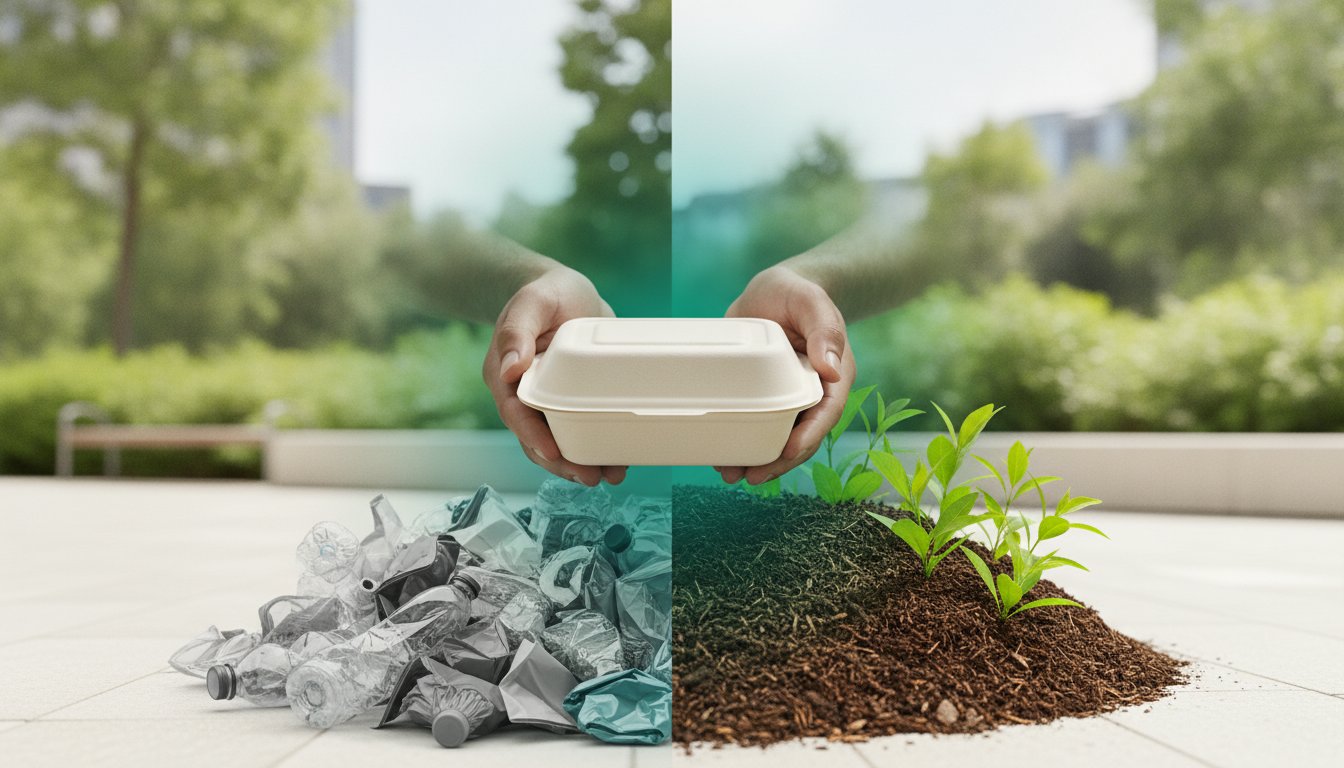
UK households discard an estimated 82 billion pieces of plastic packaging annually, with food and drink packaging accounting for 82% of that total. It's a daunting reality for any organisation trying to meet the strict requirements of the Product Regulation and Metrology Act 2025. You're likely facing the complex challenge of meeting ESG goals while ensuring your packaging remains durable and functional. Every compostable product used today is one less piece of plastic polluting o, and making this shift is no longer just an ethical choice; it's a strategic business necessity.
We understand the confusion surrounding "biodegradable" versus "compostable" labels and the very real fear of greenwashing in an increasingly regulated market. This guide provides the clarity you need to choose certified solutions with confidence. You'll discover how individual choices and corporate transitions to compostable alternatives are actively dismantling the plastic pollution crisis in 2026. We'll explore the environmental ROI of these materials, explain the latest certification standards, and list high-performance swaps like compostable caddy bags and food packaging that maintain the high standards your clients expect.
Key Takeaways
- Understand why every compostable product used today is one less piece of plastic polluting o, and how these cumulative choices contribute to a measurable reduction in environmental waste.
- Learn the critical distinction between persistent traditional polymers and certified compostable alternatives that return to the nutrient cycle within a 12-week timeframe.
- Gain the expertise to navigate the bioplastic debate by identifying genuine third-party certifications and avoiding the common pitfalls of greenwashing.
- Access a strategic roadmap for transitioning to high-performance swaps, such as compostable garbage bags and caddy bags, without compromising on operational efficiency.
The Cumulative Power of Sustainable Choices in 2026
The transition toward a circular economy in 2026 is driven by a profound sense of responsibility; by realising that every compostable product used today is one less piece of plastic polluting o, organisations are rethinking their entire supply chains. While traditional polymers are engineered for a durability that outlasts their utility by centuries, modern compostable alternatives align with natural cycles. This shift represents a move away from the "take-make-waste" model toward a system where materials provide high performance and then return to the earth as nutrients.
To better understand this concept, watch this helpful video:
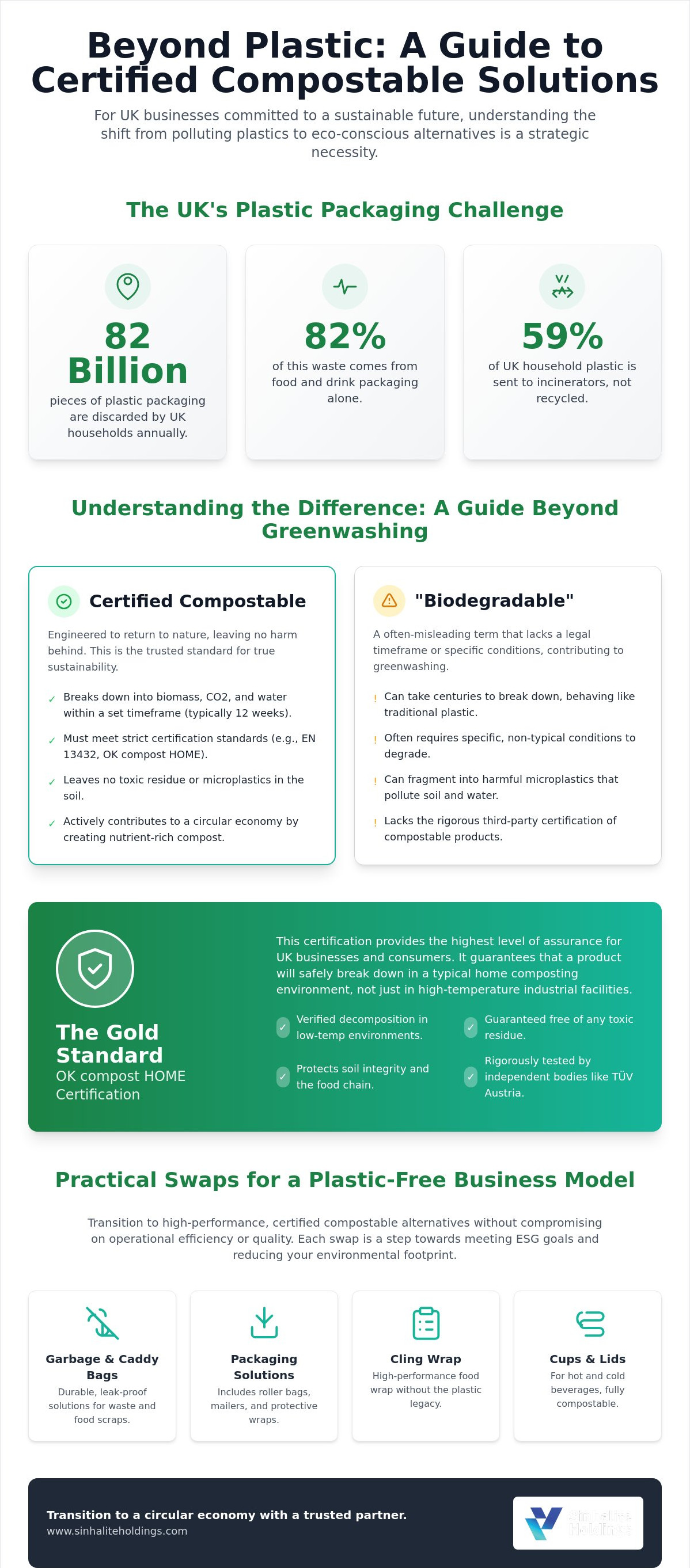
Small daily swaps in UK households and businesses contribute significantly to national plastic reduction targets. UK households discard an estimated 82 billion pieces of plastic packaging annually, a figure that highlights the scale of the challenge. Choosing a compostable shopping bag or a roll of compostable household Clingfilm isn't just a minor substitution. It's a rejection of the plastic legacy that currently sees 59% of UK household plastic sent to incinerators. When an organisation replaces traditional waste liners with compostable garbage bags, they're actively preventing persistent waste from entering the environment. These products typically break down within 12 weeks in industrial composting conditions, leaving no toxic residue behind.
Ending the Era of Persistent Microplastics
Traditional plastics never truly vanish; they merely fragment into microscopic particles that infiltrate our soil and water systems. These microplastics eventually enter the human food chain, creating long-term health and ecological concerns. By contrast, certified Bioplastics derived from plant-based sources are engineered to biodegrade into water, CO2, and biomass. Sinhalite Holdings leads this transition by providing microplastic-free alternatives for UK food storage and waste management. Using products like our compostable food roller bags or caddy bags ensures that your business contributes to national plastic reduction targets while protecting the integrity of the natural environment. This proactive approach allows organisations to meet ESG goals without sacrificing product performance.
Navigating the Bioplastic Debate: Beyond the Greenwashing
The marketplace is currently flooded with terminology that often obscures rather than clarifies environmental impact. While many products claim to be "biodegradable," this term lacks a legal timeframe or specific breakdown requirements, meaning a plastic bottle could technically be called biodegradable even if it takes centuries to fragment. In contrast, "compostable" materials are engineered to return to the earth within a defined window, usually 12 weeks, under specific conditions. Understanding these biodegradable and compostable alternatives is essential for any organisation seeking to make a genuine ecological contribution.
Greenwashing remains a significant hurdle for procurement teams. Vague claims of being "eco-friendly" or "earth-positive" without third-party verification are hallmarks of misleading marketing. Every compostable product used today is one less piece of plastic polluting o, but this only holds true if the material is authentically certified. Without rigorous testing, businesses risk replacing one pollutant with another. Transparency in the manufacturing chain is the only way to ensure that your transition away from traditional polymers is effective and ethically sound. If you're ready to review your current inventory, you can browse our range of certified solutions to see the difference professional standards make.
The Gold Standard: OK compost HOME Certification
For UK businesses and consumers, the OK compost HOME certification explained provides the highest level of assurance. Unlike industrial composting standards, which require high-heat facilities, this certification ensures that materials will break down safely in domestic compost heaps or lower-temperature environments. Bodies like TÜV Austria conduct stringent tests to verify that the material leaves no toxic residue and doesn't harm soil toxicity. This level of rigour is vital when determining do compostable bags contain plastic; a certified home-compostable product must be entirely free from persistent traditional plastics. By insisting on these benchmarks, you ensure that your organisation's waste management strategy is built on integrity rather than empty promises.
Practical Swaps for a Plastic-Free UK Business Model
Transitioning toward a circular economy requires more than just intent; it demands a functional roadmap that integrates seamlessly into daily operations. For UK organisations, switching business to sustainable packaging is a strategic move that aligns with the 2026 regulatory landscape. High-volume waste areas like catering, hospitality, and office management present the greatest opportunity for impact. By replacing standard plastic consumables with certified alternatives, your organisation demonstrates a commitment to responsible innovation. Every compostable product used today is one less piece of plastic polluting o, making each procurement decision a tangible step toward a cleaner future.
Operational efficiency shouldn't suffer when you make the switch. In commercial settings, durability is non-negotiable. Whether it's managing heavy food waste in a professional kitchen or handling office refuse, the strength of your materials matters. These swaps aren't just about ethics; they're a key component of a modern ESG strategy that satisfies both stakeholders and the planet. By focusing on high-performance materials, you ensure that your sustainability goals support, rather than hinder, your business objectives.
From Clingfilm to Garbage Bags: High-Performance Alternatives
Commercial kitchens often struggle with the transition away from PVC, yet compostable cling film that actually clings now offers a viable, high-quality solution. It provides the necessary seal for food safety without the environmental cost of traditional plastics. Similarly, managing larger waste streams requires the use of puncture resistant compostable garbage bags. These heavy-duty refuse solutions are engineered to handle significant weight and sharp edges, proving that eco-friendly choices can match industrial standards. For streamlined waste management, integrating food roller bags and caddy liners allows for a closed-loop system where food waste and its container can be processed together. Every compostable product used today is one less piece of plastic polluting o, ensuring that your business leaves a legacy of stewardship rather than persistent waste.
Lead the Transition to a Plastic-Free Future
The path toward a sustainable UK business model is built on clear, verifiable choices that reject the legacy of persistent waste. We've explored how navigating the complexities of bioplastic certifications and adopting high-performance swaps can transform your organisation's environmental footprint. By prioritising materials that align with natural cycles, you're not just meeting regulatory demands; you're actively safeguarding our ecosystem from the threat of microplastics. Every compostable product used today is one less piece of plastic polluting o, and this cumulative effort is what will define the success of the circular economy in 2026.
As a specialist UK supplier, Sinhalite Holdings is dedicated to providing the tools needed for this vital transition. Our range of OK compost HOME certified products, including high-performance clingfilm and heavy-duty refuse sacks, ensures that your operational standards remain high while your environmental impact stays low. We're here to act as your dependable partner in achieving a cleaner, greener outlook for your organisation. It's time to align your daily operations with your ethical commitments.
Explore Sinhalite Holdings' range of certified compostable essentials for your business and take a decisive step toward a more responsible and resilient future today.
Frequently Asked Questions
Is every compostable product actually better for the environment than plastic?
Certified compostable products are superior to plastic because they are designed to fully reintegrate into the ecosystem rather than persisting for centuries. Every compostable product used today is one less piece of plastic polluting o, as these materials return to the earth as biomass instead of fragmenting into harmful microplastics. This shift ensures that your organisation's waste management supports the nutrient cycle rather than contributing to the long term accumulation of traditional polymers.
What happens if a compostable bag ends up in a standard rubbish bin?
If a compostable bag is sent to landfill via a standard bin, it won't break down as efficiently as it would in a dedicated composting environment. However, it still offers a significant advantage over traditional plastic because it doesn't shed persistent microplastics into the soil or water systems. To ensure the best environmental outcome, businesses should encourage the use of organic waste streams to facilitate the 12 week breakdown process intended for these materials.
Can UK businesses save money by switching to compostable packaging?
UK businesses often achieve a better total cost of ownership by aligning with the circular economy and avoiding the rising costs of plastic waste. While initial procurement for items like compostable shopping bags might differ from plastic, organisations can avoid significant penalties from the UK Plastic Packaging Tax and eco-modulated EPR fees. Early adoption also strengthens brand loyalty among environmentally conscious clients, providing a competitive advantage that outweighs the initial transition costs.
How do I verify if a product is truly home compostable in the UK?
You can verify a product's credentials by looking for recognised third party certification logos such as the TÜV Austria "OK compost HOME" mark. This specific certification confirms that items like caddy bags or food roller bags have passed stringent safety tests for domestic composting environments. Every compostable product used today is one less piece of plastic polluting o when it carries these trusted labels, ensuring your procurement choices are built on transparency rather than vague marketing claims.


