
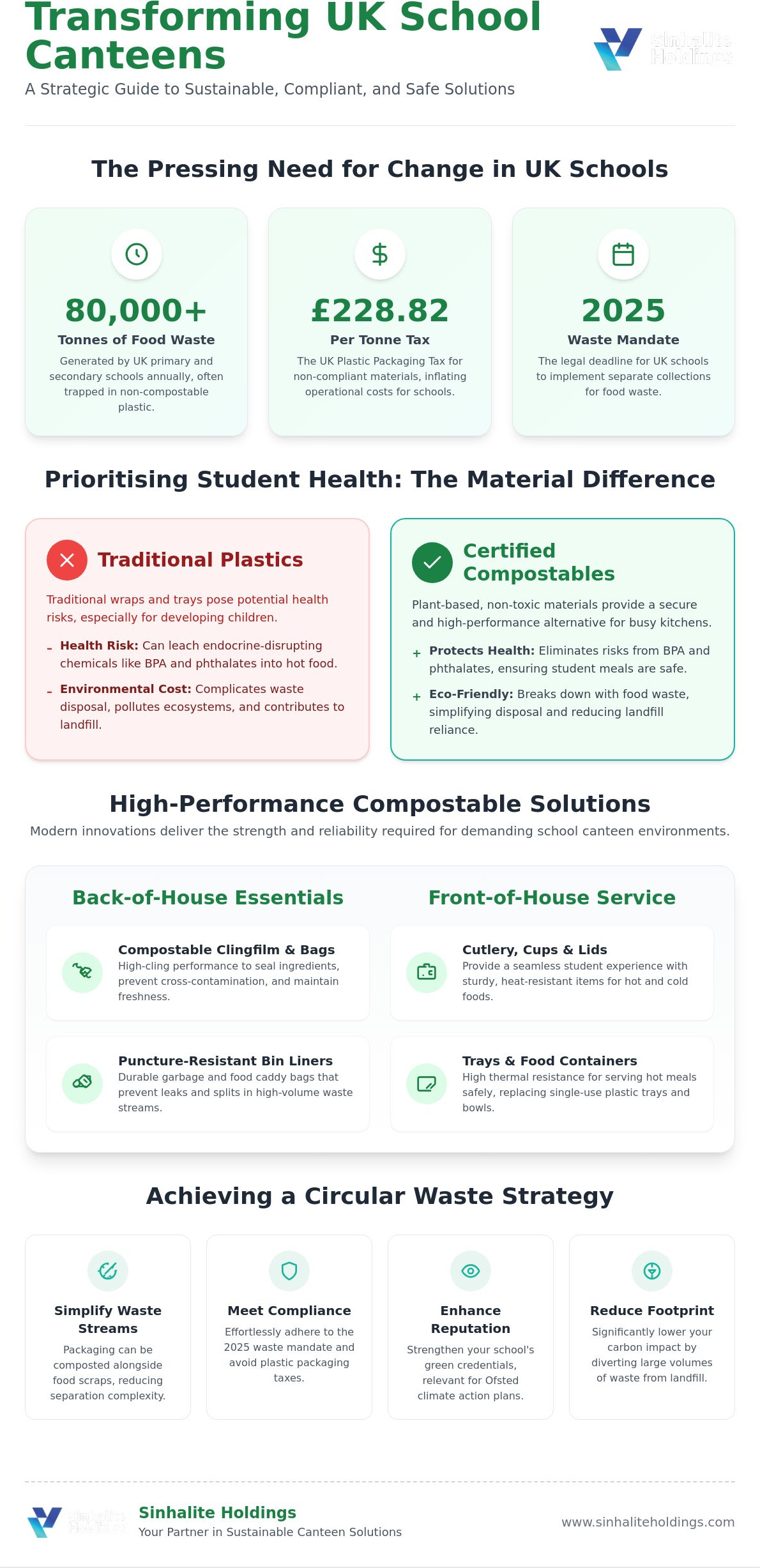
UK primary and secondary schools generate over 80,000 tonnes of food waste every year. Much of this volume remains trapped in traditional plastic liners that complicate disposal and inflate operational costs. Implementing sustainable packaging for school canteens uk is no longer just a choice for the environmentally conscious; it's a strategic necessity to meet the 2025 mandate for separate food waste collections. You've likely felt the pressure of rising fees under the 2026 Plastic Packaging Tax, which now stands at £228.82 per tonne for non-compliant materials.
We understand that transitioning away from plastic involves more than just swapping a bag. It requires confidence that your compostable liners won't split and that your food contact materials are free from toxins. This guide shows you how to adopt high-performance, certified solutions that simplify waste management while protecting student health. You'll discover a methodical approach to achieving a plastic-free canteen that reduces disposal costs and strengthens your school's green credentials. We'll examine the latest UK eco-certifications and practical steps to integrate these innovations into your daily service through a lens of responsible stewardship and industrial reliability.
Key Takeaways
- Understand how adopting a circular model eliminates health risks from BPA and phthalates in student meals.
- Identify high-performance materials like compostable clingfilm that maintain kitchen hygiene without the environmental cost of plastic.
- Learn to implement sustainable packaging for school canteens uk to meet 2025 waste mandates and reduce tax liabilities.
- Explore how puncture-resistant compostable garbage bags solve the problem of leaks and splits in high-volume canteen environments.
- Discover the essential certifications that ensure your school's waste strategy is both compliant and truly effective.
Why UK Schools are Transitioning to Sustainable Canteen Solutions
The transition toward sustainable packaging for school canteens uk represents a fundamental shift in how educational institutions perceive their environmental footprint. By 2026, the concept of a 'disposable' kitchen is being replaced by a circular model where every item serves a purpose beyond its initial use. This evolution isn't merely about waste reduction; it's a core educational value that demonstrates responsible stewardship to the next generation. Schools aren't just feeding students; they're modelling the future of the British economy.
Compliance is a major driver of this change. As of April 2026, the UK Plastic Packaging Tax has reached £228.82 per tonne for materials with less than 30% recycled content. Because many traditional plastic items used in catering don't meet these standards, costs are rising rapidly. Adopting Sustainable packaging solutions allows schools to bypass these financial penalties while adhering to the 2023 ban on single-use plastic plates and trays.
To better understand this concept, watch this helpful video:
Beyond financial savings, switching business to sustainable packaging directly enhances a school's environmental impact profile, which is increasingly relevant under Ofsted’s scrutiny of climate action plans. Schools that proactively adopt compostable alternatives show a commitment to the Department for Education’s goal of reducing emissions and improving systemic efficiency.
The Health Impact of Plastic-Free School Meals
The safety of student food contact materials is a primary concern for modern canteen managers. Traditional plastic wraps and trays can leach endocrine-disrupting chemicals like BPA and phthalates into hot meals. These substances are particularly concerning for developing children. Transitioning to plant-based, non-toxic materials provides a secure alternative that protects student health while maintaining the high performance required for busy kitchen services.
Meeting UK Environmental Targets in Education
By March 31, 2025, all UK schools are legally required to implement mandatory separate collections for food waste and dry recyclables. Transitioning to compostable materials helps schools meet these targets by simplifying the waste stream. When packaging can be processed alongside food scraps, the school’s overall carbon footprint drops and reliance on expensive landfill disposal is significantly reduced.
Selecting High-Performance Compostable Alternatives for Food Prep
Modern school kitchens operate at a frantic pace, requiring materials that withstand rigorous handling. For too long, bioplastics were dismissed as brittle or ineffective, creating a perceived barrier to adoption. Today, industrial innovation has closed this performance gap, ensuring that sustainable packaging for school canteens uk matches the stretch and strength of traditional polymers. This reliability is the foundation of a safe, efficient kitchen environment where durability and hygiene are non-negotiable standards.
Back-of-House Essentials: Clingfilm and Prep Bags
Efficiency in the prep room relies on reliable tools that don't fail mid-service. Using compostable clingfilm uk allows catering teams to seal ingredients effectively, preventing cross-contamination without contributing to the plastic crisis. It's vital to source compostable cling film that actually clings to ensure containers remain airtight during refrigeration. Additionally, food roller bags offer a practical solution for portion control and hygienic storage. These items are part of a broader movement toward environmentally friendly plastic packaging, supported by government-backed innovation to turn organic waste into high-performance materials.
Front-of-House Service: Cutlery, Cups, and Containers
The student experience at the serving hatch must remain uncompromising. Hot meals demand trays with high thermal resistance, such as those made from sugarcane bagasse, which maintain their shape even under heavy, moist food. Conversely, cold drinks are best served in PLA containers that offer clarity and structural rigidity. Using these diverse biopolymers ensures that your sustainability goals never come at the expense of meal quality or student satisfaction. To find the right balance for your facility, consider browsing our professional-grade compostable range. These solutions represent a proactive step toward a circular economy, proving that responsible choices can also be the most practical ones for large-scale catering operations.
Implementing a Circular Waste Strategy in the School Environment
Adopting sustainable packaging for school canteens uk is a significant first step, but the success of a circular model depends on what happens after the meal is finished. A truly effective strategy bridges the gap between the serving hatch and the final disposal point. Without the right infrastructure, even the highest quality compostable containers can end up in the wrong waste stream, undermining your school's environmental objectives. It's essential to view the canteen not just as a dining area, but as a practical laboratory for the circular economy.
Managing the weight and moisture of kitchen scraps requires industrial-grade reliability. Using puncture resistant compostable garbage bags ensures that heavy organic waste is transported to collection points without leaks or splits. This logistical consistency supports the broader government challenge for schools to go single-use plastic free, which demands a high standard of waste containment and hygiene. By ensuring the waste stream remains clean and segregated, schools can significantly reduce their disposal costs while fulfilling their roles as responsible innovators.
Understanding Certifications: OK compost HOME vs Industrial
Procurement teams must distinguish between different levels of compostability to avoid the pitfalls of greenwashing. Having the OK compost HOME certification explained is particularly valuable for schools with their own gardening programs or small-scale composting units. While industrial composting is the standard for high-volume canteen waste, home-certified materials allow students to observe the natural breakdown process in a controlled, educational setting, turning waste management into a tangible lesson in biology and stewardship.
Managing Odours and Hygiene with Caddy Liners
Maintaining a sanitary environment is a priority, especially when food waste is collected in classrooms or smaller prep areas. Schools often ask how to keep a food waste bin from smelling during the school day. The solution lies in using breathable, leak-proof caddy bags that allow moisture to evaporate while containing liquids. This technology prevents the anaerobic conditions that lead to unpleasant odours, ensuring that your transition to sustainable packaging for school canteens uk remains a positive experience for both staff and students.
Securing the Future of School Catering
Transitioning to sustainable packaging for school canteens uk is a significant step toward aligning educational operations with modern ethical and regulatory standards. By moving beyond the disposable mindset, your institution can effectively mitigate the financial impact of the 2026 Plastic Packaging Tax while fostering a safer, toxin-free environment for students. Success depends on selecting materials that don't compromise on durability. This includes everything from high-cling films for food safety to robust waste liners that withstand the daily demands of a high-volume kitchen.
As a specialist UK supplier for the educational sector, we're dedicated to providing the industrial-grade tools needed for this systemic change. Our offerings, including TUV Austria OK compost HOME certified products and high-performance, puncture-resistant garbage bags, ensure your waste strategy is both compliant and operationally sound. We believe that positive change is achievable when schools are equipped with the right innovations to support a circular economy and reduce long-term disposal costs.
Explore Sinhalite's range of professional compostable solutions for UK schools and take immediate action toward a cleaner, greener outlook for your facility. Together, we can build a future where responsible catering is the standard for every student.
Frequently Asked Questions
Are compostable food containers safe for hot school meals?
High-performance compostable containers are specifically engineered to withstand the thermal demands of hot meal service. Materials like sugarcane bagasse maintain structural integrity at high temperatures without leaching harmful toxins like BPA or phthalates into student meals. This makes them a superior choice for protecting student health while ensuring that kitchen operations remain efficient and reliable.
Will switching to sustainable packaging significantly increase our canteen budget?
The financial impact of transitioning to sustainable packaging for school canteens uk is often balanced by systemic savings in waste management. As of April 2026, the UK Plastic Packaging Tax rate is £228.82 per tonne for non-compliant materials. By adopting compostable solutions, schools can avoid these levies and reduce landfill costs through more efficient organic waste processing, making the shift a fiscally responsible long-term choice.
Can we compost school canteen packaging in our own school garden?
On-site composting is only possible if the products carry the OK compost HOME certification. Most catering items require the high-temperature environment of an industrial facility to break down effectively. Schools can successfully integrate these materials into their sustainability plans by partnering with local waste collectors who offer certified organic processing services, ensuring a complete circular loop.
What is the difference between biodegradable and compostable packaging for UK schools?
Compostable packaging is a rigorously certified category that guarantees a product will return to the earth as nutrient-rich organic matter. In contrast, the term "biodegradable" is often unregulated and lacks a defined timeframe for decomposition. For UK schools, choosing certified compostable items ensures compliance with environmental standards and prevents the accumulation of microplastics in the local ecosystem.


