
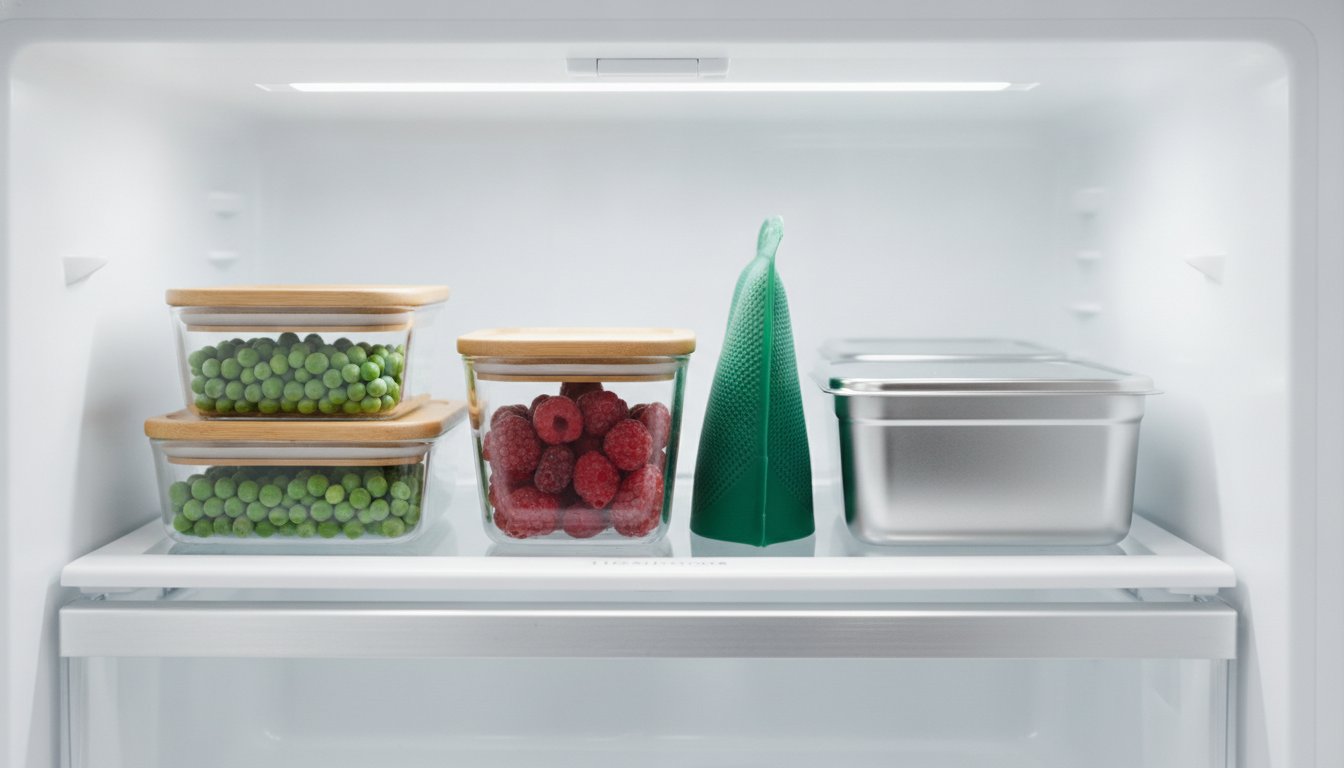
Recent data indicates that 80% of the British public believe all food packaging should be plastic-free where possible, yet many still find the transition difficult when facing the technical demands of sub-zero storage. You likely understand the frustration of freezer burn ruining a quality meal, or perhaps you feel the mounting pressure of single-use plastic waste in your daily operations. This plastic-free freezer storage guide provides the clarity and tools needed to eliminate these pains through high-performance materials and smarter workflows.
You'll discover how to master the art of preservation using a hybrid strategy of durable reusables and innovative compostable alternatives like specialised clingfilm and food roller bags. We'll show you how to maintain a longer-lasting frozen inventory while ensuring your practices align with the 2026 UK sustainability standards. This transition isn't just about reducing waste; it's about adopting a visionary approach to kitchen management that values both food integrity and environmental stewardship. We will now explore the practical steps to achieving a truly waste-free freezer that meets modern ethical expectations.
Key Takeaways
- Understand the mechanical causes of freezer burn and how compostable clingfilm serves as a high-performance oxygen barrier to preserve food integrity.
- Learn to apply this plastic-free freezer storage guide to your operations by balancing long-term reusable containers with efficient compostable food roller bags.
- Discover the operational benefits of a circular kitchen workflow, utilising compostable caddy bags to streamline organic waste management.
- Align your organisation with 2026 UK environmental regulations by adopting scalable, plastic-free alternatives that support a transition toward a circular economy.
The Mechanics of Plastic-Free Preservation: Preventing Freezer Burn
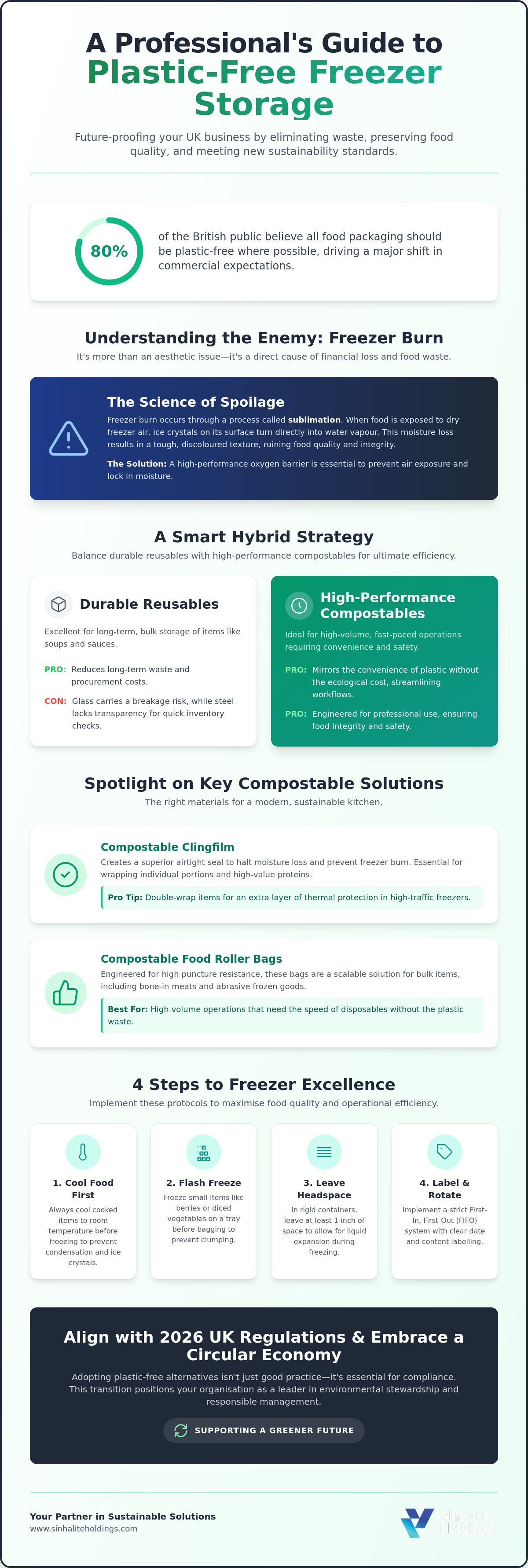
Freezer burn isn't just an aesthetic issue; it's a significant financial loss for commercial kitchens and large organisations. The Mechanics of Freezer Burn involve a process called sublimation, where ice crystals turn directly into water vapour. This occurs when food is exposed to the dry air inside a freezer. Without a proper barrier, moisture leaves the food, resulting in a toughened, discoloured texture that compromises the quality of your stock. Understanding these physical changes is the first step in mastering a plastic-free freezer storage guide for professional environments.
This transition advocates for a shift toward high-performance barriers that don't rely on fossil-fuel-derived plastics. Compostable clingfilm provides the necessary oxygen barrier to halt moisture loss. It creates a tight seal that prevents air from reaching the surface of the food, effectively protecting your inventory without leaving a legacy of plastic waste. By sealing out air, you maintain the structural integrity and flavour of the food for significantly longer periods.
To better understand this concept, watch this helpful video:
The Role of Airtight Barriers
Traditional polyethylene wraps are pervasive but environmentally damaging. Modern plant-based bioplastic polymers offer a responsible alternative. They provide comparable stretch and cling properties while remaining fully compostable. For high-value proteins, we recommend double-wrapping. Use an initial layer of compostable film followed by a secondary wrap to add an extra layer of thermal protection against temperature fluctuations. This method ensures that even in high-traffic commercial freezers, your items remain pristine.
Temperature Management and Food Safety
Proper preparation is as vital as the material used. Always cool cooked items to room temperature before freezing. This prevents condensation-induced ice crystals from forming inside the package. For items like berries or diced vegetables, flash freezing on a tray before bagging prevents clumping. When using rigid containers, leave at least an inch of "headspace" to allow for liquid expansion. Flexible wraps don't require this, but they do need clear labelling. Implement a strict protocol for marking dates and contents to ensure First-In, First-Out (FIFO) efficiency, which is a core pillar of any successful plastic-free freezer storage guide.
Selecting Sustainable Materials: A Professional Choice Framework
Building a resilient kitchen workflow requires a selection hierarchy that balances durability with operational speed. While many home-based resources suggest glass or beeswax wraps, commercial entities need solutions that withstand high-volume handling and rapid temperature shifts. This plastic-free freezer storage guide prioritises materials that maintain food safety while reducing environmental impact. Glass, stainless steel, and silicone are excellent for long-term bulk storage, but they present specific challenges in a fast-paced professional environment. Glass carries a breakage risk in sub-zero temperatures, and stainless steel, while indestructible, lacks the transparency needed for quick inventory checks.
For high-frequency operations, compostable food roller bags offer a scalable alternative that mirrors the convenience of traditional plastic without the ecological cost. These bags are specifically engineered for puncture resistance, making them suitable for bone-in meats or abrasive frozen items that would typically tear thinner films. When choosing wraps, the "Cling Test" is essential. Modern compostable film now provides a viable commercial alternative to PVC, offering the surface tension required to create an airtight seal. Following professional guidance on freezer safety ensures that your choice of material supports both the longevity of your stock and the health of your consumers.
When to Use Reusables vs. Compostable Disposables
Glass jars are ideal for liquids like soups or sauces, provided you leave space for expansion to prevent cracking. However, they're often impractical for space-saving "flat packs" that help maximise storage density. Compostable food bags are essential for odd-shaped items or when freezer space is at a premium. They allow for efficient stacking and rapid labelling, which is vital for maintaining a productive kitchen. You can explore our range of high-performance compostable options to find the right fit for your specific storage needs.
Certification Standards for 2026
Integrity in procurement is paramount for modern organisations. Decision-makers should look for the OK compost HOME certification to ensure products will fully break down in organic waste streams. Verifying TUV Austria standards is the most effective way to avoid "greenwashed" plastic blends that contain hidden polymers. Choosing certified materials ensures your transition is both legally compliant and ethically sound.
Implementing a Circular Freezer Strategy for UK Organisations
Transitioning to a sustainable infrastructure requires more than just changing containers; it demands a shift in operational philosophy. By implementing a plastic-free freezer storage guide at an institutional level, organisations can bridge the gap between food preservation and waste management. This approach establishes a closed-loop system where the packaging and the organic contents share the same end-of-life destination. When frozen inventory reaches its expiration, using compostable caddy bags allows kitchen teams to dispose of both the food and its protective wrap in a single, efficient motion. This eliminates the labour-intensive process of de-packaging spoiled stock from traditional plastic films.
Integrating these practices into corporate ESG (Environmental, Social, and Governance) reporting provides tangible evidence of a commitment to a circular economy. It moves sustainability from a vague ambition to a measurable operational standard. However, the success of this strategy hinges on thorough staff training. Teams must clearly understand the distinction between "biodegradable," a term that often lacks regulatory rigour, and "compostable," which denotes a verified ability to break down in specific conditions. Clear internal labelling and education ensure that your plastic-free freezer storage guide remains effective and your waste streams stay uncontaminated.
Scaling Sustainability in Commercial Kitchens
Large-scale organisations are already proving the viability of these transitions. Some entities have reported a 40% reduction in total plastic waste simply by switching to sustainable packaging across their cold storage departments. To achieve these results, procurement departments should prioritise bulk supplies of certified compostable materials. This ensures consistency in performance and cost-effectiveness while aligning with the March 2026 Simpler Recycling initiative, which mandates stricter food waste separation across England.
Waste Stream Integration
Ensuring your freezer wraps are compatible with UK council food waste collections is a vital step in maintaining compliance. To handle the weight and moisture of bulk organic disposal, the use of certified puncture resistant compostable bags is essential. These high-performance solutions ensure that heavy waste is transported securely to composting facilities without the risk of leaks or splits, reinforcing the reliability of your kitchen's green workflow.
Leading the Transition to Sustainable Preservation
Adopting a responsible approach to cold storage is a vital step for any organisation committed to systemic change. This plastic-free freezer storage guide has outlined how high-performance barriers prevent sublimation and how a strategic mix of reusables and compostable roller bags can streamline high-volume operations. By aligning your kitchen's workflow with the UK's 2026 sustainability standards, you turn a daily operational necessity into a powerful statement of environmental stewardship.
Success in this transition relies on using materials that don't sacrifice utility for ethics. Our products are 100% plastic-free and crafted from plant-based materials, ensuring they meet the rigorous demands of professional environments. We're proud to be a partner trusted by UK commercial kitchens and councils, providing solutions that are certified OK compost HOME by TUV Austria. This certification guarantees that your packaging will return to the earth as part of a truly circular economy.
Ready to modernise your kitchen's infrastructure? Explore our range of professional-grade compostable freezer solutions and take the next step toward a waste-free future. It's a practical, scalable choice that protects both your food quality and our planet's resources.
Frequently Asked Questions
Can I use compostable clingfilm in the freezer without it losing its stick?
Yes, professional-grade compostable clingfilm is engineered to maintain its adhesive properties and flexibility at sub-zero temperatures. Unlike some traditional plastics that can become brittle and lose their seal, plant-based polymers are designed to retain surface tension. This ensures a consistent oxygen barrier that prevents moisture loss and protects food quality. It's a reliable, high-performance tool for any organisation following a plastic-free freezer storage guide.
How do I prevent glass jars from cracking when freezing liquids?
You prevent glass breakage by selecting tempered, wide-mouth jars and leaving at least one to two inches of "headspace" to allow for liquid expansion. It's also vital to cool the contents to room temperature before freezing to avoid thermal shock to the glass. For the best results, keep the lids slightly loose until the liquid is fully frozen, then tighten them to create a final airtight seal for long-term storage.
Are compostable freezer bags as strong as traditional plastic zip-lock bags?
Modern compostable food roller bags offer advanced puncture resistance that matches the performance of fossil-fuel-based alternatives. These bags are specifically designed to handle the weight and sharp edges of bone-in meats or frozen vegetables without tearing. They provide the structural integrity required for high-volume commercial kitchens while ensuring the entire package remains compatible with organic waste streams after its use is complete.
What is the best way to label plastic-free freezer containers?
The most effective method for labelling is using compostable adhesive labels or water-based chalk markers that can be applied directly to glass and stainless steel. In a busy commercial environment, clear dating and content identification are essential for maintaining First-In, First-Out (FIFO) protocols. These techniques ensure your inventory remains organised and professional without introducing non-compostable plastic tapes or permanent solvent-based inks into your kitchen's circular workflow.


