
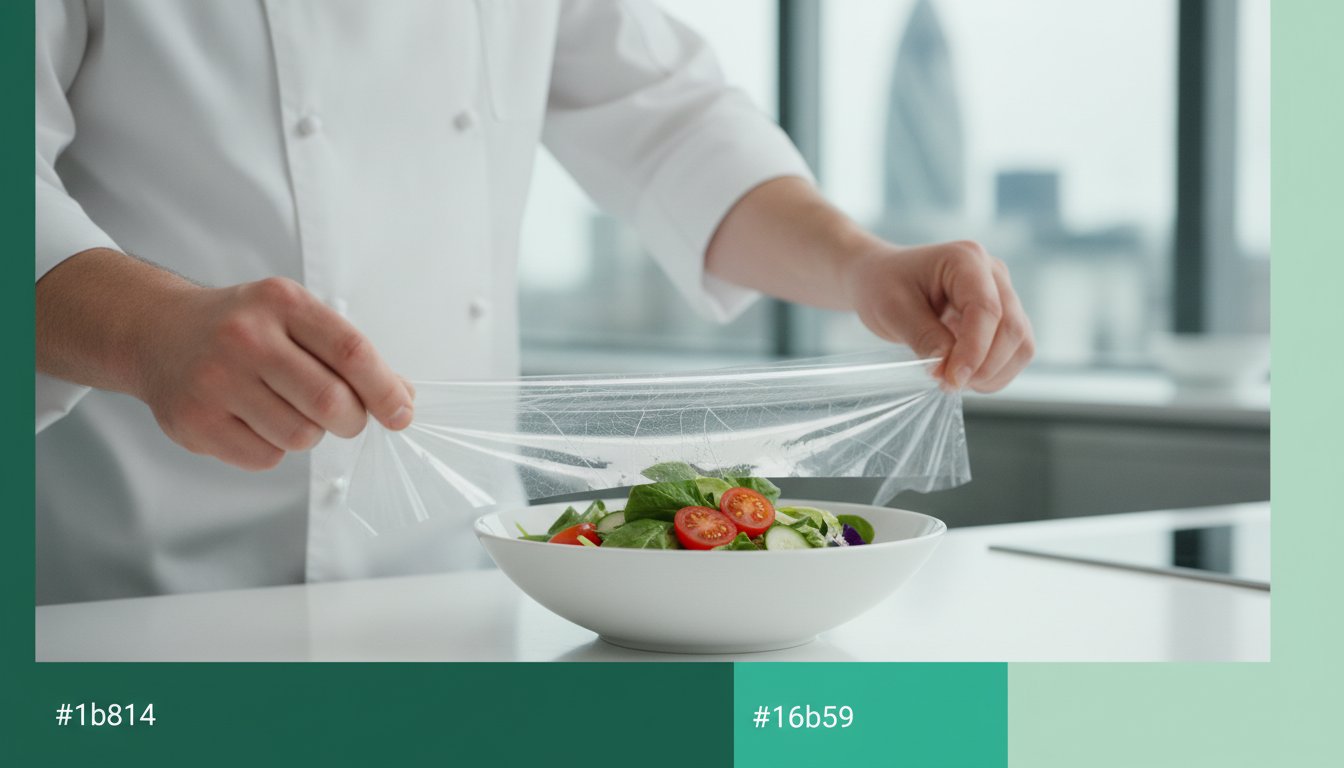
What if the material you rely on to preserve food is the very thing preventing your organisation from achieving a truly circular kitchen? Many businesses and large entities have found that earlier generations of eco-wraps simply didn't stick to containers, leading to a legitimate fear of food spoiling faster and creating unnecessary waste. It is a common frustration for those looking to balance operational efficiency with environmental stewardship. Selecting the best compostable cling film for leftovers is no longer just an aesthetic choice; it is a strategic decision that aligns your daily operations with the UK’s rigorous 2026 regulatory standards.
By reading this guide, you will discover how to maintain the highest standards of food preservation while successfully eliminating single-use plastic waste. We will clarify the vital differences between home and industrial composting certifications, such as the EN 13432 standard, and explain how the March 2026 rollout of mandatory food waste collections across England simplifies your disposal routes. This overview provides the technical insight and practical confidence required to lead a successful transition toward a plastic-free future, ensuring your commitment to sustainability is backed by high-performance innovation.
Key Takeaways
- Understand how advanced PBAT and PLA polymers provide a robust, plant-based barrier that meets the UK’s stringent EN13432 industrial compostability requirements.
- Discover how to identify the best compostable cling film for leftovers by assessing material durability when used with fatty, dry, or acidic food items.
- Apply the warmth-activation method to achieve a superior seal on non-plastic surfaces, ensuring your food preservation remains effective and airtight.
- Optimise the longevity of your supplies by implementing specific storage practices that prevent premature degradation of your compostable wrap rolls.
- Position your organisation for the 2026 mandatory food waste collections by integrating certified compostable solutions into a seamless circular economy model.
Understanding Compostable Cling Film: Materials and Standards
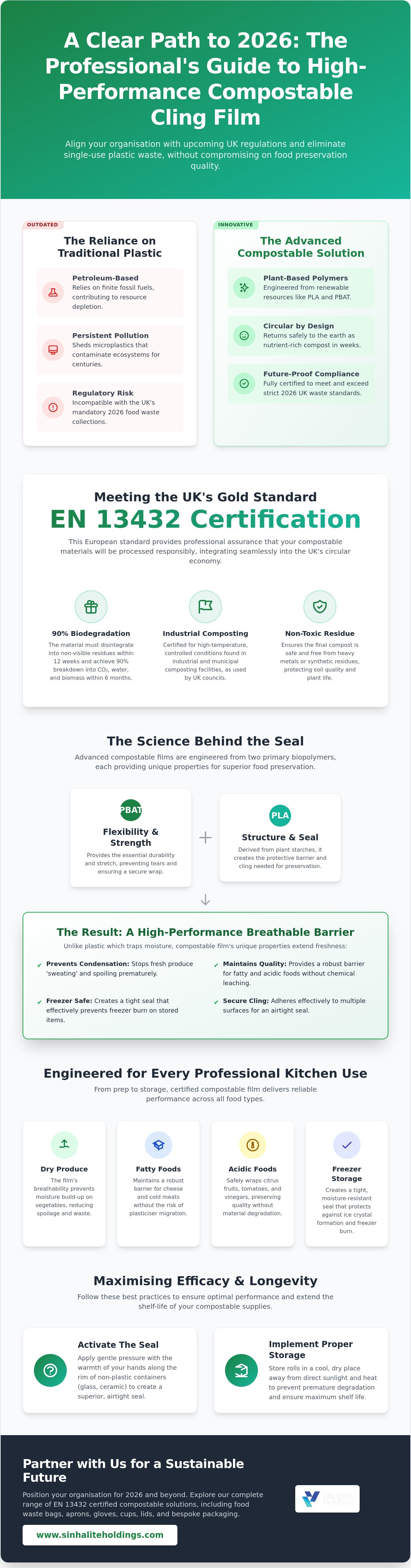
Transitioning to a circular kitchen starts with understanding the material science behind your food storage. Modern compostable cling film is a plant-based barrier engineered from bioplastic materials, primarily PBAT and PLA polymers. Unlike traditional PVC or LDPE films that rely on finite petroleum resources and shed persistent microplastics into the environment, these innovative alternatives are designed to return to the earth safely. They offer a proactive solution for businesses aiming to reduce their ecological footprint without compromising on utility.
In the UK, the benchmark for performance is the EN13432 standard. This certification ensures that the material will undergo at least 90% biodegradation within six months when processed in an industrial composting facility. For the 2026 UK waste stream, 'compostable' specifically refers to materials that break down into non-toxic components without leaving synthetic residues, perfectly aligning with the mandatory separate food waste collections implemented in March 2026. This standard provides the professional assurance that your waste will be handled responsibly by local authorities.
To better understand this concept, watch this helpful video:
Home vs Industrial Composting: What the Labels Mean
Clear labelling is the key to effective disposal and operational integrity. While industrial certifications are designed for high-heat council facilities, 'OK compost HOME' indicates a film that can degrade in lower-temperature garden heaps. Verifying these standards helps answer the critical question: do compostable bags contain plastic? Genuine compostable solutions ensure material purity, avoiding the 'hidden' polymers often found in inferior products that can contaminate organic waste streams.
The Role of PBAT and PLA in Food Preservation
Choosing the best compostable cling film for leftovers involves looking at how these materials interact with different food types. PBAT provides the necessary flexibility and strength, while PLA contributes the structure required for a protective seal. These plant-starches create a breathable yet effective barrier for fresh produce. Unlike plastic, which can trap excess condensation and lead to rot, these films possess moisture-wicking properties that help prevent premature spoilage. This technical advantage ensures that your leftovers remain fresh while your organisation maintains its commitment to environmental responsibility.
Selecting the Best Compostable Wrap for Different Leftovers
Identifying the best compostable cling film for leftovers requires an understanding of how biopolymers interact with distinct food groups. Unlike traditional plastic, which is chemically inert but environmentally damaging, plant-based films are dynamic. For dry produce like vegetables, the breathability of PLA prevents the sweating often seen in LDPE. When dealing with fatty foods like cheese or cold meats, the film maintains a robust barrier without the risk of plasticiser migration. This high-performance utility ensures that your kitchen maintains rigorous quality standards while transitioning toward a zero-waste model.
Safety remains a paramount concern for commercial entities and large organisations. Recent evaluations of wrapping acidic foods in compostable wrap demonstrate that these materials meet 2026 safety standards. They resist degradation when in contact with citrus or vinegars, ensuring that food quality is preserved without chemical leaching. This performance is a testament to the reliability of modern bioplastics, making them a viable substitute for traditional films in every professional application.
Long-term storage demands a material that effectively prevents freezer burn. Plant-based films excel in this area by creating a tight, moisture-resistant seal that protects against ice crystal formation. For large-scale operations, opting for compostable food roller bags can significantly improve workflow efficiency. Standard rolls offer the flexibility needed for varied container sizes, allowing teams to explore our range of high-performance compostable solutions to find the perfect fit for their specific operational needs.
Performance Comparison: Compostable Film vs Alternatives
Seal integrity is often the deciding factor for moist leftovers. When evaluating beeswax wraps vs compostable cling film, the latter provides a more reliable airtight seal for liquids and high-moisture dishes. In professional environments, single-use compostables offer a distinct hygiene advantage. They eliminate the cross-contamination risks associated with reusable wraps that require intensive sanitisation, providing a cleaner and more streamlined workflow.
Temperature Resistance: Microwave and Freezer Safety
Operational efficiency often involves moving food directly from cold storage to the microwave. Certified compostable films are designed to withstand specific heat thresholds, allowing for safe reheating without releasing toxic fumes or melting. In the freezer, these bioplastics remain flexible at sub-zero temperatures. They do not crack or lose their adhesive properties, ensuring the contents remain protected throughout the entire storage cycle. This durability makes them a dependable ally for businesses seeking to align their practices with modern ethical standards.
Maximising Performance and Sustainable Disposal in the UK
Achieving superior results with the best compostable cling film for leftovers requires a slight shift in standard kitchen habits. Unlike traditional plastic, which relies on synthetic adhesives, biopolymer films utilise natural properties that respond to physical handling. This transition represents a commitment to both material integrity and environmental stewardship. By mastering a few simple techniques, organisations can ensure that their food preservation remains as effective as their sustainability goals.
How to Achieve a Perfect Seal with Plant-Based Film
To ensure a tight seal on ceramic or glass containers, users should employ the warmth-activation method. This involves pressing the edges of the film against the container with the palms of the hands for several seconds. The gentle transfer of body heat increases the flexibility and tackiness of the PBAT and PLA molecules, creating a secure bond. Follow these steps for the best results:
- Ensure the container edges are completely dry and free of grease or food residue.
- Stretch the film slightly as you pull it across the rim to create tension.
- Fold the edges over the rim and press firmly using the warmth of your hands to activate the seal.
For those seeking compostable cling film that actually clings in high-humidity environments, maintaining a dry application surface is essential. If the film feels less adhesive, a quick rub between the hands can often restore its tackiness before application.
Closing the Loop: Correct Disposal Routes
The true value of a compostable solution is realised at its end of life. With the UK's mandatory food waste collections now fully implemented as of March 2026, disposing of used film is a straightforward process. These films should be placed directly into your organic waste stream along with food scraps. Integrating this practice with high-quality compostable food waste bags ensures a hygienic and efficient process for commercial kitchens. This approach also addresses common concerns regarding how to keep a food waste bin from smelling, as breathable caddy liners prevent the moisture buildup that leads to unpleasant odours.
Bioplastic rolls are sensitive to environmental triggers that initiate the breakdown process. To maintain the integrity of your supplies, store bioplastic rolls in a cool, dry location away from direct sunlight and excessive humidity. This preserves the shelf life, which typically remains stable for 12 to 18 months. By following these storage and handling protocols, your organisation can confidently lead the way toward a truly circular kitchen economy.
Advancing Your Organisation’s Circular Economy Goals
Adopting the best compostable cling film for leftovers is a decisive step toward aligning your operations with the UK’s 2026 sustainability mandates. By moving beyond traditional plastics, you ensure that food preservation and environmental responsibility coexist seamlessly. We've explored how certified materials like PBAT and PLA provide the durability needed for professional kitchens, from freezer storage to microwave reheating. These solutions don't just reduce waste; they actively support the nationwide transition to mandatory organic waste collections by providing a clean, non-toxic disposal route.
Sinhalite Holdings remains a specialist UK supplier of circular economy solutions, providing high-performance alternatives that are already trusted by leading UK hospitality entities. Our products are fully certified to EN13432 standards, ensuring that your commitment to a plastic-free future is backed by rigorous third-party verification. Transitioning to responsible practices is a practical, scalable choice that protects both your food quality and our shared environment. We invite you to Explore our range of high-performance Compostable household Clingfilm and take the next step in your sustainability journey today. Together, we can build a future where innovation and nature work in perfect harmony.
Frequently Asked Questions
Is compostable cling film safe for all types of food?
Yes, certified compostable cling film is entirely safe for all food categories, including fatty, dry, and acidic items. High-quality bioplastics are engineered to be chemically inert, ensuring they don't leach harmful plasticisers or synthetic residues into your food. This superior safety profile is a primary reason why professional kitchens consider it the best compostable cling film for leftovers when maintaining rigorous hygiene and quality standards is a priority.
Can I use compostable cling film in the microwave or freezer?
Yes, these innovative films are designed to perform reliably across a broad temperature spectrum. Most certified bioplastic wraps can withstand standard microwave reheating, though it is advisable to avoid direct contact with high-fat foods during the heating process. In the freezer, the material remains flexible and doesn't crack at sub-zero temperatures. This durability ensures your food preservation remains consistent whether you are storing items long-term or quickly reheating prepared dishes.
How long does compostable cling film take to break down in a home compost bin?
The duration of the breakdown process depends on whether the product carries a specific home or industrial composting certification. Films certified under the EN 13432 standard are designed to biodegrade by at least 90% within six months in an industrial facility. In a home compost heap, the process typically takes longer, often between 12 and 24 months, as it relies on the specific heat and moisture levels present in your garden environment.
Why does my compostable cling film not stick as well as plastic?
Compostable film utilises plant-based polymers rather than the synthetic, petroleum-derived adhesives found in traditional plastic. Because of this material difference, it requires a different application technique to achieve a secure seal. Using the warmth of your hands to press the film against the container rim activates the material's natural tackiness. This method ensures the best compostable cling film for leftovers provides an airtight barrier while supporting your organisation’s transition to a circular kitchen economy.


