

Could your current packaging choices be the silent catalyst for declining customer loyalty and rising tax liabilities in 2026? With modulated EPR fees now reaching up to £545 per tonne for less recyclable plastics, the integration of high-performance compostable carrier bags for takeaways has become a vital strategy for protecting your commercial margins. You've likely felt the pressure of escalating environmental levies and the difficulty of sourcing sustainable alternatives that don't fail when subjected to the weight and steam of a fresh order.
We believe that profound environmental stewardship and industrial utility must go hand in hand. This roundup will help you identify the most durable, BS EN 13432:2000 compliant packaging solutions available to ensure your business remains both profitable and principled. We'll preview the latest innovations in material science that offer the strength your operations require while ensuring you remain fully aligned with the UK's evolving waste legislation and consumer expectations.
Key Takeaways
- Understand why transitioning to a circular economy is now a strategic imperative for UK hospitality brands seeking to maintain their competitive edge in 2026.
- Explore the material science behind high-performance compostable carrier bags for takeaways that prevents the "soggy bag" syndrome during hot food delivery.
- Learn to identify certified packaging that meets the BS EN 13432:2000 standard to ensure full regulatory compliance and protect your brand integrity.
- Discover practical methods for integrating compostable solutions into your daily operations through effective staff training and precise waste segregation protocols.
The 2026 Strategic Shift: Why UK Takeaways are Transitioning to Compostables
The transition to a circular economy has shifted from a visionary ideal to a commercial necessity for UK hospitality. Staying competitive in 2026 requires more than just high-quality food; it demands an uncompromising commitment to environmental stewardship. Adopting compostable carrier bags for takeaways allows businesses to demonstrate this responsibility while maintaining the operational standards their customers expect. This shift represents a proactive response to a changing market where sustainability is no longer a niche preference but a core requirement for brand survival.
It's vital to distinguish between vague marketing terms and technical reality. While "biodegradable" often lacks a specific timeframe or environment for breakdown, understanding compostable materials is key to making informed procurement decisions. Certified compostable packaging must break down into nutrient-rich organic matter under specific conditions, meeting rigorous standards like TUV Austria or OK compost HOME. Sinhalite Holdings acts as a dedicated partner in this journey, providing the industrial pragmatism needed to navigate these systemic shifts with confidence.
To better understand this concept, watch this helpful video:
Regulatory Compliance and the Plastic Packaging Tax
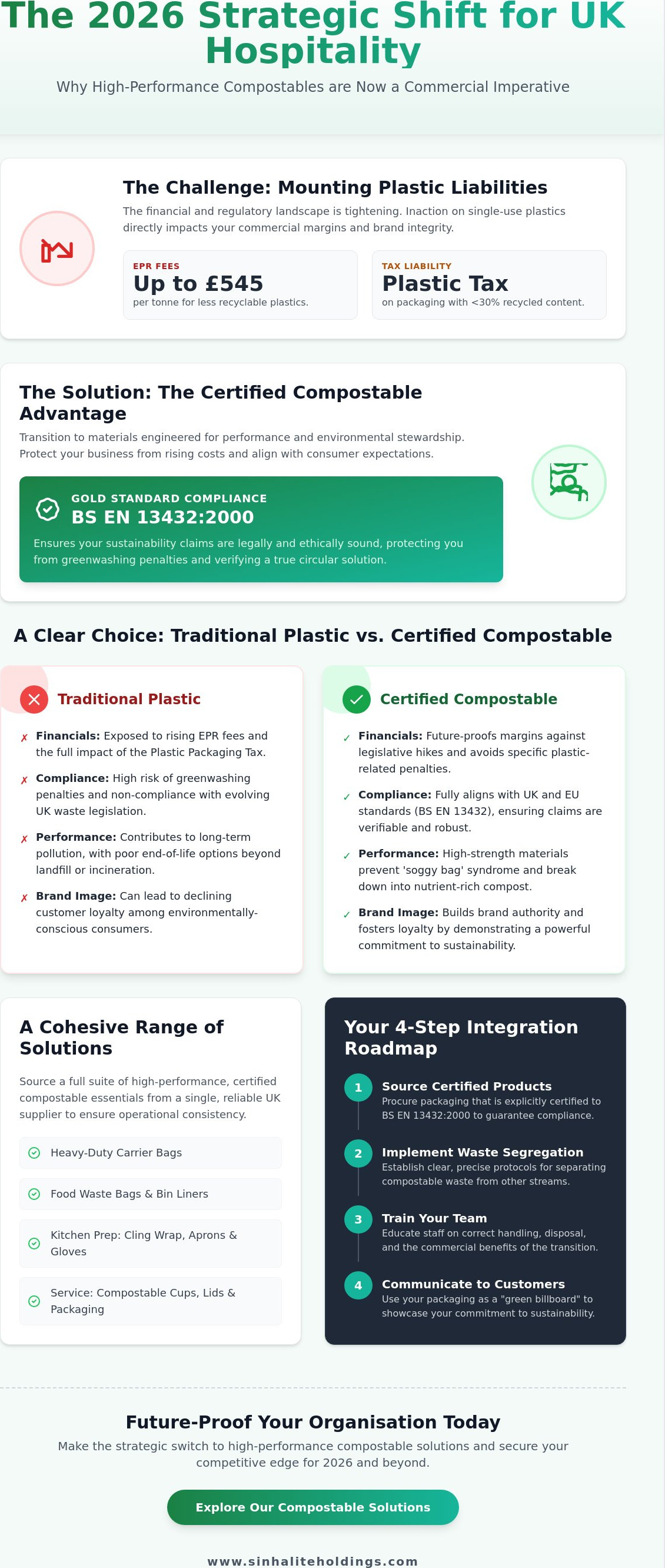
The financial landscape for UK takeaways is changing rapidly. Implementing certified compostable solutions helps your organisation navigate the plastic packaging tax explained for small business, which penalises packaging with less than 30% recycled plastic content. By choosing materials that are fully circular, you avoid the rising costs associated with traditional single-use plastics. Using verified compostable carrier bags for takeaways also protects you from greenwashing penalties, as compliance with BS EN 13432:2000 ensures your sustainability claims are legally and ethically sound.
The ROI of Sustainable Stewardship
Environmental responsibility is a powerful driver of long-term profitability. Switching business to sustainable packaging protects your margins by future-proofing your operations against future legislative hikes. Customers today are increasingly discerning. They often choose brands that mirror their own ethical standards. Investing in high-strength, reliable compostable alternatives builds brand authority and fosters deep-seated loyalty. It's a strategic move that transforms a simple packaging choice into a declaration of corporate integrity.
Commercial Roundup: High-Performance Compostable Carrier Bags and Prep Essentials
Modern material science has redefined what's possible in eco-friendly packaging. Plant-based polymers like PLA and PBAT provide the structural integrity required for high-volume takeaway operations. These compostable carrier bags for takeaways are engineered to withstand steam and heat, effectively preventing the "soggy bag" syndrome that plagues inferior alternatives. Sourcing a cohesive range of SKUs from a single UK supplier ensures that your brand’s performance remains consistent from the kitchen to the customer’s doorstep.
This performance-oriented approach ensures that bags handle industrial kitchen temperatures without losing their grip or shape. It's a pragmatic solution that balances ecological responsibility with the high-stakes demands of a professional kitchen. When you choose high-strength materials, you're investing in a reliable delivery experience that protects both your food and your reputation.
Front-of-House: Compostable Carrier Bags for Delivery
Sinhalite Holdings compostable shopping bags are designed for the heavy lifting required by the UK hospitality market. Their ergonomic handles and high-tensile strength make them a dependable choice for multi-container deliveries. Beyond their utility, these bags act as a "green billboard" for your business. They signal your commitment to sustainable stewardship to every customer. This aligns with the business case for sustainable packaging, where transparency and responsible innovation build lasting consumer trust.
Back-of-House: Prep and Storage Solutions
Efficiency in a commercial kitchen begins with the right tools. Using compostable food bags on a roll for delis streamlines portion control and prep work. For maintaining ingredient freshness without the environmental cost of plastic, professional-grade compostable clingfilm uk offers a high-cling, high-barrier solution. Transitioning to compostable food roller bags also eliminates the risk of microplastic contamination in your food prep chain. This holistic approach ensures your entire waste stream is circular and responsible.
Reviewing our full range of compostable carrier bags for takeaways can help you secure a more sustainable supply chain for your business today.
Implementation and ROI: Integrating Compostable Solutions into Your Operations
Transitioning to a circular model requires more than a simple procurement change. It demands a methodical approach to maintain operational efficiency while meeting the rigorous 2026 ethical standards. Staff training is a cornerstone of this process. Without clear waste segregation protocols, even the highest-quality compostable carrier bags for takeaways may fail to reach industrial composting facilities. Sinhalite acts as a steady, dependable ally during this transition, ensuring your operational choices lead to a measurable reduction in national plastic waste.
A 4-Step Framework for the Sustainable Transition
Implementing a sustainable packaging strategy is most effective when executed in logical phases. We recommend following this structured framework to ensure a seamless integration:
- 1. Conduct a packaging audit: Identify high-waste plastic areas in your takeaway, from prep stations to the final delivery bag.
- 2. Select certified alternatives: Replace traditional plastic with high-performance options, such as puncture resistant compostable garbage bags for kitchen waste.
- 3. Implement waste management protocols: Ensure staff use compostable caddy bags to separate organic matter correctly.
- 4. Communicate green credentials: Use social media and on-bag messaging to inform customers about your commitment to plastic waste reduction.
Closing the Loop: Commercial Waste Management Synergy
Food-contaminated packaging often complicates traditional recycling streams. However, using compostable garbage bags allows your team to dispose of food waste and certified packaging together, simplifying back-of-house logistics. This synergy extends to bin hygiene. Understanding how to keep a food waste bin from smelling through the use of breathable, high-performance liners ensures a professional kitchen environment remains sanitary. By integrating compostable carrier bags for takeaways into a wider waste strategy, you secure both your commercial ROI and your environmental legacy.
Future-Proof Your Takeaway Operations Today
The shift toward a circular economy is a strategic imperative for UK hospitality. By adopting high-performance compostable carrier bags for takeaways, you protect your business from the escalating costs of the Plastic Packaging Tax while meeting the rising ethical expectations of your customers. Modern material science now ensures that choosing a sustainable path doesn't mean sacrificing the strength or moisture resistance required for professional food delivery. Reliability and responsibility can finally coexist in your daily operations.
Successfully integrating these solutions requires a methodical approach to back-of-house efficiency and waste segregation. As a specialist UK provider of certified compostable essentials, Sinhalite Holdings offers the expertise in circular economy integration and ESG compliance your organisation needs to thrive. Our products are designed for commercial-grade durability and strength, ensuring your transition is both practical and profitable. We act as a steady ally for businesses seeking to align their operations with the highest environmental standards.
Partner with Sinhalite Holdings for your commercial compostable packaging needs and lead the way toward a cleaner, more responsible future. We're ready to help you turn environmental stewardship into a lasting commercial advantage.
Frequently Asked Questions
Is compostable packaging for takeaways strong enough for hot soups and heavy containers?
Yes, modern compostable carrier bags for takeaways are specifically engineered to provide the high-tensile strength and moisture resistance required for professional food delivery. These materials, often derived from advanced plant-based polymers, maintain their structural integrity even when exposed to steam from hot containers. This ensures that heavy loads and liquid-based dishes are transported securely without the risk of the material softening or failing during transit.
How does the UK Plastic Packaging Tax affect small takeaway businesses in 2026?
The UK Plastic Packaging Tax applies to packaging with less than 30% recycled plastic, creating a direct financial burden for businesses still relying on traditional single-use plastics. In 2026, modulated Extended Producer Responsibility (EPR) fees further incentivise the shift toward more sustainable materials. Transitioning to certified compostable solutions allows smaller organisations to mitigate these rising regulatory costs while future-proofing their operations against upcoming environmental legislation.
What is the difference between home compostable and industrially compostable carrier bags?
Home compostable materials are designed to break down at lower temperatures, making them suitable for domestic garden compost heaps. In contrast, industrially compostable bags require the higher, controlled temperatures found in specialist processing facilities to decompose efficiently. Both types must adhere to the BS EN 13432:2000 standard to be considered truly circular, ensuring they return to the earth as nutrient-rich organic matter without leaving harmful residues behind.
Will switching to compostable packaging significantly increase my operational costs?
While the initial unit price of compostable carrier bags for takeaways may differ from traditional plastic, the long-term commercial ROI is found in significant tax avoidance and enhanced brand loyalty. By integrating these solutions, businesses bypass the escalating fees associated with the Plastic Packaging Tax and EPR schemes. Additionally, customers in 2026 increasingly prioritise brands that demonstrate clear environmental stewardship, which often leads to higher retention rates and a stronger market position.


