

What if the premium your organisation pays for eco-friendly materials is actually fueling the very methane emissions you're trying to prevent? It's a common concern for businesses in Sri Lanka that want to lead the way in sustainability but fear their investments might be wasted. You've likely made the switch to reduce your plastic footprint, yet you still find yourself wondering exactly what happens to compostable packaging in landfill when it's mixed with general waste. The reality is that these innovative materials require specific conditions to thrive, and without them, they can become trapped in an anaerobic "mummification" chamber where progress stalls.
We understand that navigating the difference between "biodegradable" and "compostable" can be frustrating, especially when your ESG reporting metrics are on the line. This 2026 strategic guide will show you why landfill is the wrong end-of-life for compostables and how to implement a high-performance, plastic-free strategy that actually works. We'll explore the latest global standards, such as the ASTM D6400-26, and provide a clear roadmap for procuring certified products like compostable clingfilm and heavy-duty garbage bags. By the end of this article, you'll have the tools to ensure your commitment to the environment results in genuine, systemic change rather than just another discarded resource.
Key Takeaways
- Gain a clear understanding of exactly what happens to compostable packaging in landfill to avoid the "mummification" effect and prevent unintended methane emissions.
- Master the nuances of OK Compost HOME and EN 13432 certifications to select the most effective materials for your specific operational environment in Sri Lanka.
- Learn how to implement a strategic waste audit to verify that your sustainable packaging reaches the correct processing facilities instead of being lost in general waste.
- Evaluate industrial-grade alternatives such as puncture-resistant garbage bags and compostable clingfilm that maintain durability while supporting your organisation's environmental goals.
- Strengthen your corporate responsibility profile by adopting a visionary approach to plastic-free procurement that delivers measurable ecological results and improves ESG reporting.
The Landfill Paradox: Why "Eco-Friendly" Packaging Stalls in Rubbish Tips
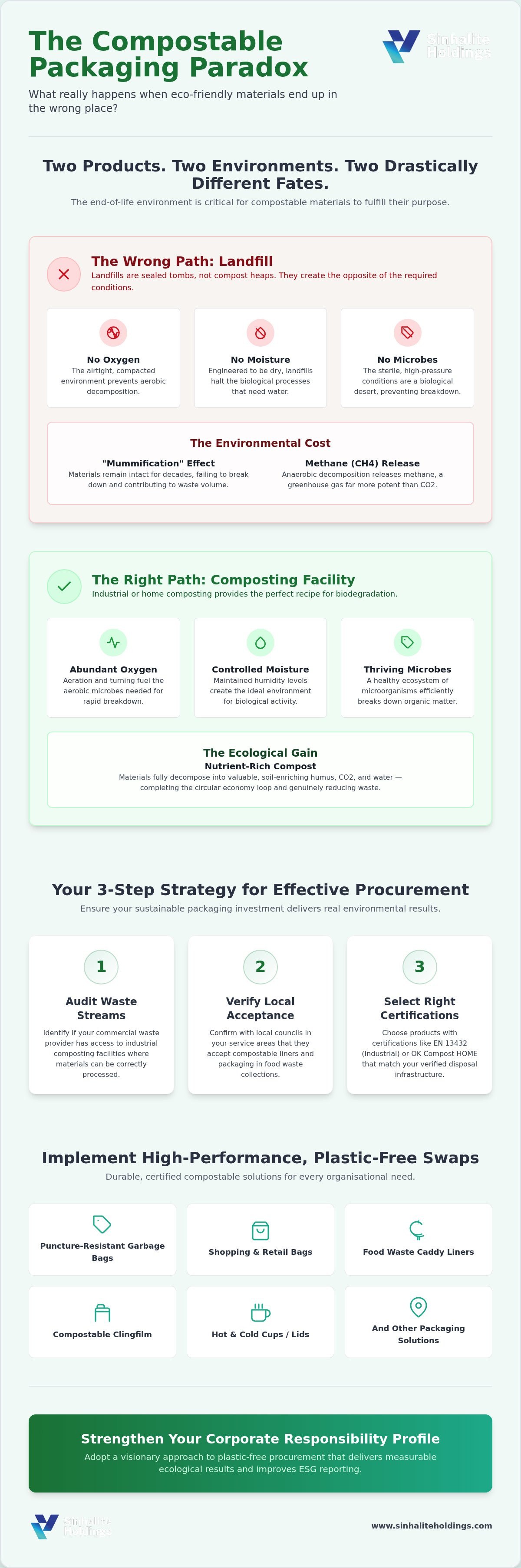
Landfills are not giant compost heaps; they are essentially tombs for our waste. These sites are engineered to be dry and airtight to prevent toxins from leaching into the soil, creating a mummification effect where even organic materials fail to degrade. When we examine what happens to compostable packaging in landfill, it's clear that the lack of oxygen and moisture halts the natural biological clock. These items don't disappear. They persist in a compacted, stagnant environment where the breakdown process is almost non-existent, leaving "eco-friendly" investments to sit unchanged for decades.
To better understand this concept, watch this helpful video:
The absence of air forces a shift from aerobic to anaerobic decomposition. This is a critical distinction for organisations in Sri Lanka seeking to align their operations with global sustainability standards. Instead of transforming into nutrient-rich soil, Biodegradable waste trapped in these conditions releases methane. This creates a paradox where products designed to help the planet end up contributing to greenhouse gas levels because they were placed in the wrong disposal stream. This "disappear in landfill" myth is a form of unintentional greenwashing that many brands fall victim to when they don't account for end-of-life management.
Methane vs. Compost: The Environmental Cost of Misplaced Waste
The Greenhouse Gas (GHG) impact of organic matter in anaerobic conditions is a significant hurdle for corporate sustainability goals. Methane is significantly more potent than carbon dioxide, and uncontrolled methane emissions from municipal landfills are largely caused by discarded organic matter. Procurement teams often investigate whether do compostable bags contain plastic to ensure they're making an ethical choice. While certified products are plastic-free, their ecological value depends on reaching a facility where they can be processed correctly, rather than being mummified in a rubbish tip.
The Role of Microorganisms in Breakdown
Biological breakdown requires a thriving community of microorganisms, which only exists in aerobic environments. Commercial composting facilities maintain the heat, moisture, and oxygen levels needed for these microbes to work efficiently. Landfills are biological deserts by comparison. The high pressure and lack of air in a landfill cell mean that the microbial activity required to break down compostable polymers never begins. Vague "biodegradable" claims are often misleading. Without the right environment, even the most innovative materials remain unchanged, highlighting the need for certified, high-performance solutions managed through proper waste streams.
Strategic Procurement: Matching Certifications to Your Organisation’s Waste Stream
Success in sustainability requires more than just swapping plastic for a greener alternative. It demands a precise alignment between the materials you procure and the waste infrastructure available to your organisation. If you choose products certified only for industrial facilities (EN 13432) but your local waste stream in Sri Lanka lacks these specialised plants, you risk a situation where your investment fails. When this mismatch occurs, we find exactly what happens to compostable packaging in landfill: the material remains inert, contributing to the very waste crisis you intended to solve. Effectively switching business to sustainable packaging involves a simple three-step audit:
- Identify if your commercial waste provider has access to industrial composting facilities.
- Verify if local councils in your service areas accept compostable liners in food waste collections.
- Select OK Compost HOME certified items as a versatile fallback for decentralised waste environments.
Understanding OK Compost HOME for 2026
For many Sri Lankan businesses, the OK Compost HOME certification is the most reliable choice for high-performance swaps. This ok compost HOME certification explained ensures that items like food waste bags or shopping liners will break down in lower-temperature environments, such as a garden heap or a less intensive municipal facility. It provides a vital safety net. Even if a bag accidentally enters a stream where conditions aren't perfect, its ability to degrade without industrial heat significantly lowers the risk of long-term environmental persistence. Look for the distinct logo on every SKU to ensure your procurement meets these rigorous standards.
The Business Case for Certified Materials
Investing in certified compostables isn't just an ethical choice; it's a strategic shield against contamination penalties. When non-certified items enter organic waste streams, they can ruin entire batches of compost, leading to higher disposal costs. Mismanaged waste also triggers methane emissions from landfills, which can negatively impact your ESG reporting and brand reputation. By selecting high-performance, certified materials, you ensure that what happens to compostable packaging in landfill is a scenario your organisation avoids. This proactive approach demonstrates a commitment to transparency that resonates with modern consumers and regulatory bodies alike. If you're ready to align your operations with these global standards, you can view our full range of certified solutions to find the right fit for your needs.
High-Performance Swaps: Implementing Sinhalite’s Compostable Solutions
Understanding what happens to compostable packaging in landfill is the catalyst for meaningful operational change. It isn't enough to simply buy a different product; you must choose solutions that match the rigorous demands of commercial environments while ensuring they don't end up mummified in a rubbish tip. Sinhalite Holdings provides the bridge between mission-driven idealism and industrial necessity. We offer a range of certified materials that allow your organisation to transition away from traditional single-use plastic products without sacrificing the strength and utility your staff rely on daily.
One of the most significant breakthroughs in our 2026 range is our compostable clingfilm uk edition. This innovation addresses a major gap in the market by offering a material that performs exactly like its plastic counterpart but is fully certified for organic disposal. For heavier applications, we've introduced puncture resistant compostable garbage bags designed specifically for the high-volume needs of commercial waste management. These products ensure that your commitment to the environment is backed by industrial-grade durability.
Replacing Single-Use Plastics in the Commercial Kitchen
The commercial kitchen is often the hardest place to eliminate plastic. High temperatures and fast-paced workflows require reliable tools. Our food roller bags and caddy liners provide a seamless swap for traditional plastics, maintaining hygiene standards while supporting a circular economy. The most requested innovation for 2026 remains our compostable cling film that actually clings. It solves the common frustration of poor adhesion, proving that sustainable choices don't have to be compromises.
A Future-Focused Partnership
We act as a steady ally for councils and businesses across Sri Lanka and the UK. By scaling our supply chains to support national distribution, we help organisations move beyond the worry of what happens to compostable packaging in landfill. We provide the tangible tools needed to reach zero-waste goals, positioning your entity as a visionary leader in environmental stewardship. This partnership isn't just about procurement; it's about building a cleaner, greener future through responsible innovation and consistent, reliable support.
#SustainabilitySL #PlasticFreeSriLanka #EcoFriendlyBusiness #CompostablePackaging #ZeroWaste2026 #SinhaliteHoldings #GreenInnovation #CircularEconomy #SustainableProcurement #SriLankaEco
Leading the Transition to a Plastic-Free Future
The journey toward a truly sustainable operation requires more than just a change in material; it demands a commitment to systemic integrity. We've examined exactly what happens to compostable packaging in landfill and why matching certifications to your specific waste infrastructure is the only way to avoid unintended environmental harm. By opting for OK Compost HOME certified SKUs, you provide your organisation with a versatile fallback that supports genuine biodegradation even in decentralised waste environments.
Sinhalite Holdings acts as a visionary partner for organisations across the UK and Sri Lanka, offering a specialised range of high-performance, puncture-resistant materials. Our goal is to ensure that your transition away from single-use plastics is both seamless and scientifically sound. Whether you're implementing commercial-grade garbage bags or our innovative clingfilm, you're investing in solutions designed for strength and ecological responsibility.
Take the next step in your sustainability journey and align your procurement with the future of the planet. Switch your organisation to Sinhalite’s certified compostable solutions today. Together, we can ensure that every choice you make contributes to a cleaner, greener world for the generations to come.
Frequently Asked Questions
Can I put industrially compostable packaging in my general waste bin?
Placing industrially compostable items in your general waste bin is not recommended. These products require high-temperature environments to break down effectively. If they are sent to a standard rubbish tip, what happens to compostable packaging in landfill is that it remains intact for years. Choosing our home-compostable range provides a more reliable end-of-life path for businesses in Sri Lanka where industrial facilities might be limited.
Does compostable packaging produce methane in a landfill?
Yes, compostable materials can release methane if they are buried in an airtight environment. This is the primary concern regarding what happens to compostable packaging in landfill; the lack of oxygen forces anaerobic decomposition. This process creates methane, which is far more harmful to the climate than carbon dioxide. Proper disposal in aerobic composting systems is essential to ensure these products deliver their intended environmental benefits.
How long does it take for Sinhalite compostable clingfilm to break down in a home compost bin?
Our compostable clingfilm generally breaks down within 180 days in a standard home compost bin. The warm, humid climate in Sri Lanka can often accelerate this natural process. Because it's certified OK Compost HOME, you don't need industrial heat to trigger the biological breakdown. It's an ideal kitchen swap that ensures your food storage remains sustainable from the moment of use to its final end-of-life.
Are compostable bags as strong as traditional plastic liners for commercial waste?
Our compostable garbage bags and caddy liners are specifically engineered for industrial-grade strength. We focus on puncture-resistant designs that reliably hold heavy or wet commercial waste without the risk of splitting. You won't have to sacrifice performance when moving away from traditional plastic. These solutions provide the durability needed for professional kitchens and offices while supporting your organisation's long-term ESG goals and environmental commitments.

