
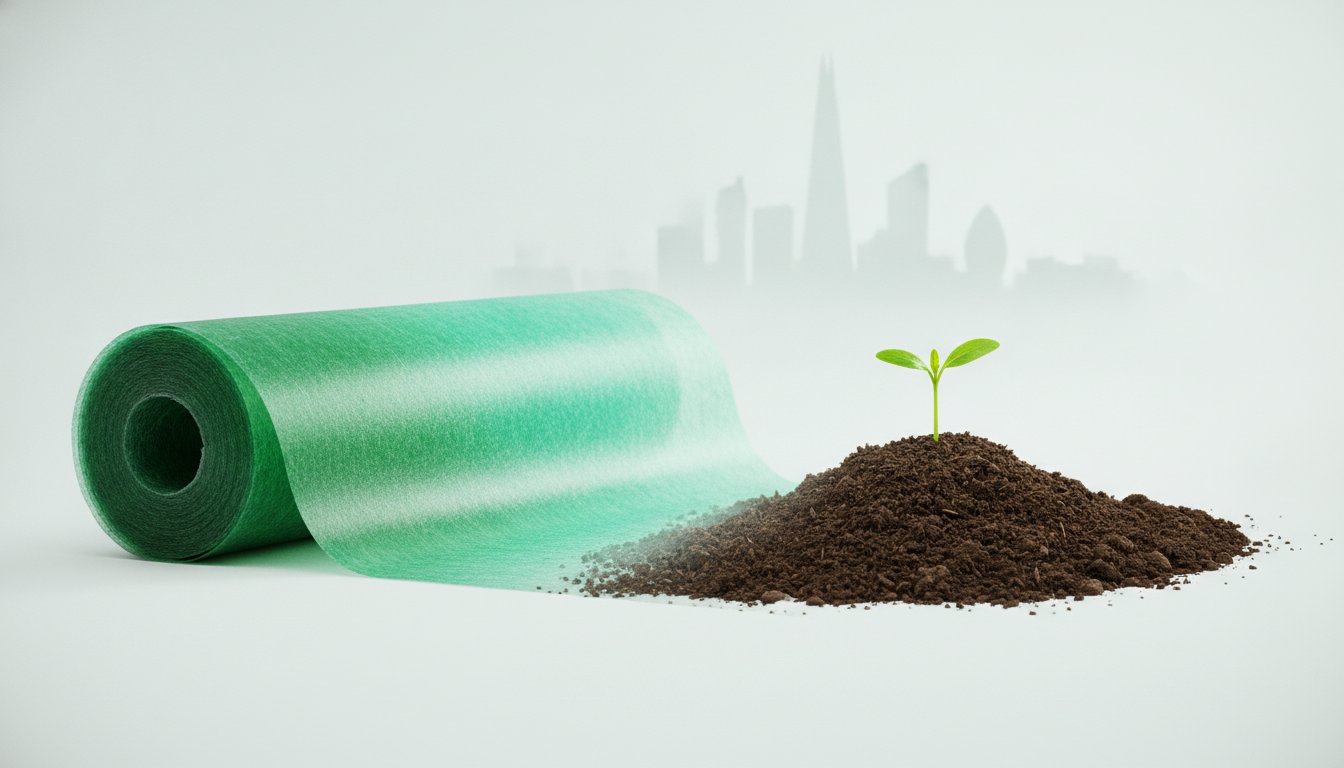
By August 2026, the landscape of packaging has fundamentally shifted under the weight of new international regulations, leaving many organisations to wonder if their current materials are truly compliant. You've likely encountered various sustainable claims that feel more like marketing than science, leading to the vital question: what is mater-bi plastic and can it actually replace traditional single-use polymers? It's a valid concern for any business leader who values both environmental stewardship and operational reliability.
We understand that the fear of greenwashing is real, especially when your reputation depends on the integrity of your supply chain. This guide provides a definitive look at Mater-Bi, the starch-based innovation that balances industrial performance with natural circularity. You'll discover how its verified EN 13432 certifications ensure it breaks down safely in industrial composting facilities, effectively turning waste into a resource. We'll examine the composition, durability, and practical applications of this material, giving you the confidence to lead your organisation toward a more responsible and waste-free future.
Key Takeaways
- Understand the molecular science behind Mater-Bi, a blend of corn starch and vegetable oils that offers a high-performance alternative to traditional polymers.
- Learn how the mechanism of biodegradation works in industrial settings, converting packaging into organic biomass and water without leaving harmful residues.
- Gain clarity on what is mater-bi plastic and how its EN 13432 certification ensures your organisation remains compliant with the 2026 EU Packaging and Packaging Waste Regulations.
- Discover how to seamlessly integrate compostable solutions like heavy-duty garbage bags and household clingfilm into your operations without sacrificing strength or puncture resistance.
- Identify the strategic advantages of transitioning to a circular economy by adopting traceable, plant-based materials that satisfy both consumer demand and legislative mandates.
Understanding Mater-Bi: The Plant-Based Evolution of Bioplastics
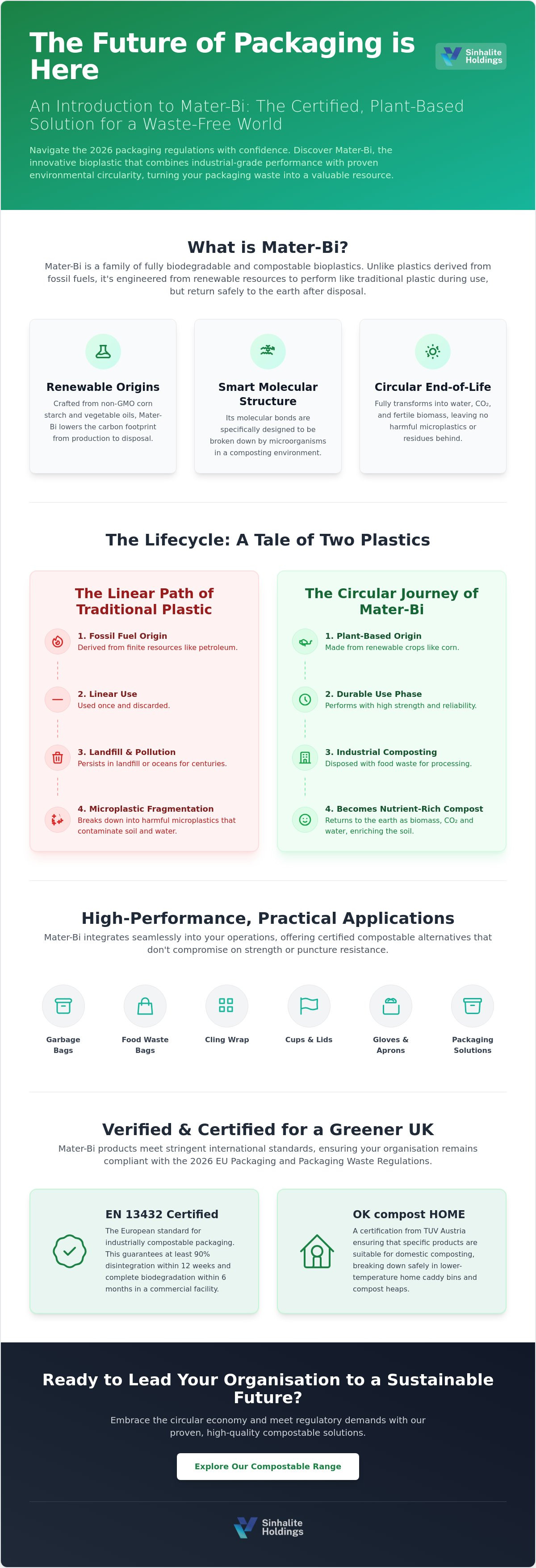
To understand the shift toward responsible packaging, one must first ask: what is mater-bi plastic? It's a versatile family of fully biodegradable and compostable bioplastics pioneered by the Italian innovator Novamont. Unlike conventional plastics that rely on finite fossil fuels, Mater-Bi is engineered from a blend of renewable feedstocks. By combining starches with vegetable oils and biodegradable polyesters, it creates a material that behaves like plastic during use but returns to the earth after disposal. This innovation is a cornerstone of Sustainable Bioplastics, providing the UK with a tangible path toward a circular economy where waste becomes a nutrient rather than a pollutant.
To better understand this concept, watch this helpful video:
The Raw Materials: From Crops to Compost
The integrity of Mater-Bi starts with its ingredients. It primarily utilises non-GMO corn starch and vegetable oils, sourced from agricultural processes that respect local ecosystems. These renewable resources are transformed into polymers that offer the same durability as petroleum-based alternatives. Choosing these feedstocks significantly lowers the carbon footprint of essential items like compostable shopping bags and caddy bags. This approach ensures the production phase is as ecologically responsible as the end-of-life phase, supporting a truly sustainable supply chain.
Mater-Bi vs. Traditional Plastic
The fundamental difference between these materials lies in their molecular structure. Traditional plastics are designed for permanence, which causes them to fragment into harmful microplastics that persist in the soil and oceans for centuries. In contrast, the molecular bonds in Mater-Bi are designed to be broken down by microorganisms in composting environments. This process ensures the material disappears completely, leaving behind only water, carbon dioxide, and fertile biomass. Mater-Bi serves as a systemic solution to plastic pollution because it aligns industrial utility with the natural cycles of the planet.
Performance and Composting: How Mater-Bi Works in the Real World
The effectiveness of any sustainable material is measured by its performance in the field and its reliability at the end of its life. When organisations ask what is mater-bi plastic, they aren't just looking for a chemical definition; they're seeking assurance that it performs under pressure. This material achieves high marks in puncture resistance and tensile strength, making it ideal for heavy-duty compostable garbage bags. The European Commission has highlighted the invention of Mater-Bi as a critical tool for high-quality composting, particularly because it simplifies waste management. In UK catering environments, businesses can dispose of packaging and food scraps in a single stream, reducing logistical complexity and costs.
The biodegradation process is a sophisticated biological reaction rather than simple fragmentation. When Mater-Bi is introduced to a composting environment with sufficient heat, humidity, and microbial activity, it transforms into carbon dioxide, water, and nutrient-rich biomass. This process addresses the common industry concern: do compostable bags contain plastic? Unlike traditional polymers, Mater-Bi leaves no persistent synthetic residues, ensuring the resulting compost is safe for agricultural use. It's a clean, efficient transition from waste back to the earth.
UK Certifications: OK compost HOME and TUV Austria
Compliance with UK waste standards requires clear, verifiable certification. While EN 13432 remains the standard for industrial composting, the OK compost HOME certification explained why certain materials are suitable for domestic caddy bins. This distinction is vital for councils and businesses aiming to meet 2026 sustainability targets. It guarantees the material will break down in lower-temperature home compost heaps, providing a scalable solution for local authorities and residential waste programs alike.
Durability and Utility in Food Storage
Performance isn't sacrificed for sustainability. Innovations in polymer blending have finally resulted in compostable cling film that actually clings, offering the seal required for professional kitchens. Additionally, the material's inherent breathability allows moisture to escape. This prevents the buildup of unpleasant odours in caddy bags and extends the shelf life of fresh produce, directly tackling the dual challenges of plastic and food waste. If you're ready to upgrade your operations, exploring our range of certified compostable solutions is a logical first step toward a greener future.
Practical Applications: Integrating Mater-Bi into Your Business Strategy
Transitioning from traditional polymers to plant-based alternatives is a practical step that yields immediate environmental dividends. For UK organisations, the process begins by identifying high-volume items that contribute most to plastic waste. By replacing standard supplies with Mater-Bi versions of household clingfilm and heavy-duty garbage bags, businesses can significantly reduce their ecological footprint without compromising on utility. When procurement teams truly grasp what is mater-bi plastic, they recognise it as a high-performance tool that fits seamlessly into existing workflows. Success in this transition depends on switching business to sustainable packaging through a methodical, data-driven strategy.
In professional environments, the versatility of Mater-Bi extends to essential protective wear and food service items. Compostable aprons and food roller bags provide the necessary hygiene barriers while remaining fully compatible with organic waste streams. Sinhalite Holdings serves as a dedicated ally for organisations seeking to navigate this shift. We provide the technical expertise and high-quality Mater-Bi solutions required to ensure your transition is both scalable and effective. By choosing a partner committed to transparency and performance, you can align your operations with the highest ethical standards of 2026.
Waste Management and Council Compliance
Local authorities are increasingly selective about the materials they accept in organic waste collections. Using certified Mater-Bi sacks ensures your commercial food waste remains compliant with council standards, preventing the costly rejection of contaminated loads. These breathable liners also provide a functional solution for how to keep a food waste bin from smelling. By allowing moisture to evaporate, the material reduces the heat and condensation that typically lead to unpleasant odours and bin leakage in busy commercial kitchens.
The Future of UK Food Packaging
As we look toward the future of compostable food packaging uk, it's evident that Mater-Bi will remain at the forefront of the circular economy. Its proven ability to return safely to the soil makes it a superior choice for any business aiming to eliminate persistent plastic pollution. Taking immediate action to adopt these plant-based solutions isn't just a response to regulation; it's a commitment to a cleaner, more resilient future. By integrating these innovations today, your organisation can lead the way in responsible business practices and sustainable growth.
Leading the Transition to a Circular Economy
Adopting plant-based innovations is no longer a peripheral choice but a core strategic requirement for the modern UK organisation. By understanding what is mater-bi plastic, your business can move beyond the limitations of fossil-fuel dependencies and embrace a material that returns safely to the earth. This technology ensures that high performance, characterised by exceptional puncture resistance and breathability, is maintained across your entire inventory. Whether you're implementing heavy-duty garbage bags or specialised food storage solutions, the transition to compostables is now both practical and scalable.
As a specialist UK supplier of high-performance compostables, Sinhalite Holdings provides the tools needed to meet the rigorous demands of the 2026 regulatory landscape. Our products carry the TUV Austria and OK compost HOME certifications, offering you the peace of mind that comes with verified compliance and environmental integrity. We're here to help you align your operations with a cleaner, more resilient future. Explore our range of certified Mater-Bi compostable solutions for your business and take a decisive step toward eliminating plastic waste today. A sustainable future is within reach, and it starts with the choices we make for our supply chains.
Frequently Asked Questions
Is Mater-Bi plastic really biodegradable at home?
Yes, specific grades of Mater-Bi are fully biodegradable in domestic composting environments. To ensure home compostability, you should look for the OK compost HOME certification on items like caddy bags. This certification guarantees the material will break down at the lower temperatures typical of a garden compost heap, eventually turning into nutrient-rich biomass without leaving synthetic residues behind.
Does Mater-Bi contain any toxic chemicals or PFAS?
Mater-Bi is engineered to be safe for the environment and doesn't contain toxic chemicals or PFAS. The material is formulated using renewable plant-based feedstocks and biodegradable polyesters that meet strict European safety standards. Because it's intended to return to the soil as compost, the manufacturing process prioritises non-toxic components to ensure the resulting biomass is safe for agricultural and horticultural use.
Can Mater-Bi products be recycled with traditional plastics?
No, Mater-Bi products shouldn't be placed in traditional plastic recycling bins. Because the molecular structure of bioplastics differs from petroleum-based polymers, they can contaminate the recycling stream for materials like polyethylene. When organisations ask what is mater-bi plastic, it's vital to understand its end-of-life path is composting, not mechanical recycling. Always dispose of these items in organic waste bins.
How long does it take for Mater-Bi to break down in a compost pile?
In an industrial composting facility, Mater-Bi typically breaks down within 180 days in accordance with the EN 13432 standard. In a home compost heap, the timeframe depends on variables like temperature, moisture, and microbial activity. While it may take slightly longer in a domestic setting, the material is designed to fragment and biodegrade completely, leaving only water, carbon dioxide, and organic matter.


