
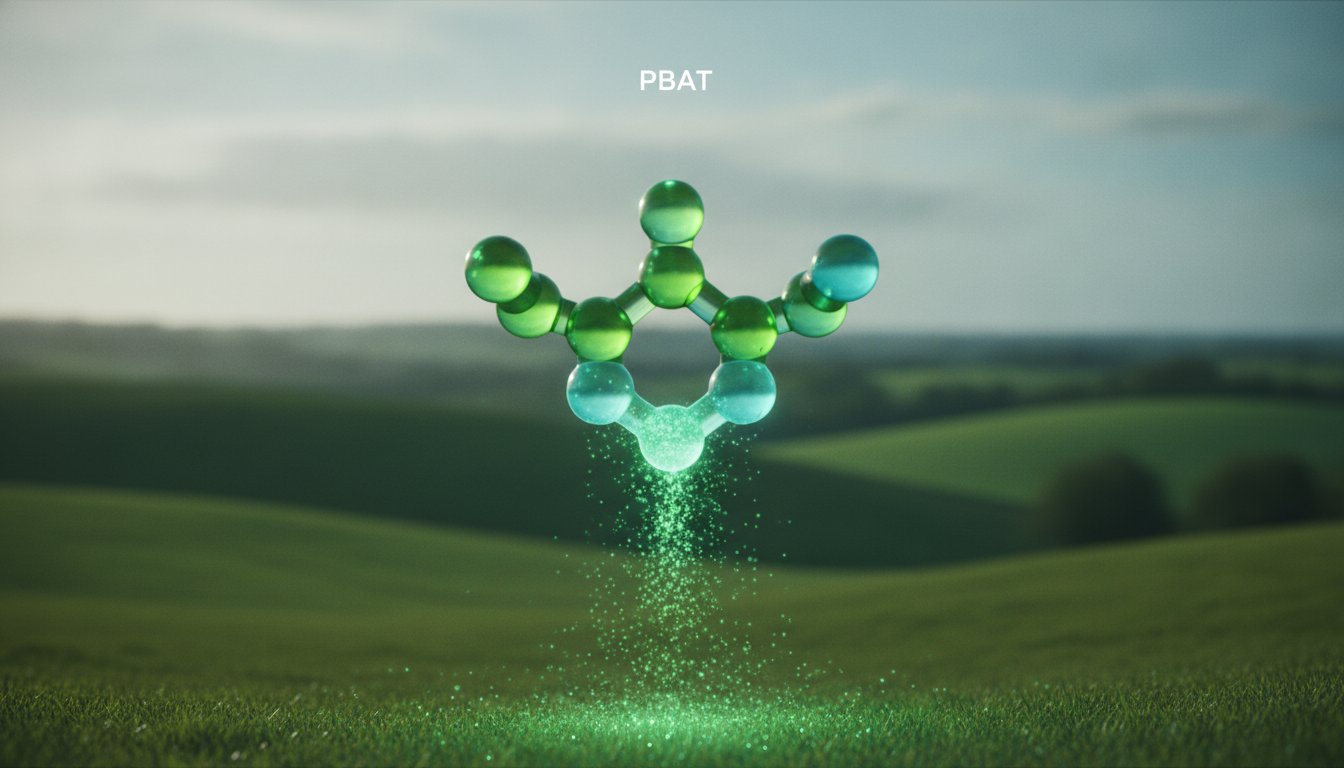
If you see the word "terephthalate" on a product label, do you immediately worry about harmful phthalates and toxic chemicals? It's a valid concern for any UK business leader striving for genuine sustainability while avoiding the trap of greenwashing. As organisations face the reality of the £228.82 per tonne Plastic Packaging Tax and new chemical bans in 2026, many are asking: what is pbat and is it safe for our customers and the environment?
We understand that transitioning to new materials requires more than just a leap of faith; it requires rigorous scientific clarity. You want to ensure that the compostable bags or clingfilm your organisation provides don't just disappear, but do so without leaving a toxic legacy in the soil. This guide provides that certainty by exploring the molecular safety of PBAT and its critical role in the UK's transition toward a circular economy.
Discover the science behind this innovative polymer and how it meets the strict EN 13432 safety standards. We will examine its chemical profile, its performance in everyday applications like food waste bags and packaging, and why it's the reliable choice for businesses committed to a cleaner, greener future.
Key Takeaways
- Understand how the unique molecular structure of PBAT enables a high-performance polymer to achieve a 100% biological end-of-life through natural microbial action.
- Gain a definitive answer to what is pbat and is it safe for your organisation by distinguishing its safe chemical composition from harmful ortho-phthalate plasticisers.
- Navigate the UK’s evolving regulatory landscape with confidence, ensuring your packaging choices align with Plastic Packaging Tax exemptions and corporate ESG requirements.
- Discover how rigorous toxicity testing and EN 13432 certification guarantee that certified compostable products support soil health rather than contributing to microplastic pollution.
- Identify the practical advantages of PBAT-based solutions, which provide the essential durability and puncture resistance required for commercial-grade garbage bags and food-contact clingfilm.
What is PBAT? Understanding the Chemistry of Compostable Plastic
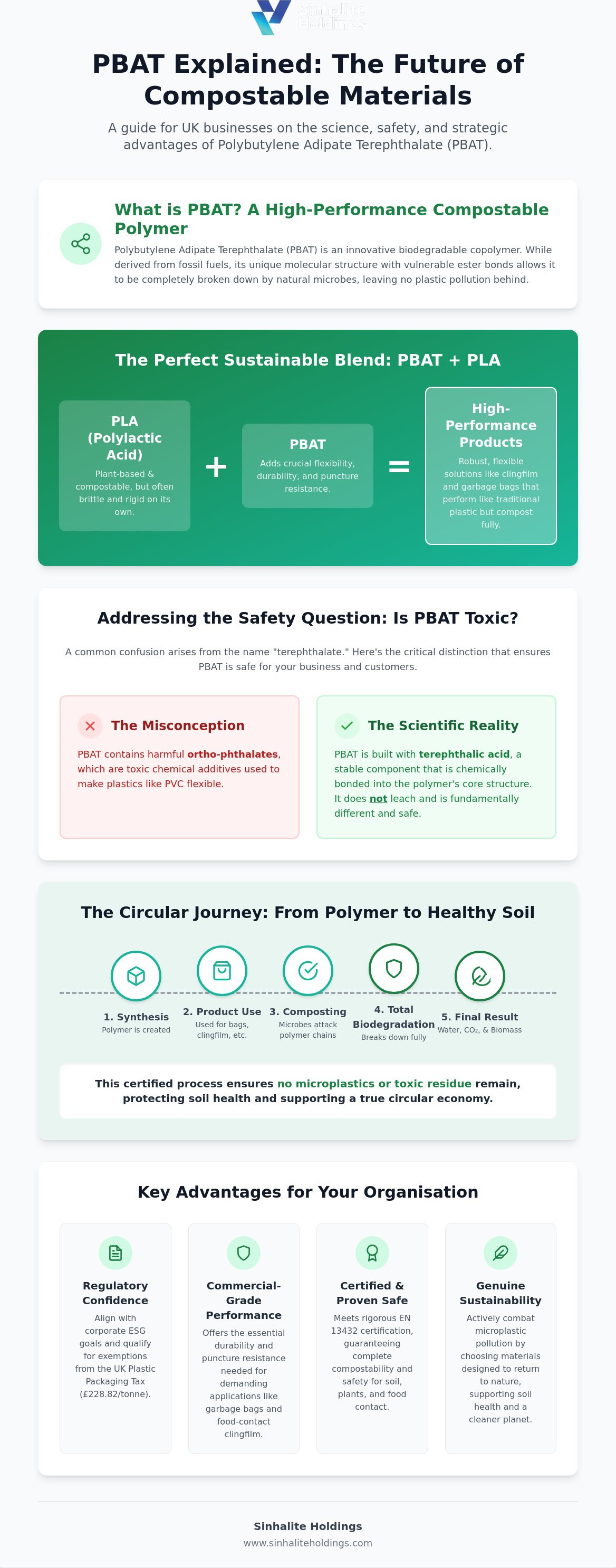
Modern packaging requires a delicate balance between functional strength and environmental responsibility. Polybutylene adipate terephthalate, commonly known as PBAT, is a biodegradable random copolymer that has become the cornerstone of flexible eco-packaging. While it's currently derived from fossil fuels, its chemical structure allows it to undergo 100% biological decomposition by soil microbes. This creates a unique scenario where a petroleum-based material doesn't contribute to permanent plastic pollution. For many UK organisations, the primary question remains: what is pbat and is it safe for widespread commercial adoption? PBAT is a performance polymer that bridges the gap between durability and compostability.
To better understand the chemistry and application of these materials, watch this helpful overview:
PBAT vs. PLA: The Perfect Sustainable Blend
Pure plant-based polymers like PLA (Polylactic Acid) are often too brittle for applications requiring flexibility. This is why most high-quality products, such as compostable clingfilm, utilise a blend of PLA and PBAT. By incorporating PBAT, manufacturers achieve the necessary stretch and cling required for food preservation while maintaining certified compostability. This synergy allows for the creation of robust food waste bags and shopping bags that perform exactly like their traditional plastic counterparts without the associated waste legacy.
The Lifecycle of PBAT: From Production to Soil
The journey of PBAT begins with industrial synthesis, where adipic acid, 1,4-butanediol, and terephthalic acid are combined. Despite its petroleum origins, the secret to its sustainability lies in its ester bonds. Unlike conventional plastics, these bonds are susceptible to enzymatic attack by naturally occurring microorganisms. When placed in a composting environment, microbes break the polymer chains into water, carbon dioxide, and biomass. This mechanism addresses the core concern regarding what is pbat and is it safe for soil health, as it prevents the accumulation of synthetic residues in the earth.
Is PBAT Safe? Addressing Toxicity and Microplastic Concerns
A common hurdle for businesses evaluating sustainable materials is the linguistic similarity between "terephthalate" and "phthalates." This often leads to the question: what is pbat and is it safe for sensitive applications? It's vital to distinguish between the two. While ortho-phthalates are often used as additives in traditional PVC to increase flexibility, the terephthalic acid in PBAT is a foundational building block of the polymer chain itself. It's chemically stable and does not leach into the environment as a harmful plasticiser. This distinction is crucial for understanding why PBAT is a responsible choice for modern organisations.
Scientific scrutiny remains the best tool for verifying safety. Research into the toxicity of its biodegradation products confirms that when PBAT mineralises, it breaks down into carbon dioxide, water, and biomass. Unlike conventional plastics that fragment into persistent microplastics, certified PBAT is designed for total assimilation by soil microbes. You can explore the technical nuances of these materials in our guide on do compostable bags contain plastic, which clarifies how bioplastics differ from the legacy polymers currently polluting our oceans.
Food Contact Safety and Chemical Migration
PBAT is highly stable in both household and commercial kitchen settings. It's frequently utilised in compostable clingwrap and food roller bags because it maintains its integrity when wrapping leftovers or fresh produce. These products comply with stringent UK and EU food contact regulations, ensuring that no harmful chemicals migrate into the food supply. Organisations can confidently adopt these solutions, knowing they provide the same safety profile as traditional options while supporting a circular waste system.
Environmental Safety: The Importance of Certification
The term "biodegradable" is often misused in marketing, but independent certification provides the necessary transparency. The OK compost HOME certification is the gold standard for verifying that a product is safe for the environment. TUV Austria standards require rigorous testing for heavy metals and ensure that the composting process has no negative impact on plant growth or earthworm health. By choosing certified materials, your business can implement high-quality compostable alternatives that leave the soil richer, not contaminated. This verified safety ensures that your transition to sustainable packaging is both ethical and effective.
PBAT in the UK: A Practical Solution for a Circular Economy
The UK is at a pivotal moment in its environmental journey. As the Plastic Packaging Tax rate reaches £228.82 per tonne in 2026, organisations are looking for tangible ways to reduce both their fiscal and ecological footprints. PBAT provides a direct pathway for this transition. By replacing traditional LDPE with compostable alternatives, businesses can meet ambitious ESG targets while ensuring their operations remain cost-effective and compliant. For procurement teams still questioning what is pbat and is it safe, the answer lies in its ability to facilitate a truly circular economy without the toxic legacy of conventional polymers.
In demanding commercial environments, performance is non-negotiable. This is why puncture resistant compostable garbage bags rely on PBAT blends to handle heavy or wet waste without failure. These solutions move beyond the limitations of single-use by ensuring that the packaging itself becomes a valuable resource, such as nutrient-rich compost, rather than a permanent pollutant. PBAT provides the essential material bridge that allows the UK to eliminate plastic waste by 2026 while maintaining the high performance standards required for modern industrial operations.
Why Sinhalite Holdings Prioritises Certified PBAT Blends
We believe that sustainability should never compromise utility. Our commitment to supplying only fully tested, high-performance compostable solutions ensures that UK organisations have access to tools that actually work. Whether it's our range of caddy bags or compostable clingfilm, we balance environmental integrity with the strength required for professional kitchens and commercial waste management. Every SKU we provide is a testament to our belief that responsible innovation is the key to a better future.
Choosing the Right PBAT Products for Your Organisation
Identifying high-quality materials is essential for maintaining brand integrity and operational efficiency. When reviewing labels, procurement officers should look for the EN 13432 standard, which verifies that the material will fully biodegrade in industrial composting facilities. It's also important to confirm what is pbat and is it safe by checking for certifications like OK compost HOME, which guarantee the absence of toxic residues after decomposition. You can begin switching your business to sustainable packaging with confidence by partnering with a supplier that prioritises transparency and performance. Making the transition now isn't just an environmental choice; it's a strategic move toward long-term corporate resilience.
Leading the Transition to a Circular UK Economy
PBAT represents a significant shift in material science, offering a performance-driven solution that aligns with the UK's 2026 environmental standards. By understanding the chemistry behind these biopolymers, organisations can move past linguistic confusion and embrace materials that fully mineralise into the soil. This transition ensures that essential tools like garbage bags and clingfilm support a circular system rather than contributing to persistent microplastic pollution. It's about choosing materials that work for your business and the planet simultaneously.
For commercial and council entities, the evidence provides a definitive answer to what is pbat and is it safe for large-scale application. The rigorous testing required for TUV Austria and OK compost HOME certifications guarantees that your choice is both ethically sound and operationally reliable. As a specialist UK-wide provider, we're dedicated to supporting ESG-driven organisations with products that never sacrifice strength for sustainability. You don't have to choose between durability and your environmental commitments.
Explore Sinhalite Holdings' range of certified compostable packaging solutions to align your operations with modern ethical standards and secure a waste-free future. Together, we can build a landscape where responsible business practices and environmental stewardship go hand in hand.
Frequently Asked Questions
Is PBAT a plastic or a natural material?
PBAT is a synthetic biodegradable copolymer. While it's currently derived from fossil-fuel sources, its molecular structure is specifically engineered to allow soil microbes to break it down completely. It functions as a high-performance bioplastic that provides the durability of traditional polymers while ensuring a clean, biological end-of-life for products like caddy bags and shopping bags.
Does PBAT contain harmful phthalates or BPA?
PBAT doesn't contain these harmful substances. The terephthalate used in its production is a stable building block of the polymer chain, which is chemically distinct from the ortho-phthalate plasticisers found in some traditional plastics. This inherent chemical stability is central to understanding what is pbat and is it safe for use in commercial kitchens and sensitive environments; it's also naturally free from Bisphenol A (BPA).
How long does it take for PBAT to decompose in a home compost bin?
Decomposition time depends on the specific certification and composting conditions. For products certified as OK compost HOME, at least 90% of the material must biodegrade within 12 months at ambient temperatures between 20°C and 30°C. While industrial composting facilities can process these materials in just a few weeks, home systems require more time to achieve full mineralisation.
Is PBAT safe for direct contact with food?
Yes, PBAT is safe for direct food contact and is a primary component in compostable clingwrap and food roller bags. These products undergo rigorous testing to comply with UK and EU food safety regulations. This ensures that the material remains stable during use and that no harmful chemical migration occurs while wrapping or storing fresh produce and leftovers.
Does PBAT leave microplastics in the soil after it breaks down?
Certified PBAT does not leave persistent microplastics in the environment. Unlike conventional LDPE which fragments into smaller, permanent pieces, PBAT is designed to be fully consumed by microorganisms. It mineralises into carbon dioxide, water, and nutrient-rich biomass, ensuring that the resulting compost is safe for agricultural use and free from synthetic residues.
Can PBAT-based products be recycled with traditional plastics?
You shouldn't recycle PBAT with traditional plastics like polyethylene. It's designed for organic recovery through composting streams rather than mechanical recycling. Including compostable materials in the plastic recycling bin can contaminate the batch and reduce the quality of the recycled plastic, so these items should always be disposed of via food waste or garden waste collections.


