

By August 2026, the decision to maintain traditional plastic usage will be measured in more than just environmental impact; it will represent a significant financial liability under the UK Plastic Packaging Tax. You've likely felt the mounting pressure to evolve while simultaneously fearing that a commercial compostable cling film uk might lack the necessary grip or durability for high-volume operations. It's a valid concern to worry about material failure or the complex legalities of greenwashing when your primary goal is maintaining food safety and operational integrity.
This guide provides the strategic roadmap you need to transition toward high-performance, certified packaging that keeps your business compliant and competitive. You'll learn how to navigate the 2026 regulatory landscape, avoid the severe fines associated with misleading environmental claims, and implement solutions that actually work. We'll explore the technical requirements of the BS EN 13432 standard, the logic of tax-efficient procurement, and the practical steps to securing a plastic-free supply chain that strengthens your brand's reputation with every wrap.
Key Takeaways
- Understand how transitioning to certified compostables provides a tax-efficient exit from the UK Plastic Packaging Tax while protecting your operational margins.
- Discover how advanced bioplastics ensure that commercial compostable cling film uk delivers the same high-performance "cling" and durability as traditional plastic alternatives.
- Learn the essential steps for conducting a professional plastic audit to pinpoint high-volume waste areas in your food preparation and waste management operations.
- Master the technical requirements of the BS EN 13432 standard to guarantee your packaging is genuinely circular and compliant with evolving 2026 regulations.
- Develop a scalable roadmap for a plastic-free supply chain that enhances your brand reputation among increasingly eco-conscious commercial clients and partners.
The 2026 Landscape: Why UK Organisations are Prioritising Sustainable Packaging
Sustainable packaging in 2026 is no longer just a corporate buzzword; it's defined by materials that actively support a circular economy without leaving harmful microplastic residue. For many UK businesses, this shift represents a move toward biological circularity. Understanding What are bioplastics? is essential for procurement teams seeking to replace fossil-fuel based films with plant-derived alternatives that return to the earth as nutrient-rich compost.
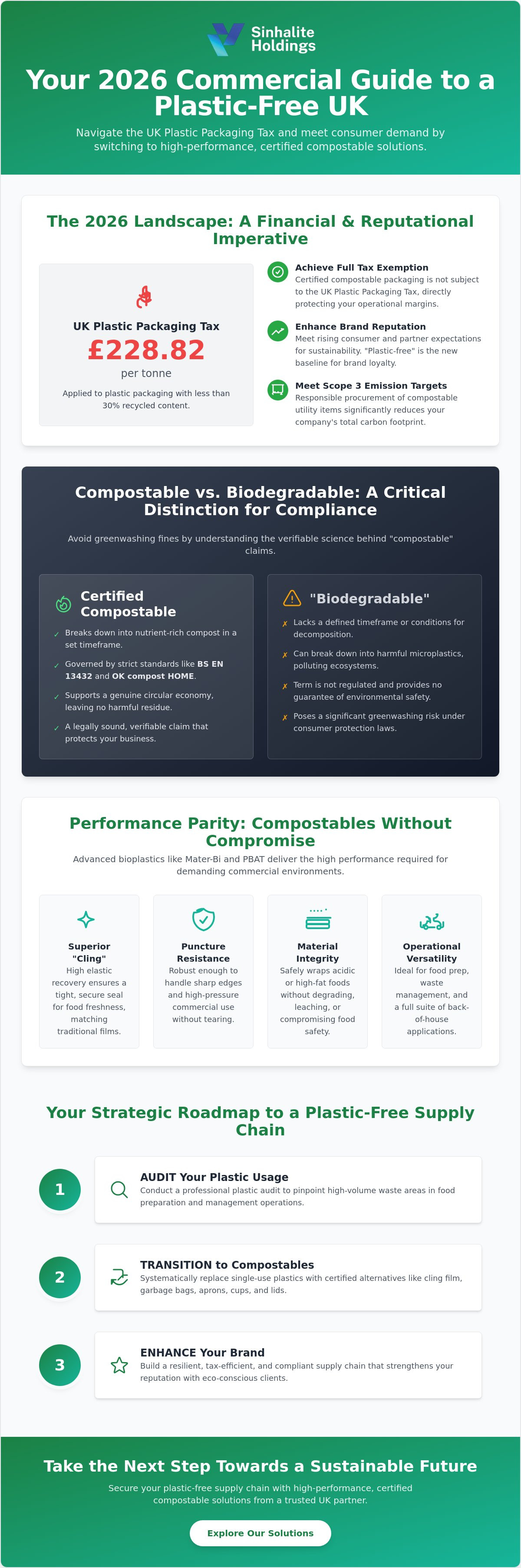
The financial rationale is equally compelling. Since 1 April 2026, the UK Plastic Packaging Tax has reached £228.82 per tonne for plastic packaging with less than 30% recycled content. By integrating commercial compostable cling film uk into your operations, you bypass this tax entirely while future-proofing your margins against further regulatory hikes and environmental levies.
To better understand the practical application of these materials, watch this helpful video review:
Beyond direct costs, organisations are now under intense pressure to meet Scope 3 emission targets. Responsible procurement of everyday utility items, such as compostable aprons and food storage solutions, plays a vital role in reducing a company's total carbon footprint. UK consumers have also reached a tipping point; they no longer view "plastic-free" as a premium feature but as a baseline expectation for brand loyalty.
Compostable vs. Biodegradable: The Regulatory Distinction
The term "biodegradable" has become a source of confusion and potential legal risk under the Digital Markets, Competition and Consumers Act. Unlike generic claims, "compostable" refers to a specific, verifiable process where material breaks down under defined conditions. For businesses managing local waste streams, having an OK compost HOME certification explained helps ensure that packaging doesn't require industrial facilities to degrade safely.
The Role of Circular Economy in Business Resilience
Transitioning to commercial compostable cling film uk reduces long-term environmental liability and simplifies waste management logistics. Sinhalite Holdings acts as a dedicated partner in switching business to sustainable packaging, providing the tangible tools needed to align commercial operations with ethical standards. This proactive approach builds a resilient supply chain that thrives in a greener economy while meeting the rigorous BS EN 13432 standards.
High-Performance Materials: Evaluating Commercial Compostable Cling Film UK
The operational success of a transition to sustainable packaging depends entirely on material performance. Traditional plastic films rely on fossil-based polymers for their adhesive properties, yet modern bioplastics like Mater-Bi and PBAT have effectively closed this performance gap. High-quality commercial compostable cling film uk now offers the same elastic recovery and structural integrity as traditional PVC or PE counterparts, ensuring that food remains protected and fresh.
Durability is a critical metric in commercial environments. In high-pressure catering and industrial settings, puncture resistance is non-negotiable. Certified compostable films are now robust enough to wrap acidic dressings or high-fat proteins without material degradation or leaching. This level of reliability extends throughout the supply chain, from food preparation to waste management. It's essential to replace all back-of-house plastic with high-performance alternatives, including food roller bags and puncture resistant compostable garbage bags. Organisations seeking to verify these performance standards can explore the range of commercial compostable solutions designed for rigorous professional use.
Technical Standards for Commercial Trust
To ensure compliance and reliability, UK businesses must look beyond generic claims. The BS EN 13432 standard is the benchmark for industrial compostability, requiring materials to disintegrate within 12 weeks and biodegrade within six months in controlled conditions. TUV Austria certifications further distinguish between industrial and home composting capabilities. For procurement teams, the priority is finding compostable cling film that actually clings. This specific functionality is vital for reducing food waste and maintaining kitchen efficiency.
Scaling Sustainability: From Cafes to Large Organisations
Scaling these solutions requires a focus on industrial-sized formats. While retail rolls are suitable for domestic use, commercial entities benefit from 600m rolls that offer better cost-control and reduced packaging waste. Sustainability becomes a natural part of the professional workflow when compostable aprons and gloves are integrated alongside food storage solutions. This holistic approach ensures that every touchpoint in the kitchen aligns with modern ethical and environmental standards.
Implementation Strategy: A Roadmap for a Plastic-Free Supply Chain
Successfully integrating sustainable alternatives requires a methodical approach that moves beyond simple procurement. A robust implementation strategy ensures that your investment in commercial compostable cling film uk translates into tangible environmental impact and operational efficiency. By following a structured roadmap, UK organisations can navigate the complexities of 2026 regulations while maintaining high standards of service.
- Conduct a plastic audit: Start by identifying high-volume waste areas within your food preparation and waste disposal cycles. Pinpointing exactly where traditional plastics are used helps prioritise the transition effectively.
- Source from specialist providers: Partner with established UK suppliers that focus on high-performance commercial compostable cling film UK to ensure material reliability and compliance.
- Implement staff training: Education is vital to prevent contamination. Train your team on the correct separation of compostable films and food waste so that organic materials reach the correct waste stream without interference.
- Communicate the transition: Share your sustainability progress with your customers. Transparency helps justify sustainability premiums and significantly enhances brand reputation among eco-conscious demographics.
Optimising Waste Management Logistics
Collaboration with your waste contractor is essential to ensure that compostable sacks and liners are processed at the correct facilities. Modern bioplastics require specific conditions to break down effectively as part of a circular economy. Using breathable compostable liners can also improve back-of-house hygiene by reducing moisture build-up. For instance, understanding how to keep a food waste bin from smelling through proper aeration can make the transition much more practical for kitchen staff.
The Long-Term ROI of Sustainable Swaps
The financial benefits of these changes extend far beyond ethical considerations. By 2026, the reduction in plastic tax liability and the increase in customer retention provide a clear return on investment. Staying informed about the future of compostable food packaging uk allows your business to remain a leader in a rapidly evolving market. This proactive stance ensures that your organisation isn't just reacting to environmental laws but is actively building a more responsible and resilient commercial future.
Securing Your Operational Future in 2026
Adopting a circular approach to packaging is no longer a peripheral choice but a core strategic necessity for UK businesses. By integrating high-performance commercial compostable cling film uk into your daily operations, you effectively mitigate the financial risks of the Plastic Packaging Tax while aligning your brand with the ethical standards of the modern market. This transition ensures that your supply chain remains resilient, compliant, and prepared for the evolving regulatory landscape of the next decade.
Success in this transition depends on selecting materials that don't sacrifice utility for sustainability. Sinhalite Holdings provides the industrial-grade tools required for this evolution. As a specialist UK supplier for the commercial and household sectors, we offer products that are OK compost HOME and TUV Austria certified, ensuring they meet the highest global standards for environmental integrity. Our performance-tested, puncture resistant materials are designed to withstand the rigours of professional environments while supporting a cleaner, greener future.
Explore Sinhalite Holdings’ range of certified commercial compostable solutions today to begin your journey toward a plastic-free supply chain. We are here to support your commitment to responsible innovation and long-term environmental stewardship.
Frequently Asked Questions
Is commercial compostable cling film microwave and freezer safe?
Most certified compostable films are fully freezer safe and can be used in the microwave for defrosting or light reheating. High-performance bioplastics are engineered to remain flexible at low temperatures without becoming brittle or losing their seal. You should always check specific manufacturer guidelines for high-heat microwave applications to ensure the material maintains its integrity during intense cooking cycles.
How does compostable cling film compare in price to traditional plastic wrap for UK businesses?
While compostable alternatives carry a higher initial unit cost than fossil-fuel based plastics, they offer significant long-term financial advantages through tax efficiency. By switching to commercial compostable cling film uk, your organisation avoids the rising costs of the UK Plastic Packaging Tax. This transition also protects your business from the reputational risks and potential fines associated with non-compliance and greenwashing.
Does compostable cling film really stick as well as standard plastic wrap?
Yes, modern bioplastics are designed to match the adhesive performance and elastic recovery of traditional PVC and PE films. Materials like Mater-Bi and PBAT provide a secure, airtight seal that is essential for maintaining food hygiene and preventing spoilage. These advanced films ensure that your professional kitchen can maintain high operational standards without compromising on its environmental commitments.
What is the best way for a UK business to dispose of large quantities of compostable film?
The most effective disposal method for commercial quantities is through an industrial composting waste stream. These films are manufactured to meet the BS EN 13432 standard, which requires them to break down completely in controlled composting environments. You should coordinate with your waste contractor to ensure that used films, food waste bags, and liners are sent to the correct processing facility rather than ending up in general landfill.


