
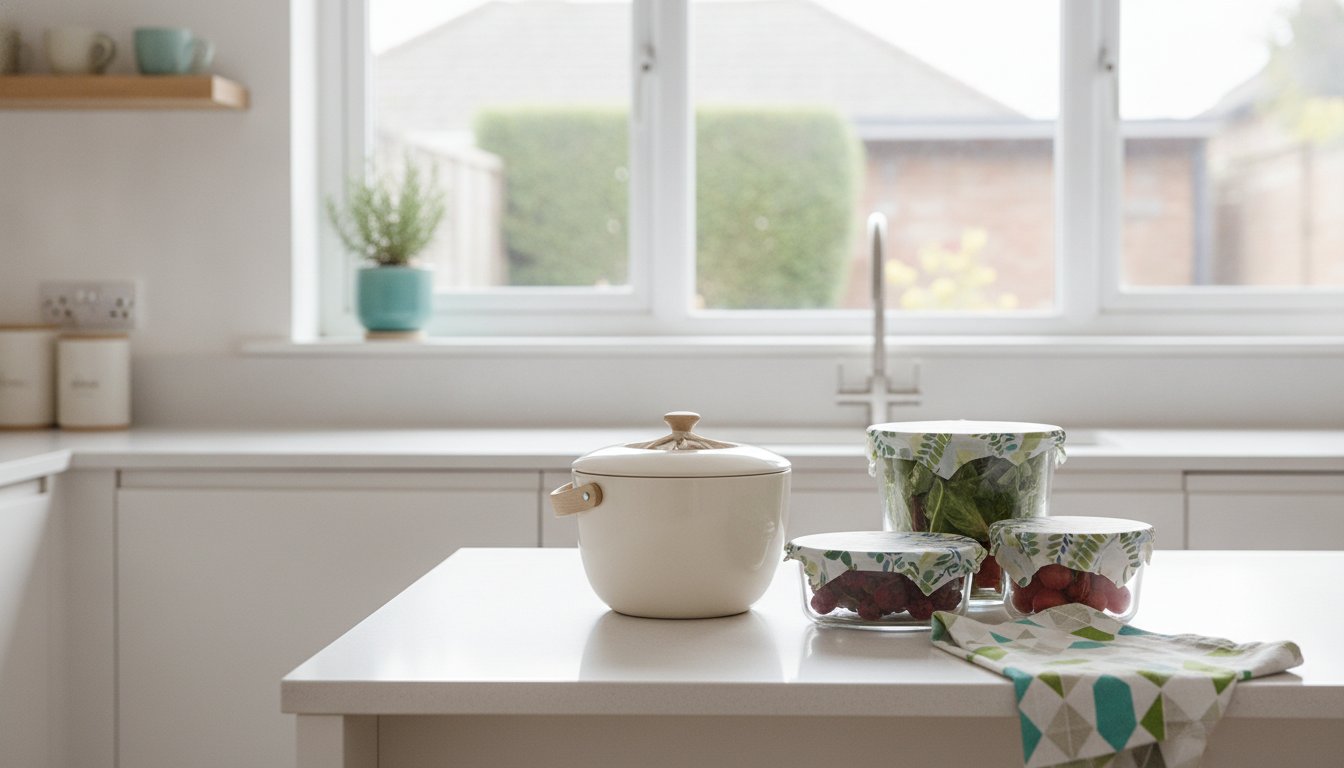
Did you know the average UK household of four currently loses approximately £1,000 every year to wasted food? It's a staggering figure that highlights a systemic inefficiency in our daily routines. You've likely tried to make a difference, only to be met with eco friendly kitchen swaps UK consumers often find frustrating, like compostable wraps that refuse to stick or confusing recycling symbols that lead to "wish-cycling." We understand that for sustainability to be truly viable, it must be functional and high-performing.
This guide will show you how to transform your kitchen into a high-performance circular micro-economy. You'll learn how to significantly lower your household's embodied carbon by switching to compostable tools that actually work as hard as you do. We provide a structured framework for 2026 that identifies the most effective compostable solutions to reduce your emissions and simplify your waste management as mandatory food waste collections become the national standard. From high-strength caddy liners to reliable food wraps, we'll explore how modern innovation makes a greener lifestyle both achievable and advantageous.
Key Takeaways
- Understand the concept of "embodied carbon" and how petroleum-derived kitchen plastics contribute to the UK’s industrial carbon load.
- Identify high-performing eco friendly kitchen swaps UK that replace single-use plastics with durable, plant-based alternatives without sacrificing utility.
- Learn how to successfully divert organic waste from landfills using certified caddy liners that maintain the integrity of your recycling stream.
- Establish a systematic circular waste station to effectively manage household emissions and prepare for 2026 mandatory food waste collection requirements.
- Evaluate the high-impact benefits of switching to compostable clingfilm and food storage solutions to lower your total carbon footprint.
Understanding the Carbon Cost of the Modern UK Kitchen
When we think about sustainability, we often focus on electricity or gas usage. However, we must address "embodied carbon." This term refers to the total greenhouse gas emissions generated throughout a product's entire lifecycle; from raw material extraction and manufacturing to transport and eventual disposal. In a typical British home, many eco friendly kitchen swaps UK that households attempt are undermined by a lack of understanding regarding these hidden costs. Every plastic tool or container carries a carbon debt that was accrued long before it reached your kitchen cupboard.
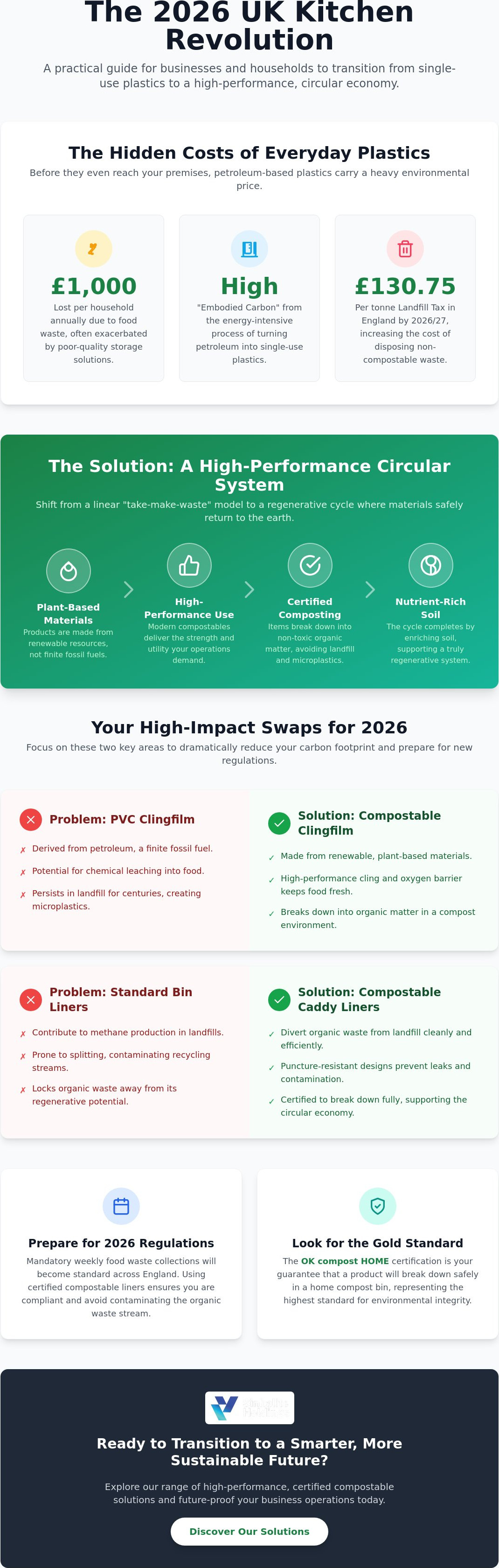
Traditional kitchen plastics, such as standard cling wrap and heavy-duty bin liners, are primary contributors to the UK's industrial carbon load because they are derived from petroleum. The process of refining oil into polymers is energy-intensive and carbon-heavy. As we move toward 2026, there is a significant national shift toward what is a circular economy, a system where materials are intentionally designed to return to the earth. This transition is essential for reaching net-zero goals, particularly as the standard rate of Landfill Tax in England reaches £130.75 per tonne for the 2026/2027 financial year. A circular kitchen is one that prioritises renewable, plant-based materials over fossil-fuel derivatives.
The Hidden Impact of Plastic Disposal
The problem doesn't end when you throw a plastic bag away. When conventional plastics are trapped in landfills, they contribute to the production of methane, a greenhouse gas that is significantly more potent than CO2. Choosing high-quality compostable bags provides a proactive solution. These plant-based alternatives break down into organic matter, preventing microplastic contamination in the UK soil system. By making intentional eco friendly kitchen swaps UK, residents can ensure their household waste supports a regenerative cycle.
High-Impact Eco-Friendly Kitchen Swaps for 2026
Transitioning from theoretical carbon reduction to practical application requires a focus on performance. Many households hesitate to adopt new habits because they fear a drop in utility. However, identifying high-impact eco friendly kitchen swaps UK consumers can rely on is simpler than it seems when you prioritise materials designed for a circular economy. Auditing your current food storage is the most logical starting point. Replacing traditional PVC wrap with a high-performance alternative is a significant move because it removes persistent toxins from your home environment and reduces your reliance on fossil fuels.
Modern innovation has transformed the durability of bioplastics. Current compostable clingfilm now matches the oxygen barrier properties of traditional plastic, ensuring food stays fresh for longer. This is a critical factor when you consider recent UK food waste statistics which show that households are responsible for roughly 70% of the nation's post-farm-gate food waste. By using tools that preserve food effectively while remaining fully compostable, you tackle two environmental challenges at once. For those on the move, replacing single-use shopping bags with heavy-duty compostable alternatives offers a lower lifetime carbon cost than even some reusable "bags for life" that often end up in landfills. You can explore our range of responsibly manufactured compostable solutions to begin this transition.
Step 1: Eliminating Petroleum-Based Food Wraps
The common misconception that bioplastics don't "cling" is a thing of the past. By 2026, advanced formulations have ensured that plant-based wraps provide the same airtight seal as PVC without the associated chemical leaching. If you're unsure which product suits your specific needs, consulting a buying guide for compostable cling film will help you select a version that balances strength with environmental integrity.
Step 2: Optimising Waste Containment
With mandatory weekly food waste collections becoming the standard across England in 2026, efficient caddy management is essential. Using puncture resistant compostable garbage bags ensures that organic waste is diverted from landfills without the mess or leaks often associated with earlier eco-alternatives. When selecting your liners, look for the OK compost HOME certification. This is the gold standard for eco friendly kitchen swaps UK, as it guarantees the product will break down safely in domestic composting conditions.
How to Systematically Manage a Circular Kitchen Waste System
Achieving a zero-waste kitchen requires more than just buying new products; it demands a shift in how we manage our daily outputs. By March 31, 2026, all local authorities in England are required to provide weekly food waste collections under the UK government's Simpler Recycling rules. This mandate makes implementing eco friendly kitchen swaps UK households can maintain a matter of national compliance as well as personal responsibility. A successful system begins with a dedicated food waste station. Using a ventilated caddy paired with breathable, certified compostable liners allows moisture to evaporate, which keeps the waste dry and significantly reduces the anaerobic processes that cause unpleasant odours.
Precision in waste separation is the cornerstone of a circular system. You must separate organic matter from dry recyclables to prevent contamination, as even a small amount of food residue can render a batch of cardboard or plastic unrecyclable. Using high-quality compostable caddy liners maintains hygiene and reduces your reliance on harsh chemical cleaning agents to scrub out bins. To measure your impact, track how much your "black bin" residual waste decreases over time. As you refine these eco friendly kitchen swaps UK, you'll likely find that the majority of your household's waste can be diverted into regenerative streams.
Maintaining Hygiene in a Sustainable Kitchen
Odour management is often the primary concern for those transitioning to separate food waste collection. Learning how to keep a food waste bin from smelling through natural aeration and frequent liner changes is essential for a pleasant kitchen environment. For commercial spaces or high-volume home kitchens, incorporating compostable aprons and gloves ensures that high hygiene standards are met without contributing to the plastic pollution crisis. These tools provide the necessary protection while remaining fully compatible with organic waste processing.
Supporting the UK Circular Economy
Every individual choice to move away from petroleum-based plastics sends a powerful signal to the market. Your household swaps contribute directly to the future of compostable packaging in the UK by increasing demand for plant-based innovation. We encourage a long-term view where these sustainable choices influence national supply chains, moving us toward a future where "waste" is no longer an endpoint, but a valuable resource for the next cycle of production.
Secure a Sustainable Future for Your Kitchen
Reducing your household carbon footprint is no longer a matter of compromise. By understanding the embodied carbon of your consumables and adopting high-performance eco friendly kitchen swaps UK households can finally bridge the gap between environmental responsibility and daily utility. We've explored how systematic waste separation and the use of certified materials prevent methane production and microplastic contamination, ensuring your kitchen operates as a true circular micro-economy. These changes don't just benefit the planet; they streamline your home management and prepare you for the national shift toward simpler recycling standards.
The transition to a cleaner future requires reliable tools that meet professional standards. You can explore Sinhalite Holdings’ range of professional compostable solutions to replace petroleum-based plastics with high-performance alternatives. Our products are TUV Austria and OK compost HOME certified, ensuring they meet the highest standards of environmental integrity while providing the strength needed for modern life. We're proud to support the UK’s 2026 circular economy goals by providing the tangible tools needed for systemic change. Every small adjustment in your kitchen contributes to a significant national impact. Together, we can build a more resilient and responsible tomorrow.
Frequently Asked Questions
What is the most effective eco-friendly kitchen swap for reducing carbon?
The most effective swap for immediate carbon reduction is the transition from traditional plastic bin liners to certified compostable versions for food waste collection. By using these liners to ensure organic matter reaches composting facilities rather than landfills, you prevent the production of methane, a greenhouse gas significantly more potent than CO2. This simple change is one of the most impactful eco friendly kitchen swaps UK households can make to lower their total embodied carbon.
Is compostable clingfilm as effective as traditional plastic wrap?
Yes, modern compostable clingfilm is engineered to provide the same airtight seal and oxygen barrier as traditional PVC wrap. Advanced bioplastic formulations ensure that the material "clings" effectively to various surfaces, maintaining food freshness and preventing unnecessary waste. High-performance versions are designed to be durable enough for both domestic and commercial use while remaining fully compatible with organic waste streams, proving that sustainability doesn't require a sacrifice in utility.
Do compostable bin liners split more easily than plastic ones?
High-quality compostable bin liners are now designed with advanced puncture-resistant technology that rivals traditional petroleum-based plastics. While early versions of eco-alternatives were prone to tearing, modern 2026 standards ensure that liners for caddies and garbage bins are robust and leak-proof. Selecting professional-grade compostable solutions ensures that your waste management remains hygienic and efficient, preventing the mess and frustration often associated with lower-quality, non-certified alternatives that don't meet industrial strength requirements.
How do I know if a kitchen product is truly compostable in the UK?
To verify if a product is truly compostable in the UK, you should look for recognized certifications such as OK compost HOME or the EN 13432 standard. These labels guarantee that the material has been rigorously tested to break down safely without leaving toxic residues or microplastics. Understanding these symbols is essential for effective eco friendly kitchen swaps UK, as it helps consumers and businesses avoid "greenwashed" products that are merely degradable rather than truly compostable.


