

With the UK's "Simpler Recycling" reforms now in full effect as of 2026, many organisations are surprised to learn that nearly 10 million tonnes of food waste are generated annually, yet much of the packaging meant to divert it still ends up in landfill. You've likely felt the frustration of staring at a "biodegradable" label, wondering if it actually belongs in your organic waste bin or if you're inadvertently contributing to greenwashing. It's a common challenge for businesses trying to align with modern ethical standards while avoiding the Environment Agency's £118 hourly non-compliance charges.
This guide clarifies exactly what can be composted industrially UK wide, ensuring your procurement choices meet the rigorous BS EN 13432 standard. We'll provide a definitive list of approved items and explain how high-performance alternatives, such as compostable clingfilm and caddy bags, can replace traditional plastics without sacrificing durability. By the end of this article, you'll have the confidence to lower your plastic footprint and transition toward a truly circular business model.
Key Takeaways
- Understand exactly what can be composted industrially UK wide by identifying the BS EN 13432 certification on your packaging.
- Learn why industrial In-Vessel Composting (IVC) is essential for processing complex bioplastics that standard home composting environments cannot degrade.
- Discover the full range of organic materials accepted in industrial facilities, including meat, dairy, and high-performance alternatives like compostable food roller bags.
- Identify practical steps to conduct a waste audit and transition your organisation away from single-use plastics toward scalable, sustainable solutions.
- Explore how to procure reliable, high-performance SKUs like compostable clingfilm and garbage bags to ensure your waste stream remains compliant and circular.
The Standards of Industrial Composting in the UK
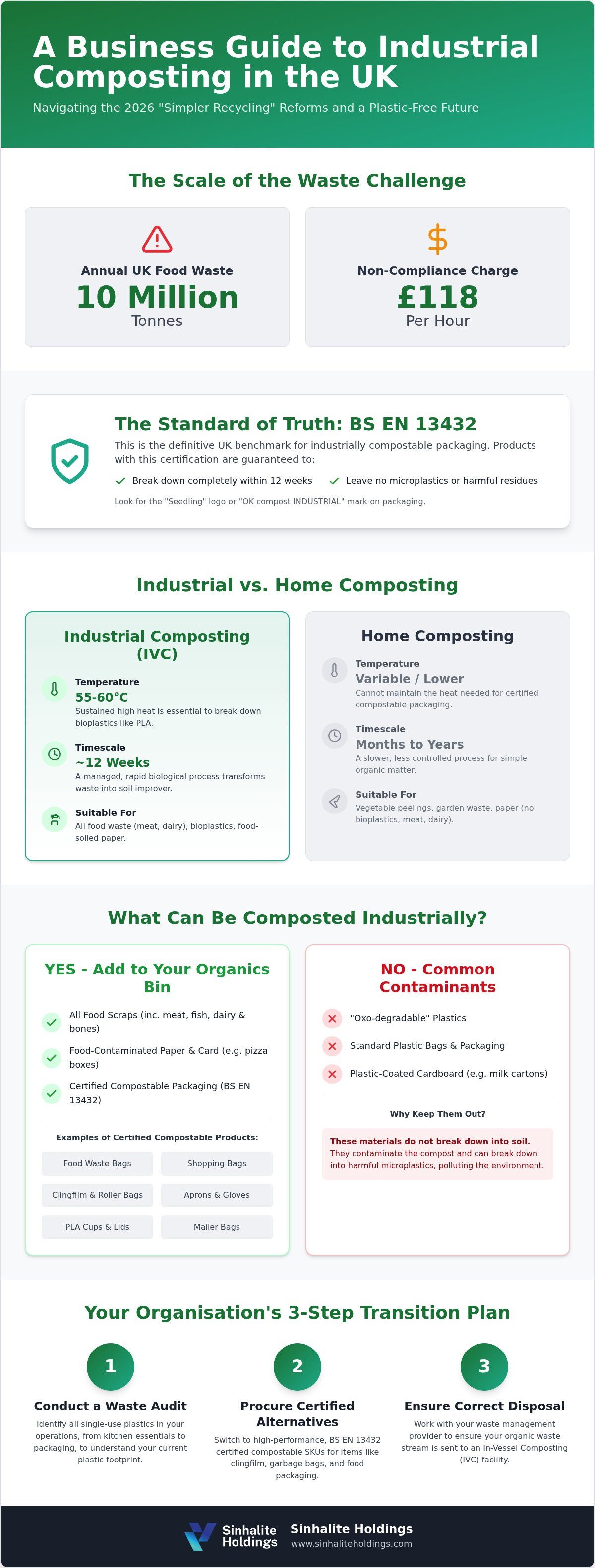
Industrial composting is a managed biological process that transforms organic waste into nutrient-rich soil improver within 12 weeks. While many people are familiar with garden composting, industrial-scale composting, specifically In-Vessel Composting (IVC), operates on a much more rigorous level. It utilises controlled heat, moisture, and oxygen to break down complex organic matter that would remain unchanged in a standard backyard heap. For organisations determining what can be composted industrially UK wide, understanding this infrastructure is essential. The 2026 Simpler Recycling reforms have standardised food waste collection across England, making these industrial processes the backbone of our national waste strategy.
The necessity for industrial processing often comes down to temperature. Many bioplastics, such as Polylactic Acid (PLA), require sustained temperatures of 55-60°C to degrade. Home compost heaps cannot maintain these conditions, which is why certified items like compostable shopping bags or food roller bags must be sent to professional facilities. These controlled environments ensure that even the most durable compostable materials mineralise completely, leaving behind no microplastics or harmful residues.
The EN13432 Certification: Your Source of Truth
The BS EN 13432 standard is the definitive benchmark for packaging recovery through composting in the UK. This certification ensures that a product will break down within a specific timeframe in an industrial facility. When procuring supplies, look for the "Seedling" logo or the "OK compost INDUSTRIAL" mark. It is also helpful to check if an item has the OK compost HOME certification explained in our detailed guide, as this indicates the material is even more versatile. However, for high-volume commercial waste, the industrial standard remains the most scalable solution for modern businesses.
In-Vessel Composting (IVC) vs Anaerobic Digestion (AD)
The UK waste landscape relies on two primary methods: IVC and Anaerobic Digestion (AD). While AD is excellent for generating renewable energy from liquid food waste, many facilities prefer IVC for processing certified compostable packaging. IVC systems are designed to handle solid organic materials and provide the aerobic conditions required for bioplastics to break down. Choosing the right disposal route ensures that your compostable caddy bags and food waste reach a facility equipped to transform them into high-quality compost.
A Comprehensive List: What Can Be Composted Industrially?
Identifying exactly what can be composted industrially UK wide requires a shift in mindset from traditional home recycling. Unlike domestic heaps, industrial facilities operate under strict UK industrial composting standards, allowing them to process materials that would otherwise contaminate a waste stream. This includes all meat, dairy, and cooked food scraps, alongside vegetable matter. It also extends to food-contaminated paper and cardboard, such as pizza boxes, which are often rejected by paper recycling plants due to grease saturation.
The most significant innovation for modern organisations is the inclusion of certified plant-based packaging. Items like PLA-lined coffee cups, lids, and compostable mailer bags are designed to mineralise in these high-heat environments. For businesses looking to overhaul their procurement, adopting these materials is a proactive step toward a cleaner future. By choosing products that are part of a managed biological cycle, you ensure that resources are returned to the earth rather than lost to landfill.
Compostable Kitchen Essentials for UK Businesses
Commercial kitchens generate high volumes of single-use plastic, but switching to certified alternatives offers a practical solution. Using compostable clingfilm uk allows chefs to wrap food securely without the environmental guilt of traditional PVC. Similarly, compostable caddy bags and food roller bags streamline the collection of organic waste while maintaining high hygiene standards. Using compostable gloves and aprons also helps reduce non-recyclable clinical or catering waste, ensuring every part of your operation reflects your commitment to the planet.
What to Keep Out: Common Contaminants
Integrity in your waste stream is vital for successful composting. You must exclude "oxo-degradable" plastics, as these materials simply break down into microplastics rather than turning into soil. Standard plastic-coated cardboard, like many milk cartons, must also be diverted to general waste. If you're unsure about your current supplies, it's worth asking: Do compostable bags contain plastic? Verifying the purity of your products prevents contamination and ensures the resulting compost is nutrient-rich. To begin your transition, you can explore high-performance certified compostable packaging solutions that align with these industrial requirements.
#Sustainability #EcoFriendly #Compostable #GreenBusiness #CircularEconomy #ZeroWaste #UKBusiness #WasteManagement #Innovation #SinhaliteHoldings #SriLanka #SustainableFuture #GreenInnovation #ClimateAction #PlasticFree
Implementing Industrial Composting in Your Organisation
Transitioning to a circular waste model requires a methodical approach that connects high-level environmental commitments to daily operational habits. The first step involves conducting a comprehensive waste audit to identify high-volume single-use plastic streams that can be replaced with certified alternatives. Understanding exactly what can be composted industrially UK wide is the foundation of this process. By aligning with the Renewable Energy Association (REA) standards, businesses can ensure their organic waste contributes to a high-quality soil improver rather than becoming a source of contamination.
Success depends on clear communication and reliable partnerships. Once you've identified your waste streams, partner with a certified supplier like Sinhalite Holdings to secure reliable SKUs that meet industrial standards. Implementing clear signage and staff training is essential to prevent contamination at the source. Finally, coordinate with your waste contractor to verify they utilise In-Vessel Composting (IVC) facilities, ensuring your compostable caddy bags and food waste are processed correctly.
Procuring High-Performance Alternatives
Operational efficiency shouldn't be sacrificed for sustainability. When upgrading your inventory, choosing compostable cling film that actually clings ensures your kitchen staff can maintain food safety standards without frustration. For heavier waste, the benefits of puncture resistant compostable garbage bags become clear in busy commercial environments where durability is non-negotiable. Beyond utility, switching business to sustainable packaging significantly enhances your CSR and ESG reporting, providing tangible data for your stakeholders.
The Future of UK Waste Management
As we look toward the 2027 deadlines for plastic film collection, anticipating the future of compostable food packaging uk allows your organisation to stay ahead of legislative shifts. The transition to a circular model is no longer a distant goal; it's a practical necessity for modern business. By adopting these innovative solutions today, you position your organisation as a leader in the green revolution, proving that responsible business practices and commercial success go hand in hand.
#Sustainability #EcoFriendly #Compostable #GreenBusiness #CircularEconomy #ZeroWaste #UKBusiness #WasteManagement #Innovation #SinhaliteHoldings #SriLanka #SustainableFuture #GreenInnovation #ClimateAction #PlasticFree
Leading the Transition to a Circular UK Economy
Adopting a circular waste model is a significant commitment to our planet's future. Throughout this guide, we've clarified exactly what can be composted industrially UK wide, highlighting the critical role of In-Vessel Composting and the necessity of rigorous BS EN 13432 certification. By distinguishing between vague "eco-friendly" claims and verified material performance, your organisation can confidently divert food waste and packaging from landfill, avoiding the rising costs and penalties associated with non-compliance.
Sinhalite Holdings is here to support this transition as a visionary partner for businesses and councils. Our EN13432 certified products are engineered for industrial efficiency, ensuring that your move away from traditional plastic is both seamless and scalable. With our reliable UK-wide distribution, you have immediate access to high-performance tools, such as compostable clingfilm and puncture-resistant garbage bags, that align your operations with modern environmental standards.
Explore Sinhalite’s range of certified compostable packaging for your business to begin your journey toward a plastic-free operation today. The tools for positive change are within reach; let's build a sustainable legacy together.
#Sustainability #EcoFriendly #Compostable #GreenBusiness #CircularEconomy #ZeroWaste #UKBusiness #WasteManagement #Innovation #SinhaliteHoldings #SriLanka #SustainableFuture #GreenInnovation #ClimateAction #PlasticFree
Frequently Asked Questions
Is industrial composting available throughout the UK in 2026?
Industrial composting is now widely accessible across the UK due to the Simpler Recycling reforms. These regulations have mandated separate food waste collections for most businesses since 2025 and all households since March 2026. This legislative shift has significantly expanded the network of In-Vessel Composting facilities, providing a robust infrastructure for organisations to manage their organic waste streams effectively.
How long does it take for certified packaging to break down in a commercial facility?
Certified compostable packaging is designed to mineralise completely within 12 weeks in a commercial facility. This rapid transformation is possible because industrial environments maintain sustained temperatures of 55 to 60°C. High-performance items, such as compostable caddy bags and food roller bags, are specifically engineered to vanish within this timeframe, leaving behind only nutrient-rich soil improver and no microplastics.
Can I put "biodegradable" bags in the industrial food waste bin?
You shouldn't place bags labeled simply as "biodegradable" in industrial bins without verified certification. The term "biodegradable" is often unregulated and can describe plastics that merely fragment into micro-fragments over many years. When determining what can be composted industrially UK facilities require the BS EN 13432 standard to ensure the material is truly compatible with organic recycling processes and won't contaminate the final compost.


